The New Golden Age of Frictionless Travel
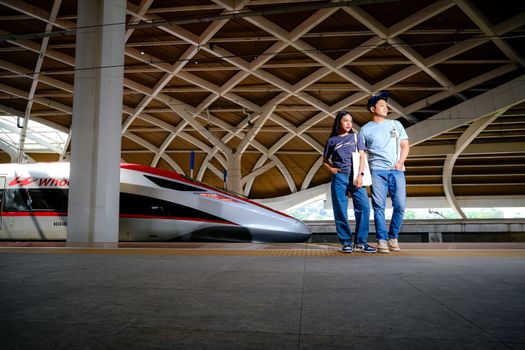
I stepped off the train at Tangier Ville station and paused. The air smelled faintly of salt water and spiced mint tea, but the atmosphere was pure, high-tech modernity. Before me sat the Al Boraq—Africa’s first true high-speed train. Sleek, double-decked, and painted in a striking scheme of white and royal blue, it looked like it belonged in Shinkansen-era Tokyo rather than the gateway to North Africa.
As we glided out of the station, whispering past ancient olive groves at 320 kilometers per hour, I realized something fundamental had changed.
``` [ Global Infrastructure Shift ] │ ┌───────────────────────────────────────┼──────────────────────────────────────┐ ▼ ▼ ▼ [ Physical Connectivity ] [ Digital Integration ] [ Sustainable Energy ]
- High-Speed Rail (Al Boraq) - Cashless Transit (Tallinn) - Green Airports (Kigali)
- Smart Urban Metros (HCMC) - Biometric Boarding (Riyadh) - EV Charging Networks
```
For decades, travel writers have romanticized "the rugged journey"—the bone-rattling bus rides, the missed connections, the navigation of chaotic, unmapped transit hubs. But let’s be honest: in the post-pandemic era, we crave efficiency. We want our digital boarding passes to sync instantly, our trains to run precisely on the minute, and our roads to be smooth enough to drink a cup of coffee on without spilling a drop.
Around the globe, a select group of forward-thinking nations is executing massive infrastructure master plans. They aren't just repairing old roads; they are leapfrogging legacy systems entirely, installing state-of-the-art fiber optics, automated metro lines, and green energy grids.
If you want to experience travel where the logistics are a pleasure rather than a chore, these are the six countries with the fastest-improving infrastructure that experts are urging you to visit right now.
---
1. Morocco: The High-Speed Gateway to North Africa
Morocco is no longer just a destination for backpackers looking to get lost in ancient medinas. Thanks to the country’s ambitious Plan Maroc Vert and massive national transport initiatives, it has quietly become one of the most well-connected nations in the Mediterranean basin.
``` [Tangier] ─── (Al Boraq High-Speed Rail: 1.2 Hours) ───> [Rabat] ─── (0.8 Hours) ───> [Casablanca] ```
The Game-Changer: Al Boraq & Modernized Terminals
The crown jewel of Morocco’s infrastructure leap is the Al Boraq high-speed rail line. Connecting the industrial hub of Tangier to the commercial capital of Casablanca via the political capital of Rabat, this engineering marvel has slashed travel times in half. What used to be a grueling five-hour train journey is now a smooth, air-conditioned, 2-hour-and-10-minute breeze.
But it’s not just the trains. Casablanca’s Mohammed V International Airport and Marrakech-Menara Airport have undergone stunning architectural and functional upgrades. Marrakech-Menara’s Terminal 1 is a masterpiece of kinetic architecture, featuring curved concrete sails and photovoltaic sunscreens that filter natural light while generating green energy.
- The Vibe: French-Moroccan chic meets high-tech efficiency. Think polished white granite floors, digital ticketing kiosks that actually work, and whisper-quiet cabins.
- Pro-Tip: Do not buy your Al Boraq tickets at the station on the day of travel. Download the ONCF Trafic app and book exactly four weeks in advance. You can snag a first-class ticket—which includes plush, reclining leather seats and access to a quiet lounge—for less than $25 USD.
---
2. Rwanda: The Clean, Green Tech Hub of East Africa
If your mental image of East Africa involves dusty dirt tracks and chaotic traffic jams, Kigali will shatter your expectations within ten seconds of arrival. Rwanda has systematically rebuilt its infrastructure from the ground up, focusing heavily on sustainability, digital integration, and urban cleanliness.
``` [ Kigali Green City Project ] │ ┌───────────────┴───────────────┐ ▼ ▼ [ Electric Mobility ] [ Smart Infrastructure ]
- Ampersand e-Motos - Cashless Tap-and-Go Buses
- Yego Cab Network - 5G Fiber-Optic Urban Grid
```
The Game-Changer: The Kigali Green City & E-Mobility
Kigali’s streets are famously spotless—partly due to Umuganda (a monthly community cleanup day) and partly due to a highly organized municipal sanitation force. The roads are perfectly paved, lined with manicured palm trees, and illuminated by smart LED streetlights.
Rwanda is also leading the continent in electric vehicle transition. The city is flooded with Ampersand electric motorcycles and Yego cabs, which you can hail via local ride-sharing apps. The national fiber-optic network feeds high-speed 4G (and increasingly 5G) internet across the country, making remote work from a cafe overlooking the rolling hills of Kigali easier than in many European capitals.
- The Vibe: Ultra-organized, peaceful, and forward-looking. The air is remarkably clean, and the hum of electric motorbikes replaces the classic diesel rattle of other regional capitals.
- Pro-Tip: When navigating Kigali’s public bus system, purchase a Tap&Go card at any major station. The buses run on strict schedules, are cashless, and feature free onboard Wi-Fi.
---
3. Vietnam: The Southeast Asian Transit Revolution
For years, getting around Vietnam meant navigating a sea of motorbikes or taking slow, overnight sleeper trains. While those classic experiences still exist, the country is currently undergoing a massive infrastructure boom that is transforming how travelers navigate its elongated, stunning geography.
``` [Hanoi Metro Line 2A] ───> Seamless urban transit through the capital [HCMC Metro Line 1] ───> Connecting Ben Thanh Market to the eastern suburbs (Opening soon) [Long Thanh Airport] ───> Mega-hub under construction to handle 100 million passengers ```
The Game-Changer: Urban Metros and Mega-Airports
Both Hanoi and Ho Chi Minh City (HCMC) are rolling out massive, multi-line rapid transit systems. Hanoi’s Cat Linh–Ha Dong line (Line 2A) is already operational, carrying passengers high above the congested streets in sleek, air-conditioned cabins. Ho Chi Minh City’s highly anticipated Metro Line 1 is in its final testing phases, promising to connect the historic Ben Thanh Market with the eastern districts in minutes.
On a macro scale, the construction of the Long Thanh International Airport near HCMC is one of the largest aviation projects in Southeast Asia, designed to eventually handle 100 million passengers annually. Additionally, the planned North-South High-Speed Railway will eventually link Hanoi to HCMC in under six hours, completely challenging the domestic aviation market.
- The Vibe: Dynamic, fast-paced, and rapidly modernizing. Historic French colonial architecture now stands alongside gleaming glass subway entrances.
- Pro-Tip: In Hanoi, skip the taxi queues and download the Grab app. Use it to book a ride, but also try taking the Metro Line 2A from Cat Linh station to Yen Nghia during the golden hour (around 5:30 PM) for stunning, elevated views of the city's neon-lit skyline.
---
4. Estonia: The Digital-First Baltic Utopia
Estonia didn't just improve its physical infrastructure; it digitized its entire society. Known globally as "e-Estonia," this Baltic nation has turned administrative friction into a relic of the past. For travelers, this means an incredibly smooth, paperless, and automated journey.
``` [ e-Estonia Ecosystem ] │ ┌───────────────────────┼───────────────────────┐ ▼ ▼ ▼ [ Paperless Transit ] [ Smart City Tallinn ] [ Rail Baltica Link ]
- Unified Smartcards - Starship Delivery - Future high-speed
- Contactless NFC - Self-Driving Shuttles connection to Europe
```
The Game-Changer: Seamless Digital Ecosystems & Rail Baltica
In Tallinn, physical tickets are obsolete. The city’s public transit system is entirely free for residents and incredibly cheap and seamless for visitors. You simply tap any contactless bank card or smartphone on the green validator onboard any tram, bus, or trolley.
On the streets, you’ll share the sidewalks with adorable, six-wheeled Starship delivery robots navigating autonomously. Meanwhile, the country is heavily invested in Rail Baltica, a massive European standard-gauge electrified railway project that will soon connect Tallinn directly to Riga, Vilnius, and Warsaw at speeds of up to 249 km/h.
- The Vibe: Medieval charm meets Silicon Valley. Cobblestone streets are lined with QR codes, and public squares offer lightning-fast, free municipal Wi-Fi.
- Pro-Tip: If you plan to explore the Estonian countryside (which you absolutely should), rent an electric car through the local app Bolt. The country is covered by a dense network of quick-charging stations, even in remote national parks like Lahemaa.
---
5. Saudi Arabia: The Megaproject Frontier
Backed by its ambitious Vision 2030 program, Saudi Arabia is currently home to some of the largest, most expensive infrastructure projects on Earth. The kingdom is transforming itself from a closed oil state into a highly accessible, futuristic tourism hub.
``` [Riyadh Metro] ──────────> 6 lines, 84 stations, driverless trains (Zaha Hadid designed) [Haramain High-Speed] ───> 450 km/h rail linking Medina, Jeddah, and Mecca [Red Sea International] ─> Carbon-neutral airport powered by 100% renewable energy ```
The Game-Changer: The Riyadh Metro & Haramain High-Speed Rail
The Riyadh Metro is a breathtaking engineering feat. Spanning six lines and 84 stations—several of which were designed by legendary architects like Zaha Hadid—it is one of the largest turn-key metro projects in history, featuring fully automated, driverless trains.
For regional travel, the Haramain High-Speed Railway connects the holy cities of Mecca and Medina via Jeddah and King Abdullah Economic City. Traveling at speeds of up to 300 km/h, these sleek trains make crossing the rugged desert landscape feel like a luxury flight.
- The Vibe: Monumental, luxurious, and unapologetically futuristic. The scale of the architecture is designed to awe.
- Pro-Tip: When booking the Haramain High-Speed Train, reserve a seat on the left side of the train when traveling from Jeddah to Medina to catch the most dramatic desert dune vistas as the sun sets.
---
6. India: The Hyper-Scale Connector
India’s infrastructure transformation is happening at a scale that is difficult to comprehend. The country is building highways, airports, and railway stations at a record-breaking pace, drastically reducing travel friction across its vast subcontinent.
``` [ India's Infrastructure Leap ] │ ┌─────────────────────────┴─────────────────────────┐ ▼ ▼ [ Vande Bharat Express ] [ Atal Setu Sea Link ]
- Semi-high-speed trains - India's longest sea bridge
- Ergonomic, quiet, and fast - Connecting Mumbai to Navi Mumbai
```
The Game-Changer: Vande Bharat & Massive Coastal Highways
The introduction of the Vande Bharat Express trains has revolutionized medium-distance rail travel in India. These indigenous, semi-high-speed, self-propelled trainsets feature aerodynamic designs, rotatable seats, bio-vacuum toilets, and customizable lighting. They have slashed travel times on popular tourist routes like Delhi to Varanasi or Mumbai to Goa.
In terms of road infrastructure, the newly opened Atal Setu (Mumbai Trans Harbour Link) is India's longest sea bridge, reducing travel time between central Mumbai and Navi Mumbai from two hours to just 20 minutes. Combine this with the massive expansion of regional airports under the UDAN scheme, and exploring India’s remote corners has never been more accessible.
- The Vibe: Energetic, massive, and rapidly organizing. The historic chaos of Indian transit is steadily being replaced by digital ticketing, clean platforms, and streamlined highway toll booths (via the automated FASTag system).
- Pro-Tip: Skip the standard train booking agents. Register for an official IRCTC account online before your trip, and book "Executive Class" (EC) on any Vande Bharat train for a premium, quiet journey complete with catered regional meals served at your seat.
---
Quick Facts & Logistics Comparison
To help you plan your next seamless journey, here is a breakdown of what to expect on the ground in these infrastructure-pioneering nations:
| Country | Standout Project | Best Way to Get Around | Estimated Daily Transit Cost (USD) | Best Time to Visit | | :--- | :--- | :--- | :--- | :--- | | Morocco | Al Boraq High-Speed Rail | High-Speed Train & Tramways | $15 - $30 | October to April | | Rwanda | Kigali Green City & E-Motos | Electric Moto-Taxis & Buses | $5 - $12 | June to September | | Vietnam | HCMC & Hanoi Metro Lines | Metro & Grab App | $8 - $15 | November to April | | Estonia | Digital Transit & Rail Baltica | Tram & Bolt Car-Sharing | $10 - $25 | May to August | | Saudi Arabia | Riyadh Metro & Haramain Rail | Metro & High-Speed Rail | $25 - $60 | November to March | | India | Vande Bharat Express Trains | Semi-High-Speed Rail & Air | $12 - $35 | October to March |
---
The Verdict: Why Infrastructure is the Ultimate Luxury
We often measure the luxury of a destination by the thread count of the hotel sheets or the Michelin stars of the restaurants. But true luxury is time.
It is the peace of mind that comes from knowing you can cross an entire country in two hours without a single bump in the road. It is the joy of tapping your phone on a reader and watching the subway doors slide open instantly.
The countries listed above have recognized that the future of tourism belongs to those who make travel effortless. By investing in world-class infrastructure, they aren't just building roads and railways—they are building the perfect travel experience.
Plan your next trip to one of these rising giants, and experience what travel looks like when everything just works.
---