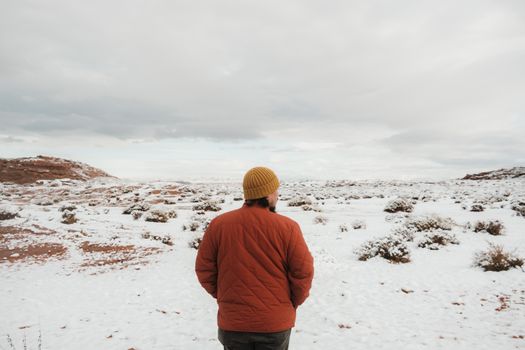
From Winter Blues to Desert Hues: How Deserts Changed My Life Forever
Let me tell you a secret: I used to hate winter. The short days, the endless grey, the bone-chilling cold that seeped into my very soul – it all felt like a relentless march towards seasonal affective disorder. My solution for years was to hibernate, counting down the days until spring. But then, a chance conversation, a spark of curiosity, and a desperate need for sunshine led me to consider something radical: the desert.
"The desert? In winter? Won't it be freezing?" my friends scoffed. And yes, some desert nights are surprisingly cold, but the days? Oh, the days are pure, unadulterated bliss. Crisp, clear air, brilliant sunshine, and landscapes that stretch into infinity, painted in hues of ochre, gold, and terracotta. What started as an escape from the cold quickly became a profound journey of self-discovery, a series of transformative experiences that redefined my understanding of beauty, resilience, and connection.
These aren't just trips; they are chapters in my life story where the desert, in its stark majesty, taught me lessons I never knew I needed. If you're looking to swap your winter coat for a wide-brimmed hat and your mundane routine for an epic adventure, read on. These five desert destinations, perfect for winter travel, genuinely changed my life forever – and I promise, they'll leave an indelible mark on yours too.
1. The Sahara Desert, Morocco: Where Silence Speaks Volumes
My first foray into the desert was the iconic Sahara, specifically the towering dunes of Erg Chebbi in Morocco. I arrived in December, escaping the damp chill of Marrakech, and was immediately struck by the warmth of the sun and the incredible quiet.
My Personal Awakening: The moment I mounted my camel, "Sahara," and we began our slow, rhythmic walk into the vast expanse of the dunes, a profound sense of peace washed over me. The world, with all its incessant noise and demands, simply faded away. That night, under a canopy of stars so bright and numerous they looked like spilled glitter, I sat in absolute silence, listening only to the gentle desert breeze. It was here, in the heart of the Sahara, that I truly felt connected to something ancient and infinite, realizing how much of my life I spent distracted by the trivial. The silence wasn't empty; it was full of presence.
Why Winter is Best: Moroccan winters (November to February) offer glorious daytime temperatures, typically ranging from 15-25°C (59-77°F). Nights can dip close to freezing, but the crisp air makes stargazing even more spectacular, and your Berber tent will have plenty of blankets! You avoid the scorching summer heat (often exceeding 45°C/113°F) and the crowds of shoulder seasons.
Practical Tips for Your Moroccan Desert Escape:
- Getting There: Most tours depart from Marrakech or Fes, typically 2-3 day excursions that include transport, camel trekking, dinner, and an overnight stay in a desert camp.
- Choosing a Tour: Options range from budget-friendly shared tours (starting around $100-150 USD for 2 days/1 night) to luxurious private camps with ensuite bathrooms and gourmet meals (upwards of $300-500+ per night). I recommend a mid-range camp for comfort without breaking the bank. Always read reviews!
- What to Pack: Layers are key! Light clothing for day, warm jacket/fleece, hat, gloves for night. Sturdy closed-toe shoes are a must. Don't forget sunscreen, sunglasses, and a scarf to protect against sand.
- Must-Do: Wake up before dawn to climb a dune and watch the sunrise paint the sky in fiery colors. It’s an unforgettable, almost spiritual experience. Try sandboarding – it's harder than it looks but incredibly fun!
- Cultural Immersion: Engage with your Berber guides. Their hospitality and knowledge of the desert are humbling. Learn a few words of Arabic or Berber, and definitely try the mint tea!
- Instagram Moment: A silhouette shot of you on a camel against the sunset, or a time-lapse of the stars above your tent. Pure magic.
2. Wadi Rum, Jordan: Walking on Mars
From the golden dunes of Morocco, my desert quest led me to the otherworldly landscapes of Wadi Rum in Jordan. Known as the "Valley of the Moon," its towering sandstone mountains and vast, empty valleys truly make you feel like you've landed on another planet.
My Personal Awakening: As our Bedouin guide navigated the rugged terrain in his beat-up jeep, I felt like an explorer on a grand expedition. We scrambled up natural rock bridges, explored ancient Nabataean inscriptions, and shared sweet tea in the shade of a massive rock formation. But it was spending the night in a "bubble tent" – a transparent dome offering panoramic views of the stars – that truly blew my mind. Lying in bed, watching constellations slowly drift across the sky, I understood the profound resilience of the Bedouin people who have called this harsh environment home for centuries. Their deep connection to the land and their unwavering hospitality taught me about finding abundance in simplicity and the enduring power of community.
Why Winter is Best: Jordan's winter (December to February) brings pleasant daytime temperatures of 10-20°C (50-68°F), perfect for exploring without overheating. Nights are cool, sometimes dropping to near freezing, but the clear skies guarantee spectacular stargazing. Avoid the intense heat of summer and the busy crowds of spring/autumn.
Practical Tips for Your Wadi Rum Adventure:
- Getting There: Most visitors combine Wadi Rum with a trip to Petra. You can arrange a jeep tour and overnight stay directly with a Bedouin camp operator (booked in advance is best) or through a tour agency in Aqaba or Petra.
- Choosing a Camp: There are countless Bedouin camps, from basic tents to luxurious "glamping" bubble tents. Prices for an overnight stay with a jeep tour, dinner, and breakfast typically range from $70-200 USD per person. I highly recommend a bubble tent experience for the ultimate stargazing.
- What to Pack: Similar to the Sahara, layers are crucial. Good walking shoes for scrambling, sun protection, and a warm jacket for evenings.
- Must-Do: A full-day jeep tour is essential to see the highlights: Lawrence's Spring, Mushroom Rock, the sand dunes, and various canyons. Don't miss climbing a rock bridge for epic views.
- Respect Local Culture: The Bedouins are incredibly welcoming. Be respectful of their traditions and always ask permission before taking photos of people.
- Instagram Moment: The iconic Martian landscape, a selfie from atop a rock bridge, or a stunning night shot of your bubble tent under the Milky Way.
3. Atacama Desert, Chile: A Symphony of Extremes
My journey then took me to the driest non-polar desert on Earth, the Atacama in Chile. Perched high in the Andes, this place is a geological wonderland of salt flats, geysers, volcanoes, and the clearest skies on the planet.
My Personal Awakening: The Atacama was a sensory overload in the best possible way. Witnessing the El Tatio geysers erupt at sunrise in sub-zero temperatures, only to spend the afternoon exploring the Mars-like Valle de la Luna (Moon Valley) under a blazing sun, was an exercise in embracing extremes. But the true game-changer was the stargazing. I've seen stars before, but nothing prepared me for the sheer density and brilliance of the Atacama night sky. At the ALMA observatory, learning about the universe's vastness, I felt an overwhelming sense of humility and wonder. It was a powerful reminder of how small we are, yet how connected to the cosmic dance. It shifted my perspective from my earthly worries to the infinite possibilities of the universe.
Why Winter is Best: Despite being high altitude, Chilean winter (June to August in the Southern Hemisphere, so essentially North America's summer) offers stable, dry weather with daytime temperatures around 15-20°C (59-68°F). The nights are cold (often below freezing), but this means perfectly clear skies for stargazing, as there's less atmospheric moisture. This is the peak season for astronomy tours.
Practical Tips for Your Atacama Adventure:
- Getting There: Fly into Calama (CJC) and take a shuttle (approx. 1.5 hours) to San Pedro de Atacama, your base.
- Acclimatization: San Pedro is at 2,400m (8,000ft), and many tours go higher. Take it easy the first day, drink plenty of water (coca tea helps!), and avoid strenuous activity.
- What to Pack: Layers, layers, layers! You'll experience extreme temperature swings. Warm jacket, hat, gloves for early morning tours (geysers can be -10°C/14°F). Light, breathable clothing for daytime. Sunscreen, sunglasses, and lip balm are essential due to intense UV.
- Must-Do Tours:
- Valle de la Luna & Valle de la Muerte: Sunset tour for incredible rock formations and panoramic views.
- El Tatio Geysers: Early morning tour to see geysers erupt at sunrise (it's cold, but worth it!).
- Lagunas Altiplánicas & Salar de Atacama: Stunning high-altitude lakes and salt flats with flamingos.
- Stargazing Tour: Absolutely non-negotiable. Book with a reputable guide who has proper telescopes and knowledge.
- Cost: Tours aren't cheap and add up. Budget around $50-100 USD per tour, plus accommodation and food.
- Instagram Moment: Sunset at Moon Valley, the steam rising from El Tatio geysers at dawn, or a wide-angle shot of the Milky Way over a desert landscape.
4. Death Valley National Park, USA: A Symphony of Resilience
My next desert encounter was closer to home, yet equally profound: Death Valley National Park in California and Nevada. Its name conjures images of desolation, but in winter, it's a vibrant landscape of extreme beauty and surprising life.
My Personal Awakening: I visited in February, expecting barrenness, but what I found was a desert teeming with subtle life and dramatic geological artistry. Standing in Badwater Basin, 282 feet below sea level, surrounded by vast salt flats, I felt an immense sense of awe at the Earth's power. Later, watching the sunrise at Zabriskie Point paint the badlands in a kaleidoscope of colors, I realized that even in the harshest environments, beauty and life persist. This trip taught me about resilience – not just the desert's, but my own. It was a powerful lesson in finding wonder in places others might dismiss as empty.
Why Winter is Best: Death Valley is infamous for being one of the hottest places on Earth, with summer temperatures regularly exceeding 49°C (120°F). Winter (November to March) is the only time to visit comfortably, with pleasant daytime temperatures typically ranging from 18-25°C (65-77°F). Nights are cool but rarely drop below freezing. You can hike, explore, and enjoy the park without the risk of heatstroke.
Practical Tips for Your Death Valley Adventure:
- Getting There: Best accessed by car. It's about a 2-hour drive from Las Vegas, or 4-5 hours from Los Angeles.
- Accommodation: Options are limited. Furnace Creek Ranch (The Oasis at Death Valley) offers hotels and cabins, or there are several campgrounds. Book well in advance for winter.
- What to Pack: Layers for varying temperatures, sturdy hiking shoes, plenty of water (carry more than you think you need!), sunscreen, hat, and sunglasses.
- Must-Do:
- Badwater Basin: Walk out onto the salt flats, the lowest point in North America.
- Zabriskie Point: Iconic viewpoint for sunrise or sunset.
- Artist's Drive & Artist's Palette: A scenic loop road with vibrant, mineral-rich hills.
- Mesquite Flat Sand Dunes: Easy access for dune exploration and photography.
- Golden Canyon & Mosaic Canyon: Fantastic hiking trails.
- Safety: Always stay on marked roads and trails. Cell service is spotty, so download offline maps. Carry extra water and snacks.
- Cost: National Park entrance fee ($30 per vehicle for 7 days, or use an America the Beautiful pass). Accommodation can be pricey due to limited options.
- Instagram Moment: The surreal patterns of the salt flats at Badwater Basin, the colorful hills of Artist's Palette, or a dramatic sunrise over Zabriskie Point.
5. Dubai Desert, UAE: Luxury Meets Adventure
My desert journey concluded, for now, in a place that perfectly blends ancient desert traditions with modern luxury: the Dubai Desert. This was a different kind of desert experience, one that showed me the desert isn't just about raw nature, but also about exhilarating adventure and refined hospitality.
My Personal Awakening: Initially, I was skeptical. Could a desert safari near such a bustling metropolis truly offer a transformative experience? But the moment our 4x4 began "dune bashing" – a thrilling rollercoaster ride over towering sand dunes – my skepticism evaporated into pure exhilaration. Later, watching a falconry display, riding a camel at sunset, and enjoying a lavish Bedouin-style dinner under the stars, I realized the desert here was a stage for both thrill and tradition. It taught me that adventure can be found in many forms, and that even in a place synonymous with opulence, the desert's fundamental magic remains. It was a reminder that joy can be found in unexpected contrasts.
Why Winter is Best: Dubai's summer heat is notoriously oppressive, often exceeding 40°C (104°F). Winter (November to March) offers ideal conditions for desert safaris, with comfortable daytime temperatures ranging from 20-30°C (68-86°F) and pleasant, cool evenings perfect for outdoor dining and stargazing.
Practical Tips for Your Dubai Desert Adventure:
- Getting There: Most desert safaris include pick-up and drop-off from your hotel in Dubai.
- Choosing a Safari: There are countless operators. Look for reputable companies like Platinum Heritage, Arabian Adventures, or Desert Safari Dubai. Options range from standard evening safaris to luxury overnight experiences with vintage Land Rovers and private camps.
- What to Pack: Light, comfortable clothing for the day. A light jacket or shawl for the evening as temperatures can drop. Closed-toe shoes are recommended for sand sports.
- Must-Do Activities:
- Dune Bashing: A thrilling ride over the dunes in a 4x4 (if you're prone to motion sickness, choose a gentler option).
- Camel Riding: A quintessential desert experience, especially at sunset.
- Sandboarding: Try sliding down the dunes!
- Falconry Show: Learn about this ancient Bedouin tradition.
- Traditional Dinner: Enjoy a BBQ dinner under the stars, often accompanied by cultural performances (belly dancing, Tanoura show).
- Overnight Camp: For the full experience, choose an overnight safari to enjoy the desert stars without light pollution.
- Cost: Evening safaris start from around $50-70 USD, while luxury or overnight options can be several hundred dollars. It's worth splurging a little for a higher-quality experience.
- Instagram Moment: A dynamic shot of a 4x4 dune bashing, a serene camel ride against a fiery sunset, or you trying your hand at sandboarding.
The Desert's Enduring Call: Your Next Life-Changing Journey Awaits
Each of these desert journeys, vastly different in landscape and culture, shared a common thread: they forced me to slow down, look up, and truly connect with the raw, untamed beauty of our planet. They taught me resilience, perspective, and the profound peace that comes from shedding the unnecessary and embracing the elemental. My winter blues are now a distant memory, replaced by vivid images of golden dunes, starry nights, and the incredible warmth of desert hospitality.
The desert isn't barren; it's a canvas of life, history, and profound silence that encourages introspection. It's a place where you can truly escape the everyday and find a part of yourself you never knew was missing.
So, as winter approaches, don't dread the cold. Instead, let the call of the desert awaken your adventurous spirit. Which of these incredible winter desert destinations will be your next life-changing journey?
Don't just dream about it – plan it! Share your desert dreams in the comments below, or tell us about your own transformative travel experiences. And if this post inspired you, hit that share button and let's spread the desert love!
---