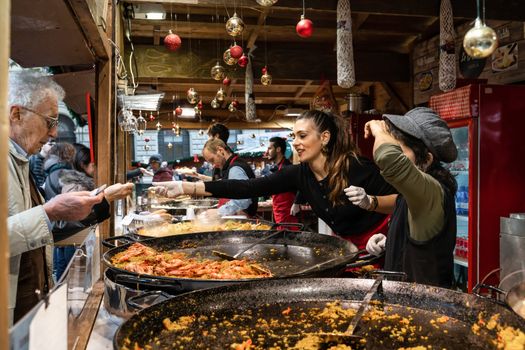
The Secret Ingredient: Unearthing Food Festivals Locals Don't Want Tourists To Know
I remember my first real food festival revelation. It wasn't in a bustling European capital or a well-advertised culinary event. It was in a tiny, sun-drenched village in Umbria, Italy, during a travel mishap that turned into a gastronomic miracle. My rented Fiat had chosen a particularly inopportune moment to break down, stranding me in a place called Montefalco. As I waited for assistance, a faint, tantalizing aroma – a mix of roasted pork, pungent truffles, and rich red wine – wafted through the cobblestone streets. Following my nose, I stumbled upon a 'Sagra del Maiale' – a local festival celebrating pork. There were no English signs, no tourist buses, just joyous locals, overflowing wine carafes, and the most incredible porchetta I’ve ever tasted, carved right off a spit. It wasn't in any guidebook. It was a local secret, and it changed how I travel forever.
That day, I learned a crucial lesson: the best food experiences aren't always in the spotlight. They're often tucked away, cherished by the communities that host them, offering a raw, unfiltered taste of local culture and cuisine. These are the festivals where grandmothers share ancient recipes, where local farmers showcase their prized produce, and where the atmosphere is thick with genuine camaraderie, not just selfie sticks.
At Tripsora, we believe in authentic travel, and for foodies, that means going beyond the obvious. It means seeking out the culinary heart of a destination, even if it's a little off the beaten path. So, put down that mainstream festival guide. I’ve scoured the globe, followed whispers, and savored countless hidden delights to bring you this curated list. These are the food festivals worth planning an entire trip around – the ones so good, the locals almost want to keep them to themselves. But don't worry, I'm sharing the secrets with you. Just promise to be a respectful, appreciative guest, and maybe don't tell everyone.
1. The Pungent Paradise: Sagra del Tartufo Bianco (White Truffle Festival) – Acqualagna, Italy
Forget the glitz and crowds of Alba. While the Piedmontese town is famous for its white truffles, for a truly immersive, less-touristy experience, head south to Acqualagna in Le Marche, Italy. This unassuming town, nestled in the Apennine foothills, is considered the "Capital of Truffle," producing more than two-thirds of Italy's national truffle yield. Their annual White Truffle Festival, typically held over a few weekends in late October and early November, is a celebration where the truffle is king, but the atmosphere remains wonderfully local and intimate.
I first heard about Acqualagna from a nonna at a tiny trattoria in Florence, who, after several glasses of Sangiovese, confessed that "real truffle lovers go south." Intrigued, I booked a train ticket. What I found was a town completely dedicated to the elusive tuber. The air itself hums with the earthy, musky scent. You'll find genuine truffle hunters (tartufai) with their trusty dogs, eager to share stories (if you can bridge the language barrier, a few Italian phrases go a long way!).
The Experience: Beyond the main market, where you can buy truffles directly from the hunters (expect to pay €3-€6 per gram, depending on the season and quality), the magic happens in the side streets and pop-up eateries. Restaurants offer special truffle menus, but the real gems are the smaller stands serving truffle-infused everything: tagliolini al tartufo (simple pasta with butter and shaved truffle), fried eggs with truffle, truffle focaccia, and even truffle-flavored gelato (surprisingly delicious!). My most memorable bite was a simple bruschetta, drizzled with local olive oil and generously shaved with fresh white truffle, enjoyed while standing next to a roaring outdoor fire, a glass of robust Rosso Conero in hand. It felt like being part of a family gathering, not a public event.
Practical Tips:
- When to Go: Late October to early November. Check the official Acqualagna website (typically in Italian) for exact dates.
- Getting There: Fly into Ancona (AOI) or Perugia (PEG), then rent a car. Acqualagna is best explored with your own transport.
- Accommodation: Book a small agriturismo in the surrounding countryside for an authentic stay. They often offer truffle-themed dinners.
- Language: While some vendors might speak basic English, knowing a few Italian phrases ("Vorrei..." - I would like..., "Quanto costa?" - How much does it cost?) will greatly enhance your experience.
- Don't Miss: Take a guided truffle hunt with a local tartufaio. Many local tour operators or agriturismi can arrange this. It's a fascinating insight into the tradition.
2. Briny Bliss on the Coast: Oysterfest on the Olympic Peninsula – Shelton, Washington, USA
When most people think of West Coast seafood, they picture Seattle's Pike Place Market. But for those in the know, the real treasure lies hidden further west, on the rugged shores of the Olympic Peninsula. The OysterFest in Shelton, Washington, specifically at the Port of Shelton, is a local institution, a celebration of all things shellfish, particularly the Puget Sound oyster. Held annually in early October, it's a paradise for mollusk lovers, drawing crowds from across the Pacific Northwest, but rarely making it onto international "must-do" lists.
I stumbled upon OysterFest while on a road trip seeking out the less-traveled corners of Washington State. A local at a coffee shop in Port Angeles, seeing my interest in seafood, scribbled "OysterFest - Shelton" on a napkin, adding with a wink, "It's where we go for the real deal." He wasn't wrong.
The Experience: This isn't a fancy, white-tablecloth affair. It's a down-to-earth, muddy-boots kind of festival, smelling of the sea, woodsmoke, and craft beer. Dozens of local oyster farms set up stalls, offering every imaginable variety: Kumamotos, Olympias, Pacifics, Shigokus – raw on the half shell, grilled with garlic butter, fried into crispy po'boys, or baked with cheese. The highlight is the West Coast Oyster Shucking Championship, where competitors furiously shuck dozens of oysters against the clock, a mesmerizing display of skill. My favorite memory is sitting on a hay bale, a dozen freshly shucked Fanny Bay oysters in front of me, a squeeze of lemon, and a pint of local IPA, watching the grey Puget Sound waters. The freshness is unparalleled; these oysters were likely harvested just hours before. Prices are incredibly reasonable, with a half-dozen raw oysters often costing around $10-$15.
Practical Tips:
- When to Go: Early October. Check the official OysterFest website for exact dates.
- Getting There: Shelton is about a 1.5-hour drive southwest of Seattle. Renting a car is essential for exploring the beautiful Olympic Peninsula.
- Accommodation: Book well in advance, as local hotels fill up. Consider staying in nearby Olympia or Hoodsport for more options.
- What to Bring: Wear comfortable, waterproof shoes. It can be muddy! And bring an appetite for oysters.
- Beyond Oysters: While oysters are the star, you'll also find clams, mussels, crab, and other local seafood, along with craft beer and wine tents.
3. The Soul of Mexico: Festival del Mole y la Enchilada – San Pedro Atocpan, Mexico City
Mexico City is a sprawling metropolis, a vibrant tapestry of culture and cuisine. But for a taste of its soul, an experience that dives deep into one of Mexico's most iconic and complex dishes, you need to leave the tourist zones and head south. San Pedro Atocpan, a pueblo magico (magic town) within the greater Mexico City area, is renowned as the "Mole Capital of the World." Its annual Festival del Mole y la Enchilada, usually held from late September to mid-October, is a pilgrimage for serious food lovers, a joyous celebration of the rich, intricate sauces that define Mexican gastronomy.
I first heard about this festival from a taxi driver in Roma Norte. He scoffed at my suggestion of visiting a popular tourist market for mole. "No, no," he insisted, "you must go to Atocpan. That is where the real mole lives." Following his advice, I navigated the city's extensive metro and then a local bus, feeling like I was truly venturing into the heart of local life.
The Experience: San Pedro Atocpan is home to over 90% of Mexico's mole production, and during the festival, the entire town transforms into a sensory explosion. The air is thick with the aroma of chilies, chocolate, nuts, and spices. Dozens of stands offer different varieties of mole – mole poblano, mole negro, mole rojo, mole verde, pipián, adobo – each with its own secret family recipe, often passed down through generations. You can taste samples, buy jars of paste to take home, and, of course, feast on dishes drenched in these glorious sauces.
My personal favorite was a simple plate of enchiladas de mole poblano, served with fresh cheese and a dollop of crema, eaten at a communal table where a local family proudly explained the 30+ ingredients in their grandmother's recipe. The depth of flavor, the perfect balance of sweet, spicy, and savory, was unlike anything I'd tasted before. It's a vibrant, noisy, colorful affair, filled with mariachi music, traditional dances, and families enjoying a cherished tradition. Expect to pay around 100-200 MXN for a generous plate of mole.
Practical Tips:
- When to Go: Late September to mid-October. Check local Mexico City event listings for exact dates.
- Getting There: San Pedro Atocpan is about an hour's drive south of central Mexico City. Public transport (metro to Tasqueña, then a local bus) is an adventure, or a taxi/ride-share can take you directly.
- Language: Spanish is essential here. Brush up on your basic phrases!
- What to Buy: Don't leave without a few jars of mole paste. Vendors will often vacuum-seal them for travel.
- Be Adventurous: Try as many different mole varieties as you can. Each family's recipe is unique.
4. Lantern-Lit Bites: Hoi An Lantern & Street Food Festival – Hoi An, Vietnam (The Local's Guide)
Hoi An is undoubtedly a popular tourist destination, famous for its ancient town, tailor shops, and glowing lanterns. But beneath the well-trodden paths lies a street food scene so vibrant and authentic, even many tourists miss its true depth. The Hoi An Lantern Festival, which technically happens every full moon, transforms the town, but it's during these evenings that the local street food festival truly comes alive, a culinary spectacle often overlooked amidst the lantern-gazing. The secret isn't if you go, but how and where you eat.
My first visit to Hoi An was a whirlwind of tourist attractions. It wasn't until a local cyclo driver, Mr. Nam, insisted on taking me "where the real food is" that I discovered the hidden gems. He navigated me away from the main riverside stalls to a maze of side alleys and unassuming courtyards.
The Experience: While the main riverfront bustles with tourists, venture into the smaller lanes, particularly around the An Hoi Islet and the areas further from the Japanese Bridge. This is where you'll find the truly local vendors, often operating out of their homes or small, makeshift stalls. Look for the places with plastic stools and a crowd of Vietnamese families. The aromas are intoxicating: grilling pork skewers, simmering pho broth, fresh herbs, and sizzling banh xeo.
My most cherished memory is discovering a tiny stall specializing in Bánh Mì Phượng (not the famous one, but a lesser-known family operation near the market) and a Cơm Gà (chicken rice) vendor tucked away on a side street. Later, I found a woman making Cao Lầu (Hoi An's signature noodle dish) in a courtyard, using noodles supposedly made with water from a specific ancient well, a secret passed down through generations. The chewy noodles, slices of char siu pork, fresh greens, and crispy crackling were a symphony of textures and flavors, costing a mere 30,000-50,000 VND. The beauty of Hoi An's "secret" festival is that it's an ongoing, nightly celebration for those who know where to look.
Practical Tips:
- When to Go: Every full moon, but any evening is good for street food. The full moon festival enhances the atmosphere.
- Getting There: Fly into Da Nang (DAD), then a 45-minute taxi or shuttle to Hoi An. The ancient town is walkable.
- Accommodation: Stay within the ancient town or just outside for easy access to the evening food scene.
- Embrace the Stools: Don't be shy about sitting on the tiny plastic stools. It's part of the authentic experience.
- Ask Locals: Engage with your hotel staff, cyclo drivers, or shopkeepers for their personal favorite food stalls. They'll often point you to the best, most authentic spots.
- Must-Try Dishes: Cao Lầu, Mì Quảng, Bánh Xèo, Bánh Bao Bánh Vạc (white rose dumplings), and the lesser-known Cơm Gà.
5. The Black Pearl of Kyushu: Kagoshima Kurobuta Matsuri (Black Pork Festival) – Kagoshima, Japan
When most people plan a food trip to Japan, their minds immediately go to Tokyo's sushi, Osaka's takoyaki, or Kyoto's kaiseki. But for an entirely different, incredibly rich culinary experience, head south to Kagoshima Prefecture on the island of Kyushu. This region is famed for its "Kurobuta" (black pork), a heritage breed known for its exceptional tenderness, marbling, and deep flavor. The Kagoshima Kurobuta Matsuri, usually held in late October or early November, is a celebration of this prized meat, a local affair that rarely sees foreign tourists, offering a truly authentic taste of regional Japanese cuisine.
I learned about Kagoshima Kurobuta from a Japanese friend who grew up there. He spoke of it with a reverence usually reserved for national treasures. "Forget wagyu," he said, "you haven't lived until you've had our Kurobuta." He convinced me to join him for the festival, promising an experience far removed from the tourist crowds.
The Experience: The festival takes place in various locations around Kagoshima City, often at local parks or exhibition centers. It's a bustling, family-friendly event where local farmers and restaurants showcase their best Kurobuta. You'll find every conceivable preparation: succulent Kurobuta tonkatsu (crispy fried pork cutlet), tender shabu-shabu (thinly sliced pork briefly boiled in broth), flavorful Kurobuta ramen, and even Kurobuta sausages and dumplings. The highlight for me was a stall serving grilled Kurobuta skewers, seasoned simply with salt and pepper, allowing the incredible flavor of the pork to shine through. Each bite was melt-in-your-mouth perfection, a testament to the quality of the meat. Prices for dishes typically range from 800-2000 JPY.
Beyond the food stalls, there are often cooking demonstrations, local produce markets, and cultural performances, all contributing to a vibrant, community-focused atmosphere. It’s a chance to see a different side of Japan, one that celebrates its agricultural heritage with immense pride.
Practical Tips:
- When to Go: Late October to early November. Check local Kagoshima tourism sites for exact dates.
- Getting There: Fly into Kagoshima Airport (KOJ) or take the Shinkansen (bullet train) from major cities like Fukuoka.
- Accommodation: Stay in Kagoshima City. Book early, especially if traveling during peak season.
- Language: While Japan is generally easy to navigate, English might be less common here. Have Google Translate ready or learn a few basic Japanese phrases.
- Explore Beyond the Festival: While in Kagoshima, visit Sakurajima volcano, Sengan-en Garden, and enjoy a traditional onsen (hot spring) experience.
6. Galloping Gourmands: Feira Nacional do Cavalo e Feira da Golegã (Horse & Gastronomy Fair) – Golegã, Portugal
Portugal is renowned for its fresh seafood, pastel de nata, and vinho verde. But for a truly unique cultural and culinary immersion, far from the tourist-packed streets of Lisbon and Porto, head to the small town of Golegã in the Ribatejo region. Every November, Golegã hosts the Feira Nacional do Cavalo (National Horse Fair), often referred to as the "Capital do Cavalo." What many don't realize is that this isn't just a horse fair; it's a parallel gastronomy fair (Feira da Golegã), a vibrant celebration of hearty Portuguese food, local wines, and a deep-seated rural tradition. It's a spectacle of horsemanship, traditional attire, and incredibly delicious, rustic food.
I discovered Golegã through a friend who is an equestrian enthusiast. She raved about the horses, but it was her descriptions of the food – the roasted meats, the rich stews, the endless wine – that truly captured my attention. I arrived expecting horses, but left enchanted by the food and the atmosphere.
The Experience: The fair typically runs for about 10 days in early to mid-November. The daytime is dominated by majestic Lusitano horses, riders in traditional garb, and equestrian displays. But as evening falls, the focus shifts to the "tasquinhas" – temporary taverns and restaurants that pop up all over town. These aren't just food stalls; they're full-fledged, bustling eateries, often run by local families, serving generous portions of regional specialties.
Imagine walking through narrow, lantern-lit streets, the scent of woodsmoke and roasting meat heavy in the air, the sound of fado music drifting from a nearby tasquinha. I remember a particularly memorable evening at a packed tasquinha, sharing a table with a lively Portuguese family. We feasted on "cozido à Portuguesa" (a rich stew of various meats and vegetables), "bacalhau assado" (roasted cod), and "ensopado de borrego" (lamb stew), all washed down with copious amounts of robust local red wine from the Ribatejo region. The portions were enormous, the flavors comforting and authentic, and the bill surprisingly small – around €15-€25 per person for a full meal with wine. It's a truly immersive experience, a glimpse into Portugal's rural heart.
Practical Tips:
- When to Go: Early to mid-November. Check the official Feira da Golegã website for exact dates, which vary slightly each year.
- Getting There: Golegã is about a 1.5-hour drive north of Lisbon. Renting a car is highly recommended for flexibility.
- Accommodation: Book well in advance! Golegã is a small town, and accommodation fills up quickly. Consider staying in nearby Santarém or Tomar.
- Dress Code: While not strictly enforced for visitors, many locals dress in traditional riding attire. Comfortable walking shoes are a must.
- Embrace the Atmosphere: It's loud, it's crowded, it's vibrant. Be prepared to share tables and soak in the festive energy.
- Beyond the Fair: Explore the charming town of Golegã and the surrounding Ribatejo region, known for its bullfighting traditions and vast agricultural landscapes.
Your Next Culinary Quest Awaits!
These hidden gems are more than just food festivals; they're windows into the soul of a culture, offering unparalleled authenticity and flavor. They require a little more effort, a bit more planning, and perhaps a willingness to step outside your comfort zone, but I promise you, the rewards are immeasurable. You'll leave with a full belly, a heart full of memories, and a deeper appreciation for the world's diverse culinary tapestry.
So, what are you waiting for? Stop scrolling through generic travel guides and start planning your next great gastronomic adventure. Seek out the local whispers, follow your nose, and prepare to discover flavors so incredible, you might just want to keep them a secret yourself.
Which of these hidden festivals sparks your wanderlust? Share your thoughts in the comments below, and if you have a secret food festival you've discovered, spill the beans (or the truffles!) – we'd love to hear about it!
---