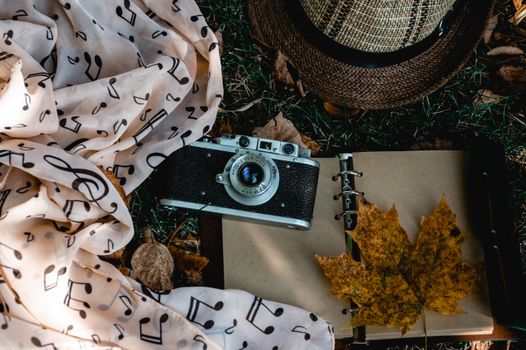
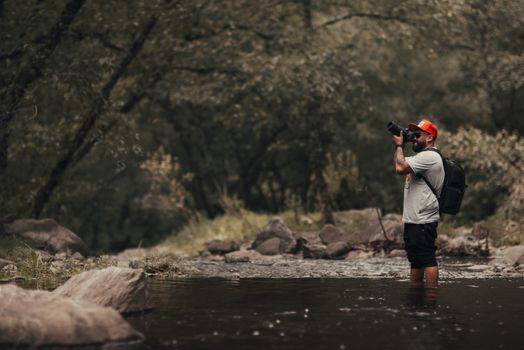
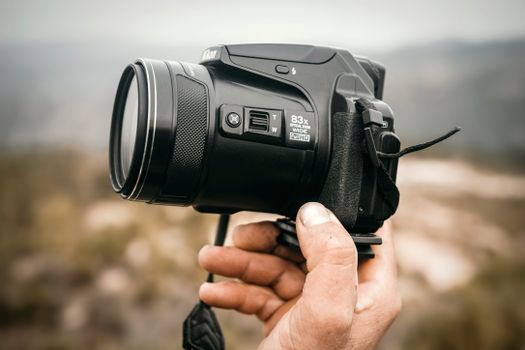
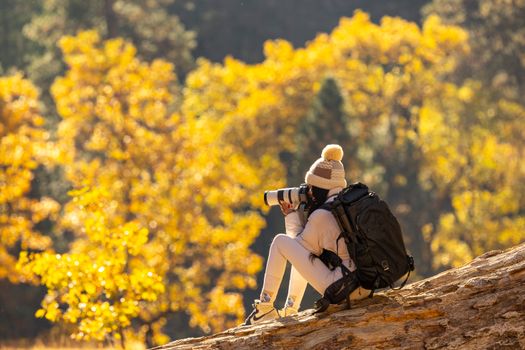
The crisp air, the kaleidoscope of fiery reds, brilliant oranges, and deep golds, the soft, diffused light – there’s truly nothing quite like October. As a travel blogger for Tripsora, I've chased autumn's embrace across continents, from the misty lochs of Scotland to the serene temples of Kyoto. And every single October, without fail, I’m reminded that this month isn’t just a season; it’s a photographer’s dream.
I remember one particularly frustrating October trip a few years back to the Canadian Rockies. The scenery was undeniably epic, but my photos? They were… flat. The vibrant yellows of the aspens looked muted, the dramatic peaks lacked definition, and the moody, misty mornings I’d envisioned capturing turned into blurry, underexposed disappointments. I knew my camera had more potential, but I was stuck in auto-mode purgatory.
That experience was my turning point. I dove headfirst into understanding exposure, light, and composition, vowing never again to let stunning vistas be reduced to mediocre snapshots. And now, as we look ahead to October 2025, I’m thrilled to share everything I’ve learned so you can avoid my past mistakes and truly nail your autumn travel photos. Whether you’re planning to chase fall colors in New England, explore ancient castles under an amber sky in Bavaria, or simply capture your local park in its autumnal glory, this guide is your essential toolkit.
Forget generic advice; we’re talking specific settings, practical tips, and a sprinkle of personal anecdotes to make sure your October 2025 travel photos are nothing short of spectacular. Let’s dive in!
The Golden Touch: Understanding October’s Unique Light (and How to Master It)
October light is a photographer’s secret weapon. Unlike the harsh midday sun of summer, autumn light is often softer, lower in the sky, and casts longer, more dramatic shadows. This creates a magical dimension that can make your photos sing – if you know how to work with it.
Golden Hour: This is your prime time, roughly an hour after sunrise and an hour before sunset. The light is warm, soft, and casts a beautiful golden glow on everything. For October, this effect is even more pronounced, making those fiery leaves truly pop. I’ve found that shooting during golden hour in places like Vermont's Smugglers' Notch or Japan's Arashiyama Bamboo Grove transforms an already beautiful scene into something ethereal.
- Tip for October 2025: Plan your day around these times. Use apps like PhotoPills or The Photographer's Ephemeris to pinpoint exact golden hour times for your specific location. Scout your spots during the day, then return when the light is perfect.
- Anecdote: I once arrived at a stunning overlook near Stowe, Vermont, just as the sun dipped below the horizon, missing the golden hour entirely. The shot was still nice, but the next morning, waking up at 5:30 AM to catch the sunrise golden hour transformed the exact same view into a vibrant masterpiece. Never again will I underestimate those precious minutes!
Blue Hour: The period just after sunset or just before sunrise, when the sky turns a deep, rich blue. This light is fantastic for cityscapes, landscapes with artificial lights, or creating moody, atmospheric shots. The cool tones provide a beautiful contrast to any lingering warm colors from the day or artificial lights.
- Setting Suggestion: During blue hour, you'll need to increase your ISO (more on that later) or use a longer shutter speed with a tripod to capture enough light. A slightly cooler white balance (around 4000-5000K) can enhance the blue tones.
- Actionable Advice: Don't pack up your gear immediately after sunset! Stay for another 20-30 minutes and you might capture some of your most dramatic shots.
Overcast Days: Don’t let a cloudy forecast deter you! Overcast days provide a giant softbox in the sky, offering beautifully diffused light that's perfect for intimate forest scenes, portraits, and macro shots of individual leaves. The colors will be rich and saturated without harsh shadows.
- Tip: Use a polarizing filter (CPL) on overcast days to reduce glare on wet leaves and intensify colors. More on filters later!
Mastering the Exposure Triangle: Your Key to Autumn Vibrancy
The exposure triangle – Aperture, Shutter Speed, and ISO – is the foundation of photography. Understanding how these three work together is crucial for capturing the dynamic beauty of October.
1. Aperture (f-stop): Controlling Depth of Field and Light
Aperture controls how much light enters your lens and, crucially, your depth of field (how much of your image is in focus).
- For Sweeping Landscapes (like the Dolomites in October): You’ll want everything from the foreground foliage to the distant peaks to be sharp. Use a small aperture (large f-number), typically f/8 to f/16. This ensures a deep depth of field.
- Example: Shooting the iconic Tre Cime di Lavaredo in October 2025, an f/11 aperture will ensure the vibrant larch trees in the foreground and the majestic peaks in the background are both tack sharp.
- For Portraits or Detail Shots (like a single vibrant leaf or a cozy café scene): You want to isolate your subject and create a creamy, blurred background (bokeh). Use a large aperture (small f-number), typically f/1.8 to f/4.
- Example: Capturing a friend sipping a pumpkin spice latte in a charming café in Prague, an f/2.8 will beautifully separate them from the bustling background. Or, a close-up of a dewy, red maple leaf with a blurred forest behind it – f/2.0 is your friend.
- Practical Tip: When shooting landscapes, try to find your lens's "sweet spot" – usually 2-3 stops from its widest aperture. For an f/4 lens, f/8 might be incredibly sharp.
2. Shutter Speed: Freezing Motion or Capturing Flow
Shutter speed dictates how long your camera's sensor is exposed to light, directly affecting how motion is captured.
- Freezing Action (e.g., a squirrel burying nuts, a person walking, choppy water): You need a fast shutter speed (e.g., 1/250s or faster). This will ensure your subject is sharp and free of motion blur.
- Anecdote: I was once trying to capture a playful fox darting through the vibrant woods of Bavaria. My initial shots were blurry messes until I bumped my shutter speed to 1/500s. Suddenly, I had crisp, dynamic images of its fiery red fur against the golden leaves.
- Capturing Motion Blur (e.g., silky waterfalls, misty rivers, light trails): You need a slow shutter speed (e.g., 1/2s to 30s or longer). You’ll absolutely need a tripod for this to keep the rest of your image sharp.
- Example: The cascading waterfalls of Plitvice Lakes National Park in Croatia, particularly stunning in autumn, demand a slow shutter speed (0.5-2 seconds) to create that dreamy, silky water effect.
- Handheld Rule: As a general rule of thumb, to avoid camera shake when shooting handheld, your shutter speed should be at least 1/focal length. So, if you're shooting with a 50mm lens, aim for 1/50s or faster. For telephoto lenses, this becomes even more critical.
3. ISO: Managing Light Sensitivity
ISO determines your camera sensor's sensitivity to light.
- Bright Conditions (Daylight, Golden Hour): Keep your ISO low (ISO 100-400) for the cleanest, most noise-free images. This ensures maximum detail and color accuracy.
- Low Light Conditions (Blue Hour, Indoors, Forest Canopy): You’ll need to increase your ISO (ISO 800-3200 or higher) to get a proper exposure without sacrificing too much shutter speed or aperture.
- Caution: Higher ISOs introduce "noise" (graininess) into your photos. Modern cameras (like the Sony A7R V, Canon EOS R5, or Fujifilm X-T5, which will be staples in 2025) handle high ISOs much better than older models, but it’s still best to keep it as low as possible.
- Workflow Tip: Prioritize aperture and shutter speed first, then adjust ISO as needed to achieve a balanced exposure. Think of ISO as your last resort, especially if you want to print large.
White Balance & Color Science: Capturing True Autumn Vibrancy
One of the biggest challenges in autumn photography is accurately capturing those rich, warm colors. Your camera’s "Auto White Balance" (AWB) often tries to neutralize warm tones, which can make your vibrant reds and oranges look dull or washed out.
- Go Manual or Preset:
- "Cloudy" or "Shade" Presets: These settings often add a touch of warmth, which can be perfect for enhancing autumn colors, even on sunny days.
- Custom White Balance (CWB): For ultimate accuracy, take a picture of a neutral gray card or a white object in your scene, then set your custom white balance based on that.
- Kelvin Temperature: This is my preferred method for precision.
- For sunny autumn days: Try setting Kelvin to 5500-6500K to preserve the natural warmth.
- For overcast days or to enhance warmth: Bump it up to 7000-8000K. This will make the reds and oranges pop even more.
- Shoot in RAW! This is non-negotiable for serious photographers. RAW files capture all the data from your camera's sensor, giving you immense flexibility to adjust white balance and colors precisely in post-processing without degradation. JPEG files compress this information, limiting your editing potential.
- Personal Experience: I once spent a morning shooting vibrant maples along the Kamo River in Kyoto, only to realize my white balance was off. Because I shot in RAW, a quick tweak in Lightroom brought back all the incredible reds and oranges I remembered. If I'd shot JPEG, those colors would have been lost forever.
Composition & Focus: Making Your Autumn Shots Stand Out
Beyond settings, how you compose and focus your shot determines its impact.
Compositional Elements:
- Rule of Thirds: Imagine a tic-tac-toe grid over your image. Place your main subject or points of interest along these lines or at their intersections. This creates a more balanced and engaging image than simply centering everything.
- Leading Lines: Use natural lines (paths, fences, tree branches, rivers) to draw the viewer's eye into and through your photograph. A winding autumn road disappearing into a forest of golden trees is a classic example.
- Framing: Use elements in the foreground (tree branches, arches, windows) to frame your main subject, adding depth and context.
- Symmetry & Patterns: Look for reflections in water or repeating patterns in foliage.
- Negative Space: Don't be afraid of empty space! It can make your subject stand out and create a sense of calm.
Focusing Techniques:
- Single-Point AF: For precise focus on a specific leaf, a person, or a distant peak. Move your focus point to exactly where you want sharpness.
- Continuous AF (AI Servo/AF-C): Essential for moving subjects like wildlife, children, or a flowing river. Your camera will continuously adjust focus as the subject moves.
- Back Button Focus: Assign focusing to a button on the back of your camera (e.g., AF-ON). This separates focusing from the shutter button, allowing you to focus once and then recompose without refocusing, or to easily switch between continuous and single-shot focus. It's a game-changer!
- Focus Stacking (Advanced): For extreme depth of field in landscapes, take multiple shots focused at different distances and blend them in post-processing. This ensures everything from the closest leaf to the furthest mountain is razor-sharp.
Essential Gear & Accessories for Your October 2025 Adventure
Your camera body is just the start. A few key accessories can dramatically improve your autumn photography.
- Lenses:
- Wide-angle (e.g., 16-35mm, 24-70mm): Perfect for expansive landscapes and capturing the sheer scale of fall foliage.
- Telephoto (e.g., 70-200mm, 100-400mm): Great for isolating distant details, compressing scenes, and capturing wildlife.
- Prime Lens (e.g., 50mm f/1.8, 85mm f/1.4): Excellent for portraits, low light, and incredible bokeh.
- Tripod: Non-negotiable for sharp landscapes (especially with smaller apertures), long exposures (silky water!), blue hour shots, and HDR bracketing. I highly recommend a sturdy, lightweight carbon fiber tripod like those from Manfrotto or Peak Design. Expect to invest $150-$400 for a good quality travel tripod.
- Filters:
- Circular Polarizer (CPL): My #1 filter for autumn. It reduces glare on wet leaves and water, deepens blue skies, and saturates colors without post-processing. A good quality CPL from brands like Hoya or B+W will cost around $80-$200 depending on your lens size.
- Neutral Density (ND) Filter: Essential for long exposures in brighter conditions (e.g., creating silky water during the day).
- Extra Batteries: Cold October weather can drain batteries faster. Always carry at least two spares.
- Plenty of Memory Cards: Shoot RAW, and you'll fill cards quickly. I recommend several high-speed, high-capacity cards (e.g., 128GB or 256GB SDXC cards).
- Weather-Sealed Bag & Rain Cover: October weather can be unpredictable. Protect your gear from unexpected showers or mist.
- Lens Cloths & Air Blower: Keep your lenses clean – smudges are amplified in autumn light.
Post-Processing & Sharing: Bringing Your Vision to Life
The magic doesn't stop when you click the shutter. Post-processing is where you refine your vision and make your images truly shine.
- Software: Adobe Lightroom Classic (my go-to), Capture One, or even free options like GIMP or RawTherapee. For mobile editing, Snapseed, VSCO, or Lightroom Mobile are excellent.
- Key Adjustments:
- White Balance: Fine-tune the warmth/coolness.
- Exposure & Contrast: Brighten shadows, deepen blacks, add punch.
- Highlights & Shadows: Recover detail in blown-out highlights or deep shadows.
- Vibrance & Saturation: Use vibrance to subtly boost colors without making them look artificial. Use saturation sparingly.
- Sharpening: Enhance detail, especially after resizing for web.
- Noise Reduction: If you had to use a high ISO, apply noise reduction carefully.
- Less is More: Aim for natural enhancements. Don't over-process; let the inherent beauty of October shine through.
- Sharing for October 2025:
- Instagram: Crop to 4:5 for maximum screen real estate. Use relevant hashtags like #OctoberVibes #FallFoliage #AutumnPhotography #Travel2025 #Tripsora #GoldenHour. Geotag your stunning locations!
- Blog/Website: Optimize images for web (reduce file size, add alt text for SEO).
- Prints: Don't forget to print your favorite shots! There's nothing like a physical reminder of your adventures.
October 2025 Hotspots & Their Unique Photo Challenges
Ready to plan your October 2025 adventure? Here are a few destinations I adore for autumn photography, along with some specific considerations:
- New England, USA (e.g., Vermont, New Hampshire, Maine): The quintessential fall foliage destination.
- Challenge: Crowds can be intense, especially on weekends. Light varies wildly from brilliant sunshine to misty rain.
- Tip: Get up early to beat the crowds and catch that magical morning light. Explore back roads for hidden gems. Consider a polarizer to cut glare from wet leaves after a morning dew.
- Kyoto, Japan: Traditional temples, zen gardens, and vibrant maples (momiji) create an unparalleled aesthetic.
- Challenge: Extremely popular, especially at famous sites like Kiyomizu-dera or Tofuku-ji. Respect local customs and other visitors.
- Tip: Focus on details – a single branch against a temple roof, reflections in a pond. Visit less-known temples or gardens for a more serene experience. Blue hour shots of illuminated temples are breathtaking.
- Bavaria, Germany (e.g., Bavarian Alps, Neuschwanstein Castle): Dramatic mountains, fairytale castles, and golden larch trees.
- Challenge: Weather can be unpredictable, with sudden shifts from sunny to cloudy to light snow.
- Tip: Be prepared for all conditions. A sturdy tripod is essential for capturing the grandeur of the Alps. Look for reflections of castles in lakes for iconic shots.
- Scottish Highlands, UK: Rugged landscapes, ancient forests, and dramatic skies.
- Challenge: Frequent mist, rain, and low light. Can be very moody but also challenging for exposure.
- Tip: Embrace the mood! Use slower shutter speeds for misty rivers and lochs. Focus on texture and atmosphere. A good weather-sealed camera and lens are a must here.
Conclusion: Your October 2025 Photo Adventure Awaits!
October 2025 is more than just another month; it’s an invitation to capture some of the most stunning natural beauty our planet offers. From the fiery embrace of autumn foliage to the soft, golden light that bathes ancient cities, every moment is a potential masterpiece waiting to be framed.
Remember, photography is a journey of continuous learning and experimentation. Don't be afraid to step out of auto mode, tweak those settings, and try new compositions. The tips and techniques shared here are your starting point, not rigid rules. Your unique eye and perspective are what will truly make your photos stand out.
So, pack your bags, charge your batteries, and get ready to chase that incredible October light. What breathtaking destination are you dreaming of for October 2025? Where will you apply these camera settings to capture your perfect travel photos?
Share your dream October 2025 destination and one camera setting you're excited to master in the comments below! And don't forget to tag #Tripsora and #October2025Photos when you share your incredible shots on social media! Happy shooting!
---