The Silent Revolution: Why June 2026 Belongs to the Pedestrian
I stepped off the train at Ljubljana’s central station, braced for the usual urban assault of diesel exhaust, screeching brakes, and the defensive posture one must adopt in any major transit hub.
Instead, I was hit by the scent of freshly cut grass, damp river stone, and the rich, nutty aroma of roasted pumpkin seed oil wafting from a nearby open-air market stall. No engines roared. No horns blared. The only sound was the low hum of bicycle tires on smooth granite, the chatter of outdoor diners, and the occasional chime of a tram.
This is not a utopian simulation. This is the reality of urban travel in June 2026.
For decades, cities were designed for cars, with humans treated as an afterthought. But a quiet revolution has reached its tipping point. Forward-thinking municipalities across Europe and beyond have reclaimed their streets, transforming congested asphalt corridors into open-air living rooms.
Visiting these destinations isn't just a win for the planet; it completely redefines the travel experience. Without the physical and mental barrier of traffic, your senses wake up. You look up at the architecture rather than down at the curb. You walk slower, discover more, and actually connect with the places you visit.
If you are planning a getaway for June 2026—when the late-spring weather is warm but not oppressive—these six car-free pioneers should be at the absolute top of your list.
---
1. Pontevedra, Spain: The Blueprint of the Car-Free Movement
``` +-------------------------------------------------------------+ | "Without cars, the city belongs to the children, the | | elderly, and the epicureans who want to drink Albariño | | in the middle of the street." — Miguel Anxo Fernández Lores | +-------------------------------------------------------------+ ```
While other cities are just now experimenting with low-emission zones, this Galician powerhouse banned cars from its 300,000-square-meter historic core back in 1999. The result? A sensory paradise where the only traffic report you'll hear is the clicking of boot heels on ancient granite flagstones.
The Vibe & Architecture
Walking through Pontevedra feels like exploring a private estate. The city’s Gothic and Renaissance plazas—like the iconic, triangular Plaza de la Leña—are bordered by traditional Galician houses with glass-enclosed balconies (galerías).
In June, the air is thick with the scent of grilled sardines and pulpo á feira (octopus sprinkled with sweet pimentón and sea salt) from the open-air pulperías. Because there are no delivery trucks or sedans to dodge, the entire old town functions as a massive, interconnected patio.
The Insider Track
- Pro-Tip: Skip the main tourist offices and download the "Metrominuto" map. It’s a brilliant, transit-style map that shows walking distances and times between major landmarks instead of subway stops.
- The Hidden Entrance: To experience the city like a local, enter the historic quarter via the Rúa Real at exactly 8:30 PM. This is when the evening paseo (social stroll) begins, and the locals gather to chat before dinner.
- What to Eat: Head to O Pulpeiro on Calle Real and order the Galician empanada stuffed with xoubas (small sardines). Wash it down with a cold glass of local, crisp Albariño wine served in a traditional ceramic bowl (cunca).
---
2. Hydra, Greece: Where Time and Tires Don't Exist
``` /\_/\ ( o.o ) - "No engines allowed. Only hooves, paws, and boots." > ^ < ```
In Hydra, the ban on motorized vehicles isn't a modern ecological trend; it is enshrined in local law. Located in the Saronic Gulf, this rugged island permits absolutely no cars, scooters, or even bicycles. Your transit options are simple: your own two feet, a donkey, or a water taxi.
The Vibe & Architecture
Hydra rises like an amphitheater around a crescent-shaped harbor. The architecture is strikingly austere compared to the whitewashed Cyclades; here, you’ll find imposing, gray-stone mansions (archontika) built by wealthy 18th-century shipowners.
In June, wild jasmine and red bougainvillea spill over whitewashed stone walls, casting sweet scents across the steep, labyrinthine alleyways. The harbor is a theater of quiet activity: the gentle clop-clop of mules carrying luggage, the splash of wooden caiques arriving with fresh fish, and the murmur of travelers sipping iced frappés by the water.
The Insider Track
- Pro-Tip: To escape the harbor crowds, hike the stone path up to the Monastery of Prophet Elias at 7:00 AM. The climb takes about an hour, but you’ll beat the midday Greek sun and have a panoramic view of the Aegean Sea entirely to yourself.
- The Hidden Entrance: Skip the crowded beaches near the port. Walk 20 minutes west along the coastal path to the tiny coastal village of Kamini. Look for a small, unmarked stone archway next to the red-roofed church; it leads down to a secluded pebble cove where the water is as clear as liquid glass.
- Local Secret: Buy a box of amigdalota (traditional pear-shaped almond cookies dusted with powdered sugar) from Tsangaris, a bakery that has used the same recipe since 1930.
---
3. Ljubljana, Slovenia: The Emerald Heart of Europe
In 2007, Ljubljana’s visionary mayor closed the entire historic center to motor vehicles. Initially met with protests, the project transformed the Slovenian capital into one of the most liveable, greenest, and visually stunning cities on the continent.
The Vibe & Architecture
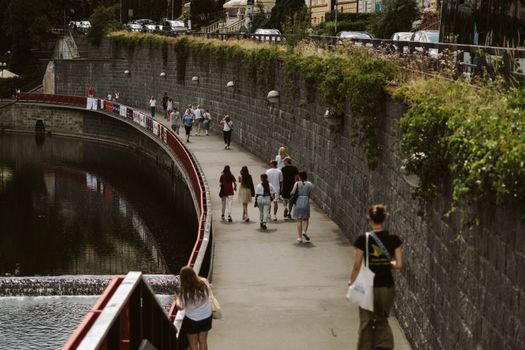
The city’s aesthetic is dominated by the playful, classical-meets-modernist architecture of Jože Plečnik. His masterpieces, including the Triple Bridge (Tromostovje) and the colonnaded Central Market, frame the emerald-green Ljubljanica River.
Willow trees drape over the water, and in June, the riverbanks are lined with sun loungers and cafe tables. If you get tired of walking, you can hail a Kavalir—a fleet of small, green, electric-powered vehicles that transport tourists and locals around the pedestrian zone completely free of charge.
The Insider Track
- Pro-Tip: Avoid the steep funicular to Ljubljana Castle. Instead, walk up the winding, cobblestone Reber Street. It’s a narrow, medieval alleyway that offers peepholes of the city’s terracotta roofs between historic timber-framed houses.
- The Hidden Entrance: Underneath the Mesarski Most (Butchers' Bridge), there is a small dock. At 6:00 PM, you can rent a stand-up paddleboard (SUP) and glide right through the heart of the historic center, waving to diners on the terraces above.
- What to Taste: Stop at Klobasarna for a quick bite of Kranjska klobasa (Carniolan sausage) served with a dollop of hot horseradish and a fresh hard roll.
---
4. Ghent, Belgium: Medieval Grandeur Meets Low-Emission Magic
``` +-----------------------------------------------------------------+ | Ghent's 2017 Circulation Plan doubled bicycle use and dropped | | nitrogen dioxide levels by 20% in just two years. | +-----------------------------------------------------------------+ ```
While nearby Bruges often steals the tourist spotlight, Ghent offers a far more authentic, energetic experience. In 2017, the city implemented a radical "Circulation Plan" that banned through-traffic and turned the entire core into Europe's largest pedestrian zone.
The Vibe & Architecture
Ghent is a city of dramatic reflections. Gothic towers, guild houses with stepped gables, and the imposing Gravensteen (Castle of the Counts) mirror themselves in the waters of the Lys and Scheldt rivers.
June brings long, northern European twilights. Locals gather on the stone quays of the Graslei and Korenlei, drinking Belgian tripels and eating cuberdons (sweet, cone-shaped raspberry candies with a liquid center). The lack of traffic noise allows the carillon bells of the Ghent Belfry to ring out clearly across the cobblestones.
The Insider Track
- Pro-Tip: Rent a wooden electric boat from Dokano to explore the canals. They provide you with a fishing net so you can help keep the waterways clean while you sightsee, turning your cruise into a fun, eco-friendly mission.
- The Hidden Entrance: Behind an unassuming wooden door on the Kraanlei street lies the entrance to the Patershol neighborhood. This is a labyrinth of 17th-century brick alleys that survived urban renewal and now houses the city's best culinary secrets.
- Local Drink: Skip the tourist pubs and find 't Velootje in the Patershol district. It’s a chaotic, candle-lit bar packed to the ceiling with vintage bicycle frames, run by an eccentric local character.
---
5. Zermatt, Switzerland: Alpine Air and Electric Whispers
High in the Pennine Alps, Zermatt has been car-free since 1947. To prevent pollution from obscuring the view of the iconic, jagged peak of the Matterhorn, only tiny, boxy, whisper-quiet electric vehicles (and horse-drawn carriages) are permitted to operate.
The Vibe & Architecture
Zermatt seamlessly blends ultra-luxury alpine chic with rustic mountain charm. Alongside high-end watch boutiques and Michelin-starred restaurants, you'll find Hinterdorf (the old village), a cluster of more than 30 traditional barns, stores, and stable buildings built between the 16th and 18th centuries out of dark larch wood.
In June, the mountain meadows are carpeted with wildflowers, and the air is incredibly crisp and clean, carrying the scent of pine resin and melting glacier ice.
The Insider Track
- Pro-Tip: Don't pay for the expensive Gornergrat railway if you are on a budget. Instead, take the Matterhorn Express cable car to the Furi station and walk the "Suspension Bridge Trail." It’s an easy, spectacular hike that crosses a 100-meter-high gorge.
- The Hidden Entrance: To find the best view of the Matterhorn at sunrise, head to the Kirchbrücke (Church Bridge) at 5:30 AM. You’ll beat the crowds, and if the sky is clear, you will watch the peak turn a brilliant, glowing pink.
- What to Taste: Cozy up at Restaurant Schäferstube and order the traditional lamb raclette, melted over open wood fires and scraped directly onto your plate.
---
6. Vauban (Freiburg), Germany: The Eco-Utopia of the Future
If you want to see what the future of sustainable living looks like, head to the Vauban district in Freiburg. Built on the site of a former French military base, this eco-neighborhood was designed from the ground up to be "car-free" and "solar-active."
The Vibe & Architecture
Vauban is a masterclass in modern, green architecture. The buildings are painted in bright pastel hues, featuring triple-glazed windows, green roofs, and solar panels that produce more energy than the residents consume.
The streets are wide, tree-lined play areas where children run freely, neighbors garden in communal plots, and bikes reign supreme. A sleek, quiet tram line runs down the center of the main avenue, connecting residents directly to downtown Freiburg in under ten minutes.
The Insider Track
- Pro-Tip: Visit on a Wednesday afternoon when the local Bauernmarkt (farmers' market) takes place on the central square. It’s the best place to mingle with the highly eco-conscious locals and learn about their unique co-housing (Baugruppen) projects.
- The Hidden Entrance: Walk along the Dorfbach, a small, restored stream that runs through the neighborhood. It is lined with wild orchards and community-built wooden benches where you can sit and read in absolute peace.
- Local Secret: Stop by the Kantine Vauban, a community-run organic bistro, and try the Spätzle with mountain cheese and caramelized onions.
---
The Logistics Blueprint: Planning Your June 2026 Escape
To help you budget and plan your car-free summer adventure, we’ve broken down the essential logistics for each destination:
| Destination | Est. Daily Cost ($) | Best Way to Get There | June Weather Temp | Must-Pack Item | | :--- | :--- | :--- | :--- | :--- | | Pontevedra, Spain | $90 - $130 | Train from Santiago de Compostela (30 mins) | 18°C - 24°C | Sturdy leather walking shoes | | Hydra, Greece | $150 - $220 | Ferry from Athens/Piraeus Port (1.5 hours) | 22°C - 30°C | High-SPF mineral sunscreen | | Ljubljana, Slovenia | $100 - $150 | Direct train or bus from Venice or Vienna | 16°C - 25°C | Reusable insulated water bottle | | Ghent, Belgium | $120 - $180 | Direct train from Brussels Airport (1 hour) | 13°C - 21°C | Lightweight rain shell jacket | | Zermatt, Switzerland | $250 - $400 | Matterhorn Gotthard Bahn train from Visp | 8°C - 18°C | Polarized sunglasses | | Vauban, Germany | $110 - $160 | Tram Line 3 from Freiburg Main Station | 14°C - 23°C | Canvas tote bag for markets |
---
The Verdict: Why You’ll Never Go Back
Once you have spent a week waking up to the sound of birdsong instead of garbage trucks, and once you’ve experienced the simple pleasure of walking down the middle of a grand city avenue without looking over your shoulder, your relationship with travel will change forever.
These six destinations aren't just protecting their environments; they are protecting the sanity and joy of the people who live in and visit them. June 2026 is the perfect time to lace up your walking shoes, pack light, and discover just how beautiful the world can be when we step out of the driver's seat.
---