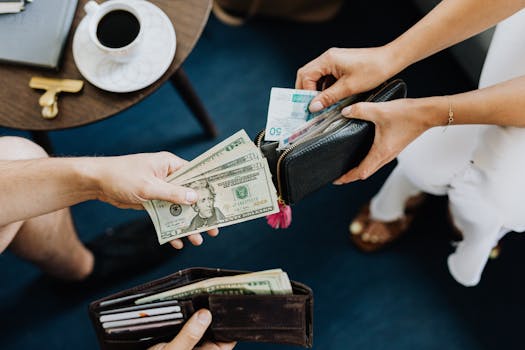
Remember my first solo trip to Europe? Paris. The city of lights, love, and… losing money on currency exchange. I was fresh out of college, armed with a basic debit card, a wad of US dollars, and a naive belief that exchanging money at the airport was just "part of the process." Oh, the horror! I vividly recall standing at a bureau de change in Charles de Gaulle, watching the screen display a rate that felt suspiciously low, then seeing the "commission" fee tacked on. My heart sank. I’d just lost a significant chunk of my precious travel budget before I even saw the Eiffel Tower.
Fast forward over a decade and countless passport stamps later, and I’ve learned a thing or two about navigating the murky waters of international money. What I discovered wasn't just a few minor tweaks; it was a complete overhaul of how I handle money abroad. These aren't just "good ideas"; these are hacks – strategies that banks actively profit from you not knowing, and that some flashy Instagram influencers conveniently gloss over while promoting their sponsored travel cards.
Forget FOMO. Let's talk about FOFO: Fear Of Financial Overcharges. Because once you know these secrets, you’ll never look at an ATM or a payment terminal the same way again. Ready to save hundreds, even thousands, on your next adventure? Let's dive in.
1. The Airport & Hotel Exchange Trap: A Tourist Tax You Can Avoid
Let's get this out of the way immediately: NEVER exchange money at the airport or your hotel. I repeat, NEVER. This is the cardinal sin of currency exchange, the financial equivalent of wearing socks with sandals in Rome (unless you’re going for a specific ironic look, of course). My Paris airport experience was just the tip of the iceberg. I've seen equally egregious rates in Bangkok's Suvarnabhumi Airport, London's Heathrow, and even at small hotel lobbies in rural Vietnam.
Why are they so bad? Simple economics. They know you're a captive audience. You've just landed, you're tired, you need local cash, and convenience trumps common sense. Their exchange rates are abysmal, often coupled with hidden "commission" fees that eat into your cash even further. That €100 you exchanged at the airport might have cost you an extra €10-€15 compared to what you could have gotten elsewhere. Over a two-week trip, that's enough for a delicious multi-course meal or a memorable souvenir.
The Tripsora Hack: Your smartphone is your best friend here. Before you even leave home, download an offline currency converter app (like XE Currency or Currency Converter Plus). Get a rough idea of the interbank rate (the real rate banks use to trade with each other). This will be your benchmark. If an airport or hotel exchange rate is wildly off, walk away. Better yet, don't even approach them. Your first stop for cash should always be an ATM in a reputable bank branch, after you’ve left the airport.
2. Your Secret Weapon: The Zero-Fee Travel Card
This is the single biggest game-changer for international travel money. Forget those "travel money" prepaid cards influencers sometimes hawk (we'll get to those). What you need is a debit or credit card that charges zero foreign transaction fees and, ideally, zero ATM withdrawal fees.
My personal epiphany came after years of racking up 3% foreign transaction fees on every single purchase and withdrawal. I was in Rome, trying to buy a gelato near the Pantheon, and the €5 cost somehow felt like €5.15 on my statement. It adds up! I started researching and discovered a whole new world of banking.
The Tripsora Hack:
- Debit Cards: Look for banks that explicitly offer debit cards with no foreign transaction fees and reimburse ATM fees worldwide. In the US, Charles Schwab Investor Checking is a legendary example. In Europe, options like Revolut, N26, and Wise (formerly TransferWise) offer similar benefits, often with multi-currency accounts. These cards typically use the interbank exchange rate, which is the best you can get. I once withdrew Thai Baht from an ATM in Chiang Mai using my no-fee debit card and compared the rate to a local exchange bureau. My card was almost always better, and I didn't have to carry large sums of cash around.
- Credit Cards: For larger purchases like hotels, rental cars, or fancy dinners, a credit card with no foreign transaction fees is your best bet. Many premium travel rewards cards offer this as a standard perk. Just make sure you pay off your balance in full to avoid interest charges.
- Notify Your Bank: Always inform your bank of your travel dates and destinations to avoid your card being flagged for suspicious activity and frozen. There's nothing worse than having your card declined when you're trying to pay for a gondola ride in Venice!
Pro Tip: Have at least two different cards (from different networks, e.g., Visa and Mastercard) in case one is lost, stolen, or blocked. Keep them in separate places.
3. The DCC Trap: Always Choose Local Currency at ATMs & POS
This is arguably the most insidious currency exchange trick, and it's where banks, payment processors, and even some merchants make a killing. It's called Dynamic Currency Conversion (DCC).
Imagine you're at an ATM in Kyoto, trying to withdraw 10,000 JPY. The screen pops up with a question: "Would you like to be charged in Japanese Yen (JPY) or your home currency (e.g., USD)?" Or you're paying for a delicious pasta dish in Florence, and the card machine asks the same thing.
The Tripsora Hack: ALWAYS choose to be charged in the LOCAL CURRENCY.
If you choose your home currency, the ATM or merchant performs the conversion for you, usually at a terrible, inflated exchange rate, often 5-10% worse than your bank's rate. They pocket the difference. If you choose the local currency, your bank (which hopefully offers a no-fee card with good rates) does the conversion, giving you a much better deal.
I learned this the hard way in Budapest. I was withdrawing Hungarian Forints and, in a moment of distraction, chose "USD" because it felt "easier." Later, checking my statement, I saw a significant difference. It was a small amount, but the principle stuck. Since then, whether it's an ATM in Medellín or a card reader in Berlin, I instinctively select "local currency." This one hack alone can save you significant money over the course of a trip.
Visual Cue: Look for phrases like "Convert to [Your Home Currency]?" or "Guaranteed Rate." These are red flags. Always decline them. The choice might be subtly phrased, but always opt for the local currency option.
4. Local Exchange Bureaus: When They Win (And How to Spot Them)
While airport and hotel exchange counters are a definite no-go, not all physical exchange bureaus are evil. In some countries, particularly in parts of Southeast Asia or Eastern Europe, reputable local bureaus can sometimes offer rates that are competitive with, or even slightly better than, ATM rates (especially if your bank charges ATM fees).
The Tripsora Hack:
- Location, Location, Location: Avoid bureaus directly in major tourist hotspots (e.g., near the Colosseum in Rome, or on Khao San Road in Bangkok). Wander a few blocks away into a more local area.
- Compare Rates: Use your currency converter app. Look for "no commission" signs, but always check the actual buy/sell rates displayed. A bureau advertising "0% Commission" but with a huge spread between their buy and sell rates is still ripping you off.
- Small, Independent Shops: Sometimes, the best rates come from small, independent currency exchange shops rather than large chains. In Prague, I found a small, family-run exchange office just off Wenceslas Square that consistently offered better rates than the bigger, flashier competitors.
- Be Wary of USD/EUR-Only Bureaus: Some places might heavily favor exchanging USD or EUR, offering less competitive rates for other major currencies.
Personal Anecdote: In Vietnam, I found that exchanging USD for Vietnamese Dong at specific gold shops or reputable jewelry stores in Ho Chi Minh City often gave me slightly better rates than ATMs, especially for larger sums. It required a bit of research and asking locals, but the savings were tangible. This is where local knowledge truly pays off.
5. Cash vs. Card: The Art of Balance
While I advocate for using your zero-fee debit/credit cards for most transactions, there are times when cash is king. Striking the right balance is crucial.
The Tripsora Hack:
- Small Denominations are Gold: Always have a stash of small local bills. Paying for a €2 coffee with a €50 note in a tiny Parisian café is an immediate faux pas and often impossible for the vendor to change. The same goes for street food in Mexico City, tuk-tuk rides in Cambodia, or market purchases anywhere in the world.
- Cash-Reliant Cultures: Some countries and regions are still heavily cash-based. Japan, surprisingly for its tech-savviness, often prefers cash for smaller shops and restaurants. Many parts of rural Southeast Asia, Latin America, and even certain pockets of Europe (like Germany for some small businesses) operate primarily on cash. Do your research before you go.
- Emergencies & Tips: Always have some emergency cash stashed separately from your main wallet. It's also essential for tipping service staff, especially in cultures where tipping is expected (e.g., USA) or simply a kind gesture (e.g., Europe).
- Budgeting: Using cash for daily expenses can also be a great budgeting tool, as it gives you a tangible sense of how much you're spending.
My rule of thumb: withdraw a moderate amount of cash from a reputable ATM (using my no-fee debit card, choosing local currency!) upon arrival, then rely on my credit card for larger purchases, topping up cash as needed.
6. The "Influencer" Illusion: Why Prepaid Travel Cards Often Fall Short
You've probably seen them: sleek, colorful prepaid travel cards promoted by influencers as the ultimate "travel money solution." While they might seem convenient, they often come with a host of hidden fees and drawbacks that make them inferior to a proper zero-fee debit card.
The Tripsora Hack: Scrutinize Prepaid Cards Like a Hawk.
- Hidden Fees: Many prepaid cards charge activation fees, load fees, inactivity fees, and even fees for checking your balance. These tiny charges add up quickly.
- Poor Exchange Rates: The exchange rates offered by prepaid cards are often less favorable than the interbank rate you'd get with a good debit card. They build their profit margin into the exchange rate.
- Reloading Hassles: If you run out of funds, reloading can be a pain, often involving fees and delays.
- Limited Protection: While some offer protection similar to credit cards, many do not, meaning if your card is stolen or compromised, your funds might be harder to recover.
Why are they promoted? Often, influencers receive commissions or are sponsored by the companies issuing these cards. While some might genuinely believe they're a good option, they rarely compare them against the truly superior alternatives like the zero-fee debit cards I mentioned earlier. Don't fall for the shiny marketing. Do your own research and prioritize actual savings over perceived convenience.
7. Redundancy & Emergency Preparedness: Your Financial Safety Net
Losing your wallet or having your card skimmed is every traveler's nightmare. It happened to me in Barcelona. My main credit card was compromised, and suddenly I was relying solely on my backup debit card. It was a stressful few hours, but because I had a backup plan, it didn't ruin my trip.
The Tripsora Hack:
- Multiple Cards, Multiple Locations: Carry at least two debit cards and one credit card. Keep them in separate places – one in your wallet, one in a secure hidden pouch, and perhaps one in your hotel safe.
- Emergency Cash: Always have a small stash of emergency cash (e.g., $100-$200 USD or EUR, depending on your destination) hidden away.
- Digital Wallets: Set up Apple Pay or Google Pay on your phone. If you lose your physical card, you might still be able to pay with your phone.
- Contact Info: Keep photos of your passport, visas, and the front and back of your credit/debit cards (with the CVV covered!) in a secure cloud storage or encrypted note on your phone. Also, have the international fraud hotlines for your banks readily accessible.
- Travel Insurance: Comprehensive travel insurance often includes provisions for emergency cash advances if you lose all your funds.
This isn't about paranoia; it's about smart preparation. A small amount of foresight can save you from a major headache (and potentially being stranded!) when things go wrong.
The Bottom Line: Be Your Own Financial Advocate
Currency exchange doesn't have to be a confusing, money-draining ordeal. By understanding these simple hacks, you're taking control of your travel budget and ensuring more of your hard-earned money goes towards unforgettable experiences, not bank fees.
Banks thrive on your ignorance. Instagram influencers might inadvertently (or purposefully) lead you astray. But you, my fellow Tripsora traveler, are now armed with the knowledge to outsmart them all. Go forth, explore, and spend wisely!
What's your best currency exchange hack? Did I miss anything? Share your tips in the comments below – let's help each other travel smarter!
---