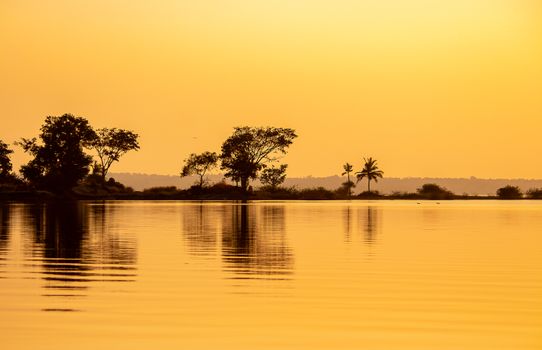
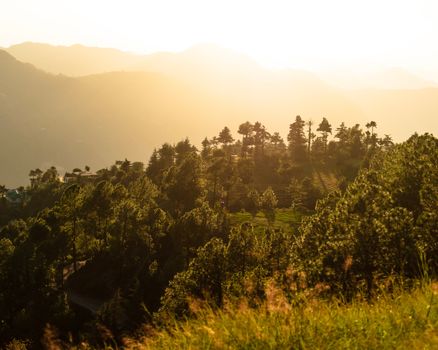
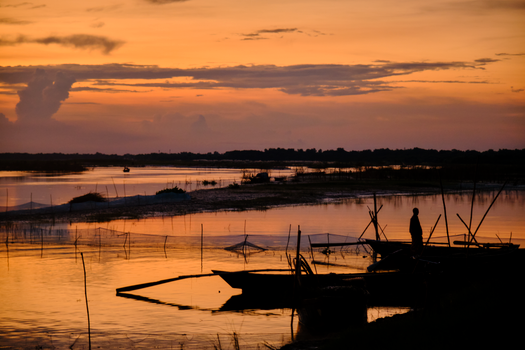
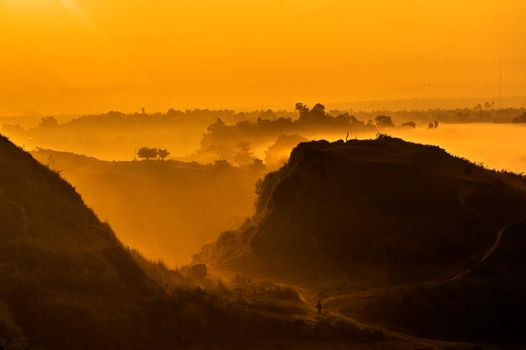
The world, for all its vastness, often feels like a well-trodden path. We see the same iconic landmarks, the same postcard-perfect sunsets, gracing our feeds again and again. But what if I told you there’s still magic left to discover? Moments so profound, so utterly breathtaking, they feel like a secret whispered only to you?
I remember my first "secret" golden hour. It wasn't some grand, famous vista, but a tiny, forgotten stretch of coastline in Portugal, stumbled upon after a wrong turn. The sun dipped below the horizon, painting the sky in hues of tangerine and rose, reflecting off the wet sand in a symphony of light. There was no one else around, just the roar of the Atlantic and the feeling of absolute, unadulterated wonder. It was then I realized: the most powerful travel experiences aren't always found on the main stage. They're often hidden, waiting for the curious, the brave, the ones willing to stray from the beaten path.
This is the thrill of the chase, the joy of discovery, the quiet satisfaction of witnessing something truly spectacular before the world catches on. The golden hour – that magical period just after sunrise or before sunset – transforms landscapes, infusing them with a warmth and depth that's simply unparalleled. It’s a photographer’s dream, a wanderer’s solace, and a moment that carves itself into your memory forever.
So, pack your bags, charge your camera, and get ready. Because I'm about to share seven golden hour locations that are still flying under the radar, waiting for you to experience their ethereal beauty before they inevitably become mainstream. These are the places that will make your heart sing, your jaw drop, and your friends green with envy.
1. Laguna Colorada's Fiery Reflections, Bolivia: Where Flamingos Dance in Golden Light
Imagine a lake the color of blood orange, dotted with thousands of vibrant pink flamingos, all set against a backdrop of snow-capped Andean peaks. Now, picture that scene bathed in the soft, incandescent glow of the golden hour. Welcome to Laguna Colorada in Bolivia’s Eduardo Avaroa Andean Fauna National Reserve.
My journey to Laguna Colorada was an adventure in itself. High up in the Bolivian Altiplano, at over 4,300 meters (14,100 feet) above sea level, the air is thin, and the landscapes are otherworldly. We bounced along dusty, unpaved roads in a sturdy 4x4, passing geysers, hot springs, and vast, empty stretches of desert. The altitude hit me hard initially, a dull throb in my temples, but the promise of what lay ahead kept me going.
Arriving at Laguna Colorada just as the sun began its descent was like stepping onto another planet. The lake's distinct reddish-orange hue, caused by algae and mineral sediments, intensified dramatically under the golden light. The white borax islands scattered across the lake seemed to glow, and the three species of flamingos – Andean, Chilean, and James's – became silhouettes, their long necks gracefully dipping into the water. As the sun dipped lower, the entire scene transformed into a living painting, the sky mirroring the lake's fiery palette. It was a moment of profound silence, broken only by the gentle lapping of water and the distant calls of the birds. No filters needed here; nature provided the masterpiece.
Practical Tips for Your Visit:
- Getting There: Laguna Colorada is typically visited as part of a multi-day (3-4 day) 4x4 tour from Uyuni, Bolivia, or San Pedro de Atacama, Chile. Tours cost around $150-250 USD, depending on duration and inclusions.
- Altitude Acclimatization: Spend a few days in Uyuni or Potosí beforehand to acclimate. Drink plenty of water and avoid alcohol.
- What to Pack: Layers are essential, as temperatures drop drastically after sunset. Bring a good quality sleeping bag (some tour operators provide them, but personal ones are better), snacks, water, sun protection, and a portable charger.
- Best Time: The dry season (April to October) offers clearer skies, but the shoulder months (March, November) can also be stunning with fewer crowds.
2. Bagan's Untouched Temples, Myanmar: A Solitary Glow Amidst Ancient History
Bagan, Myanmar, is famous for its thousands of ancient temples and stupas scattered across a vast plain. While the main temples draw crowds, especially for sunrise and sunset, there are still hundreds—perhaps even thousands—of smaller, less-frequented temples that offer an intimate, solitary golden hour experience. These are the ones that truly capture the magic of Bagan before it becomes another Angkor Wat.
My mission in Bagan was simple: find my own temple. After a chaotic but exhilarating sunrise from a popular spot, I rented an e-bike, a silent and eco-friendly way to explore, and set off into the dusty labyrinth of dirt paths. With no map and only a vague sense of direction, I let curiosity be my guide. I zipped past grand, well-maintained pagodas and then turned onto a path barely wider than my bike, leading into a thicket of trees.
There it was: a small, brick temple, partially overgrown with vines, its golden stupa still visible at the top. There was no one else in sight. I climbed the crumbling steps, carefully, respectfully, and found a small, dusty platform. As the sun began its descent, the light hit the ancient brickwork, turning it a rich, warm ochre. In the distance, hot air balloons floated like colorful dreams, but here, on my secret perch, it was just me, the wind, and the ghosts of a thousand years. The silence was profound, punctuated only by the distant tinkling of temple bells. It was a moment of pure, unadulterated awe, a feeling of connecting with history on a deeply personal level.
Practical Tips for Your Visit:
- Getting Around: E-bikes are the best way to explore Bagan independently and find hidden gems. Rentals cost around 5,000-10,000 Kyat ($3-7 USD) per day. Be careful on dusty roads, especially after dark.
- Finding Your Spot: Don't be afraid to veer off the main roads. Look for smaller, unmarked paths. Always be respectful of the temples – some may be closed or require specific entry. Ask locals for advice on lesser-known spots.
- Accommodation: Stay in Nyaung-U for a livelier atmosphere or Old Bagan for proximity to the main temples. Guesthouses range from $20-50 USD/night.
- Best Time: The dry season (November to February) offers pleasant temperatures and clear skies. Avoid the monsoon season (June to October).
3. Sossusvlei's Shifting Sands, Namibia: A Symphony of Light and Shadow
Namibia's Sossusvlei is a landscape so dramatic, so utterly unique, it feels like a dream. Towering red dunes, some of the highest in the world, stand sentinel over ancient white clay pans and petrified trees. While it's gaining recognition, experiencing Sossusvlei at golden hour, especially from the top of a giant dune, is still an experience that feels raw, untamed, and deeply personal.
My alarm went off well before dawn. The goal: climb Big Daddy, one of the tallest dunes in Sossusvlei, before sunrise. The hike up was brutal, two steps forward, one step back in the soft sand, but the cool morning air and the anticipation kept me going. We reached the summit just as the first slivers of light appeared on the horizon.
And then, the magic began. The sun painted the eastern face of the dunes in a fiery orange-red, while the western slopes remained in deep, dramatic shadow. The stark contrast created mesmerizing lines and curves, making the landscape feel alive, constantly shifting with the light. Below, Dead Vlei, with its ancient, skeletal trees, looked like an alien graveyard, its white clay floor glowing under the intensifying sun. As the golden hour stretched on, the colors deepened, the shadows lengthened, and the sense of scale was immense. I felt tiny, insignificant, yet utterly connected to this ancient, powerful land. Descending the dune, running and sliding down its steep face, was an exhilarating finish to an unforgettable golden hour.
Practical Tips for Your Visit:
- Park Entry: Sossusvlei is located within Namib-Naukluft National Park. Entry fees are approximately N$150 ($10 USD) per person per day.
- Getting Around: The last 5 km to Sossusvlei and Deadvlei require a 4x4 vehicle. You can either drive your own (if it's a 4x4) or take a shuttle from the 2x4 parking area (around N$150/person).
- Accommodation: Stay inside the park at Sossus Dune Lodge for early access to the dunes, or outside in Sesriem for more budget-friendly options.
- Photography: Bring a wide-angle lens to capture the vastness, and a telephoto for details of the dunes and trees. The light changes rapidly, so be ready!
- What to Pack: Plenty of water, sun protection (hat, sunscreen), sturdy shoes for climbing dunes, and layers for temperature changes.
4. Drangarnir & Tindhólmur, Faroe Islands: Nordic Drama in Golden Hues
The Faroe Islands are a place of unparalleled natural drama: vertical cliffs plunging into the wild Atlantic, emerald green mountains, and quaint villages. While the islands are gaining popularity, the iconic sea stacks of Drangarnir and the distinctive Tindhólmur islet still offer a golden hour experience that feels profoundly remote and exclusive.
My journey to witness Drangarnir at sunset was a testament to the Faroese weather – challenging, unpredictable, but ultimately rewarding. The hike to the viewpoint for Drangarnir (the sea stack with a natural arch) and Tindhólmur (the jagged, five-peaked islet) is not a casual stroll. It requires navigating boggy terrain, steep inclines, and often battling strong winds and mist. We started our hike in the late afternoon, the air crisp and carrying the scent of the sea.
As we rounded the final bend, the vista opened up, and my breath caught in my throat. The sun, having battled through a few lingering clouds, suddenly burst forth, casting a magnificent golden glow over the rugged coastline. Drangarnir, with its perfect arch, and the dramatic peaks of Tindhólmur stood majestically in the churning Atlantic. The golden light illuminated the green grass on the cliff tops, the white foam of the waves crashing below, and the ancient, weathered rock formations themselves. It felt like being at the very edge of the world, witnessing a spectacle that few others ever get to see in such perfect light. The raw power of nature, softened by the ethereal golden hour, created an unforgettable scene.
Practical Tips for Your Visit:
- Access: The hike to Drangarnir and Tindhólmur is on private land. You must go with a local guide, which typically costs around DKK 500-600 ($70-85 USD) per person. Book in advance.
- Weather: The weather in the Faroes is notoriously fickle. Be prepared for all four seasons in one day. Pack waterproof and windproof gear, layers, and sturdy hiking boots.
- Best Season: Summer (June-August) offers the longest daylight hours and generally milder weather, but spring and autumn can provide more dramatic skies.
- Photography: A wide-angle lens is essential for capturing the scale. A tripod is useful for low-light shots and long exposures of the waves.
5. Badlands National Park's Moonscape, USA: A Tapestry of Gold and Shadow
When people think of US National Parks, places like Yellowstone, Yosemite, or Zion often come to mind. But tucked away in South Dakota, Badlands National Park offers a golden hour experience that is utterly unique and often overlooked. Its otherworldly landscape of sharply eroded buttes, pinnacles, and spires, interspersed with vast prairie grasslands, becomes a living, breathing canvas under the sun's warm embrace.
My discovery of the Badlands was purely by chance, a detour on a cross-country road trip. I arrived in the late afternoon, initially skeptical. "Badlands" didn't sound particularly inviting. But as I drove the scenic Badlands Loop Road, my skepticism vanished. The formations, sculpted by millennia of wind and water, were unlike anything I'd ever seen.
As the sun began its descent, the magic truly unfolded. The golden light raked across the layered rock formations, highlighting every crevice, every ridge, every dramatic drop. The colors of the rock—streaks of red, yellow, purple, and gray—intensified, creating a vibrant, ever-changing tapestry. Shadows stretched long and distorted, giving the landscape an even more surreal, almost lunar quality. I pulled over at an overlook, the "Window Trail," and just sat there, watching the transformation. A bison grazed peacefully in the distance, silhouetted against the fiery sky. The silence was profound, broken only by the whisper of the wind. It felt like I had stumbled upon a hidden masterpiece, a geological symphony played out in golden light.
Practical Tips for Your Visit:
- Accessibility: Badlands National Park is easily accessible by car. The Badlands Loop Road (Highway 240) is a scenic drive with numerous overlooks and trailheads.
- Entry Fee: $30 per vehicle, valid for 7 days.
- Best Overlooks: Pinnacles Overlook, Yellow Mounds Overlook, Panorama Point, and the Window Trail offer fantastic golden hour views.
- Wildlife: Keep an eye out for bison, bighorn sheep, prairie dogs, and coyotes. Always maintain a safe distance.
- Accommodation: Camping is available within the park (Cedar Pass Campground, Sage Creek Campground). Nearby towns like Wall or Interior offer motels.
6. The Catlins' Wild Coast, New Zealand: Rugged Beauty Under a Golden Sky
New Zealand is renowned for its stunning landscapes, but while most head straight for Milford Sound or Queenstown, the wild, untamed beauty of The Catlins on the South Island's southeastern coast remains wonderfully off-the-beaten-path. This rugged region of dramatic cliffs, ancient rainforests, hidden waterfalls, and unique wildlife offers a golden hour experience that feels raw, authentic, and truly cinematic.
My trip through The Catlins was a journey of delightful surprises. I had heard whispers of its beauty but was unprepared for the sheer diversity of its landscapes. One evening, after a day of exploring windswept beaches and lush forests, I found myself at Nugget Point Lighthouse, perched precariously on a rocky outcrop. Below, a cluster of distinctive rock formations, the "Nuggets," jutted out of the sea.
As the sun began its slow descent, the sky exploded in a riot of oranges, pinks, and purples. The golden light illuminated the historic lighthouse, turning its white walls into a beacon of warmth. The waves crashed against the Nuggets, sending spray high into the air, catching the golden light like scattered diamonds. Fur seals barked from the rocks below, and a rare yellow-eyed penguin waddled ashore in the fading light. It was a sensory overload—the smell of salt, the sound of the ocean, the incredible visual spectacle. This wasn't a manicured viewpoint; it was nature in its wildest, most beautiful form, made even more magical by the golden hour. Every bend in the road here seemed to reveal another breathtaking vista, each more captivating than the last.
Practical Tips for Your Visit:
- Self-Drive: The Catlins are best explored by car. The Southern Scenic Route winds through the region, connecting all the main attractions.
- Key Spots: Don't miss Nugget Point, Purakaunui Falls, McLean Falls, Cathedral Caves (check tide times!), and Curio Bay (for petrified forest and Hector's dolphins).
- Wildlife: Be respectful of the local wildlife, especially the rare yellow-eyed penguins. Maintain distance and avoid disturbing them.
- Accommodation: Small towns like Owaka, Papatowai, and Curio Bay offer guesthouses, holiday parks, and B&Bs.
- What to Pack: Waterproofs, sturdy walking shoes, insect repellent, and a good camera are essential.
7. The Painted Hills, Oregon, USA: A Kaleidoscope of Earthy Hues
Often overshadowed by Oregon's dramatic coastline and lush forests, the Painted Hills Unit of John Day Fossil Beds National Monument is a geological marvel that comes alive with an almost surreal beauty during the golden hour. These hills, striped with vibrant reds, yellows, golds, and blacks, are a testament to millions of years of geological history, and they offer a golden hour spectacle that is truly unique.
I drove out to the Painted Hills on a whim during a road trip through Oregon, not entirely sure what to expect. The drive itself was beautiful, winding through rolling hills and quiet farmlands. But nothing prepared me for the sight that greeted me as I approached the overlook. The hills, sculpted into soft, undulating mounds, were a kaleidoscope of earthy colors, each stripe representing a different geological era.
As the sun began its descent, the magic truly began. The golden light intensified the hues, making the reds deeper, the yellows brighter, and the subtle greens and purples more pronounced. The hills seemed to glow from within, changing their appearance with every passing minute as the light shifted. Shadows danced across their gentle curves, adding depth and dimension to the already stunning landscape. I walked the short boardwalk trails, feeling like I was traversing an alien planet, utterly captivated by the natural artistry. It was a quiet, contemplative golden hour, a moment to truly appreciate the slow, powerful forces of nature that had created such an extraordinary place. The lack of crowds made it even more special, allowing for uninterrupted appreciation of this natural wonder.
Practical Tips for Your Visit:
- Location: The Painted Hills are located in central Oregon, about a 1.5-hour drive from Bend. It's best visited as part of a road trip.
- Entry: There is no entry fee for John Day Fossil Beds National Monument.
- Trails: Short, easy walking trails (e.g., Painted Cove Trail, Carroll Rim Trail) offer different perspectives and photo opportunities.
- Best Time: Late afternoon for sunset, or early morning for sunrise. The colors are most vibrant when the sun is low.
- What to Pack: Water, sun protection (it can get hot and exposed), and comfortable walking shoes. There are no services within the monument, so bring everything you need.
---
The world is full of wonders, many of which are still waiting to be discovered by the masses. These golden hour locations offer not just stunning visuals, but also a chance to connect with nature, history, and yourself in a profound, uncrowded way. They remind us that the greatest adventures often lie just beyond the well-worn path.
So, don't wait. Plan your trip to one of these golden hour gems. Experience their magic, capture their beauty, and cherish the feeling of having witnessed something truly special, before the secret gets out. Because the greatest stories are always found in the moments we steal from the ordinary.
Which of these hidden golden hour spots calls to you the most? Share your travel dreams in the comments below, and let's inspire each other to explore beyond the mainstream!
---