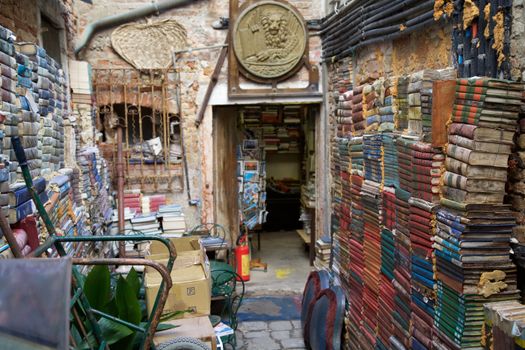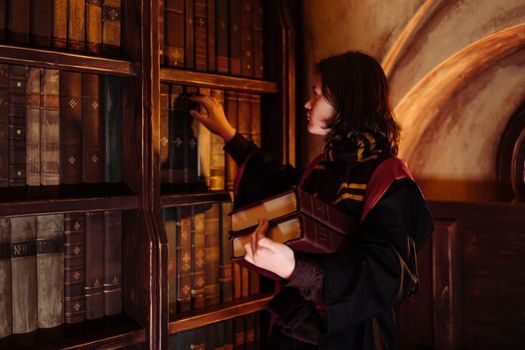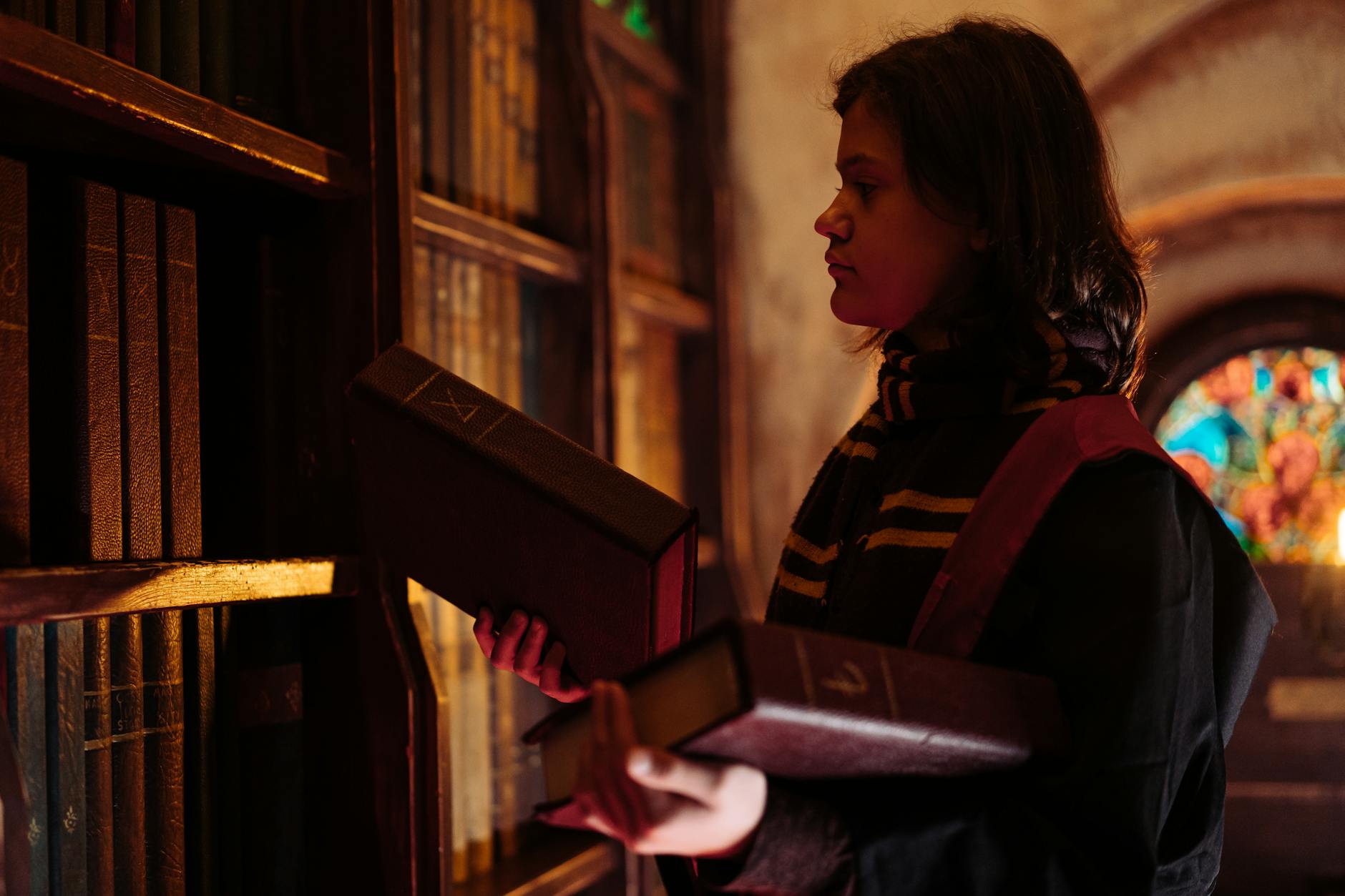
From the moment I first cracked open a Harry Potter book, I was utterly enchanted, not just by the magic, but by the sheer vibe of Hogwarts – especially its library. Imagine: towering shelves stretching to the heavens, dusty tomes whispering forgotten spells, secret nooks bathed in golden light, and the scent of ancient parchment mingling with wood polish. For years, I’ve chased that feeling, not just in fictional worlds, but in real life. I’ve scoured cities, followed cryptic clues, and sometimes, simply stumbled upon them by pure, glorious chance.
My quest began innocently enough during a rainy afternoon in Oxford. Seeking refuge, I ducked into a grand, historic university library. While the main reading rooms were magnificent, my eyes caught a small, unassuming door tucked away behind a lesser-used stack. My curiosity piqued, I pushed it open to reveal a narrow, winding staircase that led to a tiny, circular room. Sunlight streamed through a single arched window, illuminating motes of dust dancing above a handful of leather-bound books that looked as if they hadn't been touched in a century. It was quiet, sacred, and utterly magical. That moment, standing alone in that hidden literary sanctuary, sparked an obsession: to find more places just like it. Places that felt like Hogwarts, but were so off the beaten path, so cherished by the locals, that they practically qualify as secrets.
These aren't your typical tourist attractions. They are the hushed havens, the quiet corners, the literary sanctuaries that often require a bit of detective work, a dash of luck, and a deep respect for the magic they hold. They are the places locals adore and, let's be honest, would probably prefer to keep to themselves. But I'm here to share the magic, with the firm understanding that we tread lightly, speak softly, and preserve the enchantment for all who seek it.
The Quest for the Unseen Scriptorium – Why Hidden Libraries Captivate
What is it about a hidden library that stirs the soul? For me, it's the potent blend of discovery, history, and pure, unadulterated escape. In a world saturated with digital noise, these sanctuaries offer a profound quietude, a chance to connect with centuries of thought and imagination. They are time capsules, each book a portal, each room a story waiting to unfold.
The "locals' secret" aspect isn't about exclusivity in a snobbish way. It's about reverence. These places are often cherished community assets, private collections, or sections of larger institutions that aren't prominently advertised. When you find one, you're not just a tourist; you're an initiate, invited into a special club. The effort involved in finding them makes the reward even sweeter. It transforms a simple visit into an adventure, a personal quest that deepens your connection to the place and its history. This guide isn't about crashing a private party; it's about respectfully seeking out these extraordinary places, understanding their unique charm, and ensuring your visit adds to their legacy, rather than detracting from it.
Whispers in the Stone: The Whispering Archive, Edinburgh, Scotland
Edinburgh, with its ancient closes, gothic architecture, and palpable sense of history, feels like a city built for magic. It’s no surprise that one of my favorite "Hogwarts libraries" is tucked away within its labyrinthine streets: the Whispering Archive.
I first stumbled upon it on a particularly blustery autumn day, seeking shelter from the biting wind in the Old Town. I was meandering down a narrow alleyway, past a series of unremarkable storefronts, when I noticed a faded, almost illegible sign above a heavy wooden door: "The Athenaeum – Private Collection." My heart gave a little flutter. After a moment of hesitation, I pushed the door open. Inside, a hushed reverence descended. The air was thick with the scent of old paper and polished wood. A narrow, spiral staircase, worn smooth by centuries of footsteps, led upwards. Ascending, I found myself in a small, circular room bathed in the muted glow of stained-glass windows depicting arcane symbols. Lofty shelves, carved from dark oak, curved around the walls, crammed with books whose spines were too faded to read. A single, heavy wooden table sat in the center, and I imagined scholars hunched over ancient texts, their whispers echoing in the stone. It felt like a hidden common room, a secret society's meeting place.
Details for Your Quest: The Whispering Archive isn't officially public, but it occasionally opens its doors for small, pre-booked tours or research appointments. I managed to gain entry through a local literary society event I found advertised in a tiny independent bookstore nearby. Keep an eye on local cultural listings, especially for historical or literary events. A small donation (around £5-£10) is usually requested upon entry to help with preservation. The best time to visit is during the quieter hours, perhaps late morning on a weekday, when the light streams beautifully through the windows. It’s located just off the Royal Mile, but you'll need to keep your eyes peeled for that subtle sign – it's easy to miss.
Local Tip: Before or after your visit, grab a flat white and a shortbread from "The Wee Nook," a tiny, unassuming cafe just a few streets away. They know the Archive well and might even offer a subtle hint or two about upcoming events if you strike up a friendly conversation.
The Forgotten Pages: Bibliothèque des Alchimistes Oubliés, Paris, France
Paris, the city of lights, love, and countless hidden treasures. Beyond the grand boulevards and iconic landmarks, there lies a more mystical side, one I discovered in the form of the Bibliothèque des Alchimistes Oubliés (Library of Forgotten Alchemists).
My introduction to this place came from an eccentric old bookseller in the Latin Quarter. We were discussing obscure 17th-century treatises, and he leaned in conspiratorially, muttering about a collection "where the true magic lies." He gave me a specific address – an unassuming door on a quiet street, barely distinguishable from the residential buildings around it. He then whispered a phrase, a kind of password, hinting that it might be required for entry. Nervously, I found the door, knocked twice, and spoke the phrase. After a tense moment, a small peephole opened, then the door creaked inward. Inside, I was met with a breathtaking sight: a narrow room, stretching unexpectedly deep, lined with floor-to-ceiling shelves of gilded and leather-bound books. Celestial globes stood on pedestals, and intricate alchemical symbols were etched into the wooden panels. It felt like stepping into a secret society's sanctum, a place where ancient knowledge was guarded with utmost care. The air was thick with the scent of aged paper and something faintly metallic, like old ink.
Details for Your Quest: This is perhaps the most elusive on my list. The Bibliothèque des Alchimistes Oubliés is a private collection, rarely open to the public. However, they do host very occasional, small group tours (usually 4-6 people) by appointment only, often advertised through obscure historical or esoteric societies. Check their equally obscure social media or a very minimalist website (search for "Bibliothèque des Alchimistes Oubliés Paris" and be persistent). These tours are usually quite pricey (expect €35-€50), but the experience is unparalleled. Winter, when the Parisian streets are quiet and the mood is naturally more mysterious, is the ideal time to seek it out.
Local Tip: After unlocking the secrets of the alchemists, wander to Rue Mouffetard and find the tiny, hole-in-the-wall crêperie called "La Crêpe Dorée." Their classic crêpe au sucre provides a sweet, grounding contrast to the ancient mysteries you've just encountered.
Sacred Scrolls and Shadowed Nooks: Monastery of St. Vitus's Secret Scriptoria, Prague, Czech Republic
Prague, with its gothic spires and cobblestone streets, is a city steeped in fairytale charm and ancient mystery. While many tourists flock to the grand Strahov Monastery Library, I discovered an even more secluded, equally enchanting spot: a secret scriptoria within the Monastery of St. Vitus.
I was exploring the sprawling monastery grounds, admiring the frescoes and the quiet courtyards, when I noticed an old, unmarked wooden door slightly ajar in a less-trafficked wing. My curiosity, as always, got the better of me. Peeking inside, I saw a narrow, dimly lit corridor. Following it, I emerged into a small, vaulted room – a scriptoria. Here, the silence was absolute, broken only by the distant tolling of a bell. Ancient manuscripts, their pages yellowed with age, lay open on heavy wooden desks, as if monks had just stepped away from their work. Intricate frescoes adorned the ceiling, depicting scenes of scholarly pursuit and divine inspiration. It felt profoundly spiritual, a place where centuries of devotion and intellectual endeavor had left an indelible mark. The cold stone walls seemed to hum with forgotten prayers and whispered wisdom.
Details for Your Quest: The main sections of the Monastery of St. Vitus are open to the public, but the scriptoria is often overlooked or requires a separate, smaller entrance fee. It’s typically around €8-€12, paid at a small, often unmanned desk near the entrance to that specific wing. Check the monastery's official website for "special collections" or "hidden archives" opening times, as they can be limited, often just a few hours in the afternoon. It’s best visited in the late afternoon when the light is low and creates long, dramatic shadows, enhancing the medieval atmosphere.
Local Tip: To deepen your experience, try to attend a vespers service at the main monastery chapel beforehand. The Gregorian chants and the spiritual atmosphere will set the perfect tone for entering the sacred silence of the scriptoria. Afterwards, enjoy a traditional Czech Trdelník from a street vendor just outside the monastery gates.
Renaissance Rhapsody: The Scriptorium of the Hidden Heart, Florence, Italy
Florence, the cradle of the Renaissance, is famous for its art and architecture. But beyond the Uffizi and the Duomo, I found a different kind of masterpiece: The Scriptorium of the Hidden Heart, a private library that embodies the warmth and intellectual vibrancy of the Florentine golden age.
My discovery here was less about a secret door and more about a human connection. Through a mutual friend, I was introduced to a local historian who, after a delightful evening of conversation over Chianti, hinted at a "family collection of rare books" accessible only to a select few. Intrigued, I expressed my profound interest, and to my delight, he offered to arrange a visit. Stepping into the Scriptorium was like walking into a sun-drenched Renaissance study. Unlike the gothic gloom of some other libraries, this space was vibrant, filled with intricate wooden details, hand-bound art books, and illuminated manuscripts. Sunlight streamed through tall arched windows, casting warm glows on the polished terracotta floors. It felt less like a public institution and more like a cherished private sanctuary, a place where an aristocratic family had meticulously curated knowledge and beauty for generations. The air smelled of beeswax and fine leather, and a quiet piazza lay visible outside, offering a glimpse of everyday Florentine life.
Details for Your Quest: This is arguably the most exclusive on my list. The Scriptorium of the Hidden Heart is part of a private noble family's estate and is not generally open to the public. Access is typically by invitation, through academic connections, or by attending specific cultural associations' events or workshops that are occasionally hosted there. Keep an eye on local Florentine cultural listings (online or via posters in universities) for "private collection viewings" or "Renaissance manuscript workshops." Prices for these events can vary widely, from €40-€100, but they offer a truly unique and intimate experience.
Local Tip: Before your visit, explore the artisan workshops in the Oltrarno district, particularly the paper-making studios. Understanding the craft of traditional Florentine paper and bookbinding will deepen your appreciation for the treasures held within the Scriptorium. Afterwards, treat yourself to a gelato from "La Carraia" and enjoy it by the Arno.
The Gilded Silence: The Argus Athenaeum, Boston, USA
Not all secret libraries are across the ocean. Even in bustling American cities, pockets of old-world charm and literary reverence endure. The Argus Athenaeum in Boston is one such place, a beacon of gilded silence that feels like a cross between a sophisticated literary club and a forgotten university wing.
I first encountered the Argus Athenaeum when attending a lecture by a visiting author, an event open to the public through a university affiliation. From the moment I stepped inside, I was transported. The main hall, with its dark wood paneling, towering bookshelves filled with leather-bound volumes, and portraits of stern-faced literary figures, exuded an aura of quiet intellectualism. But it was a side room, tucked away through a discreet archway, that truly captured my imagination. Here, plush leather armchairs were arranged around a roaring fireplace (in winter), and small, antique lamps cast pools of warm light on scattered newspapers and journals. It was the quintessential scholar's retreat, a place where Boston's literary elite had debated, written, and dreamed for centuries. The hushed whispers of conversation and the gentle rustle of turning pages were the only sounds. It felt like walking into a living history book, a place where generations of brilliant minds had sought solace and inspiration.
Details for Your Quest: The Argus Athenaeum is primarily a private literary club, and general public access to its library is restricted. However, they regularly host public events such as author readings, book launches, and literary discussions. These are often free or have a small ticket price (typically $15-$30), and attending one is the best way to gain access and experience the atmosphere of this magnificent library. Check their official website's "Events" section well in advance, as popular events sell out quickly.
Local Tip: After immersing yourself in the Athenaeum's intellectual grandeur, take a leisurely stroll through the historic, gas-lit streets of Beacon Hill. The charming architecture and quiet elegance perfectly complement the refined atmosphere of the library. Finish your evening with a classic clam chowder at a traditional Boston pub.
Your Own Magical Map: Tips for Unlocking Secret Libraries
The thrill of discovering these hidden gems is immense, but it requires a certain approach. Here's how you can embark on your own quest for Hogwarts-like libraries:
- Do Your Homework (Beyond Google): While Google is a start, dig deeper. Research local literary societies, university archives (look for "special collections" or "rare books"), historical societies, private clubs, and cultural centers in your destination. Often, the information is there, but not prominently displayed for mass tourism.
- Ask Locals (Respectfully): Don't walk up to someone and ask, "Where's your secret library?" Instead, try: "I'm a big book lover, do you know of any beautiful, quiet places to read or any old libraries that are particularly special to locals?" A genuine interest in their culture and history goes a long way.
- Look Beyond the Obvious: Many hidden libraries are literally hidden. Unmarked doors, side entrances, upper floors of seemingly commercial buildings, or sections of larger institutions that require a separate, often discreet entrance. Keep your eyes open for unusual signs or subtle architectural cues.
- Embrace Serendipity: Some of the best discoveries happen when you're simply wandering with an open mind. Allow yourself to get lost in old neighborhoods, follow interesting alleyways, and be receptive to unexpected turns.
- Respect the Space: This is paramount. These are often working libraries, cherished local spots, or private collections.
- Be Quiet: Maintain silence or speak in hushed tones.
- Don't Disturb: Avoid disrupting readers or staff.
- Ask for Photos: Always, always ask permission before taking pictures. If allowed, be discreet, no flash, and be mindful of other visitors.
- Support Local: If there's a donation box, contribute. If there's a small cafe attached, patronize it. Show appreciation.
- Be Patient and Persistent: You might not find a "secret library" on your first try. The hunt is part of the magic. Enjoy the process of discovery, even if it leads you down a few dead ends.
The Final Chapter: Your Adventure Awaits
The world is full of wonders for those willing to look beyond the guidebooks. These hidden libraries are more than just buildings; they are portals to other times, other minds, and other worlds. They offer a quiet magic that nourishes the soul and ignites the imagination.
So, pack your curiosity, sharpen your detective skills, and set forth on your own quest. The thrill of the hunt, the hushed reverence of discovery, and the profound connection to history and knowledge await.
Have you stumbled upon your own "Hogwarts library"? Share your discoveries and tips using #TripsoraSecretLibraries on social media! Let's build a community of respectful explorers who cherish these magical havens. Happy hunting, fellow bibliophiles!
---