The Hook: A Morning Beyond the Metro
I stepped off the regional train at Tivoli station just as the morning mist was burning off the Sabine Hills. The air didn’t smell like Rome’s diesel exhaust and warm asphalt; it smelled of damp wild rosemary, crushed volcanic tufa, and the sharp, sulfurous tang of nearby thermal springs. Within forty-five minutes of leaving the chaos of Roma Termini, I was standing completely alone in the shadow of a towering, second-century brick archway built on the orders of Emperor Hadrian.
Too many travelers treat major global capitals as self-contained bubbles, ignoring the incredible layers of human history sitting just past the suburbs. In June 2026, as summer crowds clog urban centers, the smartest move you can make is to jump on a regional train or local bus.
These five handpicked historic sites are located under two hours from major global hubs. They offer deep historical immersion, architectural marvels, and authentic local food, all achievable in a single, stress-free day trip.
---
1. Tivoli: The Emperor’s Escape (45 Minutes from Rome, Italy)
The Architectural Legacy of Hadrian and the D'Este Dynasty
While Rome’s Colosseum is packed shoulder-to-shoulder by mid-morning, Tivoli offers two distinct UNESCO World Heritage sites that span a millennium of architectural genius.
First, there is Hadrian’s Villa (Villa Adriana). Built in the 2nd century AD, this sprawling imperial retreat was designed to replicate the architectural wonders the Emperor loved most from Greece and Egypt. Walk past the Canopus, a long, reflective pool lined with Corinthian columns and replicas of caryatids. Look closely at the brickwork: you will see the classic Roman opus reticulatum—a diamond-patterned brick facing that has survived two thousand years of earthquakes and weather.
A short local bus ride up the hill brings you to the 16th-century Villa d'Este. Here, the High Renaissance takes center stage. The villa is famous for its gravity-powered water gardens, featuring hundreds of fountains, grottoes, and play-fountains that whistle and sing using ancient hydraulic principles.
``` [Hadrian's Villa: Ancient Roman Ruins] │ (Local Bus / 15 Mins) │ [Villa d'Este: Renaissance Water Gardens] ```
The Culinary Pairing
Skip the tourist-trap cafes near the entrance of Villa d'Este. Instead, walk down the winding stone alleyway of Via Sibilla to Ristorante Sibilla. You will dine directly under the columns of a 1st-century BC Roman Temple of Vesta. Order the trota alla griglia (grilled local river trout) seasoned with wild fennel and wild rosemary, paired with a glass of crisp, cold Frascati Superiore.
- Pro-Tip: Do not enter Hadrian's Villa through the main modern visitor gate if you want to avoid tour buses. Instead, take a local taxi to the lesser-known cypress alley entrance on the southern perimeter. You’ll enter through the monumental Pecile portico completely uninterrupted.
---
2. Kamakura: The Zen Capital (55 Minutes from Tokyo, Japan)
Samurai Heritage and Hydrangeas in Full Bloom
In June, Tokyo begins to feel the humid embrace of the early summer rainy season (tsuyu). This is the absolute perfect time to catch the Yokosuka Line train south to Kamakura, the de facto capital of Japan from 1185 to 1333.
Kamakura is famous for its rugged hills, ancient Zen temples, and the towering bronze Great Buddha (Daibutsu) at Kotoku-in temple. Standing over 11 meters tall and weighing 121 tons, this monumental icon has survived typhoons, tidal waves, and earthquakes since 1252.
In June 2026, your main target should be Hase-dera Temple, built high on a hillside overlooking Sagami Bay. June is the peak of the Ajisai (hydrangea) season. Over 2,500 colorful hydrangea bushes burst into shades of deep blue, purple, and pink along the temple's mountain walking path. The scent of wet pine needles, incense, and damp moss creates an incredibly peaceful atmosphere.
``` [Kamakura Station] ──(Enoden Line / 5 Mins)──> [Hase Station] ──(Walk / 5 Mins)──> [Hase-dera Temple] ```
The Culinary Pairing
Near Hase-dera, seek out a quiet chashitsu (tea house) serving Kamakura-bori styled dishes. Try shirasu-don—a local specialty bowl of warm rice topped with delicate, freshly caught baby whitebait (either raw or boiled), seasoned with grated ginger, green onions, and a splash of local soy sauce.
- Pro-Tip: Skip the crowded main walking path from Kamakura Station to Hase-dera. Instead, ride the historic, green Enoden coastal train to Hase Station. Walk through the quiet residential backstreets lined with traditional timber-framed houses to reach the temple before the midday crowds arrive.
---
3. Teotihuacán: The City of Gods (1 Hour from Mexico City, Mexico)
Pre-Hispanic Monumentality and Sacred Geometry
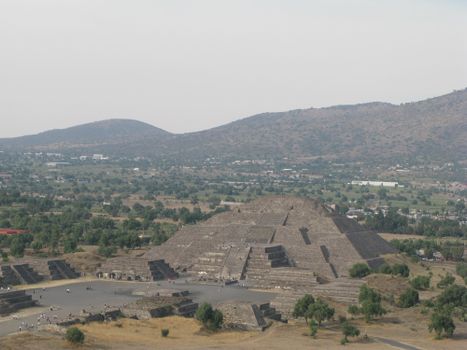
Long before the Aztecs arrived in the Valley of Mexico, an unknown, highly organized civilization constructed Teotihuacán. By 500 AD, it was one of the largest cities in the world.
Walking down the massive Avenue of the Dead, the sheer scale of this ancient city is breathtaking. The complex is dominated by two massive structures built using the talud-tablero architectural style (sloping planes topped by flat platforms): the Pyramid of the Sun and the Pyramid of the Moon.
In the morning light, the volcanic basalt and red stucco fragments still visible on some walls glow with a warm, fiery intensity. The air is dry, carrying the scent of dust, baking clay, and sweet copal incense burned by local vendors.
``` [Mexico City (Terminal del Norte)] ──(Direct Bus / 1 Hour)──> [Teotihuacán Gate 1 or 5] ```
The Culinary Pairing
For lunch, walk 10 minutes outside Gate 5 to La Gruta. This restaurant is located inside a massive, naturally formed volcanic cave. Dine on escamoles (ant larvae sautéed in butter, garlic, and epazote) served with fresh, hand-pressed blue corn tortillas, and wash it down with a glass of artisanal pulque—a traditional, milky fermented sap beverage from the agave plant.
- Pro-Tip: Most tour buses arrive at Gate 1 at 9:30 AM. Beat them by taking an early 7:00 AM bus from Mexico City’s Terminal del Norte. Have the driver drop you at Gate 5 (Puerta 5). This places you directly next to the Pyramid of the Moon at 8:00 AM opening time, allowing you to walk the Avenue of the Dead in cool, silent isolation.
---
4. Lewes: Norman Castles and Tudor Timber (1 Hour 10 Minutes from London, UK)
Medieval Might on the South Downs Chalk
If you want to escape the crowded streets of London in June, skip the tourist-heavy Windsor Castle and head south to the historic market town of Lewes in East Sussex.
Clinging to the steep chalk hills of the South Downs, Lewes is home to Lewes Castle, built shortly after the Norman Conquest in 1069 by William de Warenne. Constructed from local flint and mortar, the castle features an unusual double-keep design. Climb to the top of the West Tower for panoramic views of the green Sussex countryside.
Afterward, walk down the steep, cobbled high street to Anne of Cleves House. This beautifully preserved 15th-century timber-framed house was given to the Queen as part of her divorce settlement from King Henry VIII. Inside, you can walk on uneven oak floorboards and admire the heavy, dark-stained Tudor furniture.
``` [Lewes Castle (Norman Keep)] │ (Walk down High Street) │ [Anne of Cleves House (Tudor Timber)] ```
The Culinary Pairing
Stop at The Lewes Arms, a historic pub tucked away in a quiet alley behind the castle wall. Order a classic ploughman’s lunch—crusty bread, sharp local mature cheddar, pickled onions, and apple chutney—paired with a pint of fresh, cask-conditioned Harvey's Sussex Best Bitter, brewed right down the street at the Victorian tower brewery on the River Ouse.
- Pro-Tip: The hidden path up to the castle's West Tower is accessible via the quiet Gun Garden. This spot is usually empty, offering a peaceful place to sit on the grass surrounded by ancient flint walls and blooming English roses.
---
5. Sleepy Hollow: Dutch Colonial Heritage (1 Hour from New York City, USA)
17th-Century Stone Churches and Hudson Valley History
Just an hour north of Grand Central Terminal along the scenic Metro-North Hudson Line lies Sleepy Hollow, New York. While famous for Washington Irving’s legendary Headless Horseman, this area is home to incredibly well-preserved 17th-century Dutch colonial history.
Your first stop is the Old Dutch Church of Sleepy Hollow, built in 1685. Constructed of local fieldstone and yellow brick imported directly from Holland, it is one of the oldest active churches in the United States. Walk through the adjacent Sleepy Hollow Cemetery, where you will find weathered red sandstone and grey slate gravestones dating back to the Revolutionary War, carved with winged death’s heads and Dutch inscriptions.
Just south of the church sits Philipsburg Manor, a restored 1707 milling and trading complex. Here, you can learn about the complex history of the Dutch patroon system and the vital, often overlooked history of the enslaved people who operated the manor's heavy oak watermill.
``` [Grand Central NYC] ──(Metro-North / 50 Mins)──> [Philipse Manor Station] ──(Walk / 10 Mins)──> [Old Dutch Church] ```
The Culinary Pairing
After exploring the historic grounds, head to a local bakery in nearby Tarrytown for a warm, fresh cider donut dusted with cinnamon sugar. For a hearty meal, grab a table at The Bridge Family Restaurant and order a bowl of traditional New England clam chowder paired with a cold, locally brewed Hudson Valley IPA.
- Pro-Tip: Most visitors take the train to Tarrytown and walk along busy Broadway. Instead, take the train one stop further to Philipse Manor Station. From there, it’s a much shorter, peaceful, and scenic walk along the quiet Hudson River path directly to the historic churchyard.
---
The Budget & Logistics: June 2026 Quick Facts
To make your planning as easy as possible, here is a quick-reference guide to the transit, costs, and timing for these five incredible day trips.
| Destination | Major Hub | Transit Method | Travel Time | Est. Transit Cost (USD) | Best June Hour to Visit | | :--- | :--- | :--- | :--- | :--- | :--- | | Tivoli, Italy | Rome | Trenitalia Regional Train | 45 Mins | $6 - $10 (Roundtrip) | 8:30 AM (Hadrian's Villa) | | Kamakura, Japan | Tokyo | JR Yokosuka Line | 55 Mins | $12 - $15 (Roundtrip) | 8:00 AM (Hase-dera) | | Teotihuacán, Mexico | Mexico City | Autobuses del Norte | 1 Hour | $5 - $8 (Roundtrip) | 7:55 AM (Gate 5) | | Lewes, United Kingdom| London | Southern Rail | 1 Hour 10 Mins | $25 - $40 (Off-Peak) | 10:00 AM (Castle Gatehouse) | | Sleepy Hollow, USA | New York City | Metro-North Hudson Line | 50 Mins | $22 - $30 (Roundtrip) | 9:00 AM (Churchyard) |
---
Why June 2026 is the Perfect Window
June 2026 offers a unique sweet spot for travelers. It sits at the very beginning of the busy summer travel season, meaning local gardens are in full bloom, daylight hours are at their absolute longest, and the intense mid-summer heatwaves have not yet arrived.
By prioritizing these local, easy-to-reach historic sites, you will bypass the long ticket lines and crowded streets of major capitals. Instead, you'll find yourself standing in ancient stone temples, walking through quiet medieval alleyways, and enjoying authentic regional dishes—all while being back in the city in time for dinner.
---