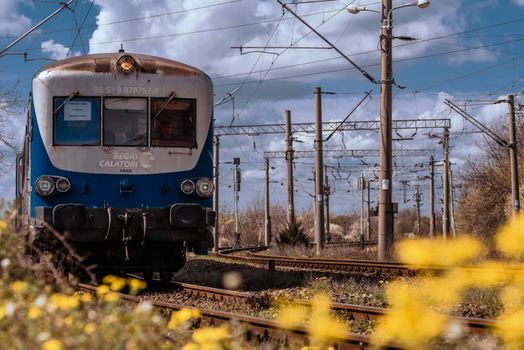
Why travel Europe by train
Trains in Europe go from city centre to city centre. You skip airport transfers, security queues and baggage fees, and you can work, read or watch the scenery. For journeys of up to about four or five hours, trains are often as fast as flying once you count the time spent getting to and from airports. They also produce much lower emissions per passenger than most flights.
Travelling Europe entirely by train does take planning. Ticketing systems differ by country, some routes need seat reservations, and prices can vary dramatically depending on when and how you book. This guide explains how to plan an itinerary, buy tickets, decide whether a rail pass is worth it, and enjoy the journey.
Step 1: Decide where you want to go
Start with the places you most want to see, and then look at how they connect by rail. Europe's rail network is dense, but some regions are better connected than others.
- Very well connected: France, Germany, Switzerland, Austria, the Netherlands, Belgium, Italy and Spain have extensive high-speed and regional networks.
- Reasonably connected: Poland, the Czech Republic, Hungary, Slovenia, Croatia and the Nordic countries have good lines on main routes.
- Less connected: Parts of the Balkans, the Baltic states, Portugal's interior, Greece and the British Isles' islands may need buses or ferries.
Look at a rail map, and think about a route that avoids backtracking. Consider travelling in a loop, starting and ending in the same city.
Step 2: Choose a pace
A common mistake is trying to see too many places. A good guideline is to stay at least two nights in each city, unless it is a quick stop. Allow time to walk around, rest and eat well.
For a two-week trip, four to six bases is plenty. For a month, you could visit eight to ten. Long train rides are enjoyable, but travel days use up energy.
Step 3: Tickets or a rail pass?
There are two main ways to pay for train travel in Europe.
Point-to-point tickets are bought for each journey. On many high-speed and long-distance routes, advance tickets are much cheaper than same-day fares. They are often tied to a specific train and may be non-refundable or have change fees.
Rail passes, such as Interrail for residents of Europe and Eurail for non-residents, allow multiple journeys within a set period or number of travel days. They offer flexibility, but they are not always cheaper. On many high-speed and night trains, you must pay an additional reservation fee, sometimes a significant one.
How to decide:
- Make a list of the journeys you plan to take.
- Look up advance ticket prices on national railway websites or a ticketing platform.
- Compare the total with the cost of a pass plus reservation fees.
- Consider how much flexibility you want.
Passes tend to be most useful for travellers who want to change plans freely, take many long journeys, or travel on routes where advance tickets are expensive. For travellers who plan their trip in advance and book early, point-to-point tickets can be cheaper.
Pass prices and rules change, so check the official sites before you buy.
Step 4: Use the right tools
- Deutsche Bahn's journey planner is widely used to find timetables across Europe, even for trains in other countries.
- National rail websites such as SNCF Connect (France), Trenitalia and Italo (Italy), Renfe (Spain), ÖBB (Austria) and SBB (Switzerland) sell tickets directly.
- Ticketing platforms that aggregate several railways can be convenient, but they may charge fees. Compare prices.
- Rail apps let you store tickets on your phone.
Download tickets and keep a backup, such as a screenshot or a printed copy, in case of battery or connection problems.
Step 5: Book at the right time
Booking windows vary. Some railways release tickets three to six months in advance, others only a few weeks ahead. For popular high-speed routes, such as Paris to Barcelona or Rome to Florence, book as soon as tickets are available for the best fares.
Regional trains often have fixed prices and do not require advance booking. You can usually buy those on the day.
Step 6: Reservations
Some trains require seat reservations even if you hold a pass or a flexible ticket. These include many high-speed trains in France, Italy and Spain, international trains and night trains. Reservations may cost a few euros or considerably more. Check the details for each journey.
Night trains
Night trains save a night of accommodation and give you more daytime in your destination. Several operators run sleeper services connecting cities such as Vienna, Zurich, Rome, Berlin, Prague and Stockholm.
Options usually include seats, couchettes with bunk beds and private sleeper compartments. Light sleepers may prefer a private compartment or earplugs. Book early, as night trains are popular and limited.
Scenic routes worth including
- Bernina Express (Switzerland to Italy): Crosses the Alps with dramatic viaducts and glaciers.
- Glacier Express (Switzerland): A slow, scenic journey between St Moritz and Zermatt.
- Flåm Railway (Norway): Steep mountain railway to fjord country.
- Munich to Salzburg and Vienna: Beautiful countryside and easy connections.
- Lisbon to Porto: A comfortable route along Portugal's coast.
- Cinque Terre Express (Italy): Local trains link the five villages along the Ligurian coast.
- Settle to Carlisle (England): A classic British country line.
Sample itineraries
Two weeks in Western Europe: London, Paris, Amsterdam, Cologne, Munich, Salzburg, Vienna. Use the Eurostar from London to Paris, high-speed trains to Amsterdam and Cologne, and then ICE trains onward.
Mediterranean loop: Barcelona, Marseille, Nice, Genoa, Florence, Rome. A mix of high-speed and regional trains.
Central Europe: Berlin, Prague, Vienna, Budapest, Krakow. Good for history and architecture, with night trains on some connections.
Alpine journey: Zurich, Lucerne, Interlaken, Zermatt, Milan. Spectacular scenery with efficient Swiss trains.
Practical tips
- Pack light. You may need to lift your bag onto racks, and walk through stations.
- Arrive early. For international trains, there may be passport checks and boarding procedures.
- Check platform information shortly before departure, since platforms can change.
- Allow buffer time for connections, especially on separate tickets.
- Validate paper tickets where required, and keep tickets until you exit the station.
- Be aware of pickpockets in busy stations.
- Check strike dates. Rail strikes are common in some countries. Look at local news and have a backup plan.
- Bring snacks and water. Food on trains can be expensive.
Money-saving tips
- Book early for high-speed routes.
- Use regional trains and day tickets where they are cheaper than express services.
- Look for group, youth and senior discounts.
- Consider country passes for places where you will travel a lot, such as Germany's regional day tickets.
- Compare train prices with buses, which are often cheaper on some routes.
Accessibility
Many major stations offer assistance for travellers with reduced mobility. Contact the railway in advance and book help. Check platform access and train accessibility, as these vary between countries and older trains.
What if you need to fly or take a bus?
Even the most committed rail traveller may need a bus or ferry occasionally, for example to cross the Adriatic or reach parts of the Balkans. Include these in your plan, and check connection times.
Frequently asked questions
Is it cheaper to take the train or fly in Europe? It depends. Low-cost airlines can be cheaper on long routes, particularly if booked early, but train tickets can be competitive when booked in advance, and you save on transfers.
Do I need a visa to travel through multiple European countries? Entry rules depend on your nationality and the countries you visit. Check the Schengen area rules and any requirements such as travel authorisation systems.
Can I bring bikes on trains? Often yes, but rules and fees vary, and reservations may be required on high-speed trains.
Are trains safe? Generally yes. Keep an eye on your belongings and use sensible precautions.
Summary
Travelling Europe by train is a relaxed, scenic and efficient way to see the continent. Plan your route, compare tickets and passes, book high-speed trains early, and leave time to enjoy each place. Timetables, fares and rules change, so check official railway websites close to your travel dates.