The Hook: A Whisper in the Connemara Mist
I stepped off the regional bus in Carraroe, and the immediate sensation was one of damp wool, burning turf, and a sudden, thrilling disorientation. The Atlantic spray was cold on my face, but it was the soundscape that stopped me in my tracks. Two elderly men leaning against a stone wall were speaking in rapid-fire Gaeilge—not the stiff, academic Irish I’d practiced on apps, but a fluid, rhythmic cadence that sounded like the tide scraping over Atlantic pebbles.
This wasn't a living museum; it was a living community fighting tooth and nail to keep its ancestral tongue from being swallowed by the English-speaking monolith.
Travel in 2026 has shifted. We are no longer content to merely consume destinations; we want to sustain them. If you are looking to align your summer travels with deep, ethical cultural preservation, July 2026 presents a unique window. Across the globe, grassroots linguistic movements are opening their doors to international learners.
These are not passive classroom courses. These are active, community-led language preservation projects welcoming learners in July 2026 where your presence, tuition, and energy directly fund the survival of humanity's most endangered worldviews.
Here are five elite, boots-on-the-ground projects where you can learn, serve, and immerse yourself this July.
---
1. The Basque Country, Spain: Cracking Europe’s Oldest Linguistic Mystery
``` _______ _ _ _____ _ __ _____ _____ _ ______ | ____| | | |/ ____| |/ / | __ \ /\ | __ \| | | ____| | |__ | | | | (___ | ' / | |__) | / \ | |__) | | | |__ | __| | | | |\___ \| < | ___/ / /\ \ | _ /| | | __| | |____| |__| |____) | . \ | | / ____ \| | \ \| |____| |____ |______|\____/|_____/|_|\_\ |_| /_/ \_\_| \_\______|______| ```
The Project: Maizpide Barnetegia (Lazkao, Gipuzkoa)
Euskara (the Basque language) is Europe’s ultimate linguistic enigma. It is a language isolate, meaning it has absolutely no known relatives on Earth. It predates the arrival of Indo-European languages in Europe, surviving Roman conquest, medieval isolation, and the brutal suppression of the Franco dictatorship.
In the quiet town of Lazkao, situated in the green, rolling hills of the Gipuzkoa province, Maizpide Barnetegia operates as a legendary boarding school dedicated entirely to Basque revitalization. In July 2026, they are hosting an intensive summer immersion program designed to take complete beginners and turn them into functional speakers while embedding them in local community life.
- The Experience: You will live in a communal dormitory, eat meals prepared by local cooks, and undergo six hours of daily instruction. In the afternoons, the classroom dissolves. You will participate in mintzapraktika (speaking practice) while hiking through the Aralar Natural Park or helping out at local agricultural cooperatives.
- The Linguistic Quirk: Euskara is ergative-absolutive. It forces your brain to completely rewire how it conceptualizes action and identity.
Pro-Tips for Lazkao
- The Hidden Gateway: To practice your newly acquired vocabulary, head to the tavern hidden behind the town's fronton (pelota court) at 8:00 PM. Order a glass of dry, naturally fermented Basque cider (sagardoa). When the bartender pours it from six feet high to aerate the liquid, don't say hola—shout a hearty "Aupa!" and ask for Idiazabal (local smoked sheep's milk cheese).
- Beat the Heat: July afternoons in the valley can get muggy. Walk down the path toward the Benedictine Monastery at 7:00 AM; the morning mist off the mountains makes this the perfect, silent hour for vocabulary drill.
---
2. Hokkaido, Japan: Breathing Life into Ainu in Nibutani
The Project: Nibutani Ainu Language Circle & Cultural Promotion (Biratori)
For centuries, the Ainu people of northern Japan were subjected to severe assimilation policies that outlawed their language, spiritual practices, and traditional hunting lifestyles. Today, the Ainu language is classified by UNESCO as critically endangered, with only a handful of native speakers remaining.
However, in the small river valley of Nibutani (located in Biratori town, Hokkaido), a fierce, youth-led cultural renaissance is underway. In July 2026, local cultural guardians are opening a two-week intensive lodge-and-learn program for international allies.
- The Experience: This project pairs daily Ainu language instruction with traditional material arts. You’ll learn the grammar of a polysynthetic language while carving ita (flat wooden trays with intricate, swirling patterns) and harvesting inner elm bark (attus) to weave traditional textiles.
- The Linguistic Quirk: Ainu is not related to Japanese. It is a language rich in onomatopoeia and deeply tied to the natural world, where every animal, plant, and tool is addressed as a kamuy (spirit/deity).
Pro-Tips for Nibutani
- The Insider Workshop: Skip the commercial cultural centers. Walk past the Nibutani Ainu Culture Museum down the unpaved gravel road toward the river. Look for the workshop with the hand-carved wooden bear outside. This is where master carvers gather. If you bring a small gift of high-quality green tea, they will happily let you sit by the hearth and practice your pronunciation of Irankarapte (the Ainu greeting).
- Culinary Immersion: Ask your hosts to show you how to prepare ohaw—a traditional, clear soup made with wild salmon, mountain herbs, and root vegetables. It is the ultimate comfort food for cool Hokkaido July nights.
---
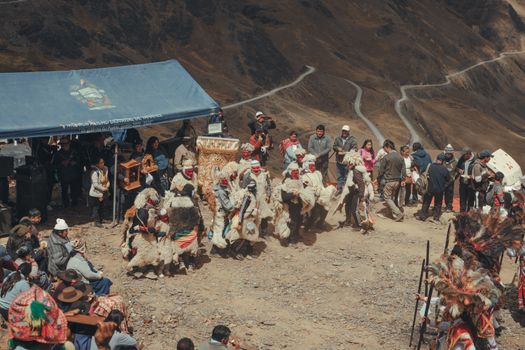
3. Cusco Valley, Peru: Safeguarding the Cosmic Language of the Andes
The Project: Kusi Kawsay Andean School & Cultural Association (Pisac)
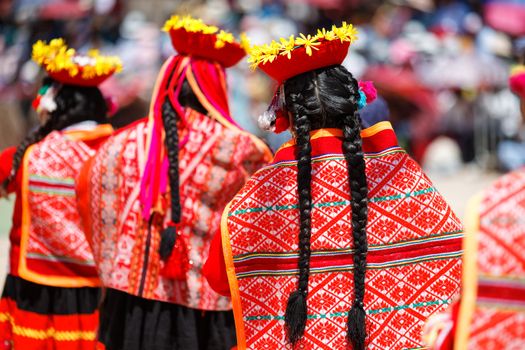
Runasimi (Quechua) was the administrative language of the Inca Empire, but today, modern economic pressures in Peru push younger generations to abandon it in favor of Spanish. In the Sacred Valley town of Pisac, the Kusi Kawsay Association works to reverse this trend by offering an indigenous-led curriculum that honors Andean cosmology, agriculture, and language.
In July 2026—which aligns with the dry, crisp Andean winter—Kusi Kawsay welcomes international volunteers and language learners to support their community archive project.
- The Experience: Learners spend mornings studying the southern dialect of Quechua and afternoons working on community-led projects. This includes documenting oral histories from elders in high-altitude farming communities and helping digitize bilingual educational materials.
- The Linguistic Quirk: Quechua uses "evidential suffixes." Every time you make a statement, you must grammatically indicate whether you personally witnessed the event, heard about it from someone else, or are merely conjecturing. It makes lying grammatically exhausting!
Pro-Tips for Pisac
- The 7:00 AM Ascent: To experience the language in its purest form, avoid the tourist-heavy Pisac market. Instead, hike up the steep dirt trail toward the agricultural terraces of Chahuaytiri at 7:00 AM. Here, community members tend to over 400 varieties of native potatoes. Speak with the elders as they work; they will appreciate your attempts at Quechua far more than any city dweller.
- The Secret Entrance: The Kusi Kawsay office is accessed through a small, unmarked wooden door painted with a yellow sun symbol, located just off the cobblestone path behind the main church plaza.
---
4. Connemara, Ireland: The Peat-Scented Rhythms of Gaeilge
The Project: Acadamh na hOllscolaíochta Gaeilge (An Cheathrú Rua / Carraroe)
While Ireland has seen a national resurgence of pride in its native tongue, the actual Gaeltachtaí (geographic areas where Irish is the primary community language) are shrinking. The Acadamh na hOllscolaíochta Gaeilge, a branch of the University of Galway located in the rugged peninsula of Carraroe, runs world-class summer schools designed to preserve this vital linguistic heritage.
July 2026 is the peak of their summer program, offering a masterclass in community integration.
- The Experience: You will be housed with local bean an tí (homestay hosts) who speak only Irish at home. Your days are split between rigorous grammar clinics and community immersion: learning sean-nós (traditional unaccompanied singing), participating in set dancing, and coastal rowing in traditional wooden currachs.
- The Linguistic Quirk: Irish features initial consonant mutations (eclipsis and lenition). A word’s spelling changes at the beginning depending on the preposition that precedes it.
Pro-Tips for Carraroe
- The Pub Parlance: The true test of your Irish won't happen in the classroom; it will happen at An Cistin, a tiny, low-ceilinged pub near the pier. Arrive by 9:00 PM on a Thursday. Sit near the fireplace where the turf smoke clings to the rafters. Order a pint of local stout, listen to the local fishermen, and wait for your moment to raise your glass and say, "Sláinte chuig na fir agus go mairfidh na mná!" (Health to the men and may the women live long!).
- The Coral Beach Escape: When your brain is fried from irregular verbs, take a 20-minute walk to Trá an Dóilín (the Coral Beach). It’s made of rare, biogenic coralline algae rather than sand. It’s cold, raw, and instantly clearing for the mind.
---
5. Oaxaca, Mexico: Weaving Zapotec Words and Wool in Teotitlán del Valle
The Project: Dixza Rugs & Organic Farm (Teotitlán del Valle)
In the dry, cactus-studded central valleys of Oaxaca, the town of Teotitlán del Valle is famous for its master weavers who use natural dyes to create stunning textile art. It is also a bastion of Diidxazá (Valley Zapotec), an indigenous language that has survived since the pre-Columbian era.
The Dixza project, run by a multi-generational Zapotec family, offers a unique residency program in July 2026 that fuses sustainable agriculture, natural dye workshops, and intensive Zapotec language learning.
- The Experience: This is a hands-on, muddy, gloriously tactile experience. You will help harvest wild cochineal insects and marigold flowers to create vibrant dyes, work on traditional pedal looms, and study the intricate tonal variations of Zapotec with local youth instructors.
- The Linguistic Quirk: Zapotec is a tonal language. The pitch and inflection you use can turn the word for "stone" into "flower" or "face."
Pro-Tips for Teotitlán
- Market Mastery: The local market opens at 6:30 AM. Go early to sit with the grandmothers selling hot atole (a warm corn-based beverage) and tlayudas. If you can successfully ask for your breakfast using the correct Zapotec tonal registers, you will be met with beaming smiles and probably an extra tamale.
- The Sacred Peak: On Sunday morning, hike up El Picacho, the sacred peak overlooking the village. It is a place of deep spiritual significance where locals leave offerings. The silence at the top is the perfect place to practice the complex glottal stops of the Zapotec tongue.
---
The July 2026 Logistics & Budget Blueprint
To help you plan your summer of linguistic activism, here is a breakdown of the key logistics for each of these high-authority projects:
| Project & Location | Focus Language | Est. Cost (2 Weeks) | How to Get There | Best Time to Apply | | :--- | :--- | :--- | :--- | :--- | | Maizpide Barnetegia <br>(Lazkao, Spain) | Euskara (Basque) | $850 USD <br>(Includes room & board) | Fly to San Sebastián (EAS) or Bilbao (BIO), then take the regional ALSA bus to Beasain, followed by a local taxi to Lazkao. | By March 1, 2026 | | Nibutani Circle <br>(Hokkaido, Japan) | Ainu | $1,200 USD <br>(Includes lodging & materials) | Fly to New Chitose Airport (CTS) in Sapporo. Take the JR train to Tomakomai, then the local Donan Bus directly to Nibutani. | By January 15, 2026 | | Kusi Kawsay <br>(Pisac, Peru) | Runasimi (Quechua) | $600 USD <br>(Program fee/donation) | Fly to Cusco (CUZ). Take a local colectivo (shared minivan) from Calle Puputi in Cusco directly to the Pisac bridge. | By February 28, 2026 | | Acadamh na hOllscolaíochta <br>(Connemara, Ireland) | Gaeilge (Irish) | $1,100 USD <br>(Includes homestay) | Fly to Shannon (SNN) or Dublin (DUB). Take the Citylink bus to Galway City, then the 424 TFI bus to Carraroe. | By April 1, 2026 | | Dixza Farm & Rugs <br>(Oaxaca, Mexico) | Diidxazá (Zapotec) | $950 USD <br>(Includes farm stay & meals) | Fly to Oaxaca International Airport (OAX). Take a shared colectivo heading toward Mitla and ask to be dropped at the Teotitlán turnoff. | By March 15, 2026 |
---
How to Be a Linguistic Ally, Not a Tourist
Traveling to learn an endangered language is a privilege, and it comes with deep ethical responsibilities. These are communities protecting their cultural sovereignty, not theme parks designed for your self-actualization. Keep these three rules of engagement in mind:
- Listen Twice as Much as You Speak: You are there to absorb, support, and document if requested. Do not treat local speakers as novelty acts. Respect their boundaries, especially regarding sacred oral histories or spiritual terminology.
- Pay Fairly and Directly: Always choose projects run by indigenous or local community boards. Ensure your money is going directly into the hands of local teachers, hosts, and artisans—not international volunteer agencies that take a massive cut.
- Understand the Stakes: For you, this is a fascinating summer trip. For the community, this is a fight against cultural erasure. Approach every class, conversation, and mistake with the humility and respect that this battle deserves.
---