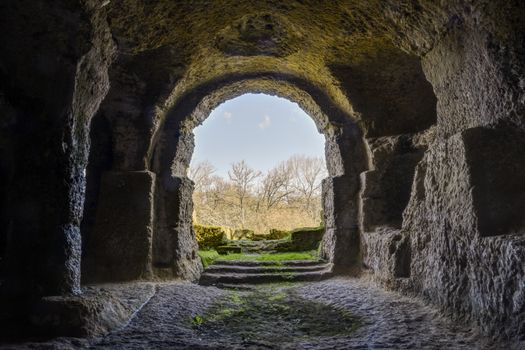
Secret Tunnels Beneath Famous Cities Instagram Influencers Don't Want You To Know
Remember that feeling? You scroll through your feed, bombarded by perfectly posed selfies in front of iconic landmarks – the Eiffel Tower at sunset, a pristine Roman fountain, a bustling market street. It's beautiful, yes, but after a while, it all starts to blend together. The filters, the same angles, the carefully curated smiles. You start to wonder: is there anything real left to discover? Anything that hasn't been monetized, merchandised, and plastered all over every feed?
I used to feel that way too. My first few trips were a blur of ticking off famous sights, rushing from one photo op to the next. But then, on a particularly sweltering August afternoon in Rome, something shifted. I'd just endured an hour-long queue for the Colosseum, elbowing my way through hordes of tourists, only to find myself squinting at ancient stones, trying to imagine the gladiators amidst the selfie sticks. It was magnificent, no doubt, but it felt… distant. Unconnected.
Later that day, seeking refuge from the heat and the crowds, I stumbled upon a tiny, unassuming sign pointing downwards, promising "Subterranean Rome." Out of pure curiosity, I descended. What I found wasn't glamorous, it wasn't brightly lit, and it certainly wasn't designed for a viral TikTok dance. It was dark, dusty, cool, and utterly, profoundly, real. I was walking through layers of history – a Roman house, an early Christian church, a Mithraic temple – stacked one upon another, whispering stories that no surface-level monument could ever convey.
That day, I learned a powerful truth: the most profound travel experiences often lie beneath the surface, hidden from plain sight, far from the polished perfection of an influencer's grid. These are the secret tunnels, the forgotten vaults, the ancient catacombs – the underground cities that most tourists (and certainly most influencers) don't even know exist, or perhaps, don't want you to know exist. Why? Because they're not always 'pretty,' they're often challenging, and they demand more than just a quick photo. They demand your full presence, your imagination, and a willingness to get a little dusty. And trust me, they are absolutely worth it.
Are you ready to trade the filtered facade for raw, authentic history? Let's dig in.
Why Go Underground? Escaping the Crowds & Finding Authentic History
The allure of the underground is primal. It's the thrill of discovery, the quiet hum of history, the escape from the relentless pace of modern life. While the surface world buzzes with traffic, commerce, and tourist throngs, beneath your feet lies a different realm – a preserved time capsule where echoes of past civilizations still resonate.
Think about it: above ground, cities are constantly evolving. Buildings are torn down, new ones erected, streets repaved, and historical sites are often heavily restored or reconstructed. But underground, time moves differently. These subterranean spaces were often abandoned, sealed off, or simply forgotten, preserving them in a state remarkably close to how they once were. You're not just looking at history; you're stepping into it.
This is precisely why these places are often overlooked by the mainstream travel narrative, especially by those focused on creating visually perfect content. There's no grand vista for a drone shot, no sun-drenched cafe for a lifestyle pose, and often, photography is restricted or challenging due to low light. But for the true explorer, the history buff, or anyone craving a unique and profound experience, these underground worlds offer an unparalleled connection to the past. They invite introspection, wonder, and a deep appreciation for human ingenuity and resilience.
Rome's Subterranean Secrets: Where Emperors and Martyrs Rest
Rome, the Eternal City, is famous for its Colosseum, Vatican, and Pantheon. But beneath its bustling streets lies an entire other city, a labyrinth of tunnels, crypts, and ancient structures that tell an even older, more intimate story. My first foray into Rome’s underground was truly transformative.
Basilica di San Clemente: This triple-layered basilica near the Colosseum is a masterclass in archaeological discovery. You start in a beautiful 12th-century church, then descend to an earlier 4th-century basilica, and finally, even deeper, to a 1st-century Roman house and a Mithraic temple. The air grows cooler, the sounds of the city fade, and you can hear the rush of an ancient underground stream. It’s an almost spiritual experience, witnessing the layers of human history literally stacked upon each other. I remember touching the rough stone walls of the Mithraeum, imagining secret rituals performed centuries ago, a stark contrast to the grandeur of the basilica above.
- Location: Via Labicana, 75, 00184 Roma RM, Italy (near the Colosseum).
- Price: Basilica entry is free, but the archaeological excavations (underground) cost about €10 per person.
- Tips: No photos allowed in the lowest levels. Wear comfortable shoes as there are many stairs. Book tickets online in advance to avoid queues, especially during peak season.
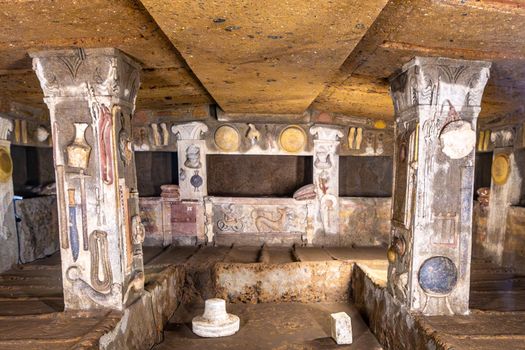
The Roman Catacombs: While many tourists visit the Vatican, few venture to the vast networks of early Christian burial grounds outside the city walls. The Catacombs of Callixtus, Domitilla, or Priscilla offer a chilling yet fascinating glimpse into ancient Roman life and death. Walking through these narrow, dark passages, lined with thousands of burial niches carved into the tufa rock, is incredibly humbling. Our guide, a passionate seminarian, spoke of martyrs and early Christian communities, making the cold stone walls come alive with stories. It's not a place for lighthearted selfies, but for quiet contemplation.
- Locations:
- Catacombs of Callixtus: Via Appia Antica, 110, 00179 Roma RM, Italy
- Catacombs of Domitilla: Via delle Sette Chiese, 282, 00147 Roma RM, Italy
- Catacombs of Priscilla: Via Salaria, 430, 00199 Roma RM, Italy
- Price: Approximately €8-10 per person for a guided tour (mandatory).
- Tips: Tours are generally conducted in multiple languages. Dress respectfully (shoulders and knees covered) as these are sacred sites. Photography is usually restricted or forbidden. Consider a combined tour that includes the Appian Way for a full experience.
Paris's Haunting Passageways: The Catacombs & Beyond
Paris, the City of Light and Romance, holds a dark secret beneath its charming boulevards: the Paris Catacombs. This isn't just a small burial site; it's a vast ossuary holding the remains of over six million Parisians, transferred here from overcrowded cemeteries in the late 18th century.
The Paris Catacombs: Descending 20 meters below ground, you enter a world meticulously arranged with femurs, skulls, and other bones, creating macabre yet strangely beautiful patterns. It's an overwhelming experience, a stark reminder of mortality and the sheer scale of human life and death. I remember the air growing heavy, the silence broken only by the shuffling of feet and hushed whispers. It’s a powerful, somber journey that profoundly impacts you, far more than any perfectly framed picture of the Eiffel Tower ever could.
- Location: 1 Avenue du Colonel Henri Rol-Tanguy, 75014 Paris, France.
- Price: €15-20 per person. Booking online well in advance is essential, as queues can be several hours long without a timed entry ticket.
- Tips: The tour is self-guided but well-signposted. It's a one-way route, about 1.5 km long, with 130 steps down and 83 steps up. It can be cold and damp, so bring a light jacket. If you are claustrophobic, be aware that some passages are narrow. Respectful photography is generally allowed, but flash photography is discouraged.
While the Catacombs are the most famous, Paris also has its own sewer museum (Les Egouts de Paris), which, while not a "tunnel" in the traditional sense, offers another unique glimpse into the city's hidden infrastructure and history. It's a fascinating, albeit pungent, experience for those truly interested in how a city functions beneath the surface.
Edinburgh's Eerie Vaults: Ghost Stories and Hidden Lives
Edinburgh, Scotland's capital, is a city steeped in history and legend. Its ancient Old Town, with its closes and wynds, hides a network of subterranean vaults and closes that tell tales of plague, poverty, and paranormal activity.
The Real Mary King's Close: This is perhaps Edinburgh's most famous underground attraction. Once a bustling street, it was partially buried and built over in the 17th century when the Royal Exchange was constructed. Walking through Mary King's Close, you're led by a character guide (often in period costume) who brings to life the stories of its former residents – families living in squalor, victims of the plague, and the city's dark secrets. The feeling of stepping into perfectly preserved 17th-century rooms, complete with original fireplaces and doorways, is incredibly powerful. I remember feeling a distinct chill, not just from the underground air, but from the palpable sense of history.
- Location: Warriston's Close, 2 High St, Edinburgh EH1 1PG, UK.
- Price: Approximately £20 per adult. Tours are guided and last about an hour.
- Tips: Book well in advance, especially during peak tourist season. Photography is strictly prohibited on the tour. It's not suitable for very young children or those with mobility issues due to uneven terrain and stairs.
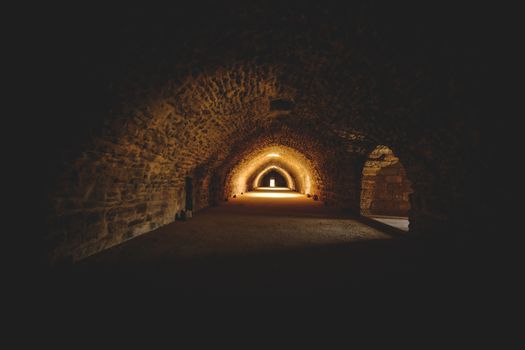
Niddry Street Vaults / Blair Street Underground Vaults: For those seeking a deeper dive into Edinburgh's darker past, these vaults offer a grittier, more atmospheric experience. Built into the arches of the South Bridge in the late 18th century, these spaces were initially used for workshops and storage, but quickly degenerated into slums, brothels, and illicit drinking dens. They are notoriously associated with poverty, crime, and hauntings. Tours here are often ghost-themed and intensely atmospheric. I distinctly remember the oppressive darkness and the feeling of being watched – whether it was the cold stone or something more, who knows?
- Locations: Various tour operators run tours from Niddry Street or Blair Street. Examples include Mercat Tours and City of the Dead Tours.
- Price: Approximately £15-£20 per person, depending on the tour.
- Tips: These tours are often very dark and can be genuinely spooky. They are not for the faint of heart. Wear comfortable shoes and be prepared for uneven, damp surfaces. Photography rules vary by tour operator, so check beforehand.
Naples's Hidden Depths: A City Built on Layers of Resilience
Naples, a vibrant and chaotic city in southern Italy, hides an astonishing network of tunnels and chambers beneath its streets – a testament to millennia of human activity, from ancient Greeks to World War II.
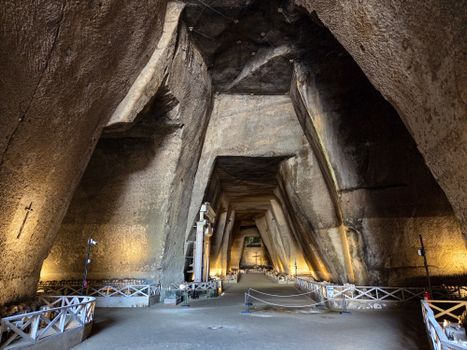
Napoli Sotterranea (Naples Underground): This is arguably the most comprehensive underground experience in Italy. Starting from a seemingly innocuous entrance in the historic center, you descend into a vast network of Greek aqueducts, Roman cisterns, and WWII air-raid shelters. The tour takes you through incredibly narrow passages (optional, but highly recommended for the full experience!), past ancient wells, and into a preserved Roman theatre that was only rediscovered when a local tailor's shop floor collapsed! It’s an incredible journey through multiple eras. My favorite part was squeezing through a tiny, candlelit passage, feeling like a true explorer.
- Location: Piazza San Gaetano, 68, 80138 Napoli NA, Italy.
- Price: Around €10-€15 per person for a guided tour.
- Tips: Tours last about 1.5-2 hours. There are multiple tour companies offering similar experiences, so check reviews. The optional narrow passages are very tight and not suitable for those with severe claustrophobia, but there's always an alternative route. Wear comfortable shoes.
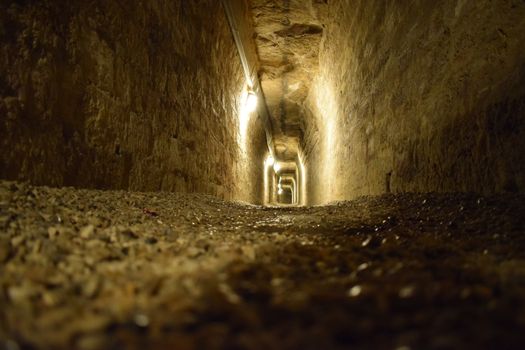
Galleria Borbonica (Bourbon Tunnel): This impressive tunnel, commissioned by King Ferdinand II of Bourbon in the mid-19th century as an escape route, was later used as a municipal storage facility, a WWII air-raid shelter, and even a judicial deposit for confiscated vehicles. Today, it’s a fascinating museum showcasing vintage cars, motorbikes, and war relics, all preserved in the subterranean environment. It offers a different perspective on Naples's history, focusing on its more recent past and its resilience during wartime.
- Location: Via Domenico Morelli, 61, 80132 Napoli NA, Italy (and other entrances).
- Price: Approximately €10-€15 per person for a guided tour.
- Tips: Several tour options are available, from standard walks to "adventure" routes involving rafts on underground waterways. Check their website for details.
Beyond the Obvious: Practical Tips for the Subterranean Explorer
Embarking on an underground adventure requires a little more preparation than simply showing up at a famous landmark. Here are my top tips to ensure a safe, enjoyable, and truly authentic experience:
- Book in Advance, Always: This is perhaps the most crucial tip. Popular underground attractions, especially the Catacombs in Paris and Rome, and Mary King's Close in Edinburgh, have limited capacity and sell out quickly. Save yourself hours of queueing (or disappointment) by booking your tickets online weeks, or even months, ahead.
- Comfortable Footwear is Non-Negotiable: You’ll be doing a lot of walking, often on uneven, damp, or slippery surfaces. Leave the fashionable sandals or heels for dinner; sturdy walking shoes or sneakers are your best friend underground.
- Layer Up: Even on a scorching summer day, subterranean environments maintain a cool, consistent temperature. Bring a light jacket or sweater, even if it feels unnecessary above ground.
- Mind Your Head (and Your Claustrophobia): Some passages can be quite low or narrow. Always pay attention to your guide's instructions and be aware of your surroundings. If you experience severe claustrophobia, research specific tours carefully; many offer alternative routes for tight squeezes.
- Respect the Rules: Photography restrictions are common in these sensitive historical and sacred sites. If photos aren't allowed, respect it. If they are, avoid flash, be quick, and be mindful of other visitors. These places are about experience, not just capturing an image.
- Bring a Small Flashlight or Headlamp: While tours usually provide some lighting, a personal light source can be invaluable for spotting intricate details, reading faded inscriptions, or simply navigating darker sections more confidently.
- Engage with Your Guide: Many underground tours are guided, and these guides are often passionate experts. Ask questions, listen to their stories, and let them bring the history to life. Their narratives are often more compelling than anything you'll read in a guidebook.
- Leave No Trace: These are fragile historical environments. Do not touch walls, disturb artifacts, or leave any litter behind. Help preserve these incredible sites for future generations.
- Battery Pack for Your Phone/Camera: While you might not get cell signal underground, you'll still want your phone charged for navigation to and from the sites, and for any allowed photos.
Why Influencers Don't Go Here (And Why YOU Should!)
Let's be honest: these secret tunnels aren't typically "influencer material." You won't find perfectly diffused natural light, spacious backdrops for outfit-of-the-day shots, or opportunities for elaborate flat lays with artisanal coffee. They're often dark, damp, and require a certain level of physical exertion and mental engagement. They don't offer instant gratification or easily shareable, viral content.
But that's precisely their magic.
These underground worlds offer something far more valuable than a fleeting like: they offer a profound, unfiltered connection to history. They challenge you to look beyond the surface, to imagine lives lived centuries ago, and to confront the raw, sometimes uncomfortable, truths of human existence.
When you emerge from the depths of Rome's catacombs, or the eerie vaults of Edinburgh, or the bone-lined passages of Paris, you carry with you a different kind of souvenir. It's not a perfectly edited photo, but a deeply ingrained memory, a sense of wonder, and a richer understanding of the cities you thought you knew. You'll have stories that no one else does, experiences that transcend the ordinary, and a newfound appreciation for the hidden layers of our world.
This isn't about chasing trends; it's about chasing truth. It's about finding adventure where others see only darkness. It's about being a true explorer, not just a spectator. So, are you ready to ditch the curated feeds, step out of the spotlight, and dive into the real, untold stories beneath our most famous cities?
The secrets are waiting.
---