The Great Summer Rail Shift: Why We Left the Runway Behind
I stepped off the TGV onto the sun-baked platform of Barcelona Sants at precisely 3:37 PM. My shoulders weren't sore from lugging an overweight bag through endless terminal queues, my ears weren't popping from cabin pressurization, and I was holding a half-finished espresso I’d bought at Gare de Lyon six hours earlier. As I walked straight out of the station doors into the buzzing streets of Catalonia—no 45-minute airport express ride required—I felt a familiar wave of triumph.
For decades, budget airlines tricked us into believing that a 1-hour flight was faster than a 6-hour train. But when you factor in the 2-hour pre-flight arrival, the 45-minute trek to out-of-the-way airports like Paris Beauvais or Milan Bergamo, security pat-downs, liquid restrictions, and baggage carousel roulette, flying quickly turns into a grueling 7-hour ordeal.
This summer, the numbers have officially tipped. Across Europe and Asia, track upgrades, open-access rail competition, and new sleeper lines have made rail travel faster, cheaper, and undeniably cooler than flying. Here are the standout train routes that replaced short flights that are trending this summer—and exactly how you can ride them like a seasoned pro.
---
1. Paris to Barcelona: The Mediterranean High-Speed Marvel
- Replaces the flight between: Paris (ORY/CDG) and Barcelona (BCN)
- The Vibe: French countryside elegance morphing into wild Catalan coastline.
For years, travelers habitually booked budget hops across the Pyrenees. Today, SNCF’s TGV InOui links Paris Gare de Lyon directly to Barcelona Sants in under 6 hours and 45 minutes.
The route is a visual masterpiece. As the double-decker train rocket south through the Rhône Valley at 186 mph (300 km/h), the urban suburbs yield to rolling vineyards, ancient limestone cliffs, and the sparkling blue expanse of the Étang de Thau near Narbonne. Keep your eyes glued to the left side of the train around Port-la-Nouvelle: the tracks cut across a narrow coastal spit where wild pink flamingos wade in the shallow salt lagoons.
``` Flight vs. Train (Paris to Barcelona):
- Plane Door-to-Door: ~6h 30m (Transit + Security + Flight + Taxi)
- Train Door-to-Door: 6h 45m (Station to Station in City Centers)
- Carbon Footprint: Train produces ~92% fewer CO2 emissions per passenger.
```
- Insider Pro-Tip: Book the upper deck (Sallon Haut) for panoramic views. Grab a fresh ham-and-butter jambon-beurre from L'Éclair de Génie inside Gare de Lyon before boarding; the onboard bistro is decent, but gourmet station food turns your train car into a private dining suite.
---
2. Vienna to Venice: The Nightjet Alpine Awakening
- Replaces the flight between: Vienna (VIE) and Venice (VCE)
- The Vibe: Falling asleep in imperial Central Europe, waking up on the Venetian Lagoon.
Short-haul regional flights between Austria and Northern Italy are notoriously expensive and offer zero views once the sun sets. Enter the ÖBB Nightjet, Austria’s flagship sleeper service, which has sparked a massive revival in European night trains.
Departing Vienna’s Hauptbahnhof around 9:30 PM, the train climbs quietly into the Semmering Pass while you settle into your private compartment. The brand-new Nightjet fleet features single-occupancy "Mini-Cabins"—pod-style sleeper berths designed for solo travelers—as well as deluxe en-suite compartments.
Instead of waking up at 4:00 AM to catch a crack-of-dawn flight to Venice Marco Polo, you wake up at 8:30 AM as the train glides silently across the Liberty Bridge spanning the Venetian Lagoon. You step off directly onto the steps of Santa Lucia Station, where water taxis and gondolas replace exhaust-choked shuttle buses.
- Insider Pro-Tip: In single compartments, request a cabin on the right side of the train direction to capture the sunrise light casting over the Venetian marshes as you approach the city.
---
3. Madrid to Seville: The Spanish Rail Renaissance
- Replaces the flight between: Madrid (MAD) and Seville (SVQ)
- The Vibe: Low-cost, ultra-luxury velocity across dry olive plains.
Spain has quietly built the second-largest high-speed rail network in the world, and market deregulation has unleashed a fierce price war between operators: AVE (Renfe), Ouigo, and the private Italian-backed operator iryo.
The Madrid (Atocha) to Seville (Santa Justa) run takes just 2 hours and 30 minutes. The direct flights between these cities have become practically obsolete for leisure travelers. Onboard iryo’s sleek red Frecciarossa 1000 trains, passengers ride in Whisper-quiet leather seats equipped with 5G Wi-Fi, individual power outlets, and at-seat gastronomy crafted by Spanish chefs.
Because of heavy competition, ticket prices routinely drop as low as €18 ($20 USD) one-way—a fraction of a last-minute Iberia airfare.
- Insider Pro-Tip: Skip the basic ticket and upgrade to iryo's "Infinita Bistro" class. The price gap is often less than €25, and it includes a hot, seasonal Spanish meal with regional Rioja wine served straight to your seat.
---
4. London to Edinburgh: The Coastal Electric Express
- Replaces the flight between: London (LHR/LCY/LTN) and Edinburgh (EDI)
- The Vibe: Moody Scottish borders, dramatic seaside cliffs, and zero flight delays.
The London-to-Edinburgh corridor was long dominated by short-haul domestic flights. However, with London Heathrow and Luton suffering from summer terminal gridlock, travelers are flocking to the East Coast Main Line.
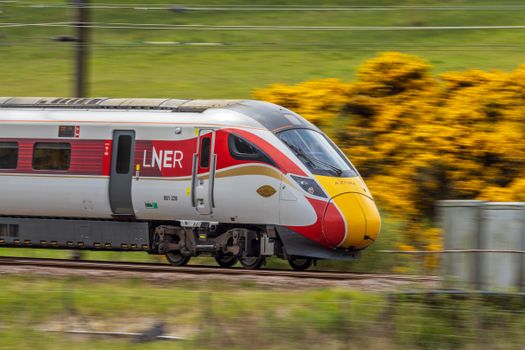
Two major rail providers compete here: LNER (London North Eastern Railway) and Lumo, an all-electric budget operator. Gliding out of London King’s Cross, the train hits top speed as it slices through Yorkshire and Northumberland.
Between Newcastle and Berwick-upon-Tweed, the train runs so close to the North Sea edge that you feel suspended over the crashing waves. Look out the right-hand window to spot Holy Island (Lindisfarne) and the haunting ruins of Bamburgh Castle perched atop basalt cliffs.
``` Time Saved:
- Flight: 1h 20m air time + 2h airport wait + 45m security + 45m Edinburgh Tram = 4h 50m
- Train: 4h 15m directly from King's Cross to Waverley Station (City Center)
```
- Insider Pro-Tip: On LNER trains, reserve Seat 61 or 62 in Coach M (Quiet Coach) on the right side (facing North) for unobstructed ocean vistas without chatter.
---
5. Tokyo to Kanazawa: The Hokuriku Shinkansen Short-Cut
- Replaces the flight between: Tokyo (HND) and Kanazawa/Komatsu (KMQ)
- The Vibe: Precision engineering slicing through lush mountain passes to Edo-era districts.
In Japan, high-speed rail (Shinkansen) has long made domestic flights redundant, but the extension of the Hokuriku Shinkansen line to Tsuruga has cemented train dominance over regional air routes from Tokyo’s Haneda Airport.
The journey from Tokyo Station to Kanazawa takes just 2 hours and 27 minutes on the Kagayaki express train. Instead of taking an airport bus to Komatsu Airport, sitting in waiting lounges, and boarding a regional turboprop, you step aboard a train whose punctuality is measured in seconds.
The ride cuts directly through the Japanese Alps. As you streak through Nagano, steep forested peaks frame the horizon before dropping down toward the Sea of Japan coastline. On board, the quiet is near-absolute; conductors bow deeply when entering and exiting every carriage, and the ride is so smooth your coffee surface hardly ripples.
- Insider Pro-Tip: Purchase an Ekiben (bento box curated specifically for train travel) inside Tokyo Station’s Ekiben Matsuri shop before boarding. Look for the local Kanazawa crab and sea bream sushi box paired with cold local sake.
---
Flight vs. Train: The Reality Checklist
If you are still deciding whether to book a ticket on a regional jet or a high-speed train this summer, review this real-world breakdown:
| Metric | Short-Haul Flight (e.g., Paris-Barcelona) | High-Speed Train (e.g., TGV InOui) | | :--- | :--- | :--- | | Check-in Requirement | 120 minutes before departure | 15-20 minutes before departure | | Luggage Limits | Strict weight/size rules; heavy fees | Generous limits; no liquid restrictions | | Departure Point | Outlying suburbs (High transfer cost) | City center (Direct metro access) | | Connectivity | Paid, spotty Wi-Fi; airplane mode | Free high-speed Wi-Fi & 5G coverage | | Carbon Impact | ~180-250g CO2 per passenger/km | ~6-14g CO2 per passenger/km | | Scenery Value | Cloud tops and seatback screens | Coastlines, castles, and mountain passes |
---
Logistical Blueprint: Route Comparison & Budget Guide
To help you plan your ideal summer trip, here is a snapshot breakdown of the logistics, estimated costs, and ideal booking windows for these top routes.
| Route | Duration | Approx. Cost ($USD) | Best Booking Window | Top Rail Operator | | :--- | :--- | :--- | :--- | :--- | | Paris $\rightarrow$ Barcelona | 6h 45m | $42 – $160 | 90–120 days ahead | SNCF / TGV InOui | | Vienna $\rightarrow$ Venice | 11h 00m (Sleeper) | $38 (Seat) – $180 (Cabin) | 180 days ahead | ÖBB Nightjet | | Madrid $\rightarrow$ Seville | 2h 30m | $20 – $75 | 30–60 days ahead | iryo / AVE | | London $\rightarrow$ Edinburgh | 4h 15m | $25 – $110 | 90 days ahead | LNER / Lumo | | Tokyo $\rightarrow$ Kanazawa | 2h 27m | $90 – $130 | 30 days ahead | JR East (Kagayaki) |
---
Master Class: Insider Strategies for Booking Summer Rail
1. The 90-Day Golden Window
Unlike airlines that use dynamic pricing up to the hour of flight, state rail networks (like SNCF, ÖBB, and Renfe) release their lowest tier tickets (TICKET PROMO) in fixed booking windows—usually 90 to 180 days in advance. Set calendar alerts for your travel dates to snag early-bird pricing before seats sell out to local commuters.
2. Ditch Third-Party Aggregators for Direct Apps
While sites like Omio or Trainline are great for comparing routes, always complete your final booking directly on the carrier’s native app (e.g., ÖBB Nightjet, SNCF Connect, or LNER). If a train is delayed or cancelled, native app holders receive real-time push updates, auto-rebooking options, and instant refund processing that third-party vendors often delay for weeks.
3. Embrace Open-Access Rail Competitors
In Spain, Italy, and the UK, rail markets are privatized and highly competitive. When searching for routes, look specifically for "open-access" operators:
- In Spain: Choose iryo or Ouigo instead of standard Renfe trains.
- In Italy: Choose Italo alongside state-run Frecciarossa.
- In the UK: Book Lumo on the East Coast line for fares up to 50% cheaper than LNER.
4. Pack a "Trackside" Picnic
One of train travel’s greatest pleasures is the complete absence of liquid rules. You can bring a bottle of local wine, fresh soft cheeses, crusty baguettes, or specialty coffee straight onto the carriage. Skip the basic microwave paninis at the train snack bar and spend $15 at a local deli near the station before boarding.
---
The Verdict: Summer Belongs on the Tracks
The era of hyper-cheap, frictionless short-haul air travel has drawn to a close. Between overcrowded terminals, systemic flight delays, and steep add-on charges for every piece of hand luggage, flying short distances has lost its appeal.
High-speed rail has shifted from a mere eco-conscious alternative into the clearly superior way to travel. You save time, protect your sanity, keep your luggage fees at zero, and watch the world unfold right outside your window at 200 miles per hour.
This summer, leave your clear plastic liquid baggies behind, skip the airport shuttle, and book a seat on the rails instead. Your travel story will be all the better for it.
---