My $3,000 Oops: How a Broken Ankle in Bali Taught Me the Real Value of Travel Insurance (and Its Secrets!)
Picture this: October 2023. I’m living my best life on a scooter, cruising through the lush rice paddies of Ubud, Bali. The air is warm, the scent of incense hangs heavy, and I’m humming along to some indie tunes. Pure bliss. Then, a rogue pothole, a sudden swerve, and the next thing I know, I’m on the ground, my ankle screaming in protest.
Fast forward a few hours, and I’m at a local clinic, being told I’ve got a nasty fracture. My perfect Bali escape? Officially derailed. Panic set in. Beyond the pain, my mind raced: How much is this going to cost? What about the flight home? My pre-paid yoga retreat?
Thankfully, I had travel insurance. But here’s the kicker: I nearly didn’t. I’d almost gone for the cheapest, bare-bones option, thinking, "What could go wrong in Bali?" That broken ankle ended up costing over $3,000 for medical care, a modified flight, and a few other incidentals. Every single penny was covered, thanks to a policy I almost scoffed at. That experience wasn't just a physical recovery; it was a deep dive into the labyrinthine world of travel insurance. And what I discovered? There are legitimate "loopholes" – smart strategies, really – that can save you thousands, especially if you're planning an epic October 2025 adventure.
Forget the idea that insurance is just a money pit. With the right knowledge, it’s a powerful financial safety net that can actually save you a fortune. And trust me, after my Bali incident, I became an expert. Let's unlock these secrets together for your trips next October!
1. The Credit Card Cavalry: Your First Line of (Often Free) Defense
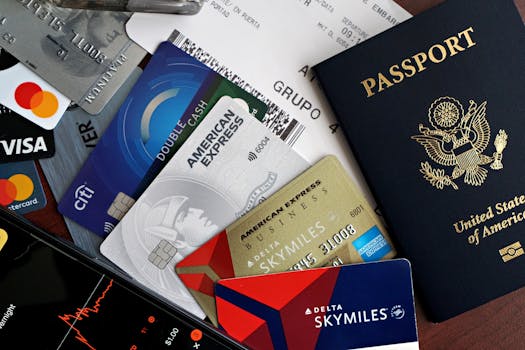
Let's start with the easiest, most overlooked "loophole" of them all: your credit card. Many premium travel credit cards aren't just for earning points; they come packed with an impressive suite of travel insurance benefits that can often rival, or even surpass, basic travel insurance policies.
My Story: I once had a flight from Rome to London delayed by 12 hours. I was fuming, picturing a night on an airport bench. But then I remembered my Chase Sapphire Reserve card. A quick call confirmed they offered primary travel delay insurance. Within an hour, I was checked into a swanky airport hotel, enjoyed a gourmet meal, and even got reimbursed for a new outfit I bought (because my luggage was stuck!). Total savings? Easily $400+.
The Loophole: The key here is knowing what you have and using the right card. Cards like the Chase Sapphire Reserve, American Express Platinum, Capital One Venture X, or certain Visa Infinite cards often include:
- Trip Cancellation/Interruption: If your trip is cut short or canceled due to covered reasons (illness, severe weather, etc.), you could be reimbursed for non-refundable expenses.
- Baggage Delay/Loss: Compensation for essential items if your luggage is delayed, or reimbursement for lost bags.
- Rental Car Insurance (Primary): This is huge! Many personal car insurance policies only offer secondary coverage, meaning your own policy pays first. Premium credit cards often provide primary coverage, meaning they pay before your personal insurance even gets involved.
- Travel Delay Insurance: As I experienced, this covers meals and lodging during significant delays.
- Emergency Medical Evacuation: Some even offer this, though often with lower limits than dedicated policies.
Actionable Tip for October 2025:
- Audit Your Wallet: Pull out your credit cards and actually read their benefits guides. You might be surprised.
- Pay with the Right Card: Always book your flights, hotels, and rental cars with the card that offers the best travel protection. This is often a condition for the benefits to kick in.
- Understand Primary vs. Secondary: For rental cars, primary coverage is gold. For other benefits, secondary coverage might mean you need to claim through your personal insurance first.
2. The "Pre-Existing Condition" Paradox: Navigating Waivers and Look-Back Periods
This is where many travelers get tripped up and either pay exorbitant premiums or go uninsured, fearing their medical history will exclude them. But there's a smart way around it.
My Story: My uncle, a spry 70-year-old, planned a dream trip to the Norwegian Fjords for October 2025. He has a history of heart issues, which made getting traditional insurance tricky and expensive. He was about to give up until I helped him dig into policy specifics. We found a policy that offered a "pre-existing condition waiver" – a true game-changer.
The Loophole: Most travel insurance policies have a "look-back period" (e.g., 60-180 days) where they review your medical history. If you've had a change in your condition or medication during this period, it might not be covered. However, many comprehensive policies offer a Pre-Existing Condition Waiver. To qualify, you typically need to:
- Purchase the policy within a specific timeframe: Usually 10-21 days of your initial trip deposit. This is crucial!
- Insure the full non-refundable cost of your trip: You can't just insure part of it.
- Be medically able to travel at the time of purchase.
By meeting these conditions, the insurance company essentially waives their right to exclude your pre-existing conditions from coverage, as long as your condition is stable when you purchase the policy. This can save you thousands in potential medical bills if your condition flares up abroad.
Actionable Tip for October 2025:
- Book Early, Insure Early: As soon as you put down a significant deposit for your October 2025 trip (flights, cruise, tour), start researching and purchasing your travel insurance. Don't wait until a month before!
- Read the Fine Print: Carefully check the "pre-existing condition waiver" clause. Understand the look-back period and the requirements to qualify for the waiver.
- Compare Policies: Use comparison sites (like Squaremouth, InsureMyTrip) and filter for policies offering these waivers.
3. Annual Policies vs. Single-Trip: The Long-Haul Savings Hack
If you're anything like me, October 2025 isn't your only travel plan. Maybe you're eyeing a spring break getaway, a summer family reunion, or a quick weekend escape. If you take two or more trips a year, an annual multi-trip policy can be a massive money-saver.
My Story: For years, I bought single-trip policies. A week in Portugal, two weeks in Thailand, a long weekend in New York – each time, a new policy. It added up. Then, before a planned October 2024 trip to Japan and a separate December trip to the Caribbean, I did the math. A comprehensive annual policy cost roughly 1.5 times what I'd paid for just one of my previous single trips, but covered all my travel for 365 days. I saved hundreds that year. For October 2025, if you have multiple trips planned, this is a no-brainer.
The Loophole: The "break-even point" for an annual policy is often much lower than you'd think. Even two moderate trips can make an annual policy more cost-effective. Plus, the convenience of not having to buy a new policy every time you travel is priceless.
Actionable Tip for October 2025:
- Assess Your Travel Habits: If you anticipate even two trips (even short ones) between now and October 2025, and beyond, calculate the cost of two single-trip policies versus one annual policy.
- Check Coverage Limits: Annual policies usually have per-trip limits (e.g., 30 or 45 days per trip). Ensure this aligns with your longer adventures.
- Consider Your Destination Mix: If you're heading to high-cost medical countries (like the US) or destinations with higher risk, an annual policy with robust medical coverage could be particularly valuable.
4. The "Cancel for Any Reason" (CFAR) Conundrum: Is It Worth the Premium?
CFAR insurance is the holy grail of flexibility, allowing you to cancel your trip for literally any reason and get a percentage of your non-refundable costs back. It sounds amazing, but it's typically more expensive and comes with its own set of rules.
My Story: Planning a once-in-a-lifetime photography expedition to Patagonia for October 2025, I was worried about unforeseen circumstances – a sudden work project, a family emergency, or even just cold feet about that epic glacier trek. Standard policies cover named perils, but what if my reason wasn't on the list? CFAR became my peace of mind investment. I ended up not needing it, but knowing I had that option was invaluable.
The Loophole: CFAR isn't always the right choice, but when it is, it's invaluable. It generally reimburses 50-75% of your non-refundable expenses, but it significantly broadens your cancellation window.
- When to Use It: This is perfect for high-cost, non-refundable trips (e.g., luxury cruises, safaris, multi-stop international tours, or trips where you've paid large deposits for unique experiences). It's also excellent if you have personal health concerns, are planning during an uncertain global period (though check specific policy wording for pandemics), or simply desire ultimate flexibility.
- The Catch: You typically must purchase CFAR within 10-21 days of your initial trip deposit, and you usually need to insure the entire non-refundable cost of the trip. It also adds 40-60% to the cost of a standard policy.
Actionable Tip for October 2025:
- Evaluate Your Risk: Is your October 2025 trip particularly expensive or complex? Are there personal circumstances that might make cancellation more likely, but not covered by standard policies?
- Act Fast: If you decide CFAR is for you, purchase it immediately after your first trip deposit. Missing that initial window means you won't qualify.
- Compare Against "Named Perils": Sometimes, a robust standard policy covering a wide range of "named perils" (illness, weather, job loss, etc.) is sufficient and much cheaper. Only opt for CFAR if you truly need the "any reason" flexibility.
5. Decoding the Fine Print: Medical Evacuation and Local Care Secrets
Medical emergencies abroad can be astronomically expensive. My Bali ankle taught me that! But there's a nuanced way to approach medical coverage that can save you from both financial ruin and unnecessary costs.
My Story: My friend, Sarah, was hiking in the Swiss Alps last summer when she took a bad fall. She needed to be helicoptered off the mountain – a medical evacuation. The bill? Over $25,000! Her basic policy only had $5,000 for evacuation. Luckily, her credit card had an additional $10,000, and we found another small policy she had bought that covered the rest. It was a stressful scramble, but it highlighted the need for sufficient evacuation coverage.
The Loophole: Many travelers conflate "emergency medical" with "medical evacuation." They are distinct.
- Emergency Medical: Covers hospital stays, doctor visits, medication for new illnesses or injuries while traveling.
- Medical Evacuation: Covers the cost of transporting you to a suitable medical facility, or even back home, if local care is insufficient or unavailable. This is often the most expensive component of travel insurance.
The "loophole" here is twofold:
- Sufficient Evacuation Coverage: Ensure you have at least $100,000 - $250,000 in medical evacuation coverage, especially if you're venturing to remote areas or countries with less developed medical infrastructure (think Patagonia, Kilimanjaro, or even certain islands in Southeast Asia). My credit card's $10,000 was a good start, but Sarah's story shows it wasn't enough on its own.
- Utilize Local Care: For minor issues (a stomach bug, a sprain, a minor cut), don't immediately jump to the most expensive international hospital. Many countries have excellent, affordable local clinics or pharmacies where you can get care for a fraction of the cost, often without even needing to file a claim. If it's a small expense, paying out-of-pocket might be cheaper than your deductible, and save you the hassle of a claim.
Actionable Tip for October 2025:
- Review Evacuation Limits: Check your policy's medical evacuation limits. If it's low and your October 2025 trip involves adventure travel or remote destinations, consider upgrading or purchasing a separate medical evacuation membership (like MedjetAssist or Global Rescue) as a supplement.
- Research Local Healthcare: Before you go, do a quick search on local clinics, pharmacies, and reputable hospitals in your destination. Knowing where to go for different levels of care can save time and money.
- Keep Your Deductible in Mind: For small medical expenses, weigh the cost against your deductible. If it's below your deductible, just pay cash.
6. The "Stacking" Strategy: Combining Benefits for Maximum Protection
This is where you become a true insurance ninja. Instead of relying on a single policy, you strategically combine benefits from different sources to create a comprehensive safety net without paying for redundant coverage.
My Story: I was on a multi-city trip through Japan last spring. My luggage, containing a new camera lens, was delayed on a flight from Tokyo to Kyoto. My credit card offered baggage delay benefits, my travel insurance policy also had it, and the airline had their own compensation. What do you do? I learned to "stack." The credit card covered the immediate essentials I bought (toiletries, a new t-shirt). Once the bag was officially declared lost (it eventually turned up!), my travel insurance would have kicked in for the higher value items, after the airline's initial compensation.
The Loophole: Understanding which benefits are "primary" and "secondary" across your various insurance sources (credit card, dedicated travel insurance, homeowner's/renter's insurance, personal health insurance) can prevent gaps and maximize your reimbursement.
- Credit Card Benefits: Often primary for rental car insurance, but secondary for medical or baggage.
- Travel Insurance: Can be primary for most benefits (medical, trip cancellation, baggage).
- Homeowner's/Renter's Insurance: Can sometimes cover personal belongings lost or stolen while traveling, but usually has a high deductible and might affect your home policy's premiums. This is often a last resort.
- Personal Health Insurance: Might offer some international emergency coverage, but rarely covers medical evacuation or trip-specific issues.
The "stacking" isn't about claiming from everyone; it's about knowing the order of operations and ensuring you have coverage for every potential scenario.
Actionable Tip for October 2025:
- Create a Benefits Matrix: List your upcoming October 2025 trip's potential risks (medical emergency, lost luggage, trip cancellation, rental car accident). Then, list your insurance sources (credit card 1, credit card 2, travel insurance policy, home insurance). Note down what each covers and if it's primary or secondary.
- Fill the Gaps: If you find a gap (e.g., no medical evacuation, low cancellation limits), that's where a dedicated travel insurance policy becomes essential. Don't buy coverage you already have, but ensure you're not exposed.
- Keep Documentation: If you do need to claim, keep meticulous records of all expenses, receipts, and communication with all parties involved.
7. The "October 2025" Advantage: Seasonal Savings and Specific Risks
October is a fantastic month for travel, but it comes with its own set of seasonal considerations that can influence your insurance choices and potentially unlock savings.
My Story: My family has a tradition of visiting the Caribbean every October. It's shoulder season, meaning fewer crowds and better prices. But it's also technically still hurricane season. One year, a tropical storm formed just days before our flight. Our airline offered a waiver, but many of our pre-paid excursions didn't. Our travel insurance, bought well in advance, included "weather-related event" coverage for non-refundable activities, which saved us about $800.
The Loophole: By understanding the specific risks and opportunities of October 2025, you can tailor your insurance to be both effective and economical.
- Hurricane Season (Caribbean/Southeast US): If you're heading to these regions, buying your insurance before a storm is named (or even before hurricane season begins) is crucial for weather-related cancellation coverage. The moment a storm is named, it becomes a "foreseeable event," and new policies won't cover it.
- Shoulder Season (Europe/Asia): October often means cooler weather and fewer tourists in popular European cities (Rome, Paris) or Asian destinations (Japan, Thailand). This can mean cheaper flights and hotels, but also potential for unexpected early snowfalls or flight delays due to changing weather patterns. Ensure your policy has good trip delay and interruption coverage.
- Fall Foliage (North America): Road trips are popular. Ensure your rental car insurance is robust, and consider roadside assistance if your personal car insurance doesn't cover it abroad.
- Adventure Travel: Many trekking seasons (e.g., Nepal, Patagonia) are excellent in October. If you're doing high-risk activities (scuba diving, mountaineering, skiing), ensure your policy specifically covers these. Many standard policies exclude them.
Actionable Tip for October 2025:
- Buy Early for Weather: If your October 2025 destination is prone to hurricanes or other seasonal weather events, purchase your policy as soon as you book your trip.
- Tailor Activities: Review your itinerary. If you're doing anything adventurous, double-check that your policy covers it. You might need an "adventure sports add-on."
- Leverage Shoulder Season Savings: Since flights and accommodations might be cheaper, you can afford a slightly more robust insurance policy that covers more scenarios, without breaking your overall budget.
Your October 2025 Adventure Awaits, Fully Protected!
My broken ankle in Bali was a painful, expensive lesson, but it turned me into a fierce advocate for smart travel insurance. It’s not just about protecting your wallet; it’s about protecting your peace of mind so you can fully immerse yourself in the magic of travel.
These "loopholes" aren't tricks; they're smart strategies that empower you to make informed decisions, leverage existing benefits, and ultimately save thousands. For your October 2025 adventures, whether you're chasing fall foliage in New England, exploring ancient ruins in Greece, or diving into the vibrant culture of Vietnam, ensure your trip is protected the smart way.
Don't let unexpected events turn your dream trip into a nightmare. Take control, understand your options, and travel confidently.
What's your biggest travel insurance fear or success story? Share your tips and experiences in the comments below! Let's build a community of savvy travelers.
#TravelInsuranceHacks #October2025Travel #SmartTravel #BudgetTravel #TripsoraTips #TravelSafety #InsuranceLoopholes #Wanderlust
---