Beyond the Souvenir Shop: Master an Ancient Trade in a Day Before Everyone Else Does
I remember standing in a bustling souk in Marrakech, the air thick with the scent of spices, leather, and mint tea. My eyes, however, were fixated not on the glittering lanterns or vibrant rugs, but on an elderly artisan, his hands deftly shaping clay on a foot-powered wheel. He moved with a rhythm born of generations, transforming a lump of earth into something beautiful and functional. It wasn't just a craft; it was a conversation with history.
That moment sparked an obsession: what if travel wasn't just about seeing, but about doing? What if, instead of just buying a handmade item, you could learn to make it yourself, even if just for a day? I've since embarked on a quest to uncover ancient trades – skills passed down through generations – that you can genuinely pick up in a single, immersive session. Forget mass-produced trinkets; these experiences offer a profound connection to culture, a unique story to tell, and a tangible skill to take home. And trust me, these aren't your typical tourist traps; these are authentic, hands-on journeys into the heart of a craft, often led by masters who are eager to share their heritage.
So, pack your curiosity and an open mind. Let's dive into some of the most captivating ancient trades you can learn in a day, before the secret gets out and they become mainstream!
1. The Art of Earth: Throwing Clay on a Potter's Wheel (Fez, Morocco & Crete, Greece)
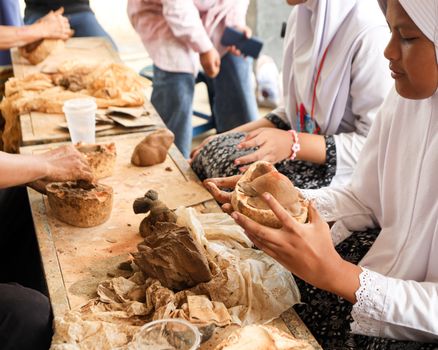
There’s something incredibly primal and satisfying about working with clay. It’s a direct connection to the earth, a humbling reminder that beauty can emerge from simple elements. My first true pottery experience was in the labyrinthine alleys of Fes, Morocco. I’d seen countless tagines and intricate bowls, but watching a master potter, Omar, effortlessly center clay on his wheel was mesmerizing.
I found a small, family-run workshop tucked away from the main tourist paths. For about €50-70 (approx. $55-75 USD), Omar offered a half-day session. He spoke limited English, but his hands were the best teachers. The first hour was pure frustration – the clay wobbling, collapsing, refusing to obey. Omar, with a patient smile, would gently guide my hands, his calloused fingers showing me the subtle pressure needed. Then, something clicked. The clay began to listen. I wasn't creating a masterpiece, but I was shaping something, feeling the centrifugal force, the coolness of the wet earth between my fingers.
By the end of the session, I had two wobbly, perfectly imperfect bowls – my proudest souvenirs. Omar then explained the firing and glazing process, offering to fire my pieces and ship them (for an additional cost, usually around €30-50 depending on weight and destination). I opted to take them unfired, a raw testament to my efforts, and they now sit on my shelf, a constant reminder of that dusty, magical day in Fes.
Why it's amazing: It's tactile, meditative, and you get a tangible product. It's incredibly Instagrammable – think hands covered in clay, focused expression, and a spinning wheel. Practical Tips:
- Look for: Small, family-run studios or cultural centers. Search "pottery workshop [city name]" or ask your guesthouse owner for recommendations.
- Wear: Clothes you don't mind getting dirty. Closed-toe shoes are a good idea.
- What to expect: Most workshops will cover centering the clay, basic shaping techniques (like bowls or cups), and a brief overview of firing.
- Locations: Fes & Safi (Morocco), Hoi An (Vietnam), Crete & Sifnos (Greece), Oaxaca (Mexico), Seto (Japan).
- Prices: Typically €50-100 / $55-110 USD for a half-day or full-day session.
2. The Poetry of the Brush: Japanese Calligraphy (Shodo) (Kyoto, Japan)
In a world dominated by rapid-fire texts and emojis, the deliberate, graceful art of calligraphy feels like a balm for the soul. My introduction to Shodo, Japanese calligraphy, happened in a serene Kyoto tea house, far from the bustling Gion district. The air was quiet, punctuated only by the soft rustle of paper and the gentle tap of the brush.
My sensei, a woman named Akiko, exuded an almost ethereal calm. She explained the history, the philosophy, and the spiritual discipline behind each stroke. For a two-hour session, priced around ¥5,000-8,000 (approx. $35-55 USD), we learned the basics: how to hold the fude (brush), grind the sumi (ink stick), and control the flow of ink. We started with simple characters like "ichi" (one) and "kawa" (river), focusing on balance, rhythm, and the precise pressure required.
It was surprisingly challenging. My first attempts were clumsy, ink blotches rather than elegant characters. But under Akiko's patient guidance, I slowly began to understand the concept of ma – the empty space – and how it’s as important as the strokes themselves. By the end, I had a framed piece of paper with my chosen character, "wa" (harmony), imperfect but deeply personal. It wasn't just writing; it was a meditation, a dance between paper and ink.
Why it's amazing: It's incredibly mindful, culturally rich, and the end product is a beautiful piece of art. It’s a quiet, introspective experience that’s perfect for reflection. Practical Tips:
- Look for: Cultural centers, traditional tea houses, or specialized calligraphy schools. Many offer English-friendly workshops.
- Wear: Anything comfortable. No specific attire needed.
- What to expect: You'll learn basic brush strokes, how to prepare ink, and practice writing fundamental characters. You'll usually leave with your own calligraphy piece.
- Locations: Kyoto & Tokyo (Japan), Seoul (South Korea), various cities in China.
- Prices: ¥5,000-10,000 / $35-70 USD for a 2-3 hour session.
3. Weaving Rainbows: Natural Dyeing & Block Printing (Jaipur, India & Sapa, Vietnam)
Imagine turning plants, roots, and insects into vibrant, lasting colors that adorn textiles. Natural dyeing and block printing are ancient arts that transform fabric into canvases of breathtaking patterns. My journey into this world began in the Pink City of Jaipur, India, a place bursting with color and craftsmanship.
I stumbled upon a block printing workshop in a quieter part of the city, run by a family whose ancestors had been dyers for centuries. For a full-day experience, including lunch, I paid around ₹3,500-5,000 (approx. $40-60 USD). The morning was dedicated to natural dyes. We learned how indigo leaves create blues, turmeric makes yellows, and madder root yields reds. My hands were soon stained with various hues as we experimented with resist dyeing techniques like shibori (tie-dyeing).
The afternoon was pure magic: block printing. The workshop had hundreds of hand-carved wooden blocks, each a miniature work of art. The sensation of pressing the block onto fabric, lifting it, and revealing a crisp, intricate pattern was incredibly satisfying. I spent hours printing a scarf, choosing my patterns and colors, creating a truly unique piece. The smell of indigo and freshly printed fabric was intoxicating. I walked away with a custom-made scarf and a deeper appreciation for the artistry behind every textile I'd ever admired.
Why it's amazing: It's visually stunning, incredibly creative, and you get a unique, wearable souvenir. It’s also deeply rooted in sustainable practices. Practical Tips:
- Look for: Textile museums with workshops, artisan cooperatives, or small, independent studios.
- Wear: Old clothes! Dyes can stain.
- What to expect: An introduction to natural dye sources, basic dyeing techniques (like immersion or resist dyeing), and hands-on block printing.
- Locations: Jaipur & Bagru (India), Sapa & Hoi An (Vietnam), Chiang Mai (Thailand), Marrakech (Morocco).
- Prices: ₹3,000-6,000 / $35-75 USD for a half-day to full-day workshop.
4. Forging Fire: Basic Blacksmithing (Rural Europe & USA)
This one might sound intimidating, but many artisanal blacksmiths offer introductory "forge-your-own" experiences that are absolutely learnable in a day. It's an ancient skill that connects you to fire, metal, and sheer physical effort. My first foray into blacksmithing was in a small, rustic workshop in the Cotswolds, England.
I found a local artisan, John, who advertised "Taster Blacksmithing Days" for curious beginners. The cost was around £120-180 (approx. $150-220 USD) for a full day, including safety gear and materials. The moment I stepped into his forge, the heat hit me, along with the rhythmic clang of hammer on anvil and the smell of coal smoke. John started with safety protocols, then moved to the basics: how to hold the hammer, how to control the heat, and fundamental techniques like drawing out, bending, and twisting.
My task for the day was to forge a simple leaf-shaped hook. It was exhilarating! The raw power of shaping red-hot metal with a hammer was addictive. There’s a primal satisfaction in seeing a piece of cold, rigid steel become malleable and then, under your own hand, transform into something useful. My leaf hook wasn't perfect – a bit lopsided, a few hammer marks – but it was mine. It felt like I had tapped into an ancient force, a skill that built civilizations.
Why it's amazing: It's empowering, physically engaging, and incredibly unique. You get to play with fire and create something truly rugged and enduring. Practical Tips:
- Look for: Small, independent artisan blacksmiths, heritage centers, or craft schools. Search "blacksmithing taster day [region/country]".
- Wear: Sturdy, non-synthetic clothing (cotton or denim is best), closed-toe leather boots, and long sleeves. Safety glasses and gloves are usually provided.
- What to expect: A strong emphasis on safety, basic hammer control, heating metal in a forge, and simple shaping techniques to create a small item (e.g., hook, bottle opener, small decorative piece).
- Locations: Rural areas in the UK, USA, Germany, Sweden, Czech Republic.
- Prices: £100-200 / $125-250 USD for a half-day to full-day introductory session.
5. The Art of Nourishment: Traditional Pasta Making (Bologna, Italy)
Food is culture, and few things are as deeply rooted in Italian heritage as fresh pasta. Forget the dried stuff; learning to make pasta by hand is a sensory delight and a skill you can bring straight home to impress your friends. My most delicious "ancient trade" experience was in the culinary heart of Italy: Bologna.
I booked a hands-on pasta-making class through a local cooking school, a charming old kitchen in the city center. For about €80-120 (approx. $90-130 USD), it was a three-hour session culminating in a shared meal. Our nonna-like instructor, Maria, spoke with a thick Bolognese accent, her hands flying as she demonstrated the art of mixing flour and eggs directly on a wooden board.
The rhythm of kneading the dough, feeling it transform from sticky mess to smooth, elastic perfection, was surprisingly therapeutic. Then came the rolling – first with a rolling pin, then through the pasta machine, thinning it until it was almost translucent. We learned to cut tagliatelle, shape tortellini, and fill delicate ravioli. The air filled with the scent of flour, fresh eggs, and bubbling tomato sauce. The best part? Sitting down with a glass of local wine, sharing the fruits of our labor, and savoring the most delicious, fresh pasta I’d ever tasted. It wasn't just a meal; it was a connection to generations of Italian culinary tradition.
Why it's amazing: You learn a delicious, practical skill, enjoy a fantastic meal, and immerse yourself in Italian culture. Plus, you get bragging rights at your next dinner party. Practical Tips:
- Look for: Local cooking schools, agriturismos (farm stays), or specialized food tours in culinary regions.
- Wear: Comfortable clothes, perhaps an apron (often provided).
- What to expect: Hands-on instruction for making dough from scratch, rolling it out, and forming various pasta shapes. Most classes include cooking and eating the pasta.
- Locations: Bologna & Florence (Italy), Rome (Italy), Sorrento (Italy).
- Prices: €70-150 / $80-170 USD for a 2-4 hour class, often including a meal.
6. Weaving Nature's Bounty: Traditional Basket Weaving (Rural Philippines & Mexico)
Basket weaving is one of humanity's oldest crafts, predating pottery and even some forms of agriculture. It's a truly sustainable art, often using readily available natural materials. My experience with this came during a trip to the highlands of Ifugao in the Philippines, a region famous for its rice terraces and indigenous crafts.
I was staying at a small homestay, and the matriarch, Lola Elena, still wove baskets for daily use. I asked if she would teach me. She happily agreed, and for a nominal fee (around ₱1,000-1,500 / $18-28 USD for a half-day, including materials she gathered herself), I spent an afternoon learning the basics. We sat on her porch, surrounded by the sounds of the jungle, with bundles of dried rattan and bamboo strips.
Lola Elena showed me how to prepare the materials, then demonstrated the foundational weaves. It required patience and a surprising amount of finger strength. My first attempts were clumsy, the strips refusing to stay in place, but Lola Elena’s hands moved with practiced ease, weaving intricate patterns. She taught me about the different types of weaves, how to create a sturdy base, and how to finish the rim. By the end of the afternoon, I had a small, rustic basket, perfectly imperfect, but entirely functional. It was a humble object, but it represented hours of focused work and a connection to a craft that has sustained communities for millennia.
Why it's amazing: It's incredibly sustainable, connects you to nature, and results in a beautiful, practical item. It's a quiet, meditative craft that fosters patience. Practical Tips:
- Look for: Indigenous communities, eco-lodges, or craft cooperatives in rural areas. Often, these are found through local guides or homestay hosts.
- Wear: Comfortable clothing.
- What to expect: Learning how to prepare natural materials (like rattan, bamboo, palm fronds), basic weaving techniques, and creating a small, functional basket or mat.
- Locations: Ifugao & Palawan (Philippines), Oaxaca (Mexico), various regions in Vietnam, Ghana (West Africa).
- Prices: ₱1,000-2,500 / $18-45 USD for a half-day session, often negotiable directly with artisans.
Ready to Unearth Your Inner Artisan?
These hands-on experiences are more than just workshops; they are invitations to step outside your comfort zone, connect with local culture on a deeper level, and acquire a skill that tells a far richer story than any mass-produced souvenir. Imagine the dinner party conversations: "Oh, this pasta? I learned to make it from a nonna in Bologna!" or "Yeah, I forged this myself in a Cotswolds forge."
The beauty of these ancient trades is their timelessness. They remind us of a world where things were made with intention, skill, and a deep respect for materials. By taking a day to learn one, you’re not just gaining a skill; you’re helping to keep a piece of human heritage alive, and trust me, that’s a travel experience far more valuable than any postcard.
So, next time you plan a trip, don't just book a tour – book a workshop. Get your hands dirty. Ignite your creativity. And discover the incredible satisfaction of bringing an ancient craft to life, one unforgettable day at a time.
Which ancient trade will you try first? Share your thoughts in the comments below!
---