The wind howled, whipping fine red dust into my eyes as I scrambled up a sandstone dune. Above me, the sky was an ink-black canvas, splattered with a million diamonds I’d never seen from home. Below, the flickering embers of our Bedouin campfire cast dancing shadows against massive rock formations that seemed to rise from the sand like ancient, petrified giants. It was my first night camping in Wadi Rum, Jordan, and I remember thinking, this is it. I’ve finally left Earth.
That feeling, that profound sense of being utterly disconnected from the familiar and immersed in something truly alien, is what I chase in my travels. Forget crowded beaches or bustling cities; my soul craves landscapes that challenge my perception of what our planet can be. And let me tell you, there are places on Earth so surreal, so utterly bizarre, that they feel like portals to another galaxy.
If you’re anything like me – a wanderer with a thirst for the extraordinary, a stargazer, a seeker of the sublime – then you need to experience these camping spots. These aren't just places to pitch a tent; they are experiences that will warp your reality, ignite your imagination, and leave you with stories that sound like science fiction.
Ready to embark on an intergalactic journey without leaving our solar system? Pack your bags (and your sense of wonder) because these are the camping spots that feel like another planet you need to experience before you die.
---
1. Wadi Rum, Jordan: The Martian Landscape of Earth
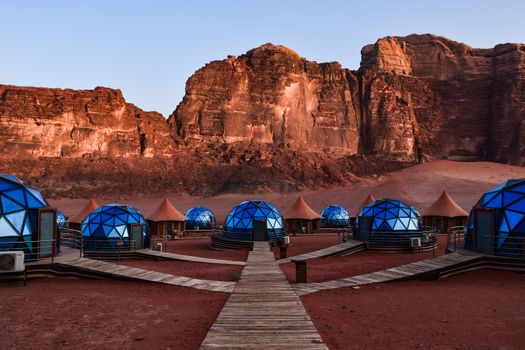
Imagine waking up to a world painted in shades of terracotta, rust, and burnt orange, where colossal sandstone mountains erupt from an endless sea of sand. This isn't Mars; it's Wadi Rum, Jordan, often called the "Valley of the Moon" or, more accurately, "The Martian Landscape of Earth." This UNESCO World Heritage site is where scenes from The Martian and Dune were filmed, and for good reason – it truly feels like you've landed on another planet.
My first trip here was transformative. After a thrilling jeep safari through the vast, silent desert, we arrived at our Bedouin camp. Tents, woven from goat hair, were nestled against towering cliffs, offering a stark contrast to the luxurious glamping options now available. We spent the evening sharing sweet Bedouin tea, listening to stories under a sky so densely packed with stars it felt like I could reach out and pluck them. The silence was profound, broken only by the crackle of the fire and the occasional whisper of the wind.
Why it feels alien: The unique geology of towering sandstone jebels, vast red sand dunes, and ancient rock formations carved by wind and time create a landscape utterly unlike anything else on Earth. The colors shift dramatically with the sun, from deep reds at dawn to fiery oranges at sunset, making every moment feel like a scene from an epic space opera.
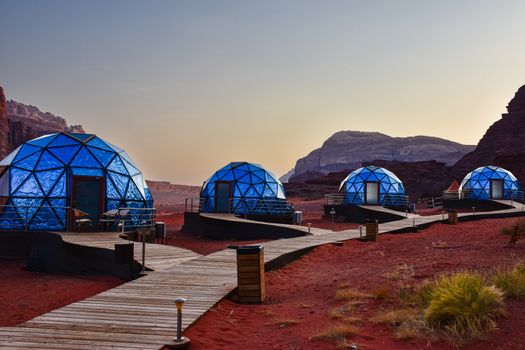
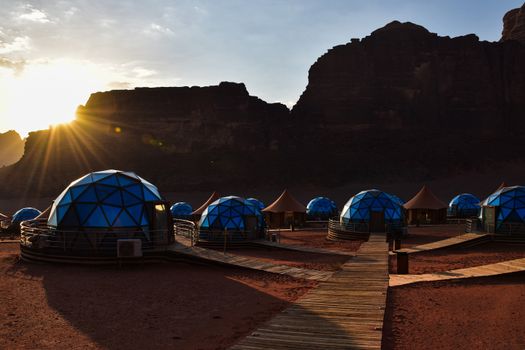
Camping Experience: You won't find traditional campgrounds here. The most authentic and recommended experience is to stay in a Bedouin desert camp. These range from basic goat-hair tents to luxurious "bubble" tents with transparent roofs for stargazing. Most camps include dinner (often a delicious zarb, meat and vegetables cooked underground) and breakfast, plus jeep tours.
Practical Tips & Details:
- Best Time to Visit: Spring (March-May) and Autumn (September-November) offer pleasant temperatures. Summers are scorching, and winters can be chilly at night.
- Getting There: Fly into Amman or Aqaba. Many tour operators can arrange transfers to Wadi Rum village, where you'll meet your Bedouin guide.
- Cost: A 1-2 night stay in a Bedouin camp with tours typically ranges from $50-$150 USD per person, depending on the camp's luxury level and the tour duration.
- What to Pack: Layers (nights are cold, days can be warm), sturdy walking shoes, sun protection (hat, sunscreen), headlamp, camera (you'll want to capture every angle!), and an open mind.
- Instagram Moment: Capture the milky way over a silhouetted sandstone arch, or a selfie on a red dune against a vibrant blue sky.
---
2. Atacama Desert, Chile: Journey to the Moon and Beyond
The Atacama Desert in Chile isn't just dry; it's the driest non-polar desert on Earth, creating an environment so extreme it's often used by NASA to test Mars rovers. Within its vast expanse lies Valle de la Luna (Moon Valley), a landscape of sculpted sand dunes, jagged salt formations, and ancient lake beds that truly transports you to a lunar surface.
I remember standing atop a ridge in Moon Valley, watching the sunset paint the already surreal landscape in hues of purple, pink, and gold. The silence was absolute, the air crisp and thin at over 8,000 feet. It felt like I was the only person on an abandoned planet, a feeling both humbling and exhilarating. Later, under one of the clearest skies imaginable, the stars exploded into view, making it one of the best stargazing experiences of my life. The Atacama is home to some of the world's most powerful observatories for a reason!
Why it feels alien: The extreme aridity, dramatic geological formations (like the "Three Marias" statues sculpted by wind and salt), and the vast, empty expanses create a desolate beauty that is profoundly un-Earth-like. The salt flats shimmer like alien ice rinks, and the geysers spew steam like vents on a distant planet.
Camping Experience: While backcountry camping isn't common within the most popular "alien" zones like Valle de la Luna, nearby San Pedro de Atacama serves as an excellent base. There are several well-equipped campgrounds and hostels with camping facilities. From here, you can take guided tours to the Moon Valley, Cejar Lagoon (floating in salt water!), El Tatio Geysers, and incredible stargazing tours.
Practical Tips & Details:
- Best Time to Visit: Year-round, but spring (September-November) and autumn (March-May) offer milder temperatures.
- Getting There: Fly to Calama (CJC), then take a shuttle or bus to San Pedro de Atacama (approx. 1.5 hours).
- Cost: Camping near San Pedro can range from $10-$20 USD per night. Guided tours to various sites typically cost $30-$80 USD each.
- What to Pack: Warm layers (especially for cold desert nights and early morning geyser tours), sun protection (UV index is extreme), sturdy hiking shoes, plenty of water, altitude sickness medication (if sensitive), and a good camera for night photography.
- Instagram Moment: A silhouette against the sunset in Moon Valley, or a wide-angle shot of the Milky Way dominating the night sky.
---
3. Landmannalaugar, Iceland: A Rainbow World of Fire and Ice
Iceland is known for its otherworldly landscapes, but Landmannalaugar takes it to another level. Tucked deep in the Highlands, this region is famous for its vibrant rhyolite mountains, which display an incredible spectrum of colors – reds, pinks, greens, blues, and yellows – created by volcanic activity and mineral deposits. It's like walking through a painter's palette that has been stretched across a vast, rugged canvas.
My hike through Landmannalaugar felt like stepping into a dream. One moment, I was traversing fields of black obsidian lava rock, sharp and glassy, and the next, I was surrounded by mountains striped with every color imaginable. To top it all off, the day ended with a soak in a natural geothermal hot spring, steam rising around me as I gazed at the colorful peaks. It was a primal, surreal experience – a true blend of fire and ice.
Why it feels alien: The kaleidoscopic mountains, steaming hot springs, stark black lava fields, and ever-present geothermal activity make Landmannalaugar feel like a newly formed planet, still bubbling and shaping itself. It's raw, untamed, and spectacularly unique.
Camping Experience: There's a well-equipped mountain hut and a designated campsite at Landmannalaugar, managed by Ferðafélag Íslands (The Icelandic Touring Association). It's a popular base for hikers tackling the famous Laugavegur trail. The campsite offers basic facilities, including toilets and showers (for a fee). Booking in advance for the hut or securing a spot at the campsite is highly recommended, especially during peak season.
Practical Tips & Details:
- Best Time to Visit: June to early September, as the F-roads leading to Landmannalaugar are only open during summer.
- Getting There: Requires a 4x4 vehicle to navigate the F-roads and river crossings. Alternatively, take a Highland bus service from Reykjavík or other major towns.
- Cost: Camping fees are around $15-20 USD per person per night. Hut stays are significantly more. Bus tickets are around $100-150 USD return.
- What to Pack: Waterproof and windproof layers (weather changes rapidly), sturdy hiking boots, warm sleeping bag (even in summer), cooking gear if camping, swimwear for hot springs, and insect repellent.
- Instagram Moment: A panoramic shot of the rainbow mountains, or a steamy selfie in the natural hot springs with the colorful landscape in the background.
---
4. White Sands National Park, USA: A Gypsum Dune Sea
Imagine a vast ocean of pure white, undulating waves stretching to the horizon under an impossibly blue sky. This isn't snow or a strange cloud formation; it's White Sands National Park in New Mexico, home to the world's largest gypsum dune field. Walking through these dunes feels like stepping onto a giant, pristine alien beach.
I'll never forget the feeling of kicking off my shoes and walking barefoot on the cool, soft gypsum sand. It doesn't absorb heat like silica sand, so it's always pleasant underfoot. We spent an afternoon sledding down the smooth slopes, laughing like children, and then watched as the sunset painted the white dunes in pastel hues of pink, lavender, and orange. As darkness fell, the stars appeared, even brighter against the reflecting white sand, making the landscape feel even more ethereal.
Why it feels alien: The sheer scale and uniform whiteness of the gypsum dunes are unlike anything most people have ever seen. It’s an incredibly stark and minimalist landscape, yet teeming with unique, adapted life. The way the light plays on the dunes, especially at sunrise and sunset, creates an illusion of a constantly shifting, living entity.
Camping Experience: White Sands offers a truly unique backcountry camping experience. There are 10 primitive campsites located deep within the dunes. You must hike in to reach them, and they are first-come, first-served. Permits are required and can be obtained at the visitor center. This is true wilderness camping, so be prepared to be self-sufficient.
Practical Tips & Details:
- Best Time to Visit: Spring and Fall offer the most comfortable temperatures. Summers can be very hot, and winters can be cold. Check the park website for missile range closures, as the park is adjacent to a military testing range.
- Getting There: Located off US-70 between Alamogordo and Las Cruces, New Mexico.
- Cost: Park entrance fee is $25 USD per vehicle (7-day pass). Backcountry camping permits are an additional $3 per person.
- What to Pack: LOTS of water (no water sources in the backcountry), sun protection (hat, sunglasses, sunscreen), sturdy shoes for hiking, a map and compass/GPS (easy to get disoriented), warm layers for cool desert nights, and a sled for dune surfing! Pack out everything you pack in.
- Instagram Moment: A lone figure walking on a pristine white dune, the vibrant sunset reflected on the sand, or a wide-angle shot of the starry night sky from your tent.
---
5. Uluru-Kata Tjuta National Park, Australia: Ancient Red Heart of a Continent
While not "alien" in the traditional sense of being barren or geologically bizarre, Uluru-Kata Tjuta National Park in Australia's Northern Territory feels profoundly ancient, spiritual, and from another time. The iconic Uluru (Ayers Rock) and the domed formations of Kata Tjuta (The Olgas) rise majestically from the flat desert, their rust-red hues shifting dramatically with the sun. This place doesn't just feel like another planet; it feels like the very heart of an ancient, sleeping world.
My first sight of Uluru at sunrise left me speechless. The immense monolith, sacred to the Anangu Aboriginal people, slowly changed from a deep purple silhouette to fiery red, then brilliant orange as the sun climbed higher. The sheer scale and spiritual presence of the rock were overwhelming. Later, hiking through the "Valley of the Winds" at Kata Tjuta, surrounded by dozens of massive, rounded domes, I felt dwarfed by geological time, a tiny speck in a landscape that has existed for millions of years.
Why it feels alien: The sheer scale and unique geological formations of Uluru and Kata Tjuta are unlike anything else. The vibrant red color against the sparse desert vegetation creates a stark, powerful visual. More than that, the deep spiritual significance and ancient history of the land imbue it with an almost palpable energy that feels profoundly other.
Camping Experience: There are no campgrounds directly at Uluru or Kata Tjuta themselves (to respect their sacred status), but the Ayers Rock Resort in Yulara, just outside the park, offers excellent camping facilities at the Ayers Rock Campground. This includes powered and unpowered sites, communal kitchens, and amenities. From here, you can easily access the park for sunrise/sunset viewing, walks, and cultural tours.
Practical Tips & Details:
- Best Time to Visit: May to September offers cooler temperatures. Summers (December-February) are extremely hot, with temperatures often exceeding 40°C (104°F).
- Getting There: Fly into Ayers Rock Airport (AYQ) or Alice Springs (ASP) and take a bus or rent a car.
- Cost: Park entrance fee is $38 AUD per person (3-day pass). Camping at Ayers Rock Campground starts around $40-50 AUD per night for an unpowered site.
- What to Pack: Wide-brimmed hat, fly net (especially in warmer months), plenty of water, sturdy walking shoes, sun protection, and respectful clothing for cultural sites. Remember to observe cultural protocols, such as not climbing Uluru.
- Instagram Moment: Uluru bathed in the golden light of sunrise or sunset, or a panoramic shot of the many domes of Kata Tjuta.
---
6. Yellowstone National Park, USA: Grand Prismatic & Geyser Basins
Yellowstone isn't just America's first national park; it's a living, breathing testament to the raw, untamed power of our planet, often feeling more like a distant, volatile world. While the wildlife is undeniably Earth-bound, the park's geothermal features – the geysers, hot springs, mud pots, and fumaroles – are truly out of this world. The Grand Prismatic Spring, in particular, with its vibrant, almost unnatural colors, looks like a portal to another dimension.
Walking along the boardwalks of the Midway Geyser Basin, where the Grand Prismatic Spring resides, I was overwhelmed by the sensory experience. The air was thick with the smell of sulfur, steam billowed from the ground, and pools of water shimmered in impossible shades of blue, green, yellow, and orange. It felt like I was on the surface of a giant, bubbling alien organism, each pool a unique, vibrant eye. The sound of Old Faithful erupting, a primal roar, only added to the feeling of being on a planet still in its violent, formative stages.
Why it feels alien: The extreme geothermal activity, the surreal and vibrant colors of the hot springs (caused by thermophilic bacteria), the bubbling mud pots, and the roaring geysers create a landscape that is constantly shifting and feels alive in a way that is both beautiful and slightly terrifying. It's a window into Earth's primordial past, or perhaps its distant future.
Camping Experience: Yellowstone offers 12 developed campgrounds, with many located near or providing easy access to the major geyser basins. These range from first-come, first-served to reservable sites, with varying amenities. Popular campgrounds like Madison (near Old Faithful) or Norris (near Norris Geyser Basin) put you right in the heart of the action.
Practical Tips & Details:
- Best Time to Visit: Late spring (May-June) and early fall (September-October) offer fewer crowds and pleasant weather. Summers are popular but can be crowded.
- Getting There: Several entrances. Fly into Bozeman (BZN), Jackson Hole (JAC), or Idaho Falls (IDA) and rent a car.
- Cost: Park entrance fee is $35 USD per vehicle (7-day pass). Camping fees range from $20-$35 USD per night, depending on the campground and amenities.
- What to Pack: Layers for unpredictable weather, bear spray (and know how to use it!), sturdy hiking shoes, binoculars for wildlife viewing, and a good camera. Always stay on boardwalks and trails, and never approach wildlife.
- Instagram Moment: The incredible rainbow colors of Grand Prismatic Spring from an elevated viewpoint, or the steam rising from a geyser basin at sunrise.
---
Essential Gear & Safety for Your Interstellar Campsite
Embarking on these "alien" camping adventures requires more than just a sense of wonder; it demands preparation. These are often remote, challenging environments, so responsible camping and safety are paramount.
- Navigation: Don't rely solely on your phone. Carry a physical map and compass, or a reliable GPS device. Signal can be nonexistent in remote areas.
- Water, Water, Water: This is non-negotiable, especially in deserts. Carry more than you think you'll need, and consider a water filter or purification tablets.
- First Aid Kit: A comprehensive kit is essential for any remote adventure.
- Layers of Clothing: Weather in these extreme environments can change rapidly. Pack moisture-wicking base layers, insulating mid-layers, and waterproof/windproof outer layers.
- Sun Protection: Hat, sunglasses, and high-SPF sunscreen are vital.
- Headlamp/Flashlight: For navigating in the dark.
- Leave No Trace: Pack out everything you pack in. Minimize your impact, respect wildlife, and stay on designated trails. These landscapes are fragile.
- Permits & Bookings: Always check park websites for required permits, fees, and booking information well in advance. Many popular spots require reservations.
- Wildlife Awareness: Research local wildlife and take appropriate precautions (e.g., bear canisters in bear country, knowing what to do if you encounter dangerous animals).
---
The Call of the Unknown
These aren't just camping trips; they're journeys of discovery, both of the planet and of yourself. They are opportunities to witness Earth's incredible diversity, to feel small yet utterly connected to something vast and ancient. The moments spent under those alien skies, surrounded by landscapes that defy explanation, will etch themselves into your memory forever.
So, what are you waiting for? Stop dreaming of space travel and start planning your terrestrial voyage to these extraordinary places. Whether it's the red sands of Jordan, the lunar valleys of Chile, or the bubbling cauldrons of Yellowstone, an experience that feels truly out of this world is closer than you think.
Which alien world will you explore first? Share your extraterrestrial camping dreams in the comments below, and don't forget to tag #TripsoraAlienCamping on your next adventure!