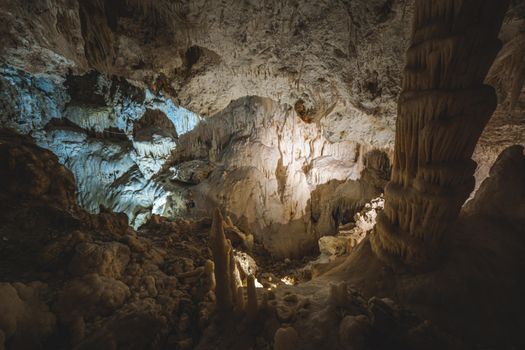
I Stepped Into the Mouth of the Earth...
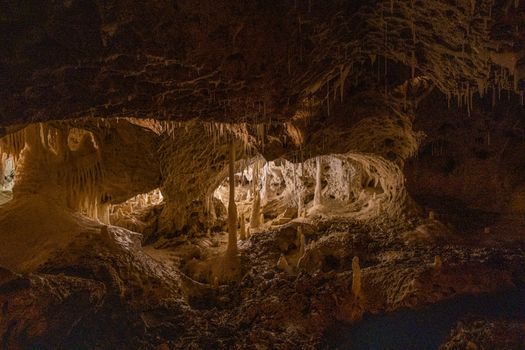
The first thing that hits you isn't the darkness; it’s the smell. It’s the scent of wet stone, ancient minerals, and a coolness that feels like the world holding its breath. I stepped off the humid jungle path in Chiang Rai, the sweat still stinging my eyes, and within three paces, the temperature plummeted twenty degrees. The air became thick with the sound of dripping water—a rhythmic, metallic tink-tink-tink that echoes off walls older than the concept of time.
Caving used to be the domain of the "extreme"—people with ropes, claustrophobia-defying nerves, and a lot of mud. But this year, a new trend is emerging. Major geological sites have opened "Express Routes" and "Discovery Corridors" that allow the average traveler to witness the cathedral-like majesty of the underworld and still be back in time for a sundowner cocktail.
Here are the seven cave systems you can explore in an afternoon that are topping the charts this year.
---
1. Tham Luang: The "Resurrection" Route (Thailand)
Most of the world knows Tham Luang from the harrowing 2018 rescue. For years, it was a site of somber reflection. But this year, the Thai Department of National Parks has opened "Chamber 3" to the public for limited afternoon tours.
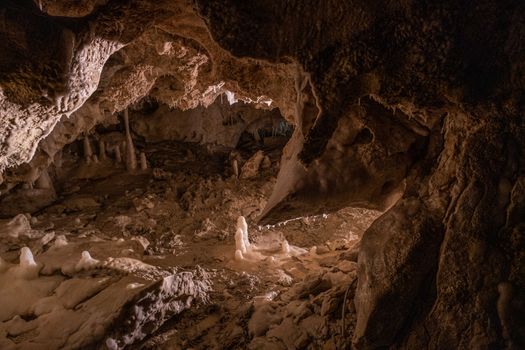
The Vibe: It’s haunting and heroic. You aren’t just looking at rocks; you’re walking through a modern legend. The limestone is jagged, and the air is heavy with the history of the "Wild Boars" rescue.
- Insider Detail: Look for the "Cave 3" markings on the walls left by the British divers. It’s a chilling reminder of how far back into the mountain you actually are.
- Pro-Tip: You must book a guided slot at least 48 hours in advance. They only allow small groups to minimize the CO2 impact on the delicate cave ecosystem.
2. Postojna Cave: The Realm of the Baby Dragons (Slovenia)
While Postojna has been a tourist staple for decades, 2024 marks a massive push for their "Hidden Passages" tour—a 90-minute detour that takes you away from the electric train tracks and into the silent, velvet-dark corners of the system.
The Vibe: Steampunk meets Middle Earth. You board a yellow underground train that feels like something out of a Wes Anderson film, whisking you past "Brilliant," a 5-meter tall white stalagmite that glows under the LED lights.
- Insider Detail: This is the only place you can reliably see the Proteus anguinus (Olm), or "baby dragons." These blind, pale salamanders can live for 100 years and survive without food for a decade.
- Pro-Tip: Wear a light down jacket. Even if it’s 30°C in the Slovenian sun, the cave stays a constant, bone-chilling 10°C year-round.
3. Cenote Zapote: The "Hell’s Bells" (Mexico)
Located along the Ruta de los Cenotes in Puerto Morelos, Zapote is emerging as the "it" spot for travelers who want a subterranean fix without the crowds of Dos Ojos.
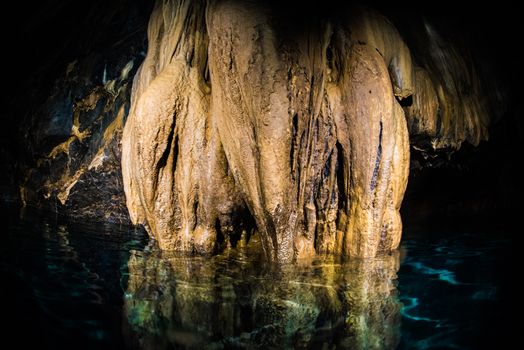
The Vibe: Surrealist art gallery. Underwater, the cave features "Hell’s Bells"—bizarre, bell-shaped limestone formations that look like giant stone mushrooms or jellyfish.
- Insider Detail: These formations only grow in a specific "halocline" layer where fresh water meets salt water. The visual effect is like looking through a greased lens.
- Pro-Tip: If you aren’t a diver, you can snorkel the surface. The "afternoon" win here is the 10-meter platform jump into the crystal-clear water. It’s the ultimate adrenaline reset.
4. Ruakuri Cave: The Solar-Powered Glow (New Zealand)
Waitomo is famous, but Ruakuri is the sophisticated older sister. It’s the only wheelchair-accessible cave in the Southern Hemisphere, featuring a stunning spiral entrance that looks like a DNA strand.
The Vibe: Ethereal and hushed. The cave is lit by thousands of Arachnocampa luminosa (glowworms) that look like a subterranean Milky Way.
- Insider Detail: The acoustics in the "Drum Room" are so perfect that local choirs occasionally perform there. Listen for the "thrum" of the distant underground waterfall.
- Pro-Tip: Take the "afternoon tea" tour. It’s less crowded than the morning slots, and the lighting for photography is significantly better near the entrance.
5. Mammoth Cave: The "River Styx" Shortcut (USA)
Kentucky’s Mammoth Cave is the longest cave system in the world, but you don't need a week to see it. The newly revamped "Domes and Dripstones" tour is a 2-hour vertical journey that hits all the highlights.
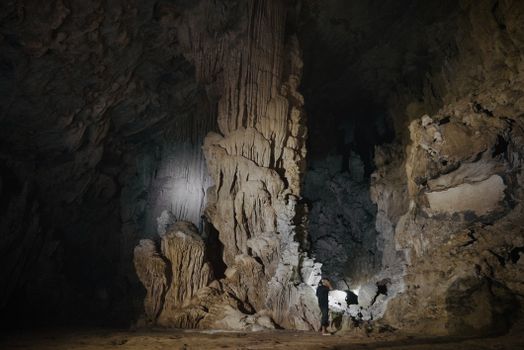
The Vibe: Grandeur on a scale that defies logic. It’s less of a "cave" and more of an underground continent.
- Insider Detail: Keep an eye out for the historic "smoke signatures" on the ceiling. 19th-century explorers used candle smoke to write their names—a practice now strictly forbidden but preserved as a "time capsule."
- Pro-Tip: The "Frozen Niagara" section is the most photogenic. If you’re short on time, this is the one tour you cannot miss.
6. Saalfeld Fairy Grottoes: The Technicolor Dream (Germany)
According to the Guinness World Records, these are the "most colorful cave grottoes in the world." Once an alum shale mine, the mineral-rich water has created a kaleidoscope of reds, blues, and golds.
The Vibe: A Brothers Grimm fairytale. It doesn’t feel real; it feels like a movie set.
- Insider Detail: The "Märchendom" (Fairytale Dome) features a reflection in the water so perfect that it’s hard to tell where the floor ends and the ceiling begins.
- Pro-Tip: Visit the "Grottoneum" museum first. It gives you the geological "cheat sheet" so you actually understand why the rocks are neon blue (spoiler: it’s the iron and magnesium).
7. Fingal’s Cave: The Basalt Cathedral (Scotland)
While technically a sea cave on the uninhabited island of Staffa, new eco-catamaran tours from Oban have made this a viable afternoon trip for the first time in years.
The Vibe: Geometric perfection. The cave is made entirely of hexagonal basalt columns, looking like a giant pipe organ built by giants.
- Insider Detail: The cave’s name in Gaelic is An Uaimh Bhinn, meaning "The Melodious Cave." The echoes of the waves inside inspired Felix Mendelssohn’s Hebrides Overture.
- Pro-Tip: Go in late May or June. Not only is the sea calmer for the boat trip, but the puffins are nesting on the cliffs above the cave entrance.
---
Quick Facts & Logistics
| Cave System | Location | Est. Cost (USD) | Best Time | Difficulty | | :--- | :--- | :--- | :--- | :--- | | Tham Luang | Thailand | $20 - $40 | Nov - Feb | Moderate | | Postojna | Slovenia | $32 | May or Sept | Easy | | Cenote Zapote | Mexico | $15 (Entry) | Year-round | Easy/Mid | | Ruakuri | New Zealand | $55 | Oct - March | Very Easy | | Mammoth Cave | USA | $20 | Spring/Fall | Moderate | | Saalfeld | Germany | $18 | Summer | Easy | | Fingal's Cave | Scotland | $80 (Boat) | June - Aug | Weather Dep. |
---
How to Get There (The Short Version)
- Postojna: A 45-minute drive from Ljubljana. Trains run hourly.
- Tham Luang: Fly into Chiang Rai (CEI), then a 1-hour Grab or private taxi to Mae Sai.
- Cenote Zapote: 40 minutes from Cancun. Rent a car; the "Colectivos" (local buses) don't go all the way to the entrance.
---