The Spark: How I Learned to Stop Worrying and Love the Volt
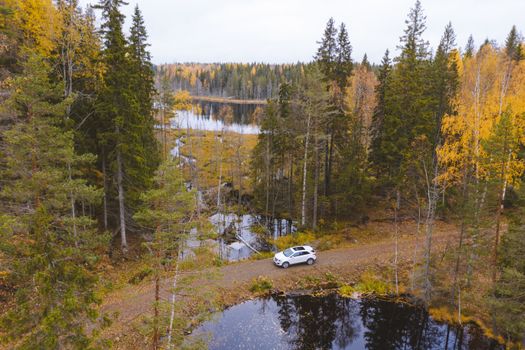
I unplugged the matte-sage Rivian R1T at a charging station overlooking the rugged, mist-shrouded cliffs of Manzanita, Oregon. The only sound was the rhythmic crash of the Pacific surf below and the faint, high-frequency hum of the 350kW DC fast charger wrapping up its cycle. The air smelled of damp pine needles, ozone, and fresh espresso from the wood-shingled cafe just fifty yards away.
In my cup holder sat a hot cardamom latte; on my dashboard, the navigation screen mapped out a seamless 300-mile stretch down Highway 101. My battery was at 80%, my cabin was pre-conditioned to a cozy 72°F, and my anxiety was at absolute zero.
``` [Battery: 80%] ====> [300 Miles of Open Coastline] ====> [Zero Emissions] ```
Just three years ago, attempting this route in an electric vehicle (EV) would have felt like an extreme sport, requiring military-grade logistics, a trunk full of heavy adapters, and a prayer to the highway gods. Today, it is a luxury travel experience. With electric vehicle road trips becoming possible travel advisors suggest that we are witnessing the most significant shift in road-tripping culture since the construction of the Interstate Highway System.
Here is how you can master the new era of the electric road trip.
---
1. The Infrastructure Revolution: Why Advisors Are Saying "Go"
For years, travel professionals gave a standard piece of advice to clients asking about electric car rentals: “Stick to the cities.” The highway network was simply too fragmented, and the dreaded "broken charger" syndrome was too common.
That advice has officially expired.
Several factors have aligned to make long-distance EV travel not just viable, but highly desirable:
- The Great NACS Convergence: With nearly every major automaker adopting Tesla’s North American Charging Standard (NACS), non-Tesla drivers are gaining access to the gold standard of charging: the Tesla Supercharger network.
- The Rise of Destination Charging: Luxury resorts, boutique hotels, and national park lodges are no longer treating EV chargers as a niche amenity. They are now as standard as high-speed Wi-Fi.
- High-Power Corridors: Federal and private funding have lined major interstate corridors with ultra-fast chargers (150kW to 350kW) that can add 200 miles of range in the time it takes to buy a sandwich and use the restroom.
According to elite travel advisors, the conversation has shifted from "Will I get stranded?" to "How can I design an incredible itinerary around my charging stops?"
---
2. The Golden Rules of EV Route Planning
You do not plan an EV road trip the way you plan a gasoline-fueled one. You do not drive until the low-fuel light dings and then pull off at the next exit. EV road tripping requires a different, far more rewarding rhythm.
Use the "Holy Trinity" of EV Apps
Never rely solely on your car's built-in navigation system. Instead, download and master these three tools before you turn the key:
- A Better Routeplanner (ABRP): The absolute gold standard for route design. You input your specific vehicle model, starting state of charge, payload weight, and even the weather conditions, and it plots exactly where, when, and for how long you need to plug in.
- PlugShare: The ultimate crowd-sourced directory. Think of it as TripAdvisor for chargers. Real drivers leave real-time reviews, upload photos of hidden plugs, and flag broken units so you never roll up to a dead station.
- The Major Network Apps: Download Electrify America, ChargePoint, and EVgo. Set up your accounts and pre-load your digital wallet with $20 each. Trying to download an app in a mountain pass with one bar of cell service is a rookie mistake you want to avoid.
---
3. The Pacific Coast Highway: A Blueprint for the Perfect EV Itinerary
To understand why travel advisors are raving about this style of travel, look no further than the iconic Pacific Coast Highway (PCH). This route is practically tailor-made for electric drivetrains.
``` [San Francisco] ---> [Santa Cruz (Lunch & Charge)] ---> [Big Sur (Regen Braking)] ---> [Santa Barbara] ```
Day 1: San Francisco to Carmel-by-the-Sea (120 miles)
Start your morning by gliding out of the foggy streets of San Francisco. As you head south on Highway 1, the regenerative braking system of your EV goes to work, capturing the kinetic energy of your descents down the coastal cliffs and feeding it back into your battery.
- The Charging Stop: Pull into the charming seaside town of Santa Cruz. Plug into a fast charger near the beach boardwalk. While your car sips electrons, grab a sourdough bread bowl filled with clam chowder at the wharf.
- The Overnight: Check into the Caramel Valley Ranch. Plug into one of their complimentary Level 2 destination chargers overnight. You will wake up to a 100% battery without ever having to think about it.
Day 2: Carmel through Big Sur to Santa Barbara (240 miles)
This is where the quietness of the electric motor shines. Without the roar of an internal combustion engine, you can roll down the windows and hear the barking sea lions at Point Lobos and the wind whistling through the redwoods.
- Pro-Tip: Keep your speed steady. High speeds (over 70 mph) drain EV batteries exponentially faster due to wind resistance. Cruising at a leisurely 55–60 mph along the winding coastal roads maximizes your range and lets you soak in the views.
---
4. The Art of the "Micro-Adventure" Charging Stop
The old way of road tripping involved frantic, five-minute gas station stops featuring lukewarm coffee and questionable hot dogs. The EV way forces you to slow down—in the best possible way.
Because a DC fast charger typically takes 20 to 40 minutes to bring your battery from 20% to 80%, every charging stop becomes an opportunity for a micro-adventure.
- The Trailhead Charge: Many state parks and national forest trailheads now feature Level 2 chargers. Plug in, hike a three-mile loop through the pines, and return to a fully replenished vehicle.
- The Culinary Charge: Forward-thinking charging networks are partnering with high-end grocery stores and retail developments. Instead of a concrete wasteland, you can charge your car while browsing artisanal cheeses, sipping local craft beer, or exploring an outdoor art gallery.
> Insider Insight: "Don't bother charging past 80% at a fast charger unless you absolutely need the range to reach your next stop," says Marcus Vance, a luxury travel advisor specializing in sustainable itineraries. "Due to the physics of lithium-ion batteries, the charging speed drops off a cliff after 80% to protect the battery pack. It's always faster to drive to the next station than to wait for that last 20%."
---
5. Destination Charging: The New Five-Star Amenity
When booking your accommodations, the presence of a dedicated, functional EV charger is now just as important as a plush mattress or a spa. Travel advisors suggest looking for properties that offer "Destination Charging."
These are Level 2 chargers (usually 7kW to 11kW) that slowly fill your battery over 8 to 10 hours while you sleep.
``` +-------------------------------------------------------------+ | HOW TO VET YOUR HOTEL'S CHARGING | +-------------------------------------------------------------+ | 1. Call the front desk directly (don't rely on booking sites)| | 2. Ask: "Are your chargers reservable, or first-come?" | | 3. Ask: "Do you charge a flat fee or is it complimentary?" | | 4. Confirm they have the correct plug type for your vehicle.| +-------------------------------------------------------------+ ```
Many premium properties, such as the Auberge Resorts Collection or Ritz-Carlton, now offer valet-managed charging. You simply hand over your keys, and the valet ensures your car is plugged in, charged, and parked for your departure the next morning.
---
6. Budget & Logistics: The Hard Numbers
To prove just how viable this has become, let’s look at the financial and logistical breakdown of a typical 1,000-mile road trip comparing a standard gasoline SUV to a modern electric SUV.
Quick Facts: EV vs. Gas Road Trip Comparison
| Metric | Electric Vehicle (e.g., Hyundai Ioniq 5) | Gas Vehicle (e.g., Toyota RAV4) | | :--- | :--- | :--- | | Fuel/Energy Cost (per 1,000 miles) | ~$45 - $65 (using mixed home/public charging) | ~$130 - $160 (based on $3.80/gallon) | | Maintenance Stops Needed | None | Potential oil change/fluid checks | | Average Charging/Refueling Time | 20-30 mins per 250 miles | 5-10 mins per 350 miles | | Best Time to Travel | Spring/Autumn (Optimal battery performance) | Year-round | | Primary Navigation Tools | ABRP, PlugShare, Google Maps | Google Maps, Waze | | Carbon Footprint | Zero tailpipe emissions | ~400 kg of CO2 |
---
7. Overcoming the Last Hurdles: Pro-Tips from the Road
If you are ready to take the plunge and plan your first electric road trip, keep these field-tested insider tips in your glovebox:
- Watch the Weather: Cold temperatures temporarily reduce battery efficiency by up to 20-30%. If you are road-tripping through the Rockies in winter, adjust your planned range down and utilize your vehicle's "pre-conditioning" feature while it is still plugged into the hotel charger to warm the battery before you set off.
- The "Tesla Tap" Advantage: If you drive a non-Tesla EV, purchase a high-quality NACS-to-CCS adapter (like the Lectron or A2Z adapter). This allows you to plug into Tesla's massive Destination Charger network at hotels and restaurants, instantly doubling your overnight lodging options.
- Don't Overpack the Roof: Sleek aerodynamics are the key to high EV range. Avoid mounting bulky, un-aerodynamic cargo boxes on your roof if you can avoid it. Opt for a hitch-mounted cargo carrier instead, which sits in the aerodynamic slipstream behind the vehicle and has a negligible impact on your range.
---
Conclusion: The Road Ahead is Silent
There is a unique magic to traveling in an electric vehicle. It forces you to align your journey with the natural cadence of the landscape. You stop to stretch your legs when the car needs to breathe. You discover hidden bakeries, quiet coastal parks, and historic towns you would have otherwise blown past at 80 miles per hour in a rush to the next gas station.
With electric vehicle road trips becoming possible travel advisors suggest that we aren't just changing the cars we drive—we are changing the way we experience the world. The roads are ready. The chargers are waiting. It’s time to plug in, quiet down, and drive into the future.
---