The Hook: Why Europe’s Best Food Halls Can’t Compete
I stepped off the local train at Keelung Station, and the salty, humid wind of the East China Sea hit me first. But within seconds, the ocean air was completely overtaken by the intoxicating scent of Chinese five-spice, bubbling pork fat, and the sharp, sulfurous tang of fermented stinky tofu.
I followed the yellow glow of two hundred paper lanterns suspended over the wet asphalt of Dianji Temple. Around me, the roar of gas burners hissed like jet engines, and the rhythmic clatter of metal spatulas against seasoned iron woks beat out the pulse of the city.
I’ve eaten my way through London’s Borough Market, picked at tapas in Barcelona’s La Boqueria, and queued for expensive cheese plates in Paris’s Marché des Enfants Rouges. While those European markets are beautiful, they have increasingly become sanitized, overpriced, and heavily curated for Instagram. They close by dusk, their prices are tailored to wealthy tourists, and the food is often pre-prepared and reheated.
Asia’s night markets, however, are living, breathing culinary ecosystems. They operate deep into the midnight hours, fueled by open flames, family secrets passed down through four generations, and prices that allow you to feast like royalty for under $15 USD.
If you want real, unadulterated culinary theater, these are the six Asian street food markets that travel experts are quietly recommending over anything you will find in Europe.
---
1. Keelung Miaokou Night Market (Taiwan): The Seafood Mecca
``` Location: Around Dianji Temple, Rensan Road, Keelung City, Taiwan Best Time to Visit: 6:00 PM to 10:00 PM Getting There: Take the local TRA train from Taipei Main Station to Keelung Station (approx. 40 minutes), then walk 10 minutes east. ```
While most tourists in Taiwan flock to Shilin or Raohe in Taipei, culinary insiders take the train north to the port city of Keelung. Clustered around a historic Taoist temple, Keelung Miaokou is a highly organized yet wonderfully chaotic grid of numbered stalls, famous for having some of the freshest seafood on the planet.
The Dish to Die For: Ding Bian Cuo (Stall 27-12)
This dish is a masterclass in texture. The vendors pour a thick rice slurry along the searing-hot upper rim of a giant wok filled with boiling broth. As the rice batter cooks instantly on the dry metal, it is scraped down into the soup, forming curly, noodle-like sheets that are both chewy and tender. It is served in a clear, sweet broth loaded with pork strips, shrimp cakes, bamboo shoots, and dried lilies.
The Insider Atmosphere
The market is lit by rows of glowing yellow lanterns, each displaying the stall number in Chinese and English. You sit on tiny wooden stools directly in front of the bubbling pots, your knees practically touching the stranger next to you. The air is thick with the scent of deep-fried butter crabs and sweet potato balls.
- Pro-Tip: Do not miss Stall 16 for Tian Bu La (Taiwanese fish cakes). They are served hot, drenched in a sweet-and-spicy red sauce, and accompanied by crisp pickled cucumbers that cut through the rich seafood umami.
---
2. Yaowarat Road (Bangkok, Thailand): The Neon-Lit Wok Theater
``` Location: Yaowarat Road, Samphanthawong, Bangkok, Thailand Best Time to Visit: 7:00 PM to Midnight (Closed on Mondays) Getting There: Take the MRT Blue Line to Wat Mangkon Station. Take Exit 1, and you will step directly into the neon glow of Chinatown. ```
Europe has nothing that matches the sheer, kinetic energy of Bangkok’s Chinatown after dark. As the sun sets, the metal shutters of Yaowarat’s gold shops slide down, and an army of street food vendors rolls out custom-built carts onto the busy thoroughfares.
The Dish to Die For: Kuay Jab Nay Ek (Rolled Rice Noodles)
Do not let the long queue deter you; it moves with military efficiency. This legendary stall serves rolled, tube-like rice noodles in a broth so heavily spiced with white pepper that it clears your sinuses on the first sip. The soup is packed with crispy pork belly that somehow retains its crunch despite being submerged in broth, along with tender pig offal for the adventurous.
The Insider Atmosphere
Eating here is an extreme sport. You dine on plastic chairs set up on the narrow shoulder of a six-lane highway, with pink taxi-cabs and roaring tuk-tuks whizzing past just inches from your back. The air smells of charcoal smoke, toasted pandan leaves, and the sweet aroma of ripe mangoes.
- Pro-Tip: For dessert, skip the western-style cafes and find the street cart selling charcoal-toasted buns stuffed with hot, oozing pandan custard. Eat them immediately while the bread is still warm and crispy from the hot coals.
---
3. Gwangjang Market (Seoul, South Korea): The Comfort Food Arena
``` Location: 88 Changgyeonggung-ro, Jongno-gu, Seoul, South Korea Best Time to Visit: 5:00 PM to 9:00 PM Getting There: Take Seoul Subway Line 1 to Jongno 5-ga Station (Exit 8) or Line 2/5 to Euljiro 4-ga Station (Exit 4). ```
Gwangjang Market is one of the oldest continuously operating markets in South Korea, and it is a temple of pure, unpretentious comfort food. Unlike the sanitized food halls of Western Europe, Gwangjang is loud, humid, and intensely aromatic.
The Dish to Die For: Nokdu Bindaetteok (Mung Bean Pancakes)
Look for the stalls where elderly women (ajummas) are hand-grinding peeled mung beans on massive rotating stone millstones. The ground beans are mixed with bean sprouts, garlic, and wild green onions, then ladled into giant vats of boiling oil. The result is a thick, golden pancake that is impossibly crispy on the outside and soft, pillowy, and steaming hot on the inside. Pair it with a bowl of makgeolli (cloudy, sparkling rice wine).
The Insider Atmosphere
The food section of the market is covered by a high glass roof, trapping the warmth, steam, and incredible smells inside. You sit on long wooden benches heated from within (a godsend during Seoul’s freezing winters), surrounded by mountains of pig trotters (jokbal) and bright red, spicy rice cakes (tteokbokki).
- Pro-Tip: Head down the narrow side alley known as "Yukhoe Alley" to find stalls serving fresh, hand-cut beef tartare topped with a raw egg yolk and served alongside crisp, sweet Korean pear slices.
---
4. Fukuoka Yatai Stalls (Fukuoka, Japan): The Riverside Micro-Bars
``` Location: Nakasu Island, Tenjin, and Nagahama districts, Fukuoka, Japan Best Time to Visit: 8:00 PM to 1:00 AM (Closed during heavy rain) Getting There: Take the subway to Nakasu-Kawabata Station and walk south along the Nakasu River canal. ```
While Tokyo has its high-end Michelin-starred restaurants, Fukuoka on the southern island of Kyushu offers Japan’s most intimate and atmospheric street food experience: the Yatai. These are small, mobile wooden food stalls that appear only at night, accommodating just eight to ten people at a time.
The Dish to Die For: Hakata Tonkotsu Ramen
Fukuoka is the birthplace of tonkotsu ramen, and eating it at a yatai is a spiritual experience. The broth is brewed for over twelve hours from pork bones, resulting in a creamy, milky, collagen-rich soup that clings to thin, hard-bite noodles. It is topped with tender slices of chashu pork, pickled red ginger, and a handful of green onions.
The Insider Atmosphere
This is not a grab-and-go street food experience. At a yatai, you squeeze shoulder-to-shoulder with local salarymen who have just finished their shifts. The atmosphere is warm, conversational, and fueled by cold draft beer and hot sake. The steam from the ramen pots keeps the wooden cabin cozy as the cool river breeze blows outside.
- Pro-Tip: It is considered poor etiquette to linger at a yatai once you have finished eating, as space is extremely limited. Order a drink, eat your noodles, have a quick chat with the chef, and move on to allow the next guest to sit.
---
5. Chulia Street & Lebuh Kimberley (Penang, Malaysia): The Wok-Hei Masterclass
``` Location: Intersection of Chulia Street and Lebuh Kimberley, George Town, Penang, Malaysia Best Time to Visit: 6:00 PM to 11:00 PM Getting There: George Town is highly walkable. Simply head to the historic center of this UNESCO World Heritage site after dusk. ```
Penang is widely regarded as the street food capital of Southeast Asia, where Chinese, Malay, and Indian culinary traditions have melted together over centuries. The street food here relies heavily on wok hei—the literal "breath of the wok"—a smoky flavor achieved only by cooking over super-heated charcoal fires.
The Dish to Die For: Charcoal Char Kway Teow
Look for the street carts where the cook is furiously tossing flat rice noodles in a battered iron wok over a glowing charcoal stove. The noodles are seared at extreme temperatures with plump cockles, fresh prawns, crunchy bean sprouts, chives, soy sauce, and a dollop of chili paste. The best vendors use rich duck egg instead of chicken egg, which coats the noodles in a velvety, decadent custard.
The Insider Atmosphere
The backdrop is George Town’s historic, crumbling British colonial shophouses and Chinese clan temples. You eat on plastic tables set up in the alleyways, dodging the occasional motorbike, while the air is filled with the sweet smell of frying garlic and the spicy aroma of asam laksa broth.
- Pro-Tip: Look for the stall on Lebuh Kimberley selling Duck Koay Chiap—a dark, comforting soup made with flat, rolled duck-egg noodles, tender braised duck meat, and hard-boiled eggs cooked in a complex herbal broth.
---
6. Ningxia Night Market (Taipei, Taiwan): The Locals’ Kitchen
``` Location: Ningxia Road, Datong District, Taipei, Taiwan Best Time to Visit: 6:00 PM to Midnight Getting There: Take the MRT Red Line to Shuanglian Station (Exit 1) and walk west down Minsheng West Road for about 10 minutes. ```
While tourists crowd the sprawling Shilin Night Market, Taipei’s culinary purists head to Ningxia. This is a compact, single-lane market that focuses almost entirely on traditional, old-school Taiwanese food, cooked by vendors who have occupied the same spots for over fifty years.
The Dish to Die For: Oyster Omelet (O-a-jian) at Lai Ji
This is Taiwan’s national dish perfected. Fresh, sweet local oysters are pan-fried with sweet potato starch, eggs, and leafy green vegetables on a giant flat-top grill. The starch creates a unique, gelatinous, chewy texture that contrasts beautifully with the crispy edges of the egg. It is served drenched in a savory, slightly sweet pink sauce made from miso, ketchup, and chili.
The Insider Atmosphere
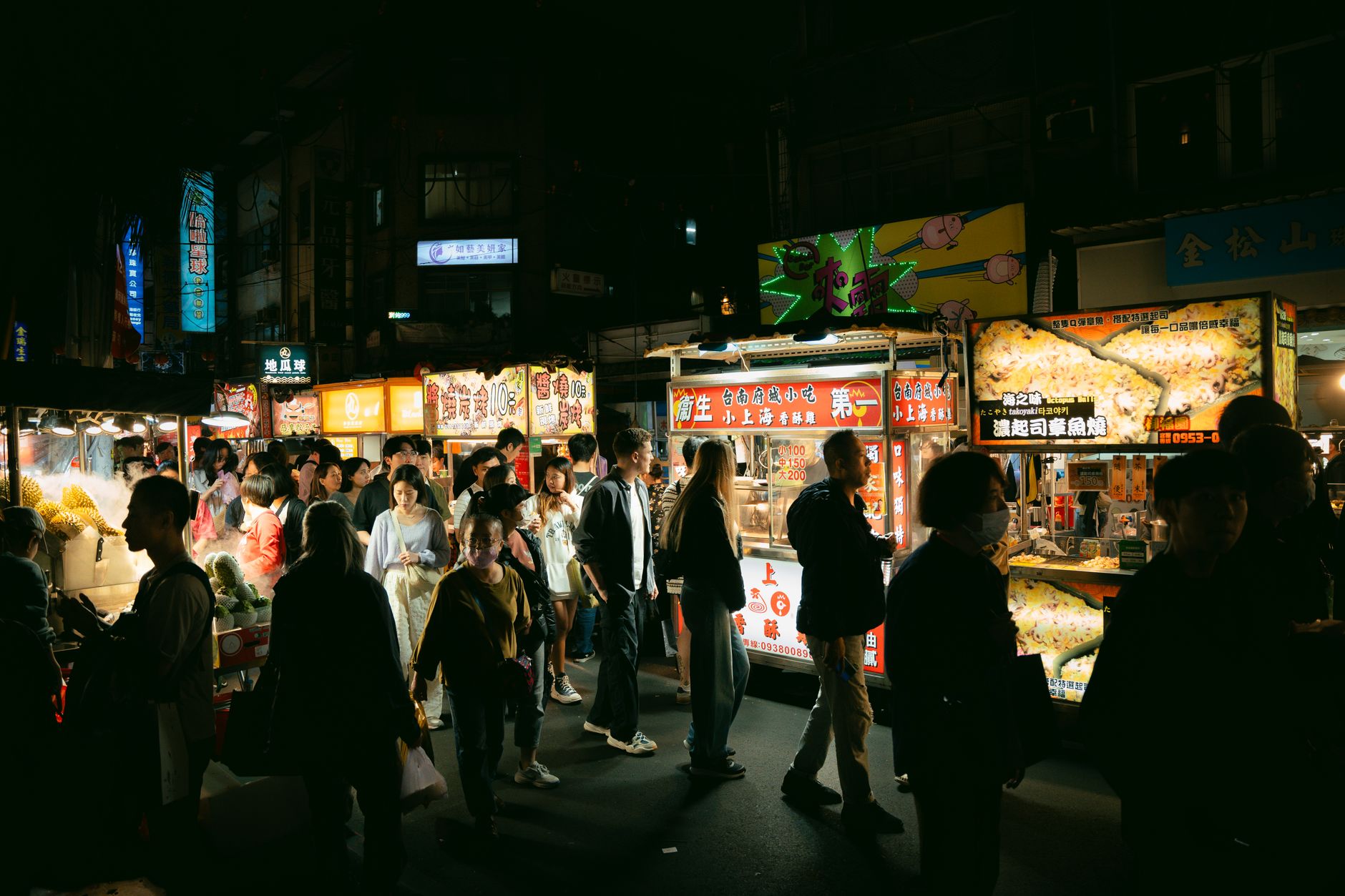
Ningxia is incredibly dense. The single pedestrian lane is packed tight with hungry locals shuffling past stalls in a slow, synchronized dance. The smells are an intense mix of caramelized sugar from deep-fried taro balls, the savory steam of braised pork rice (lu rou fan), and the smoky aroma of grilled wild boar sausages.
- Pro-Tip: Ningxia was one of the first night markets in Taiwan to introduce eco-friendly initiatives, including grease traps and reusable chopsticks. Look for the stalls with green certification signs for the highest quality ingredients.
---
The Budget & Logistics: How They Compare
To help you plan your ultimate culinary pilgrimage, here is how these iconic Asian night markets stack up in terms of cost, transit ease, and signature dishes.
| Market & Location | Signature Dish | Avg. Cost per Dish (USD) | Best Transit Option | Vibe Level | | :--- | :--- | :--- | :--- | :--- | | Keelung Miaokou (Taiwan) | Ding Bian Cuo (Potside Soup) | $2.50 - $4.00 | TRA Local Train (Keelung Station) | Atmospheric & Coastal | | Yaowarat Road (Bangkok) | Kuay Jab (Pepper Noodle Soup) | $1.50 - $3.00 | MRT (Wat Mangkon Station) | High-Energy & Chaotic | | Gwangjang Market (Seoul) | Nokdu Bindaetteok (Mung Bean Pancake) | $4.00 - $6.00 | Subway Line 1 (Jongno 5-ga) | Cozy & Traditional | | Fukuoka Yatai (Japan) | Hakata Tonkotsu Ramen | $6.00 - $9.00 | Subway (Nakasu-Kawabata) | Intimate & Social | | Chulia Street (Penang) | Charcoal Char Kway Teow | $1.50 - $2.50 | Walkable (George Town Center) | Heritage & Smoky | | Ningxia Market (Taipei) | Oyster Omelet (O-a-jian) | $2.00 - $3.50 | MRT Red Line (Shuanglian Station) | Dense & Food-Focused |
---
The Verdict: Why Asia Wins Every Time
European food markets are wonderful for a quiet afternoon glass of wine and a curated plate of cured meats. But if you want to experience food as a living, breathing art form, you must go to Asia.
These markets are not designed for tourists; they are designed for the local community. They are places where multi-generational families cook with pride, where recipes are honed over decades of daily repetition, and where the energy of the street becomes part of the seasoning.
Pack your bags, bring plenty of cash, leave your fancy clothes at home, and prepare to experience the real, uncut heart of global food culture.
---