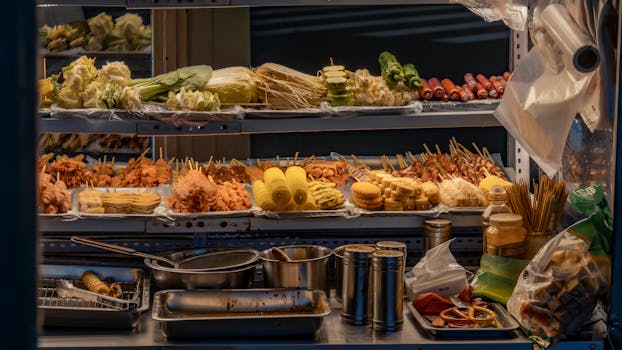
Why street food in Asia is different
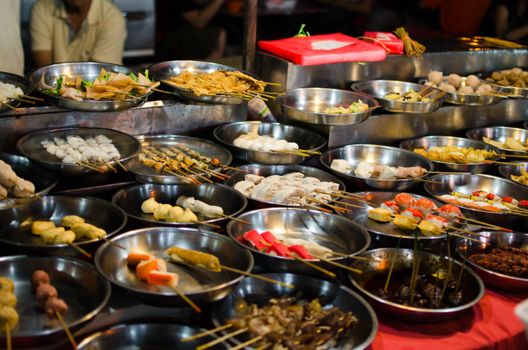
In much of Asia, street food is not a snack or a novelty. It is how people eat every day. Office workers queue at the same stall for breakfast for twenty years. Families go to the night market on Friday because it is cheaper and livelier than cooking. Many stalls specialise in a single dish, made thousands of times a week, which is why a plate of noodles from a pavement cart can beat a restaurant meal several times the price.
That specialisation is the first thing to understand when you travel. You do not look for a stall that sells everything. You look for a stall that does one or two things and has a line of people in front of it. Markets bring dozens of these specialists together, so you can eat your way through a region in a single evening.
This guide covers the markets that are most worth planning a trip around, what to order at each, and the practical habits that make street eating safe, comfortable and enjoyable.
Taipei, Taiwan: the night market capital
Taiwan is the best place in the world to learn how a night market works. Taipei alone has dozens, and the culture is so developed that locals have strong opinions about which is best.
Shilin Night Market is the largest and best known. It is crowded and touristy, but the food is still good. Look for oyster omelettes, giant fried chicken cutlets, stinky tofu (an acquired smell with a much milder taste), and bubble tea, which was invented in Taiwan.
Raohe Street Night Market is a single long lane with a temple at the end, easier to navigate and slightly more local. Its pepper buns, baked in a clay oven and filled with juicy pork, are famous, and the queue moves faster than it looks.
Ningxia Night Market is smaller and focuses on food rather than games and shopping. It is a good choice for a first evening.
Order small portions and share. Most stalls sell inexpensive plates, and the aim is to try ten things, not finish three.
Penang, Malaysia: hawker food at its best
George Town, on the island of Penang, is often described as the street food capital of Malaysia. Chinese, Malay, Indian and Peranakan traditions meet here, and the result is a food scene with huge variety.
Eat at hawker centres and kopitiams (traditional coffee shops) where several vendors share tables. Dishes to look for include char kway teow (flat rice noodles stir-fried over a fierce flame with prawns and egg), assam laksa (a sour, fishy noodle soup with tamarind), nasi kandar (rice with a choice of curries), cendol (shaved ice with coconut milk and palm sugar) and Hokkien mee (a spicy prawn broth with noodles).
Go hungry and walk between stalls. Many hawkers open only at certain hours, and good ones sell out.
Bangkok and Chiang Mai, Thailand
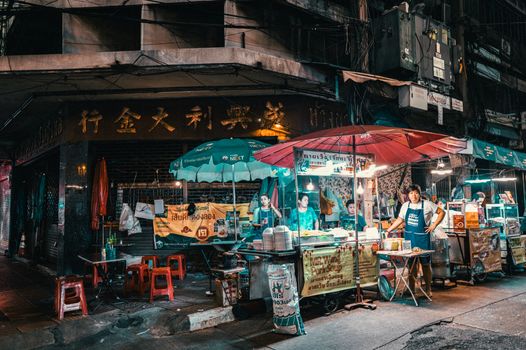
Bangkok's street food is legendary, from the pavement stalls of Chinatown (Yaowarat Road) to the sois of Sukhumvit. Chinatown comes alive at dusk with grilled seafood, noodles, roast duck and sweet desserts. For something calmer, try the markets near Ari or Thonburi.
In Chiang Mai, look for khao soi, a northern Thai curry noodle soup topped with crisp noodles, and sai oua, a herby grilled sausage. The Sunday Walking Street Market and the Saturday night market on Wualai Road are good places to graze.
Thailand's street food is generally inexpensive, and a dish costs a small amount. Vendors often cook to order, which is a good sign for freshness.
Hanoi and Ho Chi Minh City, Vietnam
Vietnam rewards early risers. Pho (beef or chicken noodle soup) is a breakfast dish, and the best places often close by mid-morning. Bun cha (grilled pork with rice noodles and herbs) is a Hanoi lunch classic. In the south, try banh mi (a baguette sandwich), com tam (broken rice with grilled pork) and banh xeo (a crispy turmeric pancake).
Eat on low plastic stools with the locals. Stalls are usually open to the street, so you can see how food is prepared.
Singapore: hawker centres with a safety net
Singapore's hawker centres are government-regulated, and stalls are graded for hygiene, which makes them a good starting point for nervous eaters. Try Maxwell Food Centre for chicken rice, Lau Pa Sat for satay in the evening, and Old Airport Road for a long list of local favourites.
Dishes to look for include chicken rice, laksa, chilli crab (usually found in restaurants rather than hawker centres), roti prata and kaya toast with soft-boiled eggs.
Other markets worth the journey
- Seoul, South Korea: Gwangjang Market for mung bean pancakes (bindaetteok) and tteokbokki (spicy rice cakes), and Myeongdong for evening street snacks.
- Osaka, Japan: Dotonbori and Kuromon Market for takoyaki, okonomiyaki and grilled seafood.
- Mumbai and Delhi, India: Chaat, vada pav and kebabs. Pay attention to hygiene and choose busy stalls.
- Yogyakarta, Indonesia: Gudeg (jackfruit stew) and night market snacks near Malioboro Street.
- Hong Kong: Dai pai dong stalls and the Temple Street Night Market.
How to eat street food safely
Most travellers who get sick from street food do so from water, ice or food that has been left sitting out. A few habits reduce the risk.
- Choose busy stalls with high turnover. Fresh ingredients move quickly.
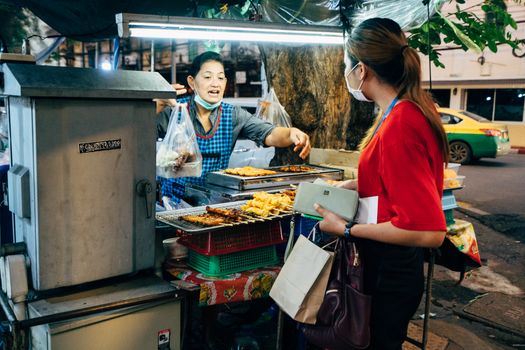
- Watch the food being cooked. Hot, freshly cooked dishes are safer than items that have sat in warm displays.
- Be careful with raw items, such as salads and unpeeled fruit, if you have a sensitive stomach.
- Drink bottled or sealed water, and be cautious with ice in places where tap water is not safe to drink.
- Wash or sanitise your hands. Carry hand sanitiser and tissues.
- Start gently. Give your stomach a day or two to adjust before eating the spiciest dishes.
- Carry small notes. Vendors may not have change for large bills.
- Tell vendors about allergies in advance if you can, or avoid risky dishes. Peanuts, shellfish and soy are common in many cuisines.
Etiquette at the market
- Queue and watch the system. Some stalls take orders in a specific way.
- Point and smile. Menus may be in a local language, but pointing works.
- Share tables if space is limited, and clear your own tray at hawker centres where required.
- Pay when asked. In some places you pay on ordering, in others when you finish.
- Tipping is rarely expected at street stalls in most of Asia.
- Ask before photographing people. Food is fine, but cooks and customers may prefer privacy.
When to go
Night markets typically start in the late afternoon and are busiest between 7 pm and 10 pm. Go slightly earlier to avoid crowds, or on a weeknight. Morning markets are best for breakfast dishes, and some close by noon.
Seasonal factors matter. The rainy season can reduce crowds but make markets muddy, and extreme heat makes midday eating unpleasant. Check local holidays, since some stalls close for several days.
Planning a food-focused trip
If you want to plan a trip around street food, choose one or two cities and give each at least three nights. Stay near a transport hub so that you can reach several markets easily.
- A simple 10-day plan: Four nights in Taipei, then fly to Penang for three nights, and finish with three nights in Singapore.
- A Southeast Asia loop: Bangkok, Chiang Mai, Hanoi and Ho Chi Minh City, using budget flights between them.
- A short city break: A long weekend in Osaka or Seoul gives you a high concentration of excellent eating.
Consider a street food tour on your first night. A local guide can explain what you are eating and help with ordering, and you will learn which stalls to return to.
Frequently asked questions
Is street food in Asia safe for travellers? For most people, yes, if you follow common-sense rules about busy stalls, fresh cooking and clean water. Some people still get upset stomachs from different bacteria, so introduce new foods gradually.
How much does street food cost? Prices vary widely. In Southeast Asia and parts of Taiwan, a meal can cost very little, while in Singapore, Hong Kong and Japan prices are higher. Compare costs by looking at menus or asking locals.
What if I am vegetarian? Vegetarian options exist, but fish sauce, shrimp paste and meat broths are common in many dishes. Learn the local phrase for 'no meat' and ask about stock. Buddhist vegetarian restaurants and stalls are widespread in Taiwan and Vietnam.
Can I eat street food if I have allergies? It is possible but requires care. Carry a card in the local language explaining your allergy, and choose stalls where you can see ingredients.
Before you go
Street food markets change. Stalls move, close and reopen, and neighbourhoods evolve. Check recent reviews and local food blogs for current favourites, and ask your hotel staff where they eat. Above all, go hungry, stay curious and let the line of locals be your guide.