The Great Deception: Why Your Feed is Lying About Global Sweets (And What They’re Missing!)
Let's be honest, we've all been there. Scrolling through Instagram, mesmerized by perfectly curated food porn – vibrant rainbow mochi, glistening cronuts, gravity-defying soufflés. Our mouths water, our travel bucket lists grow, and we dream of biting into those sweet, sweet fantasies. But what if I told you that some of the most visually stunning, seemingly dessert-like dishes out there are actually... savory? And that this delicious deception is often overlooked by the very influencers who claim to show you the world's best eats?
My own journey into this delightful culinary rabbit hole began on a scorching afternoon in Kyoto, Japan. I was wandering through the bustling Nishiki Market, a kaleidoscope of sights and smells. Amidst rows of pickles and dried seafood, I spotted them: perfectly spherical, translucent little balls, skewered on a stick, glistening with a dark, inviting glaze. "Mitarashi Dango!" I exclaimed to my travel buddy, convinced I was about to enjoy a sweet, chewy mochi treat. The vendor smiled, handed me a skewer for about 200 JPY (around $1.50 USD), and I took a hopeful bite.
My brain registered "sweet." My tongue registered "soy sauce." My eyes widened. It wasn't sweet at all! It was a delightful, chewy glutinous rice dumpling with a rich, umami-packed soy glaze, sometimes with a hint of sugar, but predominantly savory. It was delicious, unexpected, and completely blew my preconceived notions out of the water. That moment sparked an obsession: to uncover more of these incredible "dessert imposters" – the savory lookalikes that challenge our expectations and offer a truly authentic taste of local cuisine, far beyond the sugary stereotypes.
Why don't influencers talk about these? Perhaps they don't fit the 'sweet aesthetic' for a viral Reel, or maybe they simply haven't ventured beyond the obvious. But for us, the adventurous food travelers, these are the true treasures. They're the stories you'll tell, the tastes you'll never forget, and the proof that travel is about embracing the unexpected. So, buckle up, fellow food explorers, because we're about to expose the delicious secrets Instagram influencers don't want you to know!
1. Japan's Savory Sweets: Beyond the Mochi Facade
Japan, the land of culinary precision and aesthetic perfection, is a prime hunting ground for dessert imposters. While Mitarashi Dango (as I discovered) is a classic example of a dish that straddles the sweet-savory line with a strong savory lean, it's just the tip of the iceberg.
Let's talk about Senbei. These crispy rice crackers come in countless shapes, sizes, and flavors. Many are beautifully decorated, some even look like delicate cookies or intricate pastries. You might see them individually wrapped in a souvenir shop, looking like a gourmet sweet. But bite into one, and you'll often be met with a satisfyingly crunchy texture and a punch of soy sauce, seaweed, chili, or even shrimp flavor. I once bought a gorgeous, flower-shaped senbei in a Hakone gift shop, convinced it was a fancy shortbread. The first bite, a burst of salty nori, was a delightful surprise. They typically range from 100-500 JPY ($0.75 - $3.75 USD) per piece or small pack.
Then there are specific regional variations. In some parts of Japan, you might encounter Yaki Onigiri (grilled rice balls) brushed with a savory soy glaze that, when artfully presented, could almost be mistaken for a caramelized dessert. While not a direct "dessert imposter" in the same vein as dango or senbei, its visual appeal and the sweet-savory glaze can playfully deceive the uninitiated.
Tripsora Tip: When exploring Japanese markets or souvenir shops, don't just assume anything beautifully packaged and crispy is sweet. Look for kanji characters that might indicate "shoyu" (soy sauce) or "nori" (seaweed). Ask the vendor, "Amai desu ka?" (Is it sweet?) to avoid a sugary surprise! For Instagram, capture the intricate designs of senbei, then a candid shot of your surprised (but delighted) reaction upon tasting the savory notes.
2. Southeast Asian Savory Delights: The Coconut Milk Conundrum
Southeast Asia is a paradise of flavors, where coconut milk often blurs the lines between sweet and savory. You might think anything made with coconut milk is destined to be a dessert, but prepare for some delicious plot twists!
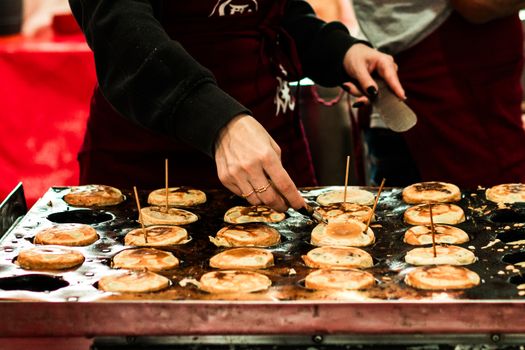
Take Khanom Krok from Thailand. These delicate, crispy-edged, creamy coconut pancakes are often served as a sweet treat, but many vendors offer savory versions that look identical. Imagine spotting these perfectly round, golden-brown delights bubbling away in their special griddle pans at a bustling Bangkok night market (like Chatuchak Weekend Market or any street food stall). You expect the sweet, custardy coconut milk interior. But then you bite into one filled with corn, taro, or even finely chopped green onions, giving it an unexpectedly savory, earthy kick. The contrast is thrilling! A small tray of 4-6 pieces usually costs around 30-50 THB ($1-$1.50 USD).
Another fantastic example is Vietnam's Bánh Bèo. These small, delicate steamed rice cakes are often served in tiny dishes or bowls, topped with savory ingredients like dried shrimp, crispy pork skin, scallions, and a drizzle of fish sauce. Their pristine white color and small, round shape can easily make them appear like a subtle, elegant dessert at first glance, especially if you're unfamiliar with Vietnamese cuisine. I vividly remember trying them in Hoi An, at a small eatery near the Japanese Bridge, where they were presented so beautifully I almost expected a sweet rice pudding. The burst of umami from the toppings was a delightful jolt. A plate of 8-10 bánh bèo typically costs 20,000-40,000 VND ($0.80-$1.60 USD).
Tripsora Tip: In Southeast Asia, always ask about the fillings! "Wan mai?" (Sweet?) in Thai or "Ngot khong?" (Sweet?) in Vietnamese can save you from a sweet-to-savory shock. These dishes are incredibly photogenic, so get those close-ups of the delicate textures and vibrant toppings before you take a bite and reveal the savory secret!
3. European Wonders: The Savory Pastry Paradox
Europe, with its rich baking traditions, isn't immune to the dessert imposter phenomenon. While patisseries might tempt you with sugary masterpieces, some savory delights cleverly hide among them, especially in France and Italy.
My favorite French surprise is the Gougère. These light, airy cheese puffs are made from choux pastry – the very same dough used for éclairs and cream puffs. Imagine walking into a charming boulangerie in Montmartre, Paris. Your eyes scan rows of beautiful pastries, and there, nestled amongst sweet choux buns, are these golden, perfectly puffed creations. They look like they're just waiting for a dollop of crème pâtissière. But take a bite, and you're met with a wonderfully savory, cheesy explosion. The crisp exterior gives way to a soft, hollow interior infused with Gruyère or Comté cheese. They're often served as an appetizer or alongside wine, not dessert. A small bag can cost 3-5 EUR ($3.20-$5.40 USD).
In Italy, while Arancini (fried rice balls) are clearly savory, their smaller, perfectly spherical cousins, often found in snack bars or aperitivo spreads, can sometimes be mistaken for a sweet fritter, especially if coated in a fine dusting of breadcrumbs. Imagine seeing a tray of these golden spheres, warm and inviting. Without knowing the context, you might think they're a sweet, fried dough ball. But inside, you'll find a hearty risotto with ragù, mozzarella, or peas. I once saw a tourist in a Sicilian cafe eyes a tray of small arancini, pick one up with the expectation of a 'zeppola' (sweet fried dough), and then visibly pause as the savory notes hit. Prices typically range from 2-4 EUR ($2.15-$4.30 USD) per arancino.
Tripsora Tip: In French bakeries, look for labels. "Fromage" (cheese) is your clue for gougères. In Italy, if it's golden and round but not explicitly labeled as sweet, assume it's savory and embrace the delicious surprise! These items are fantastic for Instagram – the elegant puff of a gougère or the golden perfection of an arancino makes for a stunning shot, especially when contrasting it with a sweet pastry in the background.
4. Middle Eastern & Indian Surprises: Spices Over Sugar
The vibrant cuisines of the Middle East and India are renowned for their incredible use of spices, which often create profiles that trick the palate into expecting sweetness when none is present.
Consider India's Dhokla. This steamed savory cake from Gujarat is a marvel. It’s typically bright yellow, light, and spongy, often garnished with mustard seeds, curry leaves, and fresh coriander. If you've ever seen a sweet semolina cake or a light sponge dessert, the dhokla's appearance can be incredibly deceptive. I remember being served a plate of these at a small, unassuming eatery in Mumbai, near the Gateway of India. The vendor, seeing my curious gaze, just smiled. Expecting a sweet, fluffy treat, I took a bite and was hit with a tangy, slightly spicy, savory burst. It was refreshing and utterly delicious, a perfect snack. A plate usually costs 50-100 INR ($0.60-$1.20 USD).
While many Middle Eastern pastries are indeed sweet, some savory items can easily blend in. Think of smaller, intricately shaped savory pastries that might be mistaken for baklava or other syrup-drenched treats from a distance. For instance, some variations of Fatayer (Middle Eastern savory pastries) with spinach or cheese fillings can be folded into delicate shapes that resemble sweet turnovers or small pies. If you're not close enough to see the filling or smell the savory spices, they can easily fool the eye in a bustling market or bakery.
Tripsora Tip: When encountering spongy, colorful cakes or intricately folded pastries in India or the Middle East, a quick sniff test can often help! The aroma of spices like cumin, mustard, or coriander will betray its savory nature. For Instagram, the vibrant yellow of dhokla against its green garnish is incredibly striking. Capture the steam rising from a freshly made batch for an authentic, mouth-watering shot.
5. Latin American Savory Treats: The Sweet Bun Deception
Latin America, with its love for corn and cheese, offers its own set of delicious deceptions, often in the form of seemingly innocent baked goods.
In Brazil, the beloved Pão de Queijo (cheese bread) is a prime example. These small, puffy, golden-brown rolls are a staple for breakfast or a snack. They often sit alongside sweet rolls, cakes, and coffee in a padaria (bakery). Their inviting appearance, soft texture, and warm aroma scream "sweet bun." My first encounter was in a bustling Rio de Janeiro bakery, near Copacabana Beach. I pointed to a basket of these golden spheres, thinking I was getting a plain, slightly sweet roll to go with my coffee. The first bite, however, was a revelation: chewy, cheesy, and gloriously savory! It was an instant addiction. They typically cost 3-8 BRL ($0.60-$1.60 USD) for a few pieces.
Similarly, in Colombia, Arepas (corn cakes) can be incredibly deceptive. While often served as a flatbread with various savory fillings, plain arepas, especially smaller ones, can look like simple biscuits or even a type of sweet corn cake if you’re not familiar with them. Imagine seeing a basket of warm, golden arepas at a roadside stall in Medellín or Bogotá. Without context, you might assume they’re a sweet accompaniment to coffee. But these are savory, often slightly salty, and meant to be filled with cheese, meat, or eggs.
Tripsora Tip: In Latin American bakeries, if it looks like a bun but isn't explicitly glazed or filled with fruit, it's often savory. Don't be afraid to ask, "Es dulce o salado?" (Is it sweet or savory?) The fluffy interior of a pão de queijo, stretching with melted cheese, is an absolute Instagram winner. Capture the moment you tear it open!
The Art of Perception: Why We Get Fooled & How to Spot Them (Or Embrace the Surprise!)
So, why do these foods fool us so consistently? It's a fascinating blend of psychology, cultural context, and visual cues:
- Color & Shape: Many savory imposters share colors (golden brown, light yellow, white) and shapes (round, puffed, delicate) commonly associated with sweet pastries and desserts.
- Context: We often encounter them in settings where sweets are prevalent – bakeries, markets, dessert sections of a menu.
- Aroma: Sometimes, the savory notes are subtle, or masked by other enticing smells, leading our brains to default to the expectation of sweetness.
- Cultural Conditioning: Our own culinary backgrounds heavily influence what we expect certain ingredients (like coconut milk or rice flour) to taste like.
How to Become a Savory Sleuth (Or Just Enjoy the Ride!):
- Ask Questions: The simplest and most effective method! A polite "Is it sweet?" in the local language (or pointing and miming) goes a long way.
- Read Menus Carefully: Look for keywords like "cheese," "soy," "shrimp," "corn," "spices," or "herbs."
- Observe Local Eating Habits: If locals are having it with coffee for breakfast or as an appetizer with savory dips, it's probably not dessert.
- Trust Your Nose (Sometimes): While not foolproof, a distinct aroma of garlic, onion, or strong spices usually indicates savory.
- Embrace the Surprise: Honestly, sometimes the best part is the unexpected discovery! Go in with an open mind and let your taste buds be delighted by the unexpected. These moments are what truly make travel memorable.
Beyond the Filters: The True Taste of Travel Awaits!
The world of food is infinitely more diverse and exciting than what often graces our perfectly curated social media feeds. While there's nothing wrong with a beautiful dessert shot, focusing solely on the "sweet aesthetic" means missing out on an entire universe of authentic, surprising, and incredibly delicious experiences. These dessert imposters are more than just food; they're conversation starters, cultural insights, and a testament to the endless creativity of global cuisine.
So, the next time you're scrolling through Instagram, remember: what you see isn't always what you get, and that's a beautiful thing! Ditch the influencer-approved checklist and dive headfirst into the unexpected. Seek out these savory surprises, challenge your palate, and discover the true, unadulterated flavors of the world.
What savory "dessert" has tricked you on your travels? Share your stories and photos with us using #TripsoraSavorySurprise – we can't wait to see your authentic food adventures!
---