Secret Night Markets: Where Locals Eat & My Life Changed Forever
The aroma hit me first – a complex symphony of sizzling garlic, sweet chili, fragrant herbs, and something undeniably, deliciously foreign. It wasn't the sanitized, souvenir-laden "night market" I'd been to the night before, filled with more selfie sticks than locals. No, this was different. This was it.
I remember my first few trips to Southeast Asia. I’d dutifully visit the famous night markets listed in every guidebook, snapping photos of colorful stalls and trying a few bites of what seemed like "authentic" street food. But something always felt… off. The prices were a little too high, the English menus a little too polished, and the crowds a little too familiar. It felt like I was watching a show, not participating in real life. I was missing the soul of the place.
Then came the epiphany. On a drizzly evening in Bangkok, a local friend, seeing my crestfallen face after yet another tourist-centric food experience, just smirked. "You're going to the wrong places, my friend," he said, pulling me onto the back of his scooter. We weaved through labyrinthine alleys, past sleeping dogs and glowing shrines, until suddenly, the world exploded into light and sound.
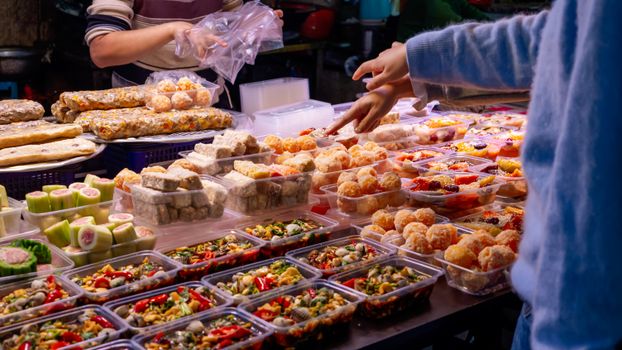
This wasn't on any map I owned. It was a sprawling, chaotic, utterly mesmerizing market tucked beneath an elevated train line, buzzing with a symphony of clanking woks, rapid-fire Thai chatter, and the laughter of families sharing plastic stools. The air was thick with the scent of charcoal smoke and spices, and every stall overflowed with dishes I'd never seen before. This was Rong Kluea Market (or what felt like its spiritual sibling, because the exact name got lost in the sensory overload), and it was the moment my travel life, and my taste buds, changed forever.
From that night on, my mission became clear: to seek out the real night markets, the ones where locals actually eat. The ones that pulse with the authentic rhythm of a city, offering not just incredible food, but a genuine window into a culture. And let me tell you, the journey has been nothing short of life-changing.
The Epiphany: Why Local Night Markets Matter (and How to Find Them)
Why go through the effort of finding these hidden gems? Because they are the beating heart of a city's culinary and social life. They're where grandmothers buy their daily meals, where teenagers gossip over cheap snacks, and where families gather after a long day. It’s not just about eating; it’s about participating.
Here's why they matter:
- Authenticity: You're tasting dishes prepared for local palates, often using traditional recipes passed down through generations.
- Flavor: The sheer variety and depth of flavor are unparalleled. These vendors specialize in a few dishes, perfecting them over decades.
- Budget-Friendly: You can eat like royalty for a fraction of the price you'd pay in a restaurant. We're talking delicious, filling meals for a few dollars.
- Cultural Immersion: You're surrounded by local life, sounds, and customs. It’s a vibrant, unfiltered experience.
- Support Local: Your money goes directly to small business owners, often families, sustaining local economies.
So, how do you find them? Ditch the guidebooks and try these tactics:
- Ask Locals (the right ones): Don't ask your hotel concierge. Ask a taxi driver, a shopkeeper, a security guard, or even a server at a local café. "Where do you eat dinner after work?" is the magic question.
- Google Maps Exploration: Zoom in on residential areas. Look for clusters of food stalls, especially those with lots of tables and chairs, or areas marked as "market." Satellite view can sometimes reveal open-air setups.
- Blogger & Forum Dive: Search for "local night markets [city name]" on niche travel blogs, Reddit, or expat forums. Look for discussions about less-known spots.
- Observe & Follow: If you see a busy street food area bustling with locals during evening hours, that's often a good sign. Follow the crowds, especially if they're not carrying cameras!
- Language Clues: If most signs are in the local language and very few are in English, you're likely in the right place.
- Price Check: If a bowl of noodles costs the equivalent of $1-3 USD, you're probably hitting a local spot. Tourist markets often inflate prices.
Bangkok's Bustling Backstreet: The True Flavors of Rong Kluea
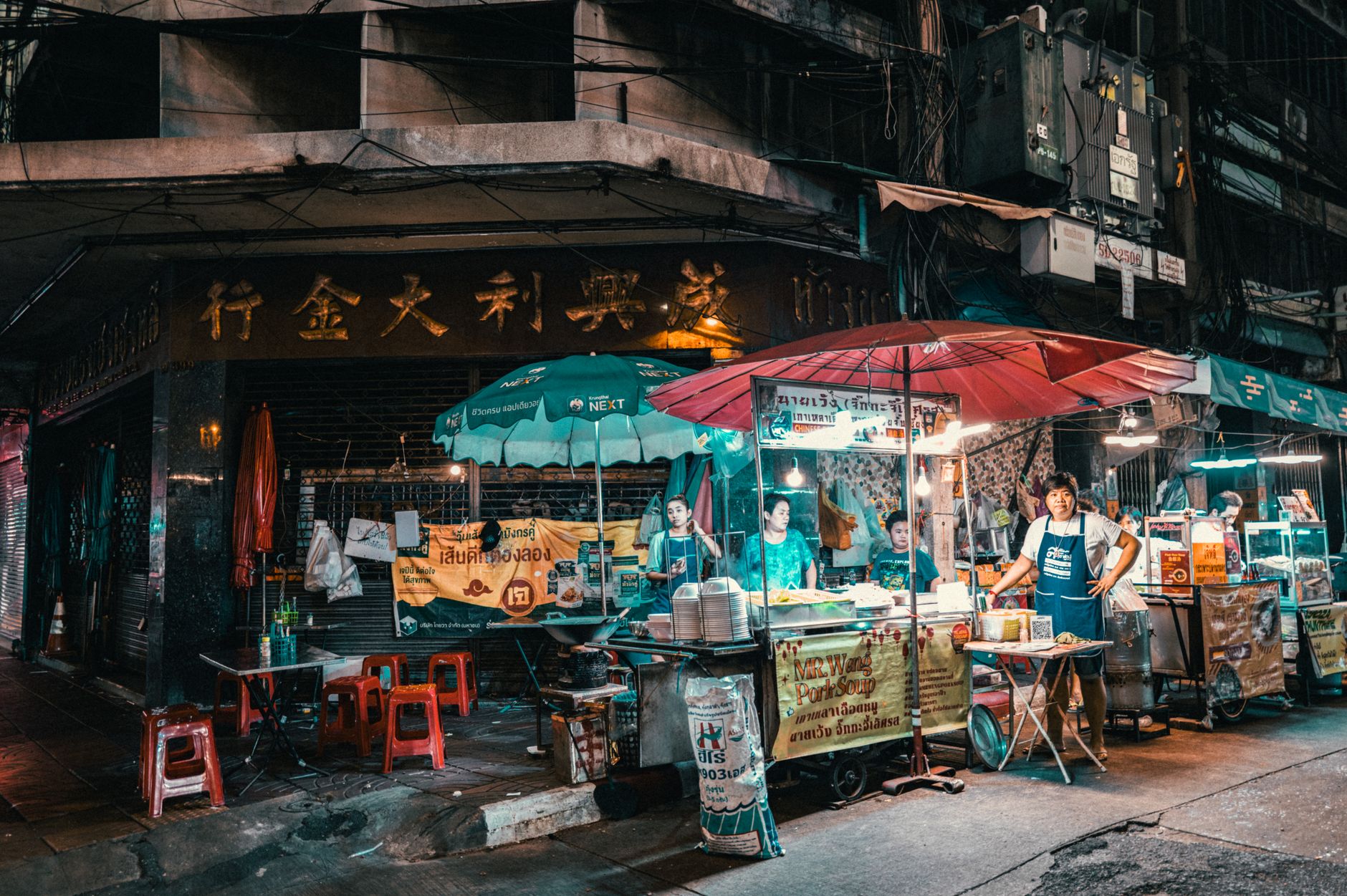
That fateful night in Bangkok ignited my passion. While "Rong Kluea Market" is technically a massive border market, the one I stumbled into felt like a smaller, more intimate version, a true local gem. Let's call it the spirit of Rong Kluea, or perhaps a lesser-known offshoot. It was a symphony of sensory overload.
Imagine this: hundreds of stalls, each a miniature kitchen, spewing delicious smoke into the humid air. Women in aprons expertly stir-frying noodles in giant woks, the flames leaping high. Men deftly grilling skewers of marinated pork (moo ping) over charcoal, their faces glistening with sweat. The rhythmic chopping of herbs, the clatter of bowls, the incessant chatter – it was pure, unadulterated life.
My friend led me to a stall overflowing with vibrant green and red curries. "Gaeng Keow Wan Gai," he pointed, "Green curry chicken. Best in Bangkok." For a mere 60 baht (about $1.75 USD), I received a bowl so fragrant, so perfectly balanced between spicy, sweet, and creamy, it brought tears to my eyes. It was nothing like the watered-down versions I'd had before. The chicken was tender, the bamboo shoots crisp, and the holy basil burst with flavor.
Next, we shared a plate of Pad See Ew (70 baht) from a stall where an elderly woman, with a mischievous twinkle in her eye, charred the wide rice noodles to perfection, creating that irresistible smoky "wok hei" flavor. The greens were still crunchy, and the subtle sweetness of the sauce was divine.
But the real showstopper was the boat noodles (Kuay Teow Rua). We sat on tiny plastic stools by a canal, watching long-tail boats glide by. Each small bowl, costing only 15 baht (about $0.45 USD), was a concentrated explosion of rich, dark broth, tender pork or beef, meatballs, and morning glory. The tradition is to stack your empty bowls, a testament to how many you've devoured. I lost count after five.
Practical Tip: Don't be afraid to point! Most vendors understand "one" or "two" in English, and a smile goes a long way. Look for the busiest stalls – that's usually a good indicator of freshness and taste.
Penang's Culinary Labyrinth: Macalister Lane's Hawker Haven
My quest continued to Penang, Malaysia, a city renowned as a food paradise. While Gurney Drive is famous, I sought out something more local. My research led me to Macalister Lane Night Market (sometimes called Macalister Road Market), a less touristy but equally vibrant hawker center that truly shines after dark.
Stepping into Macalister Lane felt like entering a secret culinary society. It's not a single street, but a collection of stalls and small eateries spilling out onto the pavement. The air was thick with the aroma of spices and frying noodles. Here, the focus is on a few iconic dishes, executed with masterful precision.
The undisputed king here is Char Kway Teow. I found a stall run by an elderly couple who had been frying these flat rice noodles for over 50 years. The wok sizzled, the flames danced, and in minutes, I had a plate of perfectly charred noodles, studded with succulent prawns, cockles, bean sprouts, and Chinese sausage. Each mouthful was a symphony of savory, smoky, and slightly spicy flavors. Price? A generous plate for 8-10 MYR (about $1.70 - $2.10 USD).
Then came the Assam Laksa. Forget any Laksa you've had before. Penang's version is a sour, spicy, fish-based noodle soup, brimming with flaked mackerel, shredded pineapple, cucumber, and mint. The broth, tangy from tamarind and spicy from chilies, was utterly invigorating. I paid 7 MYR (around $1.50 USD) for a bowl that was a revelation.
My most memorable moment at Macalister Lane wasn't just the food. It was watching a young boy, no older than ten, helping his grandmother at her Rojak stall. Rojak, a fruit and vegetable salad tossed in a sticky, spicy, peanut sauce, looked intimidating but tasted incredible. The boy, with a shy smile, offered me a piece of jicama, and we shared a moment of connection without a single shared word. It was the humanity, the family effort, that made the food taste even better.
Instagram Moment: The vibrant colors of Rojak, with its mix of green mango, red apple, and cucumber, all glistening with that dark, rich sauce, is a fantastic shot. Capture the steam rising from a Char Kway Teow wok!
Taipei's Unsung Hero: Nanjichang Night Market
Taipei is famous for its night markets like Shilin and Raohe, but for a truly local experience, I ventured to Nanjichang Night Market. Tucked away in a residential area, it's a bustling hub known for its traditional Taiwanese comfort food and a distinct lack of tourist traps.
The first thing you notice about Nanjichang is its authenticity. It’s less about flashy signs and more about delicious aromas wafting from unassuming stalls. I was immediately drawn to a stall with a line of locals patiently waiting for their turn. This is always a good sign.
My target: Gua Bao, often called the "Taiwanese burger." This steamed bun, soft as a cloud, is typically filled with tender, slow-brabraised pork belly, pickled mustard greens, and a sprinkle of crushed peanuts and cilantro. The balance of savory, sweet, and tangy, all encased in that pillowy bun, was pure perfection. Each Gua Bao cost around 50-65 TWD (about $1.60 - $2.10 USD). I had two. Or maybe three. Don't judge.
Another highlight was the Oyster Omelette (Orh Ah Jian). Unlike the fluffy omelets you might be used to, this Taiwanese version is a crispy, gooey delight. Fresh oysters are cooked with eggs, cabbage, and a starchy batter, then topped with a sweet and spicy sauce. The contrast of textures and flavors was addictive. A plate set me back about 70 TWD (around $2.30 USD).
And then there was Stinky Tofu. Yes, it smells like a dumpster fire mixed with old socks. But at Nanjichang, I tried the fried version, crispy on the outside, soft on the inside, served with pickled cabbage and a chili garlic sauce. It’s an acquired taste, but once you get past the aroma, the flavor is surprisingly complex and savory. My initial hesitation melted away after one bite, replaced by a strange craving. It's a rite of passage, and a plate was about 60 TWD (about $2 USD).
Actionable Advice: If you're nervous about ordering in a non-English speaking environment, download a translation app like Google Translate. You can often point to pictures, or use the camera function to translate menus. Embrace the adventure!
Beyond the Plate: The True Immersion Experience
While the food itself is a revelation, the true life-changing aspect of these local night markets goes far beyond what’s on your plate. It's the atmosphere, the people, the sheer vibrancy of life unfolding around you.
I remember sitting on a tiny plastic stool in a bustling market in Vietnam, sharing a table with an elderly couple who, despite the language barrier, insisted on offering me a piece of their dragon fruit. Their smiles were universal. In a small market in Laos, I watched children play tag between stalls while their parents cooked, the air filled with innocent laughter and the scent of grilled fish.
These markets stripped away the pretense of "tourism" and allowed me to simply be a part of the local fabric. I learned to appreciate the simple joy of a perfectly cooked meal, the warmth of human connection, and the resilience of communities built around food. It taught me patience, open-mindedness, and a profound respect for different cultures.
It’s where I learned that true luxury in travel isn't about five-star hotels, but about five-star experiences – the kind that ignite your senses, challenge your preconceptions, and leave an indelible mark on your soul. It’s where I understood that food is a universal language, a bridge between strangers, and a powerful storyteller of a nation's history and heart.
Your Own Local Night Market Adventure: Practical Tips & Etiquette
Ready to embark on your own life-changing culinary quest? Here are some essential tips to make your local night market experience safe, delicious, and unforgettable:
- Go with an Empty Stomach: This is non-negotiable. You'll want to try everything!
- Start Small: Don't commit to a huge portion of one dish. Try small bites from many different stalls. Share with travel companions if you can.
- Look for Crowds: A long line of locals is usually a sign of delicious, fresh food. Don't be afraid to join it!
- Observe Hygiene: While street food is inherently less sterile than a restaurant, look for stalls that appear clean, have fresh ingredients, and cook food to order. Hot, sizzling food is generally safer.
- Carry Small Bills: Many vendors won't have change for large denominations.
- Embrace the Plastic Stool Life: Comfort is secondary to authenticity. Sit where the locals sit.
- Be Adventurous: Try something you've never heard of. Ask for recommendations (even with gestures). You might discover your new favorite dish.
- Stay Hydrated: The food can be spicy and the weather often hot. Grab a fresh juice or local tea.
- Mind Your Belongings: While generally safe, crowded places can attract pickpockets. Keep your wallet secure.
- Practice Basic Etiquette: Don't block aisles, be polite, and a simple "thank you" (even in English) goes a long way.
- Bring Your Own: Consider bringing a reusable bag, and even your own chopsticks or spork, to reduce waste.
- Document (Respectfully): Snap those Instagram-worthy shots, but be mindful of people's privacy and avoid disrupting vendors. A quick "Can I take a picture?" (even with a gesture) is appreciated.
My journey through these authentic night markets has been more than just a culinary tour; it's been a journey of self-discovery. Each bite, each shared smile, each chaotic, vibrant moment has deepened my understanding of the world and my place within it. It's a reminder that the best travel experiences often lie just beyond the well-trodden path, waiting to be discovered by those brave enough to seek them out.
So, next time you plan a trip, skip the fancy restaurant reservations one night. Ask a local, follow your nose, and dive headfirst into the sensory explosion of an authentic night market. I promise, your taste buds, and perhaps even your life, will never be the same.
What's the most incredible local food experience you've had? Share your stories and tips in the comments below! Let's inspire each other to find those hidden culinary gems!
---