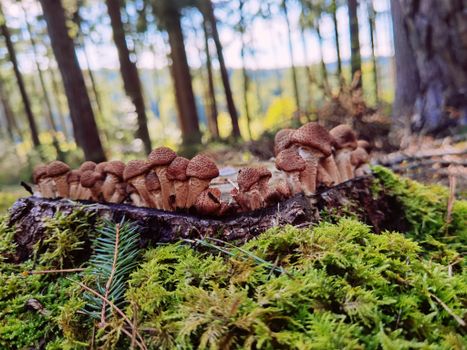
The First Rule of the Forest: Listen Before You Look
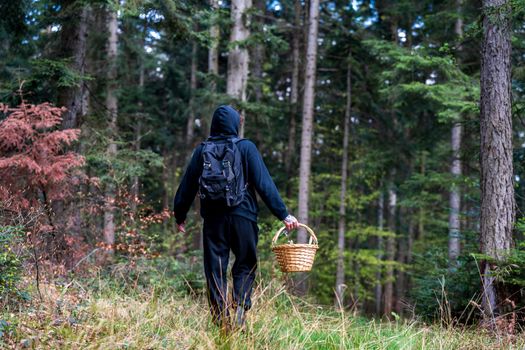
I stepped off the local regional train in Titisee, Germany, and the air didn't just hit me; it enveloped me. It smelled of wet slate, decaying pine needles, and that unmistakable, metallic tang of an approaching autumn frost. While the other tourists headed for the cuckoo clock shops, I turned toward the dark, serrated treeline of the Schwarzwald.
My guide, a man named Klaus whose skin looked like cured leather, didn't say "hello." He just pointed at my leather boots and nodded. "The earth is soft today," he whispered. "The Steinpilze will be pushing."
That’s the thing about mushroom foraging in legendary forests. It isn't a hike; it’s a heist. You aren't just walking; you’re scanning the "duff"—that thick layer of organic debris—for the slightest "shrumpt," a tiny disturbance in the soil that signals a King Bolete is about to crown.
Travel advisors are seeing a massive pivot toward "Myco-Tourism." We’re tired of digital screens; we want the tactile thrill of finding a $50-a-pound mushroom hiding under a fern. Here is the definitive map of where to go, what to pick, and how to avoid the deadly mistakes.
---
1. The Black Forest, Germany: The Kingdom of the Steinpilz
The Black Forest isn't just a setting for Grimm’s Fairy Tales; it is the undisputed heavyweight champion of European foraging. Travel advisors suggest the Southern High Black Forest, specifically around St. Blasien, for the most consistent yields.
The Target: The Steinpilz (Porcini)
Known as the "Stone Mushroom" for its dense, meaty texture, the Steinpilz is the gold standard here. You’re looking for a chestnut-colored cap that feels like damp suede.
- Local Secret: Look for "Fly Agaric" (the red-and-white Toadstool). They share the same soil conditions as Porcini. Where there is a fairy tale mushroom, the edible king is often hiding five feet away.
- Pro-Tip: Visit the local Gasthaus after your hunt. Many local chefs will actually cook your (verified) find for a small fee, pairing it with handmade Maultaschen.
---
2. The Pacific Northwest, USA: The Chanterelle Rush
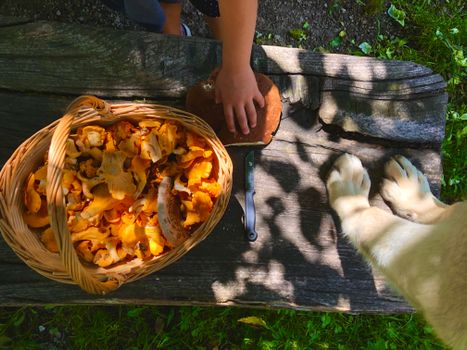
In the rain-soaked corridors of the Tillamook State Forest in Oregon, the ground doesn't just grow moss—it glows. When the autumn rains hit, the forest floor erupts in apricot-scented flashes of gold.
The Target: Pacific Golden Chanterelles
Unlike their European cousins, PNW chanterelles can grow to the size of dinner plates. They have "false gills"—ridges that look like melted wax—and they smell faintly of fresh apricots.
- The Hidden Entrance: Avoid the main trailheads. Advisors suggest the logging spurs off Highway 6. Look for stands of second-growth Douglas Fir where the light filters through in "God rays."
- Pro-Tip: Never pull. Always cut the stem at the base with a sharp blade to keep the mycelium intact. If you pull, you’re destroying next year’s harvest.
---
3. The Carpathian Mountains, Romania: The Last Wild Frontier
If you want a truly visceral experience, Transylvania’s Carpathian Mountains are where the 21st century disappears. These are some of the last primary forests in Europe, home to brown bears, wolves, and the most massive King Boletes you’ve ever seen.
The Target: Hribi (Boletus Edulis)
The Romanians call them Hribi. They are darker, funkier, and more robust than those found further west.
- Insider Language: Don't ask for a "map." Ask for the "Cărareul Ciupercilor" (The Mushroom Path).
- Pro-Tip: Hire a local shepherd as a guide. Not only do they know the secret groves, but they also know how to keep you away from the local bear populations.
---
4. The Scottish Highlands: The Birch Bolete Trail
The Cairngorms National Park offers a different vibe: ethereal, misty, and surprisingly bountiful. Travel advisors suggest focusing on the birch woodlands near Aviemore.
The Target: Birch Boletes and Chanterelles
The Birch Bolete has a distinctive scaly stalk (scabers) and a mild, nutty flavor.
- The Secret Spot: The banks of Loch An Eilein. The humidity from the water creates a microclimate perfect for late-season flushes.
- Pro-Tip: Scotland has "Right to Roam" laws, but always check the deer stalking season calendars. You don't want to be mistaken for a stag while you're hunched over a fungus.
---
5. The Blue Mountains, Australia: The Saffron Milk Cap Surprise
Who says foraging is only for the Northern Hemisphere? In the pine plantations of Oberon, just a few hours from Sydney, the "Piney" hunt is a local obsession during the Southern autumn (March–May).
The Target: Saffron Milk Caps (Lactarius deliciosus)
These are bright orange and bleed a saffron-colored milk when cut. They are crunchy, savory, and thrive under the needles of Radiata pines.
- Logistics: The Billionis Hill area is the local favorite.
- Pro-Tip: These mushrooms bruise green. Don't be alarmed; it’s not rot, it’s just oxidation. They are still delicious when sautéed in butter and garlic.
---
The Logistics: Planning Your Foray
| Destination | Best Time | Estimated Daily Cost ($) | Difficulty | | :--- | :--- | :--- | :--- | | Black Forest, GER | Sept - Oct | $150 (incl. guide) | Moderate | | Oregon, USA | Oct - Nov | $80 (permit + fuel) | Easy | | Carpathians, ROM | Aug - Sept | $60 (local homestay) | Hard (Rugged) | | Highlands, SCO | Aug - Oct | $120 (B&B + gear) | Moderate | | Oberon, AUS | March - May | $90 (Car rental) | Easy |
Quick Facts for the Modern Forager:
- The Gear: An Opinel No. 08 Mushroom Knife (with the boar hair brush), a mesh basket (to allow spores to drop as you walk), and a topographic GPS app like Gaia GPS (cell service is non-existent in the best spots).
- The 100% Rule: If you are not 100% sure what it is, do not eat it. Many delicious mushrooms have "look-alikes" that can cause anything from a stomach ache to liver failure.
- The Permit: In many US National Forests, you need a "Free Use Permit." In Europe, there are often "kg limits" per person. Don't be a poacher; check the local forestry office.
---
Authenticity: The Forager’s Code
To travel as a forager is to see the world in layers. You aren't looking at the "scenery"—you’re looking at the symbiosis. You begin to notice that certain mushrooms only grow under specific trees (mycorrhizal relationships). You learn that the "duff" of a forest floor is a living, breathing communication network.
When you finally find that perfect Porcini—the one that hasn't been nibbled by slugs or bored by worms—don't just rip it out. Take a moment. Smell the earth. Feel the temperature drop. That is the "Legendary Forest" experience travel advisors are talking about. It’s not about the food; it’s about the hunt.
Final Pro-Tip: Never share your "Honey Hole" (your secret spot) on social media with geotags on. The foraging community is tight-knit, and nothing burns a bridge faster than "burning" a secret grove.
---