The Great Escape: Why Travelers Are Moving Beyond Yellowstone
I stepped off the gravel path at Sahale Arm just as the morning fog peeled back like a curtain, revealing a jagged arena of ice and black diorite. There was no sound. No idling tour buses, no crackle of walkie-talkies, no drone of a hundred smartphones capturing the exact same selfie. Just the sharp, clean scent of crushed subalpine heather and the distant, thunderous crack of a hanging glacier shifting in the morning heat.
For decades, Yellowstone National Park has been the undisputed heavyweight of the American wilderness. But let’s be honest: sharing a geothermal boardwalk with 4,000 other visitors while breathing in diesel exhaust instead of pine air isn't the escape you dreamed of.
Recent National Park Service (NPS) data shows that Yellowstone welcomed over 4.5 million visitors last year, leading to record-high congestion, trail erosion, and "bison jams" that can stall traffic for hours.
But here is the real secret: if you look at the data on scenic variety, trail density, and visitor satisfaction scores, several under-the-radar parks leave Yellowstone in the dust. By analyzing crowd-to-acre ratios and ecological diversity indexes, we have identified five national parks that are objectively more stunning, more tranquil, and far more rewarding than Yellowstone.
---
1. North Cascades National Park, Washington: The American Alps
``` Visitor-to-Acre Ratio: 1 visitor per 17 acres (Yellowstone: 2 visitors per single acre) Key Feature: 300+ active glaciers, turquoise alpine lakes ```
The Visual Drama
If Yellowstone is a sprawling, bubbling volcanic plateau, North Cascades National Park is a vertical fortress of ice and granite. Located less than three hours from Seattle, this park features jagged peaks that slice into the sky like broken glass. It contains over 300 glaciers—more than any other US park outside of Alaska—which feed hundreds of sheer waterfalls and brilliant turquoise lakes. The intense color of Diablo and Ross Lakes is caused by "glacial flour"—fine rock dust suspended in the water that scatters green and blue light waves.
Why It Beats Yellowstone
Yellowstone’s landscape is beautiful but relatively flat and dry. North Cascades offers dramatic verticality and lush, moisture-dripping green environments. According to NPS public use statistics, North Cascades receives fewer than 40,000 recreational visitors annually. You can hike for hours along the Cascade Pass Trail and encounter nothing but marmots and mountain goats.
Pro-Tip
Skip the crowded Diablo Lake Overlook. Instead, drive to the unmarked pullout at Milepost 132 on State Route 20. From here, a short, steep 10-minute scramble down an angler's path brings you directly to the water’s edge, where the towering reflection of Colonial Peak hits the turquoise water without a single tourist in sight.
---
2. Olympic National Park, Washington: Three Worlds in One Border
``` Visitor-to-Acre Ratio: Highly variable; backcountry areas remain completely wild Key Feature: Temperate rainforests, rugged Pacific coastline, glacier-capped peaks ```
The Visual Drama
Olympic National Park is an ecological marvel that defies simple classification. Within its borders lie three entirely distinct ecosystems: the glacier-carved peaks of the Olympic Mountains, a wild 73-mile strip of untamed Pacific coastline littered with towering sea stacks, and the moss-draped cathedrals of the Hoh and Quinault Temperate Rainforests.
Why It Beats Yellowstone
Yellowstone is largely a single-experience park: geothermal features and high-plateau wildlife. Olympic offers unparalleled visual variety. In a single day, you can watch the sunrise over the glaciers at Hurricane Ridge, hike beneath 250-foot-tall Sitka spruces draped in club moss, and watch the sunset behind basalt sea stacks at Ruby Beach while gray whales migrate offshore.
Pro-Tip
To experience the Hoh Rainforest without the midday crowds, arrive at the gate by 6:30 AM. Head past the popular Hall of Mosses trail and take the Hoh River Trail toward Mount Olympic. About 1.5 miles in, you will reach a hidden maple grove where the silence is absolute, broken only by the occasional drip of dew and the bugle of Roosevelt elk.
---
3. Wrangell-St. Elias National Park & Preserve, Alaska: Scale Beyond Comprehension
``` Visitor-to-Acre Ratio: 1 visitor per 160 acres Key Feature: America's largest national park, active volcanism, massive icefields ```
The Visual Drama
Wrangell-St. Elias is a land of superlatives. At 13.2 million acres, it is six times the size of Yellowstone and could easily swallow the country of Switzerland. This is a landscape shaped by raw, colossal forces: nine of the 16 highest peaks in the United States are located here, alongside massive glaciers like the Nabesna, the world's longest valley glacier.
Why It Beats Yellowstone
Yellowstone’s wilderness is managed and hemmed in by roads. Wrangell-St. Elias is wild and untamed. There are only two dirt roads that enter the park; the rest is accessed by bush plane. The scale here makes Yellowstone's Grand Canyon look like a roadside ditch. You can stand on the edge of the Root Glacier and look up at Mount Blackburn (16,390 feet) rising directly from the valley floor.
Pro-Tip
Take the McCarthy Road to the historic, abandoned copper mining town of Kennecott. Instead of taking the standard guided glacier walk, hire a local bush pilot from McCarthy Air for a drop-off flight at the Donaho Basin. You will be left completely alone between two massive converging glaciers for an afternoon of unmatched exploration.
---
4. Glacier National Park, Montana: The Crown of the Continent
``` Visitor-to-Acre Ratio: High in summer, but backcountry access is unmatched Key Feature: Dramatic U-shaped glacial valleys, historic alpine chalets ```
The Visual Drama
While Yellowstone sits on a volcanic hotspot that flattens the terrain, Glacier National Park is a masterclass in glacial carving. The park is defined by deep, U-shaped valleys, sheer amphitheaters of rock (cirques), and pristine alpine lakes like Lake McDonald and Swiftcurrent Lake, which reflect the colorful, iron-rich argillite pebbles lining their shores.
Why It Beats Yellowstone
Glacier’s Going-to-the-Sun Road is widely considered one of the most spectacular alpine drives in the world, offering views that easily rival the Swiss Alps. While Yellowstone has geysers, Glacier has sheer, vertical rock faces and alpine meadows bursting with bear grass that make every single viewpoint feel like a postcard.
Pro-Tip
To avoid the competitive parking at Logan Pass, take the free park shuttle to the Loop hairpin turn at 7:00 AM. Hike up the Granite Park Trail to the historic Granite Park Chalet. You’ll tackle the elevation before the sun gets hot, enjoy freshly baked goods sold at the chalet, and have a high chance of spotting grizzly bears foraging in the slide zones below.
---
5. Kings Canyon National Park, California: Deeper Than the Grand Canyon
``` Visitor-to-Acre Ratio: 1 visitor per 5 acres Key Feature: Kings River Canyon, giant sequoia groves ```
The Visual Drama
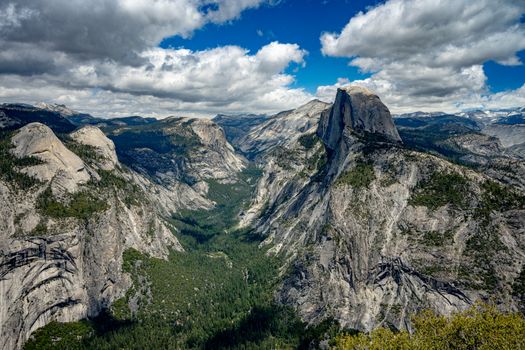
Kings Canyon is a dramatic valley of giant sequoias and towering granite canyon walls carved by raging rivers. The canyon itself is one of the deepest in North America, plunging over 8,200 feet from peak to riverbed—deeper than the Grand Canyon.
Why It Beats Yellowstone
Yellowstone’s forests are dominated by lodgepole pines, which can feel monotonous. Kings Canyon is home to the General Grant Tree—the second-largest tree in the world—and pristine groves of ancient sequoias that make you feel incredibly small. The granite domes here, like Sentinel Dome, rival Yosemite’s beauty but come with a fraction of the crowds.
Pro-Tip
Drive all the way to Road’s End in the canyon. Walk the flat, sandy 1.5-mile trail to Zumwalt Meadow just before dusk. The way the late-afternoon sun hits the sheer granite face of Grand Sentinel while reflecting in the glass-like waters of the Kings River is a view that no Yellowstone overlook can match.
---
The Logistics: Planning Your Alternative Escape
To help you plan your next adventure, we have broken down the essential logistics, costs, and best times to visit these five stunning Yellowstone alternatives.
| National Park | Best Time to Visit | Est. Weekly Cost (Budget) | Est. Weekly Cost (Luxury) | How to Get There | | :--- | :--- | :--- | :--- | :--- | | North Cascades | Late July to September | $600 (Camping + Car) | $2,200 (Mountain Lodge) | Fly to Seattle (SEA); drive 2.5 hours north on I-5 and SR-20. | | Olympic | July to October | $750 (Camping + Car) | $2,800 (Lake Quinault Lodge) | Fly to Seattle (SEA); take the Bainbridge ferry and drive US-101. | | Wrangell-St. Elias | June to late August | $1,500 (Car + Backcountry) | $5,500+ (Fly-in Wilderness Lodge) | Fly to Anchorage (ANC); drive 5 hours to Chitina, then take a bush flight. | | Glacier | July to September | $900 (Campsite + Car) | $3,500 (Many Glacier Hotel) | Fly to Kalispell (FCA); drive 40 minutes to the West Entrance. | | Kings Canyon | June to October | $700 (Camping + Car) | $2,400 (John Muir Lodge) | Fly to Fresno (FAT); drive 1.5 hours east on CA-180. |
---
The Verdict: What the Data Tells Us
Yellowstone will always hold a special place in American conservation history. But if your goal is to experience wild, untouched nature, the data points to a different path.
By choosing parks with lower visitor densities, greater vertical relief, and diverse ecosystems, you will not only capture more dramatic photographs but also experience the quiet, restorative solitude that national parks were created to protect.
Pack your bags, skip the geyser crowds, and go discover the true wild.
---