The bitter wind whipped around me, stinging my cheeks. My fingers, despite thick gloves, were starting to ache. I stood shoulder-to-shoulder with what felt like a hundred other hopeful tourists, all staring up at a sky stubbornly devoid of color. This was my grand Northern Lights adventure, and it was... underwhelming. A faint, ghostly smudge appeared for a fleeting moment, eliciting a collective groan more than gasps of wonder. I felt ripped off, exhausted, and utterly defeated. Was this it? Was the Aurora Borealis just an overhyped Instagram filter?
That night, nursing a lukewarm hot chocolate in a tiny, family-run guesthouse in rural Finland, I chatted with the owner, an elderly woman named Aino. She listened patiently to my tale of woe, a knowing twinkle in her eye. "You were in the wrong place, dear," she said softly, her voice raspy with age. "The lights, they like quiet. They like dark. The tourists, they go where the buses go. We locals, we go elsewhere." That simple conversation ignited a new quest: to uncover the elusive, magical Northern Lights viewing spots that locals guard like precious family recipes. And after years of chasing the aurora across the Arctic Circle, befriending countless 'Ainos' along the way, I’m finally ready to share the secrets I’ve learned. Get ready, Tripsora readers, because what you’re about to discover will change your Northern Lights hunt forever. We’re talking about the truly authentic, jaw-dropping displays – the ones locals don't want tourists to know about. Until now.
The Myth of the "Tourist Trap" Aurora Spot
Before we dive into the good stuff, let's talk about why your previous aurora hunts might have felt a bit... flat. Most first-time visitors to the Arctic Circle head straight for the well-trodden paths: the designated viewing points outside popular towns like Tromsø, Rovaniemi, or Fairbanks, or the organized bus tours that promise a "guaranteed" sighting. While these can certainly offer a glimpse of the aurora, they often come with significant downsides.
Light Pollution's Sneaky Sabotage: Even seemingly dark spots just outside a city can suffer from light pollution. Streetlights, buildings, and even car headlights can diminish the aurora's intensity, turning vibrant greens into faint wisps. The human eye needs true darkness to fully appreciate the subtle nuances and vivid colors of the aurora. Locals know this instinctively. They don't just drive out of town; they drive far out, to places where the night sky is truly ink-black.
The Crowd Conundrum: Imagine finally seeing the aurora explode across the sky, only to have your moment interrupted by a dozen camera flashes, excited chatter, or someone tripping over your tripod. The magic of the aurora is deeply personal, often spiritual. Sharing that intimate moment with a busload of strangers, all vying for the best shot, can detract from the wonder. Locals cherish solitude, and their secret spots offer just that: a private audience with the greatest light show on Earth.
The Costly Convenience: Organized tours, while convenient, can be expensive. You're paying for the bus, the guide, and often, a marked-up experience. By learning to find your own spots, you not only save money but gain an invaluable sense of adventure and self-reliance. The irony is, the very infrastructure built to "help" tourists see the lights often diminishes the experience. Ditch the bus; embrace the wilderness.
The Art of Local Reconnaissance: How to Find Your Own Secret Spot
So, how do you find these elusive, local-approved spots? It's not about demanding, it's about connecting. Locals are often proud of their region and, if approached with genuine curiosity and respect, can be incredibly generous with their knowledge.
1. Befriend the Locals (The Aino Method): This is perhaps the most crucial tip. Don't just stick to tourist traps. Seek out small, independent businesses:
- Cozy Cafes & Pubs: Head to a local coffee shop or a small, unassuming pub. Order a drink, strike up a conversation. Ask about local life, the weather, anything to build rapport. Once a connection is made, you can gently ask: "I'm trying to see the Northern Lights away from the crowds. Do you know any quiet places, maybe a good spot for stargazing?"
- Gas Station Attendants: These unsung heroes often know the roads like the back of their hand. They see who's coming and going, and they know which side roads are safe and accessible.
- Small Shop Owners: From souvenir shops to grocery stores in smaller towns, these individuals are deeply integrated into the community.
- Guesthouse & B&B Owners: Like my Aino, these are often goldmines of information. They live there, they know the rhythms of the land.
Crucial Etiquette: Be polite, humble, and never entitled. Offer to buy them a coffee. Show genuine interest in their life and their area. Don't ask for "the best secret spot" directly; rather, ask for a "quiet place to enjoy the night sky" or "a good spot where you go to relax and see the stars." This frames it less as a tourist demand and more as a shared appreciation for nature.
2. Learn to Read the Landscape & Maps: Locals don't just know a spot; they understand why it's a good spot. You can learn to do the same:
- Dark Sky Maps: Use online light pollution maps (like LightPollutionMap.info) to identify truly dark areas. These maps are invaluable for pinpointing regions with minimal artificial light.
- Topographic Maps: Look for slight elevations (even a small hill can offer a better vantage point) or clearings away from dense forests. Identify roads that lead away from towns and seem to dead-end or become less trafficked.
- Water Bodies: Lakes, fjords, and open coastlines offer unobstructed views and often breathtaking reflections of the aurora.
- Google Street View & Satellite: Do some virtual reconnaissance. Look for pull-offs, small parking areas, or open fields along quiet roads.
3. Look for Clues on the Ground: Sometimes, locals leave subtle hints.
- Unassuming Pull-Offs: A small, gravel patch just off a main road, seemingly leading nowhere, could be a local's favorite.
- Faint Tracks: A barely visible dirt track leading into a forest or towards a lake might be worth investigating (with caution and appropriate vehicle, of course).
- Local Cars: If you see a local's car (not a rental) parked seemingly randomly at 10 PM in a quiet spot, it might be a good indicator!
Unveiling the "Secret" Spot Archetypes: Where Locals Go
While I won't give you exact GPS coordinates to someone's private backyard, I will describe the types of locations locals seek out, providing you with the framework to find your own. These are the "archetypes" of secret aurora spots, with regional examples to guide you.
1. The Serene Lakeside Mirror (Finnish & Swedish Lapland)
- Description: Imagine a glassy lake, its surface a perfect, still mirror reflecting the aurora as if the sky itself has plunged into the water. Minimal light pollution, often surrounded by silent, snow-laden pines, creating an almost sacred atmosphere.
- Why it's secret: These spots often require a short drive off main roads, down unpaved tracks, or to small, unassuming public access points or old fishing jetties. They are rarely advertised and require local knowledge or a good map-reading eye.
- How to find: Look for smaller lakes on maps, slightly away from popular resorts like Rovaniemi or Levi in Finland, or Kiruna in Sweden. Ask locals about "quiet fishing spots" or "good places for a picnic in summer." These often double as prime aurora spots in winter, especially when the lake is frozen solid and covered in pristine snow, offering a vast, reflective canvas.
- Vibe: Pure tranquility, double the aurora magic. The silence is profound, broken only by the crunch of snow underfoot and the occasional whisper of the wind.
- Approximate Cost: Free, just transport (and maybe a thermos full of hot chocolate!).
- My Experience: Near Pallas-Yllästunturi National Park in Finnish Lapland, I once followed a tip from a gas station attendant. He pointed me to a minor road off the main highway, suggesting I look for a small, unmarked path leading to a frozen lake. After a cautious drive and a short walk, I found myself alone on a vast, snow-covered lake. The aurora appeared, dancing in vibrant greens and purples, its reflection shimmering below me. It was an ethereal, unforgettable experience, made even more profound by the absolute solitude.
2. The Coastal Fjord Lookout (Norwegian Fjords & Lofoten Islands)
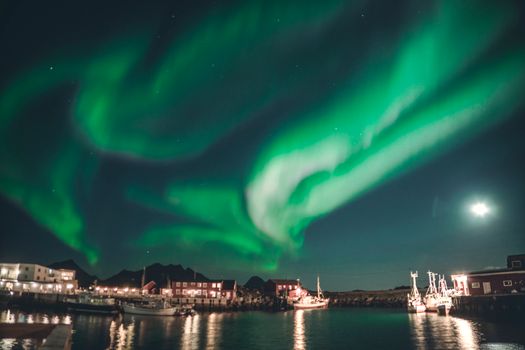
- Description: Dramatic, rugged coastlines where the aurora dances above towering fjords, snow-capped peaks, and the crashing waves of the Arctic Ocean. The vastness of the sea often means less light pollution from land, providing an incredibly dark and expansive backdrop.
- Why it's secret: Many stunning viewpoints are off the main E6 or E10 roads, requiring short hikes, navigating less-used coastal tracks, or knowing about small, unlisted pull-offs. They are often too remote for large tour buses.
- How to find: Drive along coastal roads in areas like the Lofoten Islands, Senja, or near Tromsø. Look for small pull-offs, designated picnic areas (often empty and perfect in winter), or even just a wide shoulder with an unobstructed view over the water. Ask at local grocery stores or gas stations for "best ocean views" or "where do people go to fish from the shore?"
- Vibe: Epic, wild, untamed beauty. The sound of the waves adds to the majestic spectacle.
- Approximate Cost: Free.
- My Experience: In the Lofoten Islands, I was told by a fisherman in Nusfjord to "drive until the road ends, then walk a bit." This led me to a rocky outcrop overlooking a secluded bay. The aurora, when it finally burst forth, seemed to emerge from the depths of the ocean itself, painting the sky above the jagged peaks in brilliant hues. The salty air and the roaring waves beneath felt like a primal connection to nature. It was infinitely more powerful than any crowded viewpoint.
3. The Elevated Forest Clearing (Swedish Lapland & Yukon, Canada)
- Description: Gaining a little altitude can make a huge difference. A clearing on a small hill or a low mountain pass offers panoramic views above the tree line, away from ground-level light obstruction. The snow-laden trees framing the view add to the magical atmosphere.
- Why it's secret: These often require navigating unplowed forest roads or short, easy hikes in the snow. They aren't easily accessible for large tour buses and require a bit of effort and preparation.
- How to find: Consult topographic maps for slight elevations near small towns like Kiruna (Sweden) or Whitehorse (Canada). Look for fire roads, snowmobile trails, or even old logging tracks that might lead to a clearing. Again, local advice is key – "where do hunters go for views?" or "which trails are good for snowshoeing with a view?"
- Vibe: Expansive, uninterrupted, a feeling of being on top of the world, with the quiet majesty of the forest surrounding you.
- Approximate Cost: Free.
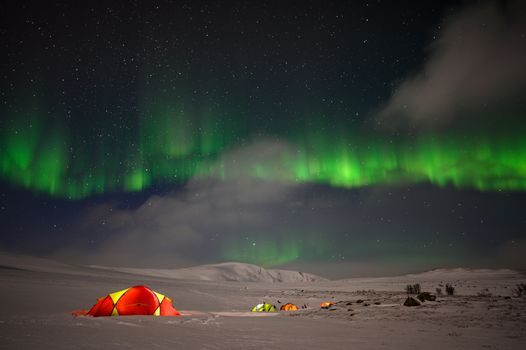
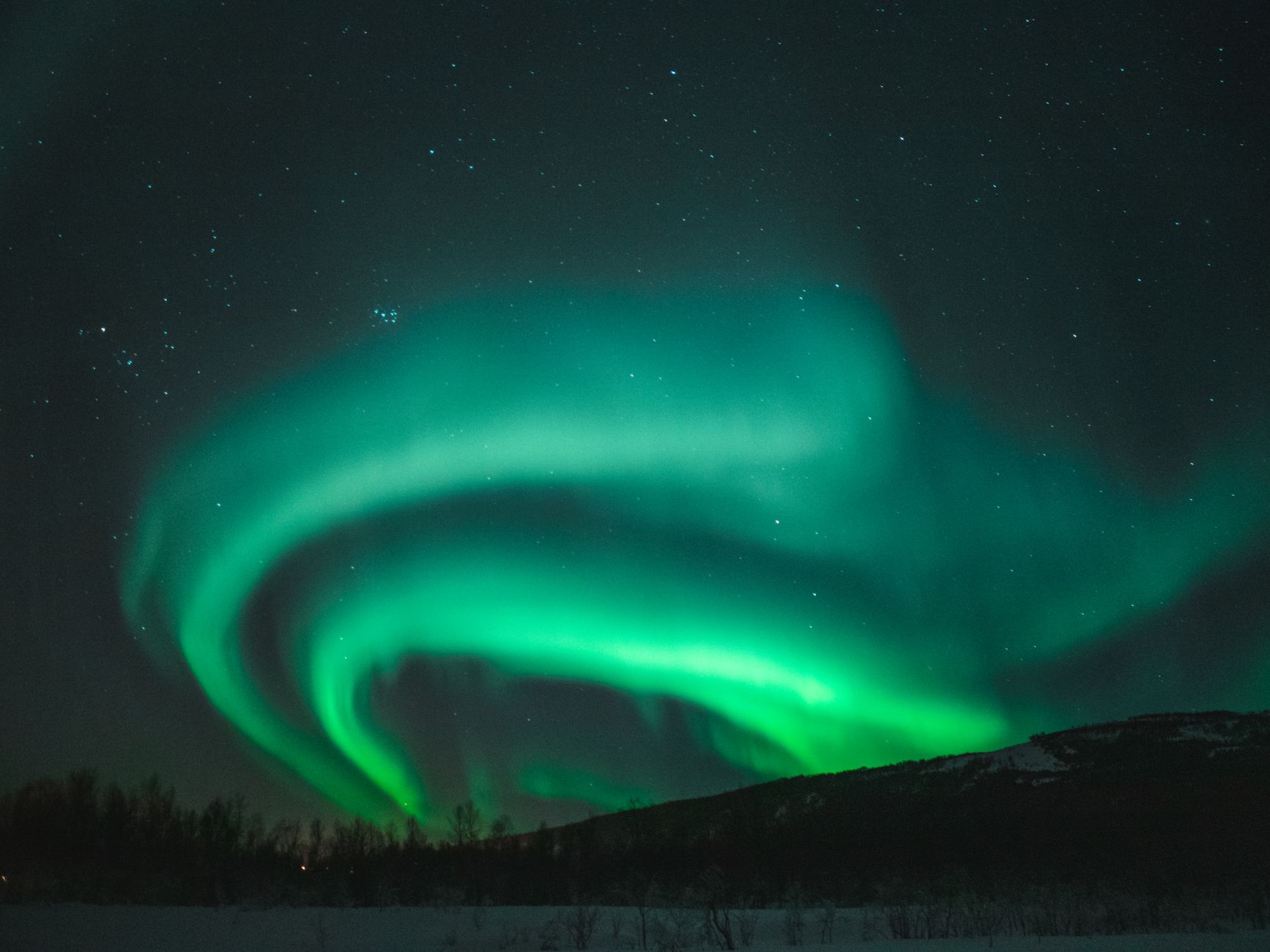
- My Experience: Near Abisko National Park in Sweden, while the famous Sky Station was bustling, a local guide (who I'd hired for a daytime snowshoeing trip) discreetly shared a "lesser-known" spot. It was a short drive up a winding, unpaved road, followed by a gentle, 15-minute snowshoe trek to a small plateau. From there, the vast expanse of the frozen lake and the surrounding mountains unfolded beneath a sky completely devoid of light pollution. The aurora was a swirling vortex directly overhead, so bright I could see its colors with my naked eye. It felt like a private audience with the cosmos.
4. The Rural Farm Road (Interior Alaska & Northern Canada)
- Description: Sometimes the best spots are the simplest: a quiet, unlit rural road, far enough from any town to eliminate light pollution, but still accessible. These are often surrounded by open fields, sparse forests, or rolling hills.
- Why it's secret: These are just ordinary roads for locals, not "destinations." They blend into the landscape and require a car, patience, and the willingness to drive a bit further than the average tourist.
- How to find: Drive away from major towns (Fairbanks, Yellowknife). Take a turn onto a paved or well-maintained gravel road that isn't a major highway. Look for areas with minimal houses and wide-open fields or sparse forests. The key is to get at least 30-60 minutes outside of any significant light source.
- Vibe: Intimate, quiet, a sense of discovery, often with a clear, wide-open view of the horizon.
- Approximate Cost: Free.
- My Experience: In Interior Alaska, after striking out at a popular viewpoint near Fairbanks, I got a tip from a friendly waitress at a diner to "just keep driving out on the Steese Highway, then turn off onto any paved side road that looks quiet." I followed her advice, eventually pulling off onto a deserted stretch of road flanked by snow-covered fields. I parked my car, turned off the engine, and waited in the utter silence. When the aurora finally appeared, it was a gentle, undulating ribbon across the entire northern horizon, slowly growing in intensity until it filled the sky. It wasn't the most dramatic landscape, but the sheer vastness and silence made it incredibly profound.
Practical Magic: Your Aurora Hunting Toolkit
Finding these secret spots is only half the battle. You need to be prepared to maximize your experience and stay safe.
1. Dress for Success (and Survival!):
- Layers are Key: Think thermal base layers (wool or synthetic), a fleece or down mid-layer, and a waterproof/windproof outer shell.
- Extremities: Thick wool socks, insulated winter boots (waterproof!), heavy-duty mittens (with thin glove liners for camera operation), and a warm hat that covers your ears are non-negotiable.
- Hand Warmers: Disposable hand and foot warmers can be a lifesaver in sub-zero temperatures.
2. Photography Gear:
- Sturdy Tripod: Absolutely essential for long-exposure aurora photography.
- DSLR or Mirrorless Camera: With a wide-angle lens (f/2.8 or wider is ideal) and manual settings.
- Extra Batteries: Cold drains batteries quickly. Keep spares in an inside pocket to keep them warm.
- Headlamp with Red Light Mode: White light can ruin your night vision and disturb others. Red light preserves it.
3. Essential Apps:
- Aurora Forecast Apps: "My Aurora Forecast & Alerts" or "Aurora Alerts" (check Kp-index and local forecasts).
- Weather Apps: AccuWeather, Yr.no (for Scandinavia), or local weather services are crucial for cloud cover predictions.
- Dark Sky Map Apps: To confirm light pollution levels.
4. Comfort & Safety:
- Thermos with Hot Drinks: Coffee, tea, or hot chocolate will be your best friend.
- Snacks: High-energy snacks (nuts, chocolate bars) are great for keeping warm and fueled.
- Full Tank of Gas: Never venture into remote areas without a full tank.
- Emergency Kit: Jumper cables, small shovel, blanket, first-aid kit, extra water.
- Tell Someone Your Plan: Always inform your guesthouse host or a friend about where you're going and when you expect to return.
- Local Emergency Numbers: Know them!
5. Patience, Patience, Patience: The lights are like a shy lover; they reveal themselves when they're ready, not on your schedule. Be prepared to wait, sometimes for hours. Bring a good book, listen to music, or just soak in the silence of the Arctic night. The wait often makes the eventual display even more rewarding.
Beyond the Lights: Embracing the Local Experience
Choosing to seek out these local-approved spots isn't just about a better view; it's about a richer, more authentic travel experience.
- Solitude & Connection: You'll find a deeper connection to nature and yourself when you're not surrounded by crowds. The silence of the Arctic night, punctuated only by the crackle of snow or the whisper of the wind, is a profound experience in itself.
- Cultural Immersion: The journey to find these spots will naturally lead you through smaller towns and local communities. Sip coffee in a tiny café, buy handmade crafts from a local artisan, or try authentic reindeer stew or cloudberry jam. These interactions are as much a part of the adventure as the aurora itself.
- Responsible Tourism: When you go off the beaten path, remember to practice responsible tourism. Leave no trace, respect private property, and support the local businesses you encounter. These hidden gems remain beautiful because they are respected.
Your Aurora Adventure Awaits!
The Northern Lights are one of Earth's most spectacular phenomena, and seeing them dance in a truly pristine, uncrowded setting is an experience that will stay with you forever. Ditch the bus tours, embrace the spirit of adventure, and follow these insider tips to unlock the Arctic's best-kept secrets. The quest for these hidden spots is an adventure in itself, a testament to the magic that unfolds when you step off the well-worn path.
Go forth, intrepid aurora hunter! Bookmark this guide, pack your bags, and prepare for an adventure that will forever change how you see the Northern Lights. Share your own secret discoveries (or at least the type of spot!) with #TripsoraSecrets and inspire fellow travelers. The lights are waiting, and now, you know where to find them.
---