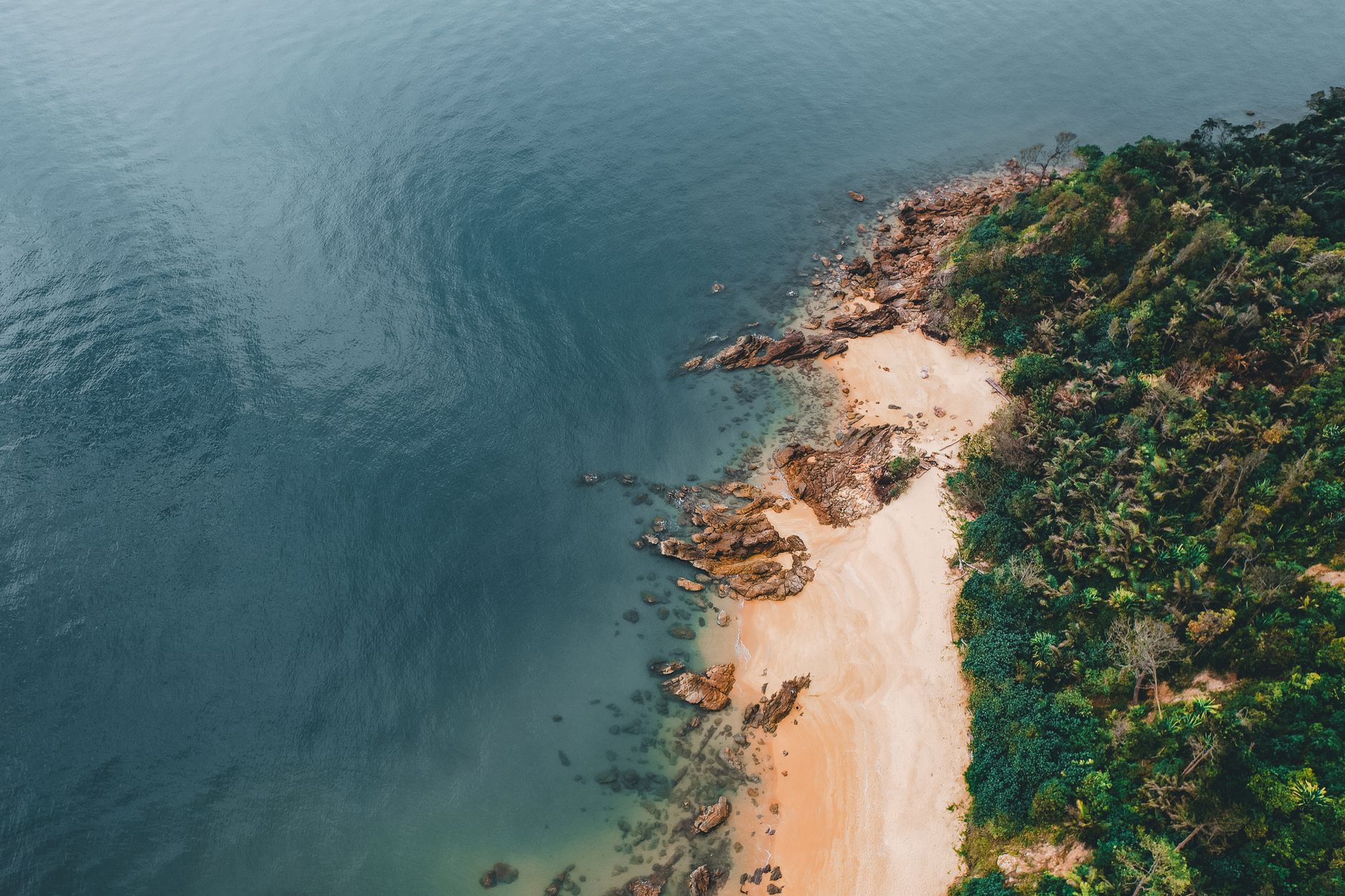
The sun beat down, turning the white sand almost blinding. The water, a vibrant turquoise, lapped gently at my feet. It was idyllic, picture-perfect… almost. Except for the 200 other people vying for the same slice of paradise, the incessant drone of jet skis, and the queue forming for the "authentic" beach shack smoothie. This, I thought, was supposed to be a "secret beach" I’d read about. A quick search on Instagram confirmed my suspicions: #ParadiseBeach was trending, boasting tens of thousands of posts. My heart sank.
That experience solidified my mission: to seek out the truly secret beaches. The ones that require a little grit, a bit of local knowledge, and an adventurous spirit to find. The ones where your only companions are the gentle waves and the occasional curious crab. The ones you hesitate to even tell your closest friends about, for fear of breaking their magic.
Over the past few years, fueled by a healthy dose of wanderlust and a stubborn refusal to share my beach towel with strangers, I’ve stumbled upon some absolute gems. These aren't the places you'll see splashed across glossy travel magazines just yet. They're the whispered legends, the dots on a faded map, the rewards for those willing to go the extra mile. And today, I’m sharing a few of my most cherished finds with you, my fellow Tripsora adventurers. But shhh… let’s keep this between us, okay?
1. Praia Escondida, Costa Vicentina, Portugal: The Surfer’s Solitude
Imagine the wild, untamed beauty of Portugal’s Algarve, but without the resort complexes and bustling crowds. That’s the Costa Vicentina, and tucked away amidst its dramatic cliffs and windswept dunes is Praia Escondida – the “Hidden Beach.” I first heard about it from a local fisherman in Sagres, who drew me a cryptic map on a napkin.
Getting there is part of the adventure. You’ll need to drive a rental car (a sturdy one, preferably) down a series of increasingly unpaved roads, past cork oak forests and sleepy villages. Eventually, you’ll reach a small, unmarked parking area. From there, it’s a 20-minute hike down a winding, slightly precarious dirt path carved into the cliffside. Wear proper shoes – flip-flops are a definite no-go.
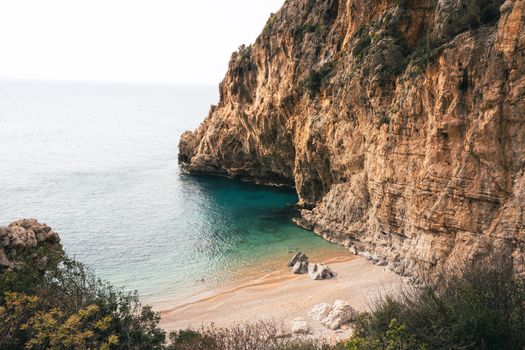
But oh, the reward! As you descend, the cove slowly reveals itself: a crescent of golden sand, flanked by towering ochre cliffs. The Atlantic Ocean here is a deep, mesmerizing blue, often with a playful swell perfect for experienced surfers or bodyboarders. When I visited last spring, there were only three other people on the entire beach – a couple sharing a picnic and a lone surfer riding the waves. We exchanged quiet nods, a silent acknowledgment of our shared discovery.
Practical Tips:
- Location: Near Vila do Bispo, Algarve, Portugal. Best found with offline maps and asking locals.
- Access: Rough dirt road followed by a moderate, steep hike. Not suitable for young children or those with mobility issues.
- What to Bring: All your essentials! There are no facilities. Pack water, snacks, a towel, sunscreen, and a good book.
- Best Time: Spring or early autumn for pleasant weather and even fewer crowds. Summer can be busy, but still less so than mainstream beaches.
- Nearby Stays: Consider a charming guesthouse in Vila do Bispo or a rustic glamping spot further inland. Prices for a cozy double room can range from €60-€100 per night.
- Instagram Moment: The dramatic cliff descent offering panoramic views of the untouched coastline.
2. El Nido del Cóndor, Tayrona National Park, Colombia: Jungle’s Embrace
Tayrona National Park is already on many travelers' radars, but most stick to the well-trodden paths leading to Cabo San Juan. Venture just a little further, and you’ll find a network of trails leading to truly secluded coves. El Nido del Cóndor (The Condor’s Nest) isn’t officially marked on tourist maps, but it’s a local secret whispered among hikers and indigenous Kogi guides.
My journey to El Nido began with an early morning hike from the Calabazo entrance, a less popular starting point than El Zaino. After about three hours of trekking through dense jungle, past howler monkeys and vibrant birdlife, my guide, a soft-spoken local named Mateo, veered off the main trail. We followed a faint, overgrown path for another 45 minutes, the air thick with humidity and the scent of damp earth.
Suddenly, the jungle canopy broke, revealing a small, pristine beach. The sand here is a darker, almost reddish hue, contrasting beautifully with the emerald green of the surrounding vegetation and the startlingly clear Caribbean water. Towering boulders, worn smooth by centuries of wind and sea, dotted the shoreline, offering perfect spots for sunbathing or quiet contemplation. We spent hours swimming in the warm, gentle waves, feeling like the only people on earth. I even spotted a family of capybaras foraging near the jungle edge!
Practical Tips:
- Location: Deep within Tayrona National Park, accessible from the Calabazo entrance. A local guide is highly recommended (and often essential for finding the unmarked trail). Expect to pay a guide around 100,000 COP (approx. $25 USD) for the day.
- Access: Strenuous jungle hike. Requires good fitness, sturdy hiking boots, and plenty of insect repellent.
- What to Bring: Water purification tablets, high-SPF sunscreen, swimwear, quick-dry clothes, and snacks. You'll need to carry out everything you bring in.
- Best Time: December to April (dry season) for easier hiking conditions.
- Nearby Stays: Eco-lodges or hammocks within Tayrona, or guesthouses in nearby Palomino or Taganga. Prices vary, but a hammock or basic cabin can be as low as 40,000 COP ($10 USD) per night.
- Instagram Moment: The dramatic contrast of lush jungle meeting the Caribbean Sea, with ancient boulders scattered across the sand.
3. Koh Lanta Noi's Secret Cove, Thailand: Island Hopping's Hidden Gem
Everyone knows Koh Lanta, a popular but still relatively laid-back island in Thailand. But few venture to its smaller, quieter sibling: Koh Lanta Noi. This island, separated by a narrow channel and connected by a bridge, is predominantly local, with rubber plantations and fishing villages. And tucked away on its western shore, after a delightful scooter adventure, I found a cove so perfect, it felt like a movie set.
I rented a scooter from Old Town on Koh Lanta Yai for about 250 THB ($7 USD) a day and crossed the bridge. The roads on Koh Lanta Noi are quieter, winding through verdant landscapes. After a while, a small, hand-painted sign (barely legible) pointed down a dirt track. This track led to a small, family-run coconut farm. After politely asking permission, the farmer gestured towards a path through the trees.
And there it was: a small, horseshoe-shaped cove with powdery white sand, fringed by swaying palm trees and calm, impossibly clear turquoise water. The most striking feature was a natural rock arch on one side, perfect for framing photos. I spent the entire afternoon snorkeling among the coral just offshore, watching colorful fish dart between the anemones. The only other person I saw was the farmer's wife, who brought me a freshly cut coconut for a few baht – the sweetest I’ve ever tasted.
Practical Tips:
- Location: Western shore of Koh Lanta Noi, Thailand. Best found by renting a scooter and asking locals in Old Town for directions to "Ao Mai Pai" (though the 'secret cove' is a slight detour from this).
- Access: Scooter ride across a bridge, followed by a short dirt track and a walk through a coconut grove.
- What to Bring: Snorkel gear, plenty of water, sunscreen, and cash for potential fresh coconuts.
- Best Time: November to February (dry season) for calm seas and sunny skies.
- Nearby Stays: Stay on Koh Lanta Yai in Old Town for a charming, authentic experience, with guesthouses ranging from 600-1500 THB ($17-$40 USD) per night.
- Instagram Moment: Swimming through the natural rock arch, or a drone shot showcasing the perfect horseshoe bay.
4. Anakao's Blue Lagoon, Madagascar: The Vezo Village Escape
Madagascar is synonymous with unique wildlife and stunning landscapes, but its coastline holds some truly extraordinary secrets. Anakao, a small fishing village on the southwest coast, is a destination in itself, but the real magic lies just a short boat ride away: a series of uninhabited islets and sandbars forming what locals call the "Blue Lagoon."
My journey to Anakao involved a bumpy 4x4 ride from Toliara, followed by haggling with a local fisherman for a pirogue (traditional outrigger canoe) trip. The boat, a simple wooden vessel with a colorful sail, cut through the calm, electric-blue waters. After about an hour, we reached a spot where the water was so clear, I could see every detail of the seabed. My fisherman guide, a friendly Vezo man named Jean-Claude, pointed to a tiny patch of white sand emerging from the ocean.
This was it: a temporary sandbar, shifting with the tides, surrounded by a kaleidoscope of blues. We spent the day snorkeling among vibrant coral gardens, spotting sea turtles, and feasting on freshly grilled fish prepared by Jean-Claude on a small, portable grill. The silence was profound, broken only by the gentle lapping of waves and the distant cries of seabirds. It was pure, unadulterated bliss.
Practical Tips:
- Location: Off the coast of Anakao, southwest Madagascar. Arrange a pirogue trip with a local fisherman directly in Anakao. Expect to pay around 150,000-250,000 MGA (approx. $35-$60 USD) for a full day trip, including lunch.
- Access: Bumpy road to Anakao, then a pirogue boat trip.
- What to Bring: Snorkel gear, hat, sunglasses, high-factor sunscreen (the sun is intense!), a waterproof bag for electronics, and plenty of water.
- Best Time: April to December, avoiding the cyclone season.
- Nearby Stays: Simple, charming bungalows in Anakao village. Expect basic facilities, but incredible hospitality. Prices for a bungalow can be around 80,000-150,000 MGA ($20-$35 USD) per night.
- Instagram Moment: The surreal experience of standing on a tiny sandbar in the middle of an impossibly blue ocean, with the pirogue gently bobbing nearby.
5. The Emerald Coast's Whisper, Sardinia, Italy: A Mediterranean Dream
Sardinia’s Costa Smeralda (Emerald Coast) is famous for its glamorous resorts and superyachts. But just beyond the glitz, if you know where to look, are pockets of wild, untouched beauty that feel a world away. I stumbled upon "The Emerald Coast's Whisper" (my own unofficial name for it) by pure chance, following a goat trail after a wrong turn.
I was driving a little Fiat 500, exploring the less-traveled roads inland from Olbia. I saw a small, faded sign pointing to "Spiaggia Nascosta" (Hidden Beach), which turned out to be a local euphemism for "good luck finding it." After parking the car on a dusty track, I walked through a dense thicket of Mediterranean scrub, the air fragrant with myrtle and juniper. The path was barely visible, often requiring me to push through branches.
Then, like a mirage, it appeared: a tiny, secluded cove, no more than 50 meters wide. The sand was pearly white, almost luminous, and the water was a mesmerizing shade of emerald green, hence my chosen name. Smooth, granite rocks, sculpted by wind and sea, framed the cove, creating natural sunbathing platforms. I spent a blissful afternoon swimming in the calm, cool water, feeling completely disconnected from the world. The only sounds were the cicadas and the gentle splash of waves. It was a moment of pure, unadulterated peace.
Practical Tips:
- Location: East coast of Sardinia, roughly between Olbia and San Teodoro. Requires local knowledge or keen observation for faded signs.
- Access: Car rental is essential, followed by a short, rugged hike through dense vegetation.
- What to Bring: Water, snacks, a small towel, and good walking sandals. Don't expect any services.
- Best Time: May-June or September-October to avoid the intense summer heat and crowds.
- Nearby Stays: Look for agriturismos (farm stays) inland from the coast for an authentic Sardinian experience, often including delicious home-cooked meals. Prices can range from €70-€120 per night.
- Instagram Moment: The striking contrast of the luminous emerald water against the white sand and rugged granite rocks, with no one else in sight.
6. Waitapu Sands, Northland, New Zealand: The Wild, Untamed Edge
New Zealand's North Island is famed for its stunning coastline, but most travelers flock to the Bay of Islands or the Coromandel. Venture further north, past the popular Kauri forests, and you'll find a raw, rugged beauty that feels ancient and untouched. Waitapu Sands, a local secret known mainly to a handful of fishermen and adventurous campers, is one such place.
I was on a road trip, chasing the sun and solitude, when a Maori elder I met at a small roadside stall near Hokianga Harbour mentioned a place where the "sea whispers secrets." Intrigued, I followed his vague directions, which involved driving down a gravel road for what felt like forever, past sheep farms and dense native bush. The road eventually dead-ended at a small clearing.
From there, a steep, winding track led through thick coastal flax and pohutukawa trees. The air was crisp, carrying the scent of salt and damp earth. After a challenging 30-minute descent, the path opened up onto a vast, sweeping expanse of dark, iron-rich sand. This wasn't a cozy cove; this was a wild, powerful beach, battered by the Tasman Sea. The waves were strong, the wind invigorating, and the sheer scale of the place was humbling. I spent hours walking along the deserted shoreline, collecting unique shells and watching the powerful waves crash against the shore. The only other signs of life were seabirds soaring overhead and the occasional deer print in the sand. It felt like standing at the very edge of the world.
Practical Tips:
- Location: Remote Northland, New Zealand, west coast. Requires a sturdy vehicle (4x4 recommended for the gravel roads) and a good sense of direction. No phone signal here.
- Access: Long drive on gravel roads, followed by a steep, unmarked hiking track. Not suitable for young children.
- What to Bring: Warm layers (even in summer, the wind can be chilly), sturdy hiking boots, plenty of water, snacks, and a camera with a wide-angle lens.
- Best Time: Any time of year, but be prepared for changeable weather. Summer (December-February) offers longer daylight hours.
- Nearby Stays: Basic campsites or small holiday parks in nearby towns like Opononi or Rawene. Expect to pay around NZD $20-$40 for a powered site.
- Instagram Moment: The dramatic, sweeping views of the wild Tasman Sea, with dark sands stretching into the distance and powerful waves crashing.
How to Find Your Own Secret Paradise (and Keep it That Way!)
Finding these hidden gems isn't just about luck; it's about adopting a certain mindset and approach to travel.
- Go Local: Talk to locals! Fishermen, shopkeepers, guesthouse owners – they often know the best spots that aren't in guidebooks. Learn a few phrases in the local language to break the ice.
- Look Beyond the Main Roads: Rent a scooter, a 4x4, or even a bicycle. The best beaches are rarely right next to a paved highway. Be prepared for bumpy roads and a bit of a hike.
- Use Satellite Maps: Before you go, scour Google Maps or other satellite imagery for promising coves or stretches of coastline that look inaccessible. Look for faint trails or parking areas.
- Hike for It: The more effort required to reach a beach, the less likely it is to be crowded. Embrace the adventure of a good trek.
- Travel Off-Season: Even slightly outside peak season can dramatically reduce crowds at popular "secret" spots.
- Leave No Trace: This is paramount. Pack out everything you pack in. Do not disturb wildlife or natural formations. Support local communities by buying food/drinks from small vendors if available.
- Be Discreet: When you find your slice of paradise, enjoy it, photograph it, but think twice before geotagging it on social media. A subtle tag like "#HiddenBeach" or "#SomewhereBeautiful" allows others to appreciate the beauty without revealing its exact location. The magic of these places lies in their discovery.
The Call of the Untouched Shore
There's a unique thrill in discovering a place that feels like it's just for you. These secret beaches aren't just beautiful; they're sanctuaries. They offer a chance to reconnect with nature, to find genuine solitude, and to experience the raw, untamed beauty of our planet before the masses descend.
So, next time you plan a beach getaway, challenge yourself. Look beyond the postcards and the trending hashtags. Pack your sense of adventure, lace up your hiking boots, and set out to find your own secret slice of heaven. You might just discover the most unforgettable beach experience of your life. And when you do, tell us about it in the comments – but maybe just a hint, not the exact coordinates, okay? Let's keep these whispers alive, together.