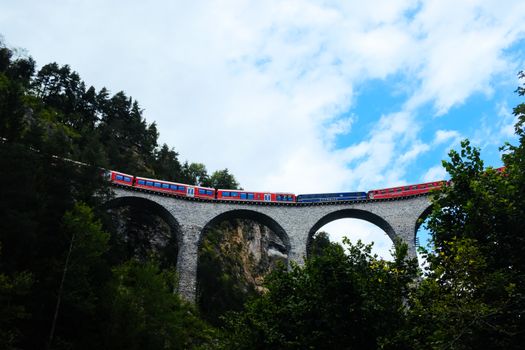
There’s a certain magic to train travel, isn’t there? It’s not just about getting from point A to point B; it’s about the rhythmic clickety-clack, the ever-changing tableau outside your window, the feeling of being carried through the very heart of a landscape. But some train journeys... well, some transcend even that. They don't just cross a landscape; they conquer it, weaving through mountains, gliding over deserts, and scaling heights that seem utterly impossible.
I still remember my first truly epic train journey. It was a crisp autumn morning, and I was nestled by a panoramic window, watching the Canadian Rockies unfurl in a symphony of gold and crimson. As the train rounded a bend, a colossal grizzly bear ambled into view, totally unfazed by our passing. My jaw dropped. It wasn't just a view; it was an immersion, a living, breathing painting that moved with us. That’s the power of these impossible train journeys – they don't just show you the world; they invite you to become a part of its most remote, majestic corners.
If you’re anything like me – a wanderer with a deep appreciation for the grand tapestry of our planet – then buckle up. Because I’ve scoured the globe, ridden the rails, and gathered a list of the most mind-blowing train experiences that cross landscapes you simply have to witness before you die. These are more than trips; they are pilgrimages to the sublime, adventures that will etch themselves into your soul.
1. The Jungfraujoch Railway, Switzerland: Scaling the Top of Europe
The Impossible Landscape: The Swiss Alps. Jagged peaks, eternal glaciers, and a seemingly impenetrable fortress of rock and ice. How on earth do you build a railway through that?
My first glimpse of the Eiger, Mönch, and Jungfrau peaks from the valley floor filled me with a mixture of awe and skepticism. Surely, no train could conquer such a formidable barrier. Yet, the Jungfraujoch Railway, affectionately known as the "Top of Europe," does exactly that. This isn't just a train ride; it's a feat of early 20th-century engineering that still boggles the mind today.
The journey begins in the picturesque Lauterbrunnen or Grindelwald valleys, winding through lush meadows and charming Alpine villages. But soon, the magic truly begins as the train plunges into a tunnel carved directly through the Eiger and Mönch mountains. For long stretches, you're in the belly of the beast, with only the occasional stop at "Eigerwand" and "Eismeer" stations, where massive viewing windows offer tantalizing glimpses of the glacier world outside. It's like being in a secret, underground observatory.
When you finally emerge at Jungfraujoch, Europe's highest railway station (3,454 meters / 11,332 feet), the world explodes into a blinding expanse of snow and ice. The Aletsch Glacier, a UNESCO World Heritage site and the longest glacier in the Alps, stretches out beneath you like a frozen river. I remember stepping out, the crisp, thin air invigorating my lungs, and feeling utterly insignificant against the backdrop of such immense natural beauty. You can explore the Ice Palace, walk on the glacier plateau, and take in the panoramic views from the Sphinx Observatory.
Practical Tips:
- Best Time to Go: Year-round, but summer (June-September) offers the clearest views and best hiking opportunities. Winter brings a magical, snowy wonderland.
- Booking: Book tickets well in advance, especially during peak season. You can purchase them online or at any major railway station in Switzerland. Consider a Swiss Travel Pass for discounts.
- Cost: A round trip from Interlaken Ost typically costs around CHF 200-250 (approx. $220-275 USD), but varies with passes and discounts.
- What to Pack: Even in summer, it’s cold up top! Layers are essential, including a warm jacket, hat, gloves, and sunglasses (the glare off the snow is intense). Don't forget sturdy shoes.
- Instagram Moment: The Sphinx Observatory terrace with the Aletsch Glacier stretching out, or the iconic "Top of Europe" sign.
2. The Ghan, Australia: Traversing the Red Centre's Heart
The Impossible Landscape: The vast, untamed Australian Outback. A seemingly endless expanse of red desert, ancient rocks, and sparse, resilient vegetation. How do you lay tracks across that?
Imagine a journey that spans an entire continent, from the tropical north to the temperate south, through landscapes so remote they make you feel like you've stepped onto another planet. The Ghan, named after the Afghan camel drivers who once navigated this unforgiving terrain, is Australia's legendary transcontinental railway.
My journey on The Ghan was an exercise in slow travel and profound discovery. As the train departed Darwin, the lush greenery gradually gave way to the quintessential red earth of the Outback. Days dissolved into a mesmerizing blur of ancient landscapes, dotted with ghost gums and termite mounds that looked like sculptures. From my comfortable cabin, I watched the sunrise paint the desert in hues of orange, pink, and purple – a spectacle that words can barely capture.
The train offers "Off-Train Experiences" in iconic Outback towns like Katherine (cruising through Nitmiluk Gorge) and Alice Springs (exploring the Royal Flying Doctor Service base or the Desert Park). These stops break up the journey perfectly, allowing you to connect with the land and its unique culture. I particularly loved the feeling of standing in the middle of nowhere, under an impossibly vast sky, realizing just how immense and wild Australia truly is. The silence was deafening, yet profoundly peaceful.
Practical Tips:
- Best Time to Go: The "dry season" (May-October) is ideal for comfortable temperatures and clear skies in the Top End.
- Booking: This is a luxury experience, so book months in advance, especially for specific cabin types.
- Cost: Prices vary significantly by cabin class (from Gold Service to Platinum Service) and duration. A 3-day/2-night Darwin to Adelaide journey can range from AUD 2,000 to AUD 5,000+ (approx. $1,300-$3,300 USD) per person, all-inclusive.
- What to Pack: Comfortable clothing, a wide-brimmed hat, sunscreen, and a good book. Don't forget your camera for those stunning Outback sunsets.
- Instagram Moment: The vast, red desert stretching to the horizon, especially at sunrise or sunset from your window, or during an off-train excursion in Alice Springs.
3. Rocky Mountaineer, Canada: Glacier-Carved Grandeur
The Impossible Landscape: The Canadian Rockies. Towering, snow-capped peaks, pristine turquoise lakes, deep canyons, and dense forests teeming with wildlife. How do you carve a path through such raw, untamed wilderness?
If you're looking for a train journey that perfectly blends luxury with unparalleled natural beauty, the Rocky Mountaineer is your ticket. This isn't a sleeper train; it's a daylight-only experience designed to maximize your viewing pleasure, with overnight stays in charming towns like Kamloops or Quesnel.
I chose the "First Passage to the West" route, tracing the historic path of Canada’s first transcontinental railway from Vancouver to Banff/Lake Louise. From the moment I stepped into the GoldLeaf Service dome car, I knew I was in for something special. The panoramic windows, extending up into the ceiling, offer an unobstructed view of the majestic scenery unfolding around you. And the food? Gourmet meals served in a separate dining car, with local wines to match. Pure bliss.
The journey is a constant stream of "wow" moments. You'll pass through Hell's Gate, a narrow canyon where the Fraser River rages, and witness the Spiral Tunnels, an engineering marvel that allows the train to descend steep gradients. But the real stars are the mountains themselves: Castle Mountain, Mount Rundle, and the iconic Three Sisters. I spotted bighorn sheep scaling cliffs, eagles soaring overhead, and yes, even another grizzly bear foraging by a river. The guides onboard provide fascinating commentary, sharing stories of the railway's construction and the region's natural history. It's an educational and deeply inspiring experience.
Practical Tips:
- Best Time to Go: April to October. Late spring and early autumn offer vibrant colors and fewer crowds.
- Booking: Book well in advance (6-12 months) as popular routes and dates sell out quickly.
- Cost: Varies widely by route, duration (2-4 days), and service level (SilverLeaf vs. GoldLeaf). Expect to pay from CAD 1,500 to CAD 5,000+ (approx. $1,100-$3,700 USD) per person.
- What to Pack: Layers for varying temperatures, comfortable shoes for exploring during stops, and a high-quality camera with a zoom lens for wildlife spotting.
- Instagram Moment: Any shot from the GoldLeaf dome car, especially when passing turquoise lakes like Lake Louise or Moraine Lake (accessible via bus connections from Banff). The Spiral Tunnels are also a unique photo op.
4. Tren a las Nubes, Argentina: The Train to the Clouds
The Impossible Landscape: The High Andes of Salta, Argentina. Extreme altitudes, dizzying ravines, and a landscape that feels utterly alien. How do you build a railway that climbs so high, so fast?
"Tren a las Nubes" translates to "Train to the Clouds," and it’s not an exaggeration. This incredible railway in Argentina’s Salta province is one of the highest in the world, climbing to an astonishing 4,200 meters (13,780 feet) above sea level. It’s an engineering marvel, featuring 29 bridges, 21 tunnels, 13 viaducts, 2 spirals, and 2 zigzags – all designed to conquer the dramatic Andean topography.
My journey on the Tren a las Nubes started in Salta city, a charming colonial hub. The train winds its way through the Lerma Valley, past tobacco plantations and small villages, slowly gaining altitude. But it’s when you hit the Quebrada del Toro (Bull's Gorge) that the landscape truly transforms. The train clings to the side of mountains, crosses dizzying viaducts like the iconic Polvorilla Viaduct, and maneuvers through impossibly tight turns. I remember looking down from the carriage window, the sheer drop making my stomach lurch, and marveling at the audacity of the engineers who built this line.
The air thins as you ascend, and the landscape becomes starker, more dramatic – a tapestry of reds, browns, and ochres, punctuated by hardy cacti and sparse vegetation. It feels like you're ascending into the heavens, literally among the clouds. At the Polvorilla Viaduct, the train actually stops, allowing passengers to disembark and walk alongside this monumental structure, feeling the wind whip around them. There are medical personnel on board to assist with altitude sickness, and oxygen is available, which is a testament to just how high you're climbing!
Practical Tips:
- Best Time to Go: March to November is generally the operating season, with spring and autumn offering pleasant weather.
- Booking: Book well in advance, especially during peak season. Tickets can be purchased online.
- Cost: A round trip from Salta typically costs around ARS 40,000-60,000 (approx. $400-600 USD, check current exchange rates as they fluctuate wildly). This includes breakfast, snacks, and medical assistance.
- What to Pack: Warm layers (even if it's hot in Salta, it's cold at altitude), a hat, sunglasses, and sunscreen. Acclimatize in Salta for a day or two before the trip to help prevent altitude sickness. Drink plenty of water.
- Instagram Moment: The Polvorilla Viaduct – both from inside the train and walking alongside it. The vast, stark Andean landscapes are also incredibly photogenic.
5. Flåm Railway, Norway: A Fjordland Rollercoaster
The Impossible Landscape: The Norwegian Fjords. Sheer cliffs plunging into deep, narrow waterways, surrounded by cascading waterfalls and verdant valleys. How do you build a railway down that?
The Flåm Railway (Flåmsbana) isn't the longest train journey, but it’s arguably one of the most intense and visually stunning in the world. Often described as one of the steepest standard-gauge railways globally, it descends 864 meters (2,835 feet) over just 20 kilometers (12 miles) from Myrdal mountain station to the picturesque village of Flåm, nestled at the end of Aurlandsfjord.
I experienced this journey as part of a larger "Norway in a Nutshell" tour, and it was a definite highlight. The train cars are charmingly old-fashioned, but the views are anything but. From the moment it pulls out of Myrdal, the landscape becomes a blur of dramatic beauty. You pass through 20 tunnels, some hand-dug, and witness waterfalls so close you can feel the spray. The train makes a special photo stop at Kjosfossen waterfall, where, if you're lucky, you'll see a 'huldra' (a mythical forest siren) dancing as the water thunders down. It's a truly magical, almost theatrical, moment.
The scenery shifts from rugged, snow-dusted mountains at Myrdal to lush, green valleys and the tranquil waters of the fjord at Flåm. The gradient is so steep that the train uses five different braking systems! I felt a thrill as we snaked our way down the valley, each turn revealing another breathtaking vista of cascading water, traditional red farmhouses, and the impossibly blue fjord. It's a short journey, but every single minute is packed with visual drama.
Practical Tips:
- Best Time to Go: May to September for the best weather and lush greenery. Winter offers a serene, snow-covered landscape but can be very cold.
- Booking: Book tickets in advance, especially if combining with other legs of the "Norway in a Nutshell" tour.
- Cost: A single adult ticket from Myrdal to Flåm costs around NOK 500-600 (approx. $45-55 USD).
- What to Pack: Layers, a waterproof jacket (for potential spray at Kjosfossen), and a wide-angle lens for your camera to capture the vastness.
- Instagram Moment: The Kjosfossen waterfall stop, the panoramic views of the valley and fjord as the train descends, and the charming Flåm station itself.
6. Qinghai-Tibet Railway, China: The Sky Train to the Roof of the World
The Impossible Landscape: The Tibetan Plateau. Average altitude of over 4,000 meters (13,000 feet), permafrost, and extreme weather conditions. How do you build a railway across the highest plateau on Earth?
This is arguably the most ambitious railway project in history, and it lives up to its nickname: "Sky Train." The Qinghai-Tibet Railway connects Xining, China, with Lhasa, Tibet, traversing some of the most remote and challenging terrain imaginable. Over 960 kilometers (600 miles) of the railway lie at an elevation of more than 4,000 meters, with the highest point at Tanggula Pass reaching 5,072 meters (16,640 feet) – making it the world's highest railway.
My journey on the Qinghai-Tibet Railway was a profound experience. The train itself is specially designed for high-altitude travel, with oxygen supplied directly into the carriages and individual oxygen outlets available for passengers. This innovative engineering allows you to breathe comfortably even at dizzying heights.
Departing from Xining, the landscape gradually transforms from arid mountains to the vast, undulating expanse of the Tibetan Plateau. I spent hours glued to the window, watching yak herds graze on sparse grasslands, nomadic tents dotting the horizon, and crystal-clear lakes reflecting the impossibly blue sky. The sheer scale of the landscape is humbling. You pass over numerous bridges and through tunnels specially constructed to deal with the permafrost, which required groundbreaking engineering solutions.
The highlight for me was crossing the Tanggula Pass. The train slows down, and an announcement invites passengers to witness this monumental achievement. Looking out at the snow-capped peaks and the endless, barren beauty of the plateau, I felt a deep sense of wonder at both nature's majesty and human ingenuity. Arriving in Lhasa, the spiritual heart of Tibet, felt like a true pilgrimage, made all the more meaningful by the incredible journey.
Practical Tips:
- Best Time to Go: May-October offers the most comfortable weather. Winter is beautiful but extremely cold.
- Booking: Foreigners need a Tibet Travel Permit to enter Tibet. You must book your train ticket through a licensed tour operator in China who will arrange the permit. Book several months in advance.
- Cost: Train tickets themselves are relatively inexpensive (around CNY 800-1,200 for a sleeper, approx. $110-165 USD), but the mandatory tour package with a licensed operator will add significantly to the overall cost (can be $1,000-$3,000+ depending on duration and inclusions).
- What to Pack: Warm layers, a hat, gloves, sunglasses, and high-SPF sunscreen. Bring snacks and drinks, although food is available on board. Acclimatize in Xining for a day or two if possible, and stay hydrated.
- Instagram Moment: The vast, ethereal landscapes of the Tibetan Plateau, especially at Tanggula Pass, with yaks grazing against a backdrop of snow-capped mountains. The unique train interior with oxygen masks is also a good shot.
7. El Chepe (Copper Canyon Railway), Mexico: Into the Heart of the Canyon
The Impossible Landscape: Mexico's Copper Canyon (Barrancas del Cobre). A network of canyons four times larger than the Grand Canyon, with dizzying depths, rugged terrain, and dense forests. How do you build a railway through such a colossal geological wonder?
The Ferrocarril Chihuahua al Pacífico, affectionately known as El Chepe, is not just a mode of transport; it’s an adventure into the heart of Mexico’s Sierra Madre Occidental. This legendary railway winds its way through the Copper Canyon, a series of 20 canyons that are home to the indigenous Rarámuri (Tarahumara) people. It’s a landscape of immense scale and raw, untamed beauty.
My journey on El Chepe was an immersive experience into a different side of Mexico. Starting from Los Mochis on the Pacific coast, the train slowly climbs into the mountains, passing through agricultural lowlands before the terrain dramatically shifts. We passed through 86 tunnels and over 37 bridges, some of them spanning breathtaking ravines. The scale of the canyons is truly staggering – I remember leaning out (safely, of course!) from the open platform between carriages, feeling the wind in my hair, and gazing into depths that seemed to swallow the light.
The beauty of El Chepe is the flexibility it offers. You can ride the entire route to Chihuahua, or, as I did, hop off at various stops to explore the canyons more deeply. Divisadero offers arguably the most iconic views, where you can see the confluence of several major canyons and visit the Adventure Park with its zip lines and cable car. Cerocahui provides access to the Urique Canyon, the deepest of them all, and opportunities to learn about Rarámuri culture. There’s a sense of stepping back in time, away from the modern world, as you witness their traditional way of life.
Practical Tips:
- Best Time to Go: October-March for cooler, drier weather. Spring brings blooming wildflowers, and summer is lush but can be hot and rainy.
- Booking: El Chepe offers two services: Chepe Express (luxury, fewer stops, faster) and Chepe Regional (more stops, more local feel). Book Express tickets well in advance online. Regional tickets can be bought closer to the date.
- Cost: A one-way ticket on Chepe Express from Los Mochis to Divisadero can range from MXN 2,500-4,000 (approx. $150-240 USD) depending on class. Regional is cheaper. Factor in costs for accommodation at stopovers.
- What to Pack: Layers for varying altitudes, comfortable walking shoes for canyon exploration, sun protection (hat, sunscreen), and a good camera. Bring cash for local purchases.
- Instagram Moment: The panoramic views from Divisadero, especially overlooking the Urique Canyon, or a shot of the train crossing one of the dramatic bridges. Interactions with Rarámuri artisans also make for authentic photos.
Your Journey Awaits: Essential Tips for Conquering the Impossible
Ready to book your own impossible train adventure? Here are a few universal tips to make your journey seamless and unforgettable:
- Book Early, Always: These are some of the most popular and often exclusive train journeys in the world. Cabins, especially on luxury routes, sell out months, sometimes even a year, in advance. Don't procrastinate!
- Embrace the Slow Travel Mindset: Train travel is about the journey, not just the destination. Disconnect from your devices, look out the window, read a book, chat with fellow passengers, and let the landscape wash over you.
- Pack Smart: Layers are your best friend, especially for high-altitude journeys where temperatures can fluctuate wildly. Don't forget a good camera, extra batteries, a power bank, and a comfortable neck pillow.
- Stay Hydrated: This is crucial, particularly on high-altitude routes like the Tren a las Nubes or Qinghai-Tibet Railway. Drink plenty of water to help prevent altitude sickness.
- Research Your Route: Understand the stops, the duration, and what amenities are available on board. Some trains offer gourmet dining, while others are more basic.
- Check Visa and Permit Requirements: For international travel, always confirm visa requirements for each country. For journeys like the Qinghai-Tibet Railway, specific travel permits are required for foreigners.
- Consider Travel Insurance: For such epic and often costly journeys, comprehensive travel insurance is a non-negotiable.
The Call of the Rails
There's something profoundly moving about watching the world unfold from a train window. These impossible landscapes, once barriers to human progress, are now traversed by steel giants, offering us a unique, intimate perspective that no plane or car can replicate. They remind us of the ingenuity of humanity and the boundless beauty of our planet.
So, which impossible landscape is calling your name? Will you soar to the "Top of Europe," brave the vastness of the Australian Outback, or climb to the "Roof of the World"? These aren't just train rides; they are invitations to witness the extraordinary, to challenge your perceptions, and to create memories that will last a lifetime.
Don't just dream about it – start planning your impossible train journey today! Share this post with your fellow adventurers, and let us know in the comments: which of these epic routes is first on your bucket list?
---