Ditch the Ordinary! 7 Wild Transport Methods You Won't Believe Exist
There’s a moment, isn't there? A moment when you’re stuck in airport security, battling rush hour traffic in a foreign city, or enduring another endless train journey, and you think, "Is this it? Is this the pinnacle of human ingenuity when it comes to getting from A to B?" I’ve been there more times than I can count, sighing as I board another identical bus, wishing for a spark of magic, a hint of the extraordinary.
Then, something shifts. You stumble upon a local secret, a mode of transport so utterly unique, so brilliantly adapted to its environment, that it redefines your entire travel experience. It happened to me in Medellín, Colombia, perched high in a cable car, watching the city lights twinkle below, realizing this wasn't just a ride; it was a lifeline. It was a revelation that the world is brimming with transportation methods that defy the conventional, innovations that feel like they've leapt from the pages of a sci-fi novel, or historical relics that have simply refused to fade.
Forget your standard trains, planes, and automobiles for a moment. Today, we're embarking on a journey to uncover the transportation methods you probably never knew existed before they started quietly making waves (or flying through the air, or gliding silently on tracks). These aren't just ways to get around; they're experiences, cultural immersions, and sometimes, a peek into the future. Get ready to bookmark, share, and maybe even plan your next adventure around these mind-bending marvels!
1. The Sky-High Commute: Urban Cable Cars (Medellín & La Paz)
My First Ascent: I'll never forget my first ride on Medellín's Metrocable. I'd heard whispers about it, but nothing prepared me for the reality. Stepping into the small, brightly colored gondola, I expected a tourist gimmick. Instead, as we smoothly ascended, I watched the sprawling city of Medellín unfold beneath me. What truly struck me wasn't just the breathtaking panoramic views (which are insane for your Instagram feed!), but the sheer purpose of it all. This wasn't a joyride; it was a vital artery, connecting previously isolated hillside communities to the city's heart, offering residents an affordable, efficient, and dignified commute. It literally changed the city.
Beyond the Tourist Trail: While ski resorts have had cable cars for decades, their integration as daily urban public transport is a relatively new and exciting development.
- Medellín, Colombia's Metrocable: Part of an award-winning integrated public transport system, the Metrocable transformed Medellín. It provides residents from "comunas" (neighborhoods) high on the hills with direct access to the metro, jobs, and opportunities downtown. A standard metro ticket (around 2,880 COP / $0.75 USD) often covers your cable car ride, making it incredibly accessible. Ride Line K for the classic experience and incredible views, or Line L to Arví Park for a nature escape.
- La Paz, Bolivia's Mi Teleférico: Even more ambitious, La Paz boasts the world's largest urban cable car network. With multiple lines painting the sky in vibrant colors (red, yellow, green, blue, orange, white, purple, silver, gold – yes, all of them!), Mi Teleférico is the primary mode of transport for millions in this high-altitude city. It seamlessly connects different altitudes and neighborhoods, bypassing the city's notorious traffic jams. Each ride costs a mere 3 Bolivianos (approx. $0.45 USD). The views of the sprawling city nestled in the Andes are absolutely unparalleled, especially at sunset.
Why It's a Game-Changer: These systems are sustainable, reduce traffic congestion, and most importantly, foster social inclusion by bridging geographical and economic divides. They're a testament to how innovative urban planning can transform lives.
Pro-Tip: In Medellín, always check the operating hours, especially for the Arví Park line (L), which sometimes closes for maintenance. In La Paz, try to ride a few different lines – each offers a unique perspective of the city's incredible topography. Don't forget your camera; these views are pure gold!
2. Riding the Rails of History: Cambodia's Bamboo Train (Norry)
A Bumpy Blast from the Past: Picture this: You're sitting on a simple bamboo platform, no walls, no roof, just a cushion beneath you. A small engine sputters to life, and suddenly you're rattling down a single, narrow gauge railway track, the wind whipping through your hair, palm trees blurring past. This was my introduction to Cambodia's Norry, or "Bamboo Train," near Battambang, and it was one of the most delightfully bizarre rides of my life.
Ingenuity on Display: The Norry isn't a modern invention; it's a testament to Cambodian ingenuity born out of necessity. For decades, with the official railway system in disrepair, locals devised these makeshift "trains" – small, motorized bamboo platforms – to transport goods and people between villages. The most fascinating part? It’s a single track, meaning when two Norries meet, one has to be quickly disassembled and lifted off the track to allow the other to pass!
The Experience Today: While it's largely become a tourist attraction now, the spirit of its original purpose remains. You can still experience a ride near Battambang (the O Dambong section was a popular spot, though routes can shift). The journey is rustic, bumpy, and utterly charming. You'll pass through rice paddies, small villages, and get a genuine feel for rural Cambodian life. The "station" is often just a small collection of stalls selling drinks and souvenirs, adding to its authentic, untouched vibe.
Details & Prices: A ride typically lasts about 20-30 minutes each way, covering a few kilometers. Prices are usually around $5-10 USD per person, and it’s often a shared experience, though you can sometimes negotiate for a private Norry if you arrive off-peak.
Why It's Unforgettable: It’s not just the ride; it’s the story, the resourcefulness, and the sheer joy of experiencing something so wonderfully unique. It's a reminder that sometimes the simplest solutions are the most profound.
Pro-Tip: The Norry experience is best combined with a day trip around Battambang, exploring the city’s colonial architecture, temples, and the infamous Killing Cave. Be prepared for dust and sun, and embrace the bumps – they’re part of the adventure!
3. Water World Wonders: Floating Taxis & Market Boats (Mekong Delta & Bangkok)
Navigating a Liquid Labyrinth: My senses were in overdrive the first time I ventured into the Mekong Delta in Vietnam. The air vibrated with the buzz of motorboats, the scent of exotic fruits mingled with diesel fumes, and every direction I looked, there was water. Boats weren't just for fishing or leisure; they were homes, shops, and, crucially, the primary mode of transport.
Life on the Water: In many parts of Southeast Asia, particularly the Mekong Delta and the intricate canal systems (khlongs) of Bangkok, water transportation isn't a novelty – it's a way of life.
- Mekong Delta, Vietnam: Here, sampans (traditional flat-bottomed wooden boats) and larger motorboats navigate a vast network of rivers and canals. Floating markets like Cai Rang (near Can Tho) are vibrant hubs where vendors sell goods directly from their boats. These aren't just tourist spectacles; they're essential marketplaces for local communities. Hiring a small boat for a few hours (around $15-30 USD, depending on duration and group size) allows you to delve deep into the Delta's rhythm, passing stilt houses, fruit orchards, and local cottage industries.
- Bangkok's Khlong Taxis, Thailand: While the BTS Skytrain and MRT subway dominate the modern city, Bangkok's ancient khlongs (canals) still offer a fantastic, albeit chaotic, alternative. The Khlong Saen Saep Express Boat is a public transport service that slices through the city's heart, avoiding traffic. It's fast, cheap (fares usually less than $1 USD), and a wild ride! Longtail boats are also available for private hire to explore the quieter, residential khlongs, offering a glimpse into a more traditional side of Bangkok.
Why It's More Than a Ride: These water-based systems offer a unique perspective on local culture and daily life. You're not just observing; you're immersed in the flow of a community that lives and breathes by the water. It’s also often a more sustainable and less traffic-congested way to travel.
Pro-Tip: When hiring a private boat, always agree on the price and duration beforehand. For the Khlong Saen Saep Express, be prepared for a splash – hold onto your belongings and wear something that can get wet! Early mornings are best for floating markets to avoid the heat and crowds.
4. Futuristic Pods & Personal Rapid Transit (PRT) (Masdar City & Morgantown)
Stepping into Tomorrow: I remember landing in Abu Dhabi and being told about Masdar City, a planned "eco-city" that felt like something out of a utopian film. The most intriguing part? Its Personal Rapid Transit (PRT) system. Stepping into one of those sleek, driverless electric pods, gliding silently through underground tunnels, felt like I'd time-traveled straight into 2050. This is truly "before mainstream" – a fully operational glimpse into what could be the future of urban mobility.
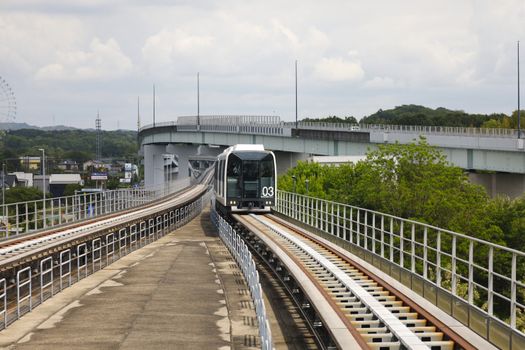
The On-Demand Revolution: PRT systems are designed for automated, on-demand transport using small, driverless vehicles (pods) that run on dedicated guideways. They're all about efficiency, sustainability, and personalized travel.
- Masdar City, UAE: While Masdar City is still under development, its PRT system is fully operational for visitors and residents within its core area. These electric pods whisk you from the parking lot to the city center, showcasing a vision of car-free urban living. It's free to ride and a fascinating experience, feeling completely futuristic and remarkably quiet. It’s a living laboratory for sustainable urban development.
- Morgantown, West Virginia, USA: This might surprise you! The Morgantown PRT, operational since 1975, is arguably the world's first successful PRT system. Built for West Virginia University, it connects the university's three campuses and downtown Morgantown. It's been running reliably for nearly 50 years, transporting students and staff in automated vehicles on elevated tracks. While not a tourist attraction per se, its longevity and functionality prove the concept's viability.
Why It's the Future (or a glimpse of it): PRT systems offer a compelling alternative to traditional public transport and private cars. They're energy-efficient, eliminate traffic, and provide a direct, personalized journey. Imagine a city where you simply summon a pod, and it takes you directly to your destination without stops or detours. That's the promise of PRT.
Pro-Tip: If you're in Abu Dhabi, a visit to Masdar City is a must for tech and sustainability enthusiasts. It's easily accessible by taxi. The PRT system is compact but gives you a fantastic feel for the concept. For Morgantown, while you can't just hop on as a tourist, seeing the elevated tracks and the vehicles moving offers a historical perspective on this innovative transport method.
5. The Whimsical Glide: Wuppertal Suspension Railway (Schwebebahn)
A Century-Old Marvel: Imagine riding a train that hangs below its tracks, gliding above a river and bustling city streets. Sounds like something from a steampunk novel, right? Welcome to Wuppertal, Germany, home to the Schwebebahn, or "Suspension Railway." The first time I saw its distinctive carriages dangling above the Wupper River, I was absolutely mesmerized. It’s a living, breathing piece of history that’s still a vital part of daily life.
Engineering Ahead of Its Time: Opened in 1901, the Wuppertal Suspension Railway is an engineering marvel that has stood the test of time. It's not a monorail in the traditional sense; rather, the trains are suspended from a single rail structure. Most of its 13.3-kilometer (8.3-mile) route runs 12 meters (39 feet) above the Wupper River, offering unparalleled views of the city. For a short stretch, it even runs above city streets.
The Ride Experience: Stepping inside, you get a sense of its vintage charm, but the ride itself is surprisingly smooth and quiet. You feel like you're floating, looking down on boats on the river and people going about their day. It’s an incredibly efficient and unique way to navigate Wuppertal, and it's fully integrated into the public transport system, meaning you can use a standard public transport ticket (fares are standard, around €3 for a single journey).
Why It's a Must-See: The Schwebebahn is more than just transport; it’s an icon. It’s a testament to audacious early 20th-century engineering and a fantastic example of sustainable urban transport that has been operating for over a century. It offers a completely different perspective of the city and is incredibly Instagram-worthy, especially the moments when two trains pass each other.
Pro-Tip: Ride the entire length of the line from Oberbarmen to Vohwinkel (or vice-versa) to get the full experience. Try to snag a spot at the very front or back of a carriage for the best views. Wuppertal itself is a charming city worth exploring, with parks and a vibrant cultural scene.
6. Cycle Rickshaws & Bicitaxis: The Human-Powered Hustle (India, Mexico, Cuba)
The Original Sustainable Ride: While not "new," the resurgence and unique adaptations of human-powered transport in certain cities make them feel fresh and vital. My first ride in a cycle rickshaw through the chaotic, colorful streets of Old Delhi was an exhilarating sensory overload. It wasn't just a ride; it was a dance, a negotiation, a performance, all powered by a determined human being.
More Than Just a Tourist Gimmick:
- India's Cycle Rickshaws: In cities like Delhi, Kolkata, and Varanasi, cycle rickshaws are still a primary mode of local transport, especially in congested old city areas where cars struggle to navigate. They’re slow, often bumpy, but offer an intimate, eye-level view of street life you'd miss from a taxi. Prices are negotiable, usually just a few dollars for a short ride.
- Mexico City's Bicitaxis: In the bustling historic center of Mexico City, bicitaxis (bicycle taxis) offer a quirky, eco-friendly way to get around pedestrian zones and narrow streets. They're often brightly decorated and provide a fun, open-air experience. A ride typically costs around 50-100 MXN ($2.50-$5 USD) depending on distance and your bargaining skills.
- Cuba's Coco Taxis & Bicitaxis: In Havana, you'll find a delightful array of human and motor-powered contraptions. Bicitaxis are common, but the bright yellow, coconut-shaped Coco Taxis (small, motorized three-wheelers) are a unique Cuban invention. They offer a fun, breezy, open-air ride through the city, especially along the Malecón. Prices are negotiable but generally cheaper than a classic car taxi.
Why They Endure: These human-powered (or semi-powered) vehicles are sustainable, provide local employment, and offer a unique, immersive way to experience a city's pulse. They force you to slow down and truly absorb your surroundings.
Pro-Tip: Always negotiate the price before you get in. Be fair; remember you're supporting a local's livelihood. Embrace the chaos, strike up a conversation with your driver, and be prepared for some incredible photo opportunities!
7. The Gondola of Dreams: Skyway Montebianco (Courmayeur, Italy)
Floating to the Roof of Europe: Okay, so mountain gondolas aren't entirely unheard of, but the Skyway Montebianco is in a league of its own. It's not just a ride; it's an architectural and engineering marvel designed to transport you to the very heart of the Mont Blanc massif with breathtaking elegance. My journey on this "8th Wonder of the World" was nothing short of spiritual.
A Panoramic Revolution: Launched in 2015, the Skyway Montebianco isn't your average ski lift. It features rotating cabins that offer a full 360-degree panoramic view as you ascend from Courmayeur (1,300m / 4,265ft) to Punta Helbronner (3,466m / 11,371ft), putting you face-to-face with Europe's highest peaks.
The Experience: The ascent is divided into three stages, each offering different views and facilities. At Punta Helbronner, you step out onto a stunning circular terrace, feeling utterly dwarfed by the surrounding glaciers and granite spires. There's also a crystal room and a small museum. It feels like a space station perched on a mountain.
Details & Prices: Tickets are pricey (around €55-60 for an adult return ticket), but absolutely worth every penny for the experience. It's advisable to book online in advance, especially during peak season, and check weather conditions – you want clear skies for those views!
Why It's "Before Mainstream": While other cable cars exist, the Skyway Montebianco's rotating cabins, modern design, and the sheer scale of its journey into such extreme alpine environments push the boundaries of what a "gondola" can be, setting a new standard for mountain access.
Pro-Tip: Dress warmly, even in summer, as temperatures at Punta Helbronner are significantly colder. Wear sunglasses and bring sun protection, as the sun's intensity at altitude is high. Take your time at each station to acclimatize and soak in the views.
The Journey Continues: Dare to Explore!
There you have it – a whirlwind tour of some of the most fascinating, futuristic, and wonderfully weird transportation methods on our planet. From silently gliding through the sky above bustling cities to rattling along makeshift bamboo tracks, these experiences remind us that travel is about so much more than just reaching a destination. It's about the journey itself, the unexpected detours, and the incredible ways humans adapt and innovate to navigate their world.
So, the next time you're planning a trip, challenge yourself. Dare to ditch the conventional. Seek out these marvels, embrace the unfamiliar, and let a unique ride be the highlight of your adventure. You might just discover your new favorite way to travel.
What's the most unique or unexpected transportation method you've ever encountered on your travels? Share your stories and photos with us on social media using #TripsoraTravel and #UnconventionalTransport! Let's inspire each other to explore beyond the ordinary!
---