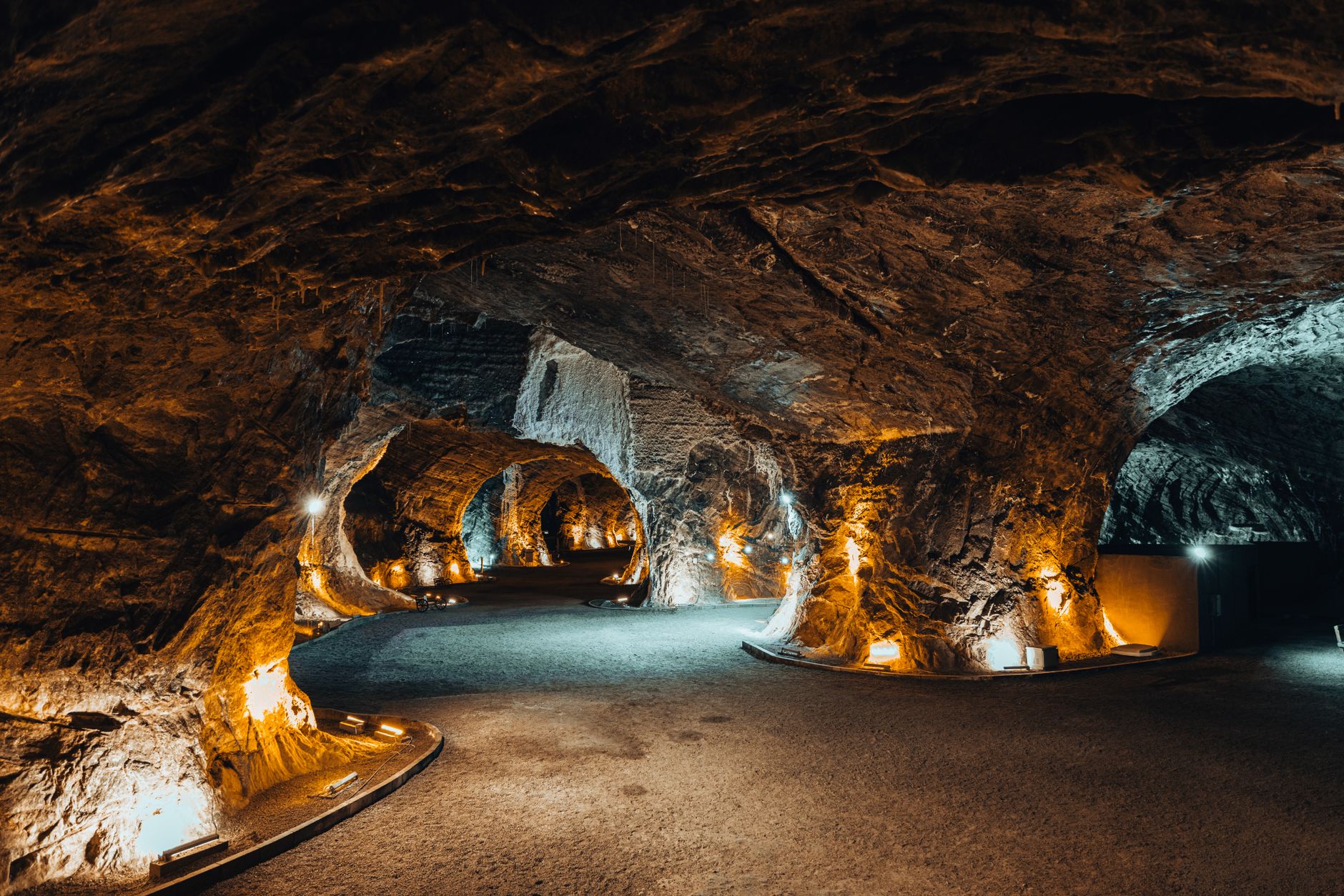
The sun was beating down on the Cappadocian plains, a relentless Turkish heat that made even the thought of walking uphill unbearable. My guide, a jovial local named Mehmet, just winked. "Come, my friend," he said, gesturing towards a nondescript entrance carved into a hillside. "The real wonders, and the real coolness, are below."
Skeptical but trusting, I followed him into the darkness. What unfolded over the next few hours wasn't just a sightseeing tour; it was a journey through time, a chilling, awe-inspiring exploration of an entire civilization hidden beneath the earth. Narrow passages opened into vast chambers, ventilation shafts soared upwards, and the whispers of ancient lives seemed to echo in the cool, damp air. I emerged blinking into the sunlight, my mind reeling. I had just walked through Derinkuyu, one of the largest underground cities in the world, and my travel perspective was forever changed.
That day sparked an obsession: the quest for the world's most incredible underground cities. These aren't just caves; they are complex, meticulously engineered marvels – homes, churches, stables, and entire communities carved out of rock and earth. They offer a unique blend of adventure, history, and a profound sense of stepping into a forgotten world. And the best part? Many of them are still relatively under the radar, offering an authentic, uncrowded experience that's becoming increasingly rare in our hyper-connected world.
So, if you’re ready to ditch the predictable, escape the heat, and unearth some truly extraordinary travel experiences, grab your headlamp (just kidding, usually they’re well-lit!), and let’s dive into the subterranean wonders that deserve a spot on your bucket list – before everyone else finds them.
Why Go Underground? The Allure of the Subterranean
What is it about descending into the earth that captures our imagination? For me, it’s a cocktail of reasons:
- Escape the Elements: Whether it's scorching heat or biting cold, underground cities offer a consistent, often pleasant, temperature. A welcome respite from the midday sun!
- A Step Back in Time: These aren't just ruins; they're preserved snapshots of ancient life, often untouched by centuries of surface-level changes. The air itself feels heavy with history.
- Architectural & Engineering Marvels: Imagine carving entire cities, complete with ventilation, water systems, and multi-story dwellings, using ancient tools. The ingenuity is mind-boggling.
- Unique Atmosphere: The silence, the enclosed spaces, the play of light and shadow – it’s an immersive experience unlike any other. It can be meditative, thrilling, and sometimes a little eerie.
- Beat the Crowds: While some underground sites are popular, many of the true "cities" are still less frequented than their above-ground counterparts, offering a more intimate exploration.
Practical Tip for Subterranean Exploration: Always wear comfortable walking shoes, as paths can be uneven. If you're prone to claustrophobia, check the accessibility and narrowness of passages beforehand. Most major sites are well-lit and ventilated, but a small flashlight on your phone can be handy for darker corners. Always go with a guide where recommended – their knowledge truly brings these places to life.
1. Cappadocia's Labyrinthine Secrets: Derinkuyu & Kaymakli (Turkey)
My initiation into underground cities came with the sprawling, multi-level complexes beneath Cappadocia. While the fairy chimneys and hot air balloons are iconic, the real secret lies beneath.
The Story: Imagine living in a region constantly under threat from invaders. What do you do? You dig. The early inhabitants of Cappadocia, starting with the Phrygians in the 8th-7th centuries BC, and later expanded by early Christians fleeing persecution, carved out incredible networks of underground cities. These weren't just bunkers; they were fully functional, self-sufficient communities capable of housing thousands of people and their livestock for months. They had kitchens, stables, churches, schools, wineries, and even sophisticated ventilation systems.
My Experience in Derinkuyu: As Mehmet led me deeper into Derinkuyu, the air grew cooler, carrying the scent of damp earth. We navigated narrow, sometimes crouching-height tunnels, which periodically opened into vast, cathedral-like chambers. I saw the massive circular stone doors, designed to be rolled into place from the inside, sealing off levels from intruders. We passed by what Mehmet pointed out as a stable (I could almost smell the ancient horses!), a wine press, and a communal kitchen with a smoke-blackened ceiling. The sheer scale – 8 levels currently accessible, with estimates of up to 18-20 levels reaching 85 meters deep – is mind-boggling. It felt less like a museum and more like walking through an abandoned world, every passage whispering tales of fear, resilience, and faith.
Practical Tips for Visiting:
- Location: Derinkuyu and Kaymakli are about 20-30 km south of Göreme, Cappadocia.
- Getting There: Many tours from Göreme include these sites. You can also rent a car or take a dolmuş (minibus).
- Entrance Fees: Approximately 60-75 Turkish Lira (around $2-3 USD) per person for each site. Prices can fluctuate.
- Guide: Absolutely essential. A knowledgeable guide will bring the history and daily life of these cities alive. You can hire one at the entrance or join a tour.
- What to Wear: Comfortable shoes are a must. Layers are good, as it's cooler underground.
- Claustrophobia: Be aware that some passages are very narrow and low. If you're severely claustrophobic, Kaymakli is generally considered slightly wider and less intense than Derinkuyu, but both have tight spots.
- Instagram-Worthy: Focus on the dramatic interplay of light and shadow in the larger chambers, or the intricate details of a carved doorway.
2. Matera's Sassi: Ancient Caves Reimagined (Italy)
Matera wasn't on my radar until a friend raved about it. "It's a city of caves," she said, "but not like you think." She was right. Matera, in the Basilicata region of Southern Italy, isn't just an underground city; it's a living underground city, a testament to human resilience and transformation.
The Story: The "Sassi di Matera" (stones of Matera) are a complex of cave dwellings, churches, and monasteries carved into the limestone ravines. Inhabited since the Paleolithic era, it's one of the oldest continuously inhabited settlements in the world. For centuries, it was a place of extreme poverty and disease, earning it the shameful title of "the shame of Italy." But after a massive relocation effort in the 1950s, Matera underwent a miraculous transformation. Today, it's a UNESCO World Heritage site, a European Capital of Culture, and a stunning example of sustainable tourism, with many caves now converted into boutique hotels, restaurants, and homes.
My Experience in Matera: Walking through the Sassi felt like stepping into an ancient biblical landscape, yet with a vibrant, modern pulse. I stayed in a cave hotel, "Sextantio Le Grotte della Civita," which was an experience in itself – sleeping in a beautifully restored cave, with minimal light and the natural stone walls creating an incredibly unique ambiance. I spent days getting lost in the labyrinthine alleyways, discovering hidden cave churches with ancient frescoes (like the Crypt of the Original Sin, which requires a separate tour), and enjoying aperitivos at cliff-edge restaurants. The way the buildings are stacked atop each other, with rooftops serving as streets for the level above, is utterly fascinating. At night, with the Sassi illuminated, it’s truly magical, like a giant, sparkling nativity scene.
Practical Tips for Visiting:
- Location: Basilicata region, Southern Italy.
- Getting There: Best accessed by train from Bari (about 1.5 hours) or by car.
- Best Time to Visit: Spring (April-May) or Fall (September-October) for pleasant weather and fewer crowds. Summer can be hot.
- Staying in a Cave Hotel: Highly recommended for a truly immersive experience. Prices vary widely, from budget-friendly guesthouses to luxury suites. Book well in advance!
- Exploring: Wear very comfortable walking shoes. The Sassi are steep, with many stairs and uneven cobblestones.
- Guided Tours: Consider a walking tour to understand the complex history and unique architecture.
- Instagram-Worthy: Matera at dusk is breathtaking, with lights twinkling across the Sassi. Also, capture the unique "stacked" architecture and the cozy interiors of the cave dwellings.
3. The Ajanta & Ellora Caves: India's Rock-Cut Masterpieces (India)
From the functional caves of Cappadocia and Matera, we shift to the purely spiritual and artistic wonders of the Ajanta and Ellora Caves in Maharashtra, India. These aren't "cities" in the residential sense, but rather vast complexes of rock-cut temples, monasteries, and prayer halls that formed self-sufficient communities for monks and devotees.
The Story: The Ajanta Caves, dating from the 2nd century BCE to about 480 CE, are a series of 30 rock-cut Buddhist cave monuments famous for their stunning mural paintings and intricate sculptures depicting the life of Buddha and Jataka tales. The Ellora Caves, active from about 600-1000 CE, are an even more diverse complex of 34 caves dedicated to Buddhism, Hinduism, and Jainism, showcasing a remarkable spirit of religious harmony. The undisputed highlight is the Kailasa Temple (Cave 16) at Ellora, a colossal, multi-story temple carved down from a single piece of rock – a feat of engineering and artistry that defies belief.
My Experience at Ellora: I arrived early at Ellora, eager to beat the heat and the crowds, and was immediately struck by the sheer scale. Walking into Cave 16, the Kailasa Temple, was a jaw-dropping moment. It's not just a cave; it's an entire temple complex, complete with courtyards, pillars, and detailed sculptures, all carved out of a single piece of living rock. I spent hours tracing the narratives in the carvings, marveling at the detailed elephants, deities, and mythological scenes. The Buddhist caves with their serene Buddhas and viharas (monasteries) offered a sense of profound peace, while the Jain caves, though smaller, were exquisite in their delicate details. It's a place where you truly feel the weight of centuries of devotion and artistic genius.
Practical Tips for Visiting:
- Location: Near Aurangabad, Maharashtra, India. Ajanta is about 100 km from Aurangabad, Ellora is about 30 km.
- Getting There: Aurangabad has an airport and train station. From there, hire a taxi for a day trip to each site (it's hard to do both justice in one day).
- Entrance Fees: Approximately 600 INR (around $7-8 USD) for foreigners per site.
- Best Time to Visit: October to March, when the weather is cooler and drier.
- Guide: Highly recommended, especially for Ajanta, to understand the stories behind the frescoes. Guides are available at the entrance.
- What to Wear: Respectful attire (shoulders and knees covered) is appreciated, especially in religious sites. Comfortable shoes are essential.
- Photography: Allowed in most areas, but flash photography is often prohibited, especially for the Ajanta frescoes, to preserve them.
- Instagram-Worthy: The Kailasa Temple at Ellora offers incredible wide-angle shots. At Ajanta, focus on the vibrant, ancient frescoes (without flash!) and the serene Buddha statues.
4. Petra's Siq & Treasury: Technically Not Underground, But Subterranean Vibes (Jordan)
Okay, so Petra isn't an "underground city" in the same way as Derinkuyu, but the experience of entering it through the Siq is profoundly subterranean, and the city itself is carved into the rock, giving it a powerful cave-like, hidden-world feel. It absolutely belongs on this list of mind-blowing rock-cut wonders.
The Story: Petra, the "Rose City," was the capital of the Nabataean kingdom, flourishing as a major trading hub from around the 4th century BC. Its inhabitants were masters of hydraulic engineering, creating an elaborate system of dams, channels, and cisterns to manage water in the arid desert. The city's most iconic structures, like the Treasury (Al-Khazneh) and the Monastery (Ad Deir), are not built but carved directly into the sheer sandstone cliffs.
My Experience in Petra: Nothing, not even a thousand photos, prepares you for the reveal of the Treasury. The journey begins with the Siq, a narrow, winding canyon that feels like a geological embrace. As I walked through it, the towering walls, sometimes only a few meters apart, created a sense of anticipation. The air was cool, the light dappled. Then, through a final, dramatic crack in the rock, it appeared: the magnificent facade of the Treasury, glowing rose-red in the morning light. It’s an almost spiritual experience. Beyond the Treasury, the city sprawls, with countless tombs, a Roman-style theater carved into the rock face, and pathways leading to the High Place of Sacrifice and the Monastery, each requiring a rewarding hike. It's a city within the rock, a testament to a lost civilization's artistry and ingenuity.
Practical Tips for Visiting:
- Location: Ma'an Governorate, Southern Jordan.
- Getting There: Most visitors fly into Amman or Aqaba and then take a bus, taxi, or rental car to Wadi Musa, the town adjacent to Petra.
- Entrance Fees: Petra tickets are expensive (around 50-70 JOD, or $70-100 USD for a single day), but the Jordan Pass is highly recommended as it includes visa fees and entry to Petra and many other sites, saving you money.
- Best Time to Visit: Spring (March-May) and Autumn (September-November) for pleasant weather. Go early in the morning (gates open at 6 AM) to beat the crowds and the heat, and see the Treasury in optimal light.
- Exploring: Petra is vast. You'll be doing a lot of walking, so comfortable, sturdy shoes are non-negotiable. Consider hiring a donkey or camel for the hike up to the Monastery if you're short on time or energy.
- Guide: A local guide can offer invaluable insights into Nabataean history and the significance of various structures.
- Instagram-Worthy: The classic shot of the Treasury peeking through the Siq is a must. Also, capture the scale of the Monastery, or the intricate details of the Royal Tombs.
5. Dar al-Hajar (The Rock Palace): A Glimpse into Future Subterranean Dreams (Yemen)
This one is a bit of a curveball, as it’s largely inaccessible to tourists right now due to the ongoing conflict in Yemen. However, it epitomizes the "before they become mainstream" and "hidden gem" concept, and it's a place that, when safe to visit, will undoubtedly blow up on the travel scene. It's an aspirational entry, a dream for the future, and a reminder of the world's truly unique, undiscovered wonders.
The Story: Dar al-Hajar, also known as the Rock Palace, is a truly iconic structure nestled in Wadi Dhar, just outside Sana'a. It's a five-story building seemingly growing out of a massive natural rock formation, a magnificent example of Yemeni architecture. Built in the 1930s as a summer palace for Yahya Muhammad Hamid ed-Din, the Imam of Yemen, it stands on the foundations of an even older structure. While not "underground" in the sense of a carved city, its seamless integration with the rock, its multiple levels, and its historical significance make it a profound example of living with and within the earth.
Why It's on My Radar: The images of Dar al-Hajar are mesmerizing. It looks like something straight out of a fantasy novel, a castle clinging precariously and yet majestically to a giant boulder. The idea of exploring its many rooms, terraces, and learning about the ingenuity behind its construction, especially in such a dramatic landscape, is incredibly appealing. It represents the ultimate off-the-beaten-path destination, a place of immense beauty and cultural significance waiting for a safer future to welcome travelers.
Practical Tips (for when it's safe to visit):
- Location: Wadi Dhar, approximately 15 km northwest of Sana'a, Yemen.
- Getting There: When safe, typically by taxi or tour from Sana'a.
- Safety: Crucially, check all current travel advisories before even considering a trip to Yemen. It is currently listed as a Level 4: Do Not Travel by many governments due to war, terrorism, and civil unrest.
- Future Travel: If and when peace returns, expect to need local guides, potentially permits, and a deep respect for local customs.
- Instagram-Worthy: The iconic wide shot of the palace against the dramatic desert landscape is a photographer's dream.
Your Next Adventure: Dig Deeper!
From the ancient refuges of Cappadocia to the artistic sanctuaries of India, the living caves of Matera, the rock-cut majesty of Petra, and the aspirational wonders of Yemen – the world beneath our feet is just as rich, diverse, and awe-inspiring as the world above. These underground cities and rock-cut marvels offer a chance to connect with history, culture, and adventure in a way that few other destinations can. They challenge your perceptions, spark your imagination, and leave you with stories that are truly unique.
So, are you ready to trade the well-worn paths for the thrill of discovery? Are you prepared to step into a hidden world, long before the masses catch on? Start planning your subterranean adventure today. The earth is waiting to reveal its secrets.
Which underground wonder will you explore first? Share your thoughts in the comments below! And don't forget to pin this post for your ultimate hidden gems bucket list!
---