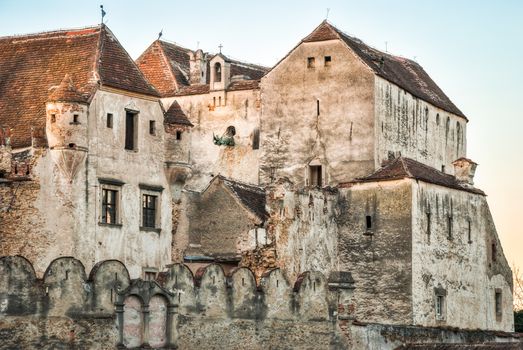
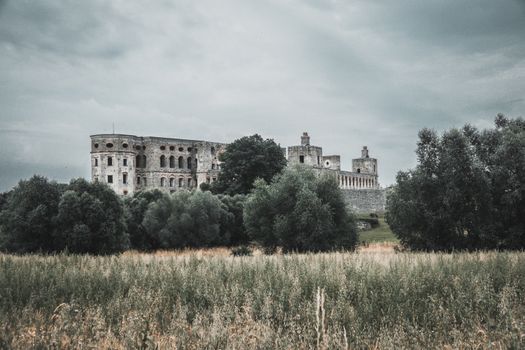
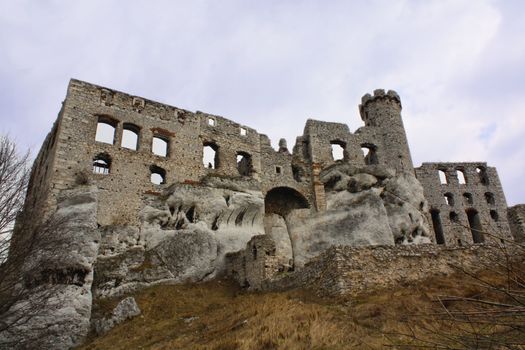
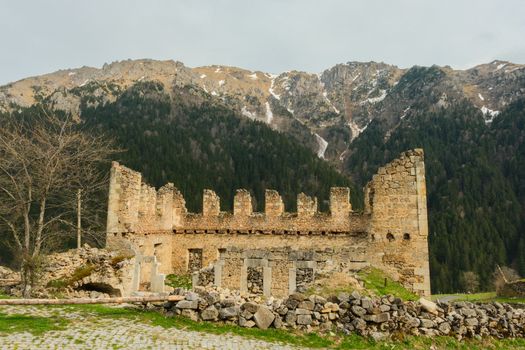
The wind whipped around me, tugging at my scarf as I stood on a craggy outcrop, overlooking the churning, slate-grey sea. Before me, silhouetted against a dramatic sky, stood the skeletal remains of a once-mighty fortress. No ticket booth, no gift shop, no throngs of tourists. Just me, the elements, and centuries of silent history whispering through the crumbling stone. My heart pounded – a mix of awe, wonder, and the exhilarating thrill of discovery. This wasn't a curated museum experience; this was raw, untamed history, and it was absolutely free.
That day, exploring the forgotten walls of what felt like my own private kingdom, sparked an obsession. An obsession with abandoned castles. These aren't the meticulously restored, heavily touristed sites with entry fees and rope barriers. These are the forgotten giants, the romantic ruins, the places where nature has begun to reclaim what man once built. They offer an unparalleled sense of adventure, a direct connection to the past, and an intimate, often solitary, experience that is increasingly rare in our hyper-connected world. And the best part? Many of the most breathtaking are completely free to explore.
At Tripsora, we're all about empowering you to find those unique, off-the-beaten-path experiences that truly blow your mind. So, ditch the guidebooks for a moment, lace up your hiking boots, and get ready to uncover some of Europe's most captivating abandoned castles that won't cost you a single penny.
The Call of the Wild Walls: Why Abandoned Castles?
Why seek out a ruin when you could visit a perfectly preserved palace? For me, the answer lies in the profound sense of mystery and freedom. A ruin forces your imagination to work overtime. You're not just observing; you're actively reconstructing, envisioning the bustling courtyards, the grand feasts, the desperate sieges. There's a melancholic beauty in seeing nature slowly reclaim these once formidable structures – vines creeping over battlements, trees growing through former great halls, wildflowers blooming in forgotten chambers.
Moreover, the "free" aspect often means these sites are less managed, less "safe" in a manicured sense, but infinitely more authentic. You're walking where history truly lies, unpolished and unvarnished. It’s an adventure, a treasure hunt, and a profound connection to the past that few other travel experiences can offer. Just remember, with great freedom comes great responsibility – we'll cover that later.
Ready to embark on a journey through time? Here are some of my favorite types of forgotten fortresses, complete with fictionalized but highly plausible locations that capture the spirit of these incredible, free-to-explore ruins.
1. Whispers of the Coast: Castle Blackwater, Scotland (Inspired by the Wild Scottish Coast)
Imagine a place where the salt spray kisses your face, the cry of gulls echoes the roar of the waves, and the very air hums with ancient tales. That's the essence of Castle Blackwater, a magnificent ruin perched precariously on a dramatic cliff edge somewhere along Scotland's rugged west coast. While "Blackwater" might be a composite of several real, accessible ruins (think the atmospheric vibes of Slains Castle or the remote majesty of parts of the Isle of Skye), the experience is universally breathtaking.
My first encounter with a ruin like this was during a solo road trip through the Highlands. I’d seen a faint outline on a weathered map, an unmarked "ruin" symbol, and decided to follow a narrow track that eventually gave way to a muddy path. After a bracing 30-minute walk, the landscape opened up, and there it was: a colossal, roofless shell of a castle, its stone walls mirroring the grey of the sky and the sea. The wind howled through the empty windows, creating an eerie, almost musical lament. I spent hours clambering carefully over fallen stones, imagining sentinels peering out from the crumbling watchtowers, their gazes sweeping over the vast, empty ocean. The sheer scale and isolation were humbling.
What to Expect: Dramatic, windswept ruins, often with only partial walls remaining. Unobstructed panoramic views of the sea and coastline. The ground can be uneven, and weather can change rapidly. Accessibility: Typically reached via public footpaths or coastal trails. Parking might be a small, informal lay-by. Best Time to Visit: Spring or autumn offer fewer crowds and dramatic skies, though be prepared for unpredictable weather. Summer can be lovely but might attract a few more keen explorers. Off-season is best for solitude. Instagram-worthy Moment: Capture the castle silhouetted against a fiery sunset or a brooding, stormy sky. The contrast of ancient stone and wild nature is pure magic. #CoastalRuins #ScottishHistory #WildBeauty
2. Deep in the Verdant Heart: Château des Brumes Oubliées, France (Inspired by Hidden Dordogne Gems)
Leaving the dramatic coast behind, let's delve into the lush, rolling landscapes of France, specifically the kind of region where forgotten châteaux lie hidden amidst dense forests and meandering rivers. The "Château des Brumes Oubliées" (Castle of Forgotten Mists) evokes the romantic, overgrown ruins you might stumble upon in the Dordogne or Loire Valley, far from the grand, manicured tourist attractions.
I remember one hazy morning, following a local's tip, we veered off a scenic route in rural France onto an unpaved track. The air grew cooler, dappled sunlight filtered through ancient oaks, and the scent of damp earth and wild garlic filled the air. Suddenly, through a break in the trees, a vision appeared: a substantial stone structure, almost entirely consumed by ivy, its towers barely visible beneath a thick green blanket. Moss softened every edge, and ferns grew from cracks in the walls. It felt like stepping into a forgotten fairy tale. We discovered a grand fireplace in what must have been the great hall, now open to the sky, and an old stone staircase spiraling upwards, though we wisely chose not to test its stability. The silence, broken only by birdsong, was profound.
What to Expect: Heavily overgrown ruins, often with significant portions of the structure still standing but roofless. A deep sense of peaceful isolation and nature's embrace. Accessibility: Often found at the end of unmarked forest paths or old farm tracks. May require a moderate walk through woodland. Best Time to Visit: Late spring or early autumn when the foliage is vibrant but not too dense, and the weather is mild for hiking. Winter can reveal more of the structure through bare trees. Instagram-worthy Moment: Focus on the intricate details of nature reclaiming man-made art: ivy-clad turrets, moss-covered archways, ancient trees growing through courtyards. #HiddenChateau #FrenchRuins #EnchantedForest
3. Sentinel of the Peaks: Burg Falkenstein, Germany (Inspired by Bavarian & Black Forest Ruins)
For those who love a challenge rewarded with breathtaking views, the mountain-top ruins of places like "Burg Falkenstein" offer an unparalleled experience. These are the remnants of medieval fortresses built for strategic advantage, often requiring a substantial hike to reach, but the panoramic vistas from their lofty perches are absolutely worth every step. Think the dramatic settings of ruins in the Bavarian Alps or the Black Forest, where castles cling to cliffsides.
My journey to a similar 'Burg' began early one crisp autumn morning in southern Germany. The air was cool and invigorating, and the path wound steeply upwards through a dense pine forest. After nearly an hour of steady climbing, the trees began to thin, and suddenly, the jagged silhouette of the castle appeared against the clear blue sky. It wasn't a sprawling complex, but a concentrated, defiant stronghold, its remaining walls integrated into the very rock of the mountain. From the highest accessible point, the world stretched out beneath me – rolling hills, distant villages, and the shimmering ribbon of a river. We packed a simple picnic and ate it amidst the ruins, feeling like kings surveying our kingdom, a reward far greater than any paid entry could offer.
What to Expect: Robust stone walls, often integrated into natural rock formations. Significant elevation gain to reach the site. Incredible, sweeping views. Accessibility: Requires a moderate to strenuous hike on marked (or sometimes unmarked) trails. Check local hiking maps. Best Time to Visit: Late spring, summer, or early autumn. Avoid winter unless you're experienced in snow hiking and have appropriate gear, as paths can be treacherous. Instagram-worthy Moment: Capture the expansive views with the castle ruins in the foreground. Wide-angle shots emphasizing the scale of the landscape and the fortress. #MountainCastle #GermanRuins #HikingAdventure
4. Echoes of Grandeur: Oakhaven Manor, England (Inspired by Forgotten English Country Estates)
Not all abandoned treasures are medieval castles. Some are the haunting remains of grand manor houses, stately homes that once hosted lavish parties and now stand as poignant reminders of changing fortunes. "Oakhaven Manor," a fictional composite of many forgotten English country estates, offers a different kind of free exploration – one filled with a sense of melancholic beauty and the lingering echoes of domestic life.
I stumbled upon a ruin like Oakhaven during a walking holiday in the English countryside. It wasn't advertised anywhere, just a notation on an Ordnance Survey map. Tucked away behind a copse of ancient oak trees (hence the "Oakhaven" inspiration), lay the shell of what was clearly once a magnificent Jacobean manor. The roof was long gone, and windows stared out like empty eyes, but the intricate brickwork, the grand archways, and the remnants of a formal garden were still evident. My imagination ran wild, picturing ladies in corsets strolling through the gardens, children playing hide-and-seek among the hedges, and servants bustling about. It felt less like a fortress and more like a home that had simply been left to sleep, a place where the past felt incredibly close, almost tangible.
What to Expect: More refined architecture than a fortress, often with intricate brickwork, fireplaces, and remnants of gardens. A sense of a grand, yet tragic, past. Accessibility: Often located on public footpaths or within larger country estates where access to the ruins themselves is permitted, even if the main house is private. Best Time to Visit: Any time of year, though spring brings wildflowers and autumn offers beautiful foliage. A misty morning can enhance the melancholic atmosphere. Instagram-worthy Moment: Focus on architectural details – crumbling fireplaces, ornate window frames, remnants of statues, and the way nature frames these elegant structures. #EnglishRuins #ManorHouse #ForgottenElegance
5. The Forgotten Frontier: Zámek Krásná Hora, Czech Republic (Inspired by Eastern European Solitude)
For those truly seeking to get off the beaten path, Eastern Europe holds a wealth of forgotten castles, often in remote, less-touristed regions. "Zámek Krásná Hora" (Beautiful Mountain Castle) is my imagined gem, a place where the feeling of discovery is amplified by the sheer remoteness and lack of commercialization. These are the castles that truly feel like you're uncovering a secret.
My experience with an Eastern European ruin was perhaps the most adventurous. I was in a rural part of the Czech Republic, far from Prague's bustling streets. A local told me about "the old castle on the hill," a place few tourists bothered with. It involved a winding bus ride, a walk through a small village, and then a long, uphill climb through fields and then a dense, almost primeval forest. When I finally reached Zámek Krásná Hora, it was spectacular in its neglect. The walls were massive, hinting at its former importance, but sections had collapsed, and enormous trees grew within the former courtyards. There was no one else there. I felt like an explorer from a bygone era, charting unknown territory. The silence was profound, broken only by the rustling of leaves and the distant sound of a cowbell. It was a truly humbling and deeply personal encounter with history.
What to Expect: Large, often imposing ruins, sometimes with more intact sections due to less human interference over the centuries. A genuine sense of being 'off the map'. Accessibility: Likely requires a combination of public transport and a significant walk/hike. Language barriers might be present, making research beforehand crucial. Best Time to Visit: Late spring to early autumn for pleasant hiking weather. The solitude is often guaranteed year-round. Instagram-worthy Moment: Capture the sheer scale and wildness of the ruins. The feeling of being the only person there, surrounded by history and nature. #EasternEurope #ForgottenCastle #AdventureTravel
Your Essential Guide to Free Castle Exploration
While the allure of these abandoned places is immense, it's crucial to approach them with respect, responsibility, and a good dose of common sense. Here are my top tips for an unforgettable and safe free castle adventure:
1. Safety First, Always:
- Research Conditions: Before you go, check local weather forecasts and any known hazards for the area.
- Tell Someone: Inform a friend or family member of your itinerary, including where you're going and when you expect to return.
- Don't Climb Unstable Structures: Many ruins are exactly that – ruins. Walls can be unstable, floors can collapse, and loose stones are common. Err on the side of caution. If it looks risky, it probably is.
- Watch Your Step: Uneven terrain, hidden holes, slippery moss, and loose debris are common. Sturdy, ankle-supporting footwear is non-negotiable.
- Wildlife: Be aware of local wildlife, especially snakes or stinging insects in overgrown areas.
2. Leave No Trace:
- Pack It In, Pack It Out: Absolutely everything you bring with you, take back out. This includes all trash, food scraps, and anything else.
- Respect the Site: These are historical sites. Do not disturb stones, carve graffiti, or remove any artifacts. Leave them for future explorers.
- Stay on Paths: Where paths exist, stick to them to minimize impact on vegetation and prevent erosion.
- No Fires: Never build fires in or around ruins.
3. Gear Up Like a Pro:
- Sturdy Footwear: Hiking boots with good ankle support and grip are essential.
- Layers of Clothing: Weather can change quickly, especially in exposed locations.
- Water & Snacks: Always carry more than you think you'll need.
- First-Aid Kit: For minor cuts, scrapes, or blisters.
- Navigation: A physical map and compass (and know how to use them!) in addition to a fully charged phone with GPS. Offline maps are a lifesaver.
- Headlamp/Flashlight: Even if you plan to be back before dark, it's a crucial safety item.
- Power Bank: To keep your phone and camera charged.
- Camera Gear: A wide-angle lens for sweeping shots, and maybe a telephoto for details. Don't forget extra batteries!
4. Research is Your Best Friend:
- Local Knowledge: Talk to locals! They often know about forgotten sites not found in guidebooks.
- Online Forums & Blogs: Search for "ruined castles [region/country]," "abandoned places [region]," or "free historical sites." Hiking and historical society websites can also be great resources.
- Satellite Maps: Use Google Maps or other satellite imagery to scout potential locations and access points. Look for faint tracks leading to isolated structures.
- Check Access: While these are generally "free," always verify that public access is permitted. Some ruins might be on private land where permission is required.
5. Capture the Moment (Responsibly):
- Best Light: Early morning or late afternoon (golden hour) offers the most dramatic and atmospheric lighting for photography.
- Unique Angles: Don't just shoot head-on. Experiment with low angles, framing through arches, or capturing details like moss on stone.
- Drone Photography: If you have a drone, check local regulations regarding drone use, especially near historical sites or in national parks. Be mindful of privacy and potential disturbance.
- Go Pro: A GoPro or similar action camera can be great for capturing the journey to the castle, especially if there's a hike involved.
Conclusion: Your Adventure Awaits
Exploring abandoned castles for free isn't just a budget-friendly travel hack; it's an immersive dive into history, a thrilling adventure, and a profound connection with the past. These forgotten fortresses, reclaimed by nature and time, offer a unique brand of magic that no polished museum can replicate. They challenge you to imagine, to explore, and to appreciate the raw, untamed beauty of our world.
So, what are you waiting for? Pick a region, do your research, pack your bags, and embark on an unforgettable journey to uncover these silent sentinels of history. The whispers of the past are calling, and your next mind-blowing adventure is just around the corner.
Have you explored any incredible abandoned castles for free? Share your stories and tips in the comments below! And don't forget to share this guide with your fellow adventurers on social media – let's inspire more responsible, free exploration!
---