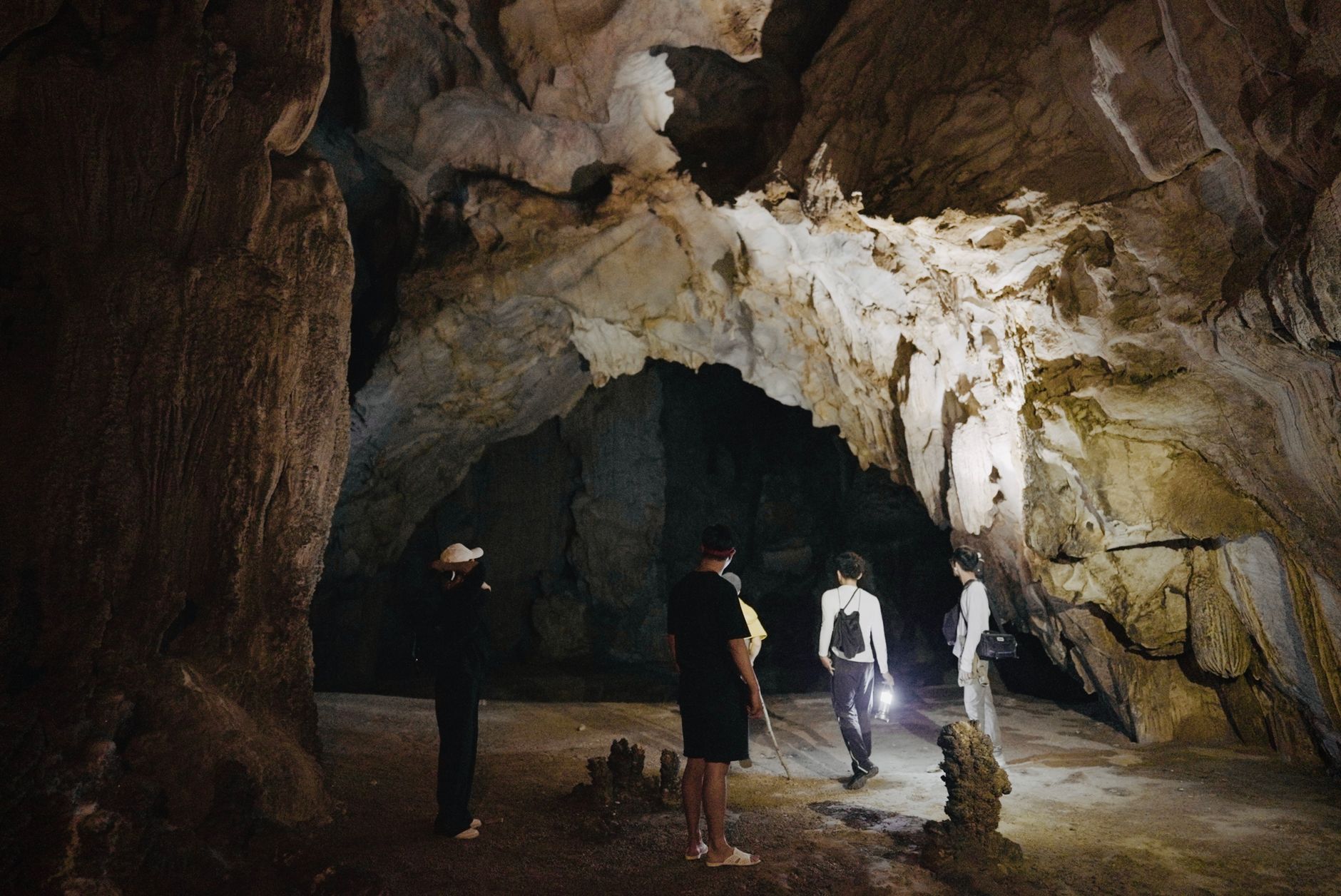
The Earth's Secret Heart: Unearthing Caves Locals Don't Want Tourists to Know About
I remember my first "guided" cave tour like it was yesterday. A massive group, a flashlight beam dancing haphazardly across ancient formations, and a guide rattling off facts I barely absorbed over the chatter of 50 other tourists. It was beautiful, sure, but it felt… impersonal. Like being herded through a natural museum rather than experiencing a raw, wild wonder.
That experience ignited a spark in me. A desire to peel back the layers of popular tourism and find the real adventures. The ones where you can hear your own breath echo in the vast silence, where every drip of water feels like a secret message, and where the sense of discovery is utterly, uniquely yours. That's when I started seeking out the caves locals knew about – the ones that hadn't been sanitized, lit up, and commodified for the masses. The ones they often prefer to keep to themselves.
And let me tell you, the world is full of them. From remote limestone labyrinths in Southeast Asia to ancient grottoes tucked away in European mountains, these are the cave systems where you can truly immerse yourself in the subterranean world, often without paying a hefty guide fee. But here's the kicker: "locals don't want tourists to know" isn't always about malice. Sometimes, it's about preserving a fragile ecosystem, maintaining a sacred space, or simply wanting to keep a slice of authentic, uncrowded beauty for themselves. Our mission isn't to invade, but to explore responsibly, with respect and an adventurous spirit.
Ready to trade the tour bus for a headlamp and a sense of true discovery? Let's dive in.
Why Go Guide-Free? The Thrill of Independent Exploration
Why bother seeking out these less-trodden subterranean paths? The reasons are as deep and compelling as the caves themselves:
- Authenticity: This is the big one. Guided tours, while informative, often strip away the raw, untamed essence of a place. Going solo means experiencing the cave on its own terms, feeling its ancient energy without a filter.
- Freedom & Flexibility: No rushing through, no waiting for stragglers. You set your own pace, linger where you're most captivated, and decide which passages to explore. This freedom enhances the sense of adventure exponentially.
- Budget-Friendly: Let's be honest, guided tours can be expensive. Exploring independently often means paying a small entrance fee (if any) or simply the cost of your gear. More money for other adventures!
- A Deeper Connection: When you're responsible for your own navigation and safety, you pay closer attention. You notice the subtle changes in rock formations, the unique cave fauna, the way light plays on the walls. It fosters a profound respect and connection to the environment.
- The Thrill of Discovery: There's an unparalleled rush in knowing you've found something special, something that isn't on every tourist map. It's the ultimate adventurer's high.
The Golden Rules of Self-Guided Caving: Adventure with Responsibility
Before you pack your bags and head underground, remember: independent exploration comes with a hefty dose of personal responsibility. These aren't theme park rides. Nature is powerful and unforgiving if disrespected.
- Do Your Homework (Thoroughly!): Research, research, research! Don't just show up. Look up cave maps, local reports, weather patterns, and any specific permits or regulations. Talk to locals respectfully. Ask about accessibility, flood risks, and any known dangers.
- Safety First, Always:
- Tell Someone: Always inform a trusted person (hotel staff, local friend) of your exact plans, including your route and estimated return time.
- Never Go Alone: While I advocate for independent exploration, never go solo into a potentially challenging cave. Bring at least one experienced companion.
- Lights, Camera, Action (and Batteries!): You need at least three independent light sources per person: a reliable headlamp, a powerful handheld flashlight, and a small backup (even your phone light in a pinch, though not ideal). And spare batteries for all!
- Know Your Limits: If a passage looks too tight, too deep, or too dangerous, it probably is. There's no shame in turning back.
- First Aid Kit: A well-stocked kit is non-negotiable.
- Leave No Trace: This is paramount. Pack out everything you pack in. Do not touch formations (oils from your skin damage them), do not disturb wildlife, and do not leave any markings. Caves are delicate ecosystems.
- Respect Local Customs & Warnings: If locals advise against something, listen. There's usually a good reason. If a cave is considered sacred or has restricted access, respect that. "Locals don't want you to know" often translates to "please respect our home."
- Weather Watch: Heavy rains can cause flash floods in caves, making them incredibly dangerous. Always check the forecast for several days prior.
Europe's Untamed Underground: Whispers from Ancient Earth
Europe, with its rich history and diverse geology, offers a surprising number of lesser-known cave experiences. Forget the crowds of Postojna or the commercialized grottoes; these are about raw beauty.
1. The 'Lost Caves' of Triglav National Park, Slovenia
Slovenia is a caving paradise, but beyond the famous guided tours, there are countless smaller, wilder systems. Deep within Triglav National Park, near the village of Bohinj, a local I befriended once pointed me towards a series of unmarked karst entrances. "They're not on the maps for tourists," he'd said with a wink, "too small for big groups, too wild."
My experience: With a local friend who knew the general area (and after careful online research of geological maps), we found a narrow fissure, barely wide enough to squeeze through. Inside, the cave opened into a small chamber adorned with glittering calcite crystals and delicate 'cave pearls'. There were no lights, no walkways, just the pristine, untouched beauty of nature. The silence was profound, broken only by the drip of water. It was humbling.
- Details: These aren't specific named caves but rather a network of smaller, unnamed karstic features. Requires significant local inquiry and excellent navigation skills. Crucial: Only attempt with someone who has local knowledge and has explored similar terrain.
- Getting There: Fly into Ljubljana (LJU), rent a car, and head towards Bohinj. Start asking around respectfully in local guesthouses or mountaineering clubs.
- Cost: Free, but the expertise of a local guide (if you can find one willing to show you) might cost.
- Instagram-worthy: The entrance, framed by lush greenery, and the pristine, untouched formations inside (use a good wide-angle lens and a powerful light source).
2. Cueva del Gato (Cat Cave), Andalucía, Spain (Partial Self-Exploration)
While the main entrance to Cueva del Gato near Benaoján is often part of a guided tour, the river that flows out of it offers a unique, partially self-guided adventure. Locals often swim or hike upstream from the river's exit point, exploring the initial open sections of the cave where the water emerges.
My experience: I spent a scorching August afternoon following a small group of Spanish families who were picnicking by the river. They pointed me towards the crystal-clear, icy water emerging from a dramatic cave mouth. With a wetsuit (essential, the water is freezing!) and a waterproof headlamp, I swam into the initial cavern. The sheer power of the water and the vastness of the opening were incredible. I explored as far as it felt safe and visible, marveling at the rock formations sculpted by millennia of water flow. It's a taste of caving without committing to a full, deep exploration.
- Details: The river exploration is generally safe for strong swimmers in the initial sections. Deeper exploration requires specialized gear and permits. Always check water levels; flash floods are a risk.
- Getting There: Fly into Málaga (AGP), rent a car, and drive to Benaoján. The cave is well-signposted from there.
- Cost: Free for river exploration.
- Instagram-worthy: The dramatic cave mouth where the river emerges, clear turquoise water, and the stunning surrounding natural park.
Asia's Secret Subterranean Worlds: Beyond the Tourist Trail
Asia's karst landscapes are home to some of the world's most spectacular caves, but many remain off the main tourist circuit, awaiting the intrepid explorer.
3. Sagada's Lesser-Known Caves, Mountain Province, Philippines
Sagada is famous for its hanging coffins and Sumaguing Cave, which offers guided 'cave connection' tours. However, if you talk to the right local, you'll hear whispers of other, smaller caves, often used for spiritual purposes or simply less accessible.
My experience: During a trek to some remote rice terraces, my guide, a local Kankanaey elder named Apo, pointed out a small, unassuming opening hidden behind a cluster of ferns. "Old people used to hide here during the war," he murmured. He warned me it was slippery and unlit, but with his blessing and a powerful headlamp, I ventured inside. It was a single chamber, small but incredibly atmospheric, with ancient stalactites draped like ghostly curtains. The air was cool and still, carrying a sense of deep history. It wasn't grand, but it was profoundly authentic.
- Details: These are typically unnamed, local-knowledge-only caves. They may be small, unlit, and require scrambling. Always ask locals respectfully and consider hiring a local guide for safety and cultural sensitivity, even if they're not 'leading a tour'.
- Getting There: Fly into Manila (MNL), then take an overnight bus to Sagada. Once there, engage with local guides or guesthouse owners.
- Cost: Potentially free, or a small tip for local guidance.
- Instagram-worthy: The lush jungle entrance, the dramatic lighting from your headlamp, and the sense of solitude.
4. Phong Nha-Ke Bang National Park's Unmarked Caves, Vietnam
While Phong Nha is renowned for its massive, world-famous caves (Son Doong, Phong Nha, Paradise Cave), the entire national park is a limestone wonderland. Many smaller, unnamed caves exist, some only explored by local villagers or during scientific expeditions.
My experience: On a motorbike trip through the more remote parts of the park, I stopped at a small village. A young man, noticing my headlamp, offered to show me a "small cave" nearby. It wasn't on any map. We hiked through dense jungle for about 30 minutes, crossed a shallow stream, and then clambered down into a sinkhole. The cave itself was modest in size, but it was teeming with unique insects and bats. The highlight was a small, underground river that flowed silently through it. It was a simple, unfiltered experience, far from the polished tours.
- Details: These are truly off-the-beaten-path. You must rely on local knowledge and good judgment. Some areas might be restricted due to unexploded ordnance or protected wildlife.
- Getting There: Fly into Dong Hoi (VDH), then take a taxi or bus to Phong Nha town. Rent a motorbike and explore the fringes of the park, respectfully engaging with locals.
- Cost: Likely free, perhaps a small thank-you payment to a local guide.
- Instagram-worthy: The dramatic jungle approach, the hidden entrance, and the unique cave wildlife.
Americas: Wild Caves of the New World
From the cenotes of Mexico to the vast systems of the USA, the Americas offer incredible opportunities for independent caving.
5. Sistema Dos Ojos' Less-Visited Cenotes, Tulum, Mexico
The Yucatán Peninsula is riddled with cenotes – natural swimming holes, often connected by vast underground rivers and cave systems. While many are commercialized, the larger systems like Dos Ojos (Two Eyes) have numerous entrances, and some are far less visited than others.
My experience: Instead of heading straight for the main, crowded Dos Ojos entrance, I rented a scooter and followed a dirt track a few kilometers down the road. I found a smaller, less-marked entrance to what was essentially a lesser-known 'eye' of the same system. There was a small entrance fee, but no guide was required. I descended into the cool, clear water with my snorkel and mask. The sunlight filtered through the water, illuminating ancient stalactites and stalagmites just beneath the surface. I swam through crystal-clear passages, occasionally surfacing in small, air-filled pockets. It was an otherworldly experience, feeling like I was exploring a drowned cathedral.
- Details: Many cenotes allow self-guided exploration for swimming and snorkeling. Diving requires certified guides and equipment. Always check for current conditions and entrance fees.
- Getting There: Fly into Cancún (CUN), take a bus or colectivo to Tulum, then rent a scooter or bicycle to explore the cenote routes.
- Cost: Typically a small entrance fee (e.g., 100-200 MXN, ~$5-10 USD).
- Instagram-worthy: The ethereal blue light filtering through the water, underwater stalactites, and the serene jungle surroundings.
6. National Forest Caves, USA (Specific Regulations Apply)
Many U.S. National Forests and Bureau of Land Management (BLM) lands contain caves that are open to the public for self-guided exploration, often with minimal to no infrastructure. These are typically smaller, less dramatic than national park show caves, but offer genuine wilderness caving.
My experience: In the Ozark-St. Francis National Forest in Arkansas, I once found a small, unmarked cave entrance after a tip from a local park ranger (who stressed its wild nature). Armed with my gear, a friend, and a detailed topographical map, we navigated a short, muddy crawlway that opened into a small chamber. It was raw, untouched, and utterly quiet. We saw delicate cave formations and even a few bats clinging to the ceiling. It was a reminder that even in a developed country, wild places still exist just beneath the surface.
- Details: Regulations vary greatly by forest and specific cave. Some require permits, others are seasonally closed for bat protection, and some are completely open. Always check the specific National Forest or BLM district website for current rules.
- Getting There: Research specific National Forests (e.g., Mark Twain NF, Ozark-St. Francis NF, Daniel Boone NF) and look for caving sections on their websites.
- Cost: Often free, but permits might be required for specific caves.
- Instagram-worthy: The rustic, natural entrance, the unique rock formations, and the sense of deep wilderness.
Beyond the Beaten Path: Africa & Oceania's Lesser-Known Labyrinths
These continents also hold their share of hidden underground wonders, waiting for the adventurous traveler.
7. Cango Caves' Adventure Route (Self-Guided Section), Oudtshoorn, South Africa
While the Cango Caves offer popular guided tours, they also have an "Adventure Tour" which, while guided, allows for a much more hands-on, self-exploratory feel through tight squeezes and challenging passages that the main tours don't touch. However, for true independence, there are also smaller, less-advertised caves in the same geological region that locals can point you towards.
My experience: After doing the Cango Caves Adventure Tour, I chatted with a local farmer at a nearby roadside stall. He mentioned a small cave on his property, just a limestone overhang really, but with a short, accessible passage. He allowed me to explore it. It was tiny, unlit, and had no formations to speak of, but the thrill was in the access, the personal invitation, and the feeling of stepping into a place that wasn't designed for tourists. It was a simple, authentic connection to the local landscape.
- Details: This requires significant local interaction and respect. These are not publicly managed caves. Always seek permission.
- Getting There: Fly into George (GRJ) or Cape Town (CPT), then drive to Oudtshoorn. Explore the surrounding area and engage with local communities.
- Cost: Free, or a small token of appreciation to the landowner.
- Instagram-worthy: The stark beauty of the Karoo landscape, the unassuming cave entrance, and the unique flora and fauna around it.
Gear Up! Essential Equipment for Your Independent Expedition
Don't skimp on gear. Your safety and enjoyment depend on it.
- Lighting: As mentioned, three independent light sources per person, with spare batteries. Headlamps are crucial for hands-free movement.
- Helmet: Non-negotiable. Protects against bumps and falling debris.
- Sturdy Footwear: Hiking boots with good ankle support and grip are essential. Expect mud and slippery surfaces.
- Appropriate Clothing: Layers are best. Caves are often cool (even in hot climates) and damp. Wear old clothes you don't mind getting dirty or torn. Long sleeves and pants protect against scrapes.
- Gloves: Protect your hands from rough rock and cold.
- Backpack: Small, durable, and comfortable.
- Water & Snacks: Stay hydrated and fueled.
- First Aid Kit: Comprehensive, including emergency blanket, pain relievers, bandages, antiseptic wipes.
- Navigation: A physical map (waterproofed), compass, and a fully charged phone with offline maps/GPS (though GPS often struggles underground).
- Emergency Whistle: For signaling.
- Camera: Waterproof and durable, or a protective case.
- Wetsuit (Optional but Recommended for Water Caves): If you're exploring water-filled caves, this is a must.
Your Next Epic Underground Adventure Awaits
The world beneath our feet is a realm of breathtaking beauty, ancient mystery, and profound silence. While guided tours offer a convenient glimpse, true independent exploration offers an unmatched sense of discovery and connection. The "secrets" aren't always locked away; sometimes they just require a little more effort, a lot more respect, and a willingness to step off the well-worn path.
Remember, the goal isn't just to find a cool cave; it's to experience it authentically, responsibly, and with a deep appreciation for the natural world. So, do your research, gear up, ask the locals (politely!), and get ready to uncover some of the earth's best-kept secrets. The adventure of a lifetime is waiting, just beneath the surface.
What's the most incredible hidden gem you've ever discovered? Share your stories and tips in the comments below – let's inspire each other to explore more responsibly!
---