Michelin Under $30: The Secret That Changed My Life Forever
I remember it like it was yesterday: perched on a tiny stool in a bustling Tokyo alley, slurping down a bowl of ramen so exquisite it brought tears to my eyes. The broth was a symphony, the noodles perfectly springy, the chashu melting on my tongue. The bill? A mere 950 yen – about $8. That ramen wasn't just delicious; it was a revelation. It was my first taste of a Michelin-recognized meal for under $30, and it cracked open a world I never knew existed.
For years, I'd admired Michelin-starred restaurants from afar, scrolling through glossy photos of impossibly beautiful dishes and mentally adding zeros to the price tags. Fine dining, I believed, was reserved for the ultra-rich, special occasions, or lottery winners. My budget travel style simply didn't allow for it. My idea of a culinary adventure was a street food market or a highly-rated local bistro. And don't get me wrong, I love those too! But there was always this lingering curiosity, this whisper of "what if?"
Then came that ramen, a humble bowl from a tiny, unassuming spot that had earned a prestigious Bib Gourmand mention in the Michelin Guide. It wasn't about white tablecloths or silver service; it was about the food. The sheer, unadulterated artistry on a plate (or in a bowl). That moment wasn't just a meal; it was a paradigm shift. It showed me that the Michelin Guide wasn't just about exorbitant prices; it was about exceptional quality, regardless of the setting. And it sparked a mission: to unlock the secrets of affordable Michelin dining, proving that anyone, even a budget-conscious traveler like me, could taste the stars without emptying their wallet. This isn't just about saving money; it's about elevating your travel experience, discovering culinary masterpieces, and proving that luxury can be accessible. And trust me, once you taste this secret, your travel life will never be the same.
The Michelin Guide: More Than Just Stars
Before we dive into the hacks, let's clear up a common misconception. The Michelin Guide isn't only about 1, 2, or 3-star restaurants. While those are the pinnacle of fine dining, they also recognize other categories that are a goldmine for budget travelers:
- Bib Gourmand: Awarded to restaurants offering "exceptionally good food at moderate prices." This is your sweet spot for under-$30 meals. They prioritize quality ingredients and skillful cooking over opulent decor.
- Michelin Plate: Signifies restaurants where "the inspectors have discovered quality food." It’s a step below Bib Gourmand but still guarantees a noteworthy culinary experience.
Understanding these categories is your first, most crucial step. Forget the three-star palaces for a moment; we're hunting for Bib Gourmand and Michelin Plate gems. These are the unsung heroes of the Michelin universe, offering incredible value and unforgettable flavors.
My first foray into this world, beyond that initial ramen, was in Seville, Spain. I stumbled upon a tapas bar, Vinería San Telmo, which had a Bib Gourmand mention. Instead of a multi-course meal, I ordered two exquisite tapas – a slow-cooked oxtail with potato foam and a vibrant octopus salad – plus a glass of local wine. The total? A blissful €18. The flavors were complex, the presentation artful, and the atmosphere lively and authentic. It was everything I loved about Spanish dining, elevated by that subtle Michelin touch, all for less than a mediocre dinner back home. I remember snapping a photo of the oxtail, its rich sauce glistening under the warm lights, and thinking, "This is it. This is the magic."
Strategy 1: The Lunch Menu & Set Meal Advantage
This is perhaps the most universally effective strategy. Many high-end restaurants, even those with Michelin stars, offer significantly reduced prices for their lunch menus or set meals compared to their dinner counterparts. Why? Lunch is often less formal, less time-consuming for the kitchen, and designed to attract a broader clientele, including local businesspeople.
How to make it work:
- Research aggressively: Before you even book your flight, scour the Michelin Guide website (or app) for your destination. Filter by Bib Gourmand or Michelin Plate. Then, visit the individual restaurant websites. Look for "Menu del Día," "Prix Fixe Lunch," "Business Lunch," or "Set Lunch Menu."
- Timing is everything: Lunch typically runs from 12 PM to 2 PM or 1 PM to 3 PM. Arrive early to ensure a table, especially in popular spots.
- Read the fine print: Some lunch menus might exclude drinks or have limited options. Make sure the price fits your budget, even with an added beverage.
- Embrace the simplicity: Lunch menus are often a condensed version of the dinner experience, but they still showcase the chef's skill and the restaurant's quality. You might get two or three courses for the price of a single appetizer at dinner.
My most memorable lunch experience was at a beautiful Michelin Plate restaurant in Lisbon, Portugal. I found a "Menu Executivo" online for €25, which included a starter, a main course, and a dessert. I chose a delicate codfish ceviche, followed by a perfectly pan-seared sea bass with seasonal vegetables, and a light passion fruit mousse. Each dish was a masterpiece of flavor and presentation. The restaurant had a chic, minimalist design, and the service was impeccable. As I savored each bite, looking out at the historic streets, I couldn't help but feel like I was getting away with something incredible. It was a proper fine-dining experience, complete with linen napkins and attentive staff, all for a price I'd usually pay for a casual pub meal. I remember discreetly taking a photo of the sea bass, the golden-brown skin perfectly crispy, and texting it to my friends with the caption: "Guess how much?!"
Strategy 2: The Art of the Appetizer, Bar Seating, & A La Carte
Sometimes, even the lunch menu might push you slightly over the $30 mark, or you might have your heart set on a specific Michelin-starred establishment. This is where the "art of the appetizer" and strategic seating come in.
Here’s how to pull it off:
- Focus on signature small plates: Many Michelin-starred restaurants have an iconic appetizer or a few small plates that perfectly encapsulate their culinary philosophy. Order just one or two of these, perhaps paired with a glass of house wine or a craft cocktail. You still get to experience the flavors and the ambiance without committing to an entire tasting menu.
- Embrace the bar: If available, check if the restaurant offers bar seating. Often, the bar menu is more casual and affordable than the main dining room's. Plus, you get a front-row seat to the mixology magic!
- Go à la carte (selectively): Instead of a full meal, choose one specific, highly-raved-about main course or even a spectacular dessert. This allows you to splurge on one incredible dish without the full price tag of a multi-course experience.
I used this strategy to "taste" a 1-star restaurant in Paris. The full dinner tasting menu was well over €150. But I noticed their bar area offered a small selection of elevated snacks and a few à la carte dishes. I ordered a single, incredibly delicate scallop tartare with yuzu foam, paired with a glass of crisp Sancerre. It cost me €28. The dish was a tiny explosion of flavor, meticulously crafted, and served in an elegant, hushed environment. It wasn't a "meal," but it was an experience. It was enough to understand the chef's vision and appreciate the artistry. I felt like a culinary spy, infiltrating the world of haute cuisine on my own terms. I posted a close-up of the tartare on Instagram, the vibrant colors contrasting with the minimalist white plate, and the comments flooded in, asking "Where?!" and "How much?!"
Strategy 3: Hawker Stalls & Street Food with Stars – The Ultimate Budget Michelin
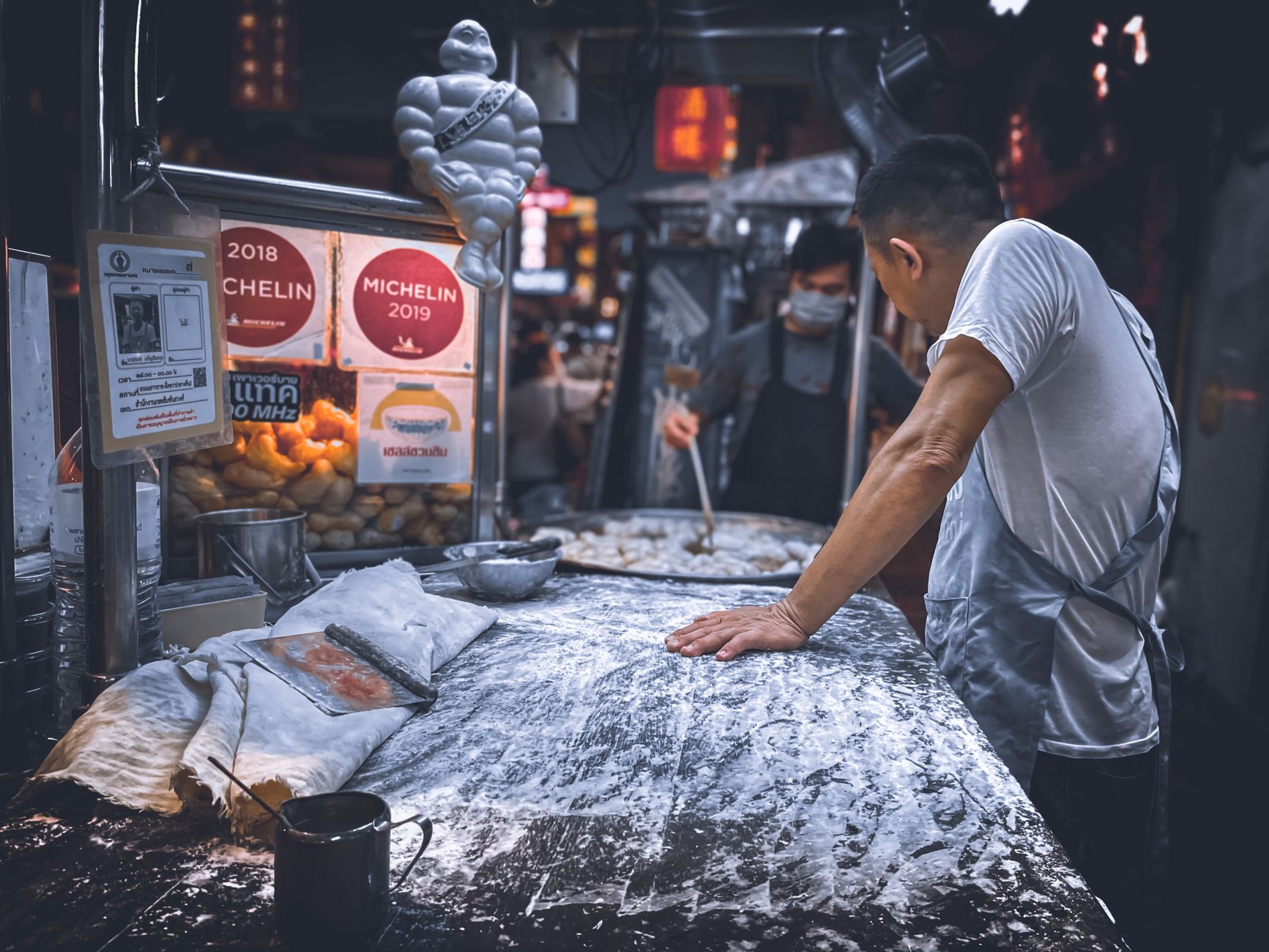
This is where the game truly changes, especially in Asia. The Michelin Guide isn't snobby; it celebrates exceptional food wherever it's found, even in the most humble settings. Some hawker stalls and street food vendors have earned the coveted Michelin star, offering world-class flavors for unbelievably low prices.
Key destinations for this hack:
- Singapore: Home to Hawker Chan, the world's first Michelin-starred hawker stall (originally called Liao Fan Hong Kong Soya Sauce Chicken Rice & Noodle). You can get their famous Soya Sauce Chicken Rice for as little as S$3 (about $2.20 USD)! It's an absolute must-try. The queue is long, but the reward is immense. I waited for 45 minutes, chatting with fellow foodies, and that first bite of succulent chicken and fragrant rice was worth every second. It's a testament to how incredible food doesn't need a fancy setting.
- Hong Kong: Tim Ho Wan (original location in Mong Kok) famously earned a Michelin star for its dim sum, with dishes starting from HK$20-30 (around $2.50-$4 USD). Their baked char siu bao (BBQ pork buns) are legendary – crispy on the outside, fluffy inside, and filled with sweet, savory pork. I remember ordering a basket of these, along with some perfectly steamed siu mai and har gow, and the bill barely broke HK$100 (around $13 USD) for a feast. The chaotic, bustling atmosphere, the clatter of chopsticks, the steaming baskets – it was pure Hong Kong magic.
These aren't just cheap meals; they are culinary pilgrimages. They offer a unique blend of authentic local culture and Michelin-level quality. It’s an experience that’s shareable, Instagram-worthy, and an incredible story to tell. Imagine telling your friends you ate at a Michelin-starred restaurant for less than a cup of coffee!
Strategy 4: Beyond the Stars – Bib Gourmand & Michelin Plate Hotspots
While the Michelin star hawker stalls are thrilling, don't overlook the sheer volume of Bib Gourmand and Michelin Plate restaurants that exist globally, especially in Europe and parts of Asia. These are consistently excellent and often designed with local budgets in mind.
Countries and cities where these are abundant and affordable:
- Spain & Portugal: Tapas bars, tascas, and small family-run restaurants frequently receive Bib Gourmand or Michelin Plate recognition. Lunch menus are common and incredibly good value. Think fresh seafood, slow-cooked meats, and vibrant produce, all prepared with care.
- Italy: Trattorias and osterias, especially outside major tourist hubs, offer fantastic value. Look for "menù fisso" (fixed menu) for lunch.
- Japan: Beyond the starred ramen or sushi joints, many udon shops, soba restaurants, and izakayas receive Bib Gourmand mentions. You can get an incredibly satisfying and high-quality meal for well under $20.
- France (especially outside Paris): While Paris can be pricey, smaller cities and towns often have charming bistros with excellent lunch deals that boast a Michelin Plate or even a Bib Gourmand.
My trip through Portugal was a revelation. In Porto, I found a traditional tasca (a casual, family-run eatery) with a Michelin Plate. For €15, I had a hearty bowl of Caldo Verde (green soup), a generous portion of Bacalhau à Brás (shredded cod with onions and potatoes), and a glass of local vinho verde. The food was simple, comforting, and packed with authentic flavor – exactly what the Michelin Plate celebrates. It felt like eating at a Portuguese grandmother's house, if that grandmother were a culinary genius. I loved the rustic charm, the clatter of plates, and the genuine warmth of the staff. It was a true taste of local life, elevated.
Strategy 5: Research, Reserve, and Repeat – Your Action Plan
Now that you know the strategies, here’s how to put them into action and make this a consistent part of your travel repertoire:
- Download the Michelin Guide App: This is your best friend. Filter by location, price, and category (Stars, Bib Gourmand, Plate). Read the descriptions; they often hint at the best value options.
- Cross-Reference with Google Maps/Reviews: Once you've identified a potential spot, check Google Maps for recent reviews, photos, and current opening hours. Look for photos of menus to confirm prices. Websites like TripAdvisor or local food blogs can also provide valuable insights.
- Book Ahead (Especially for Lunch): Even for Bib Gourmand spots, popular lunch sittings can fill up quickly. A quick email or online reservation can save you disappointment. For hawker stalls, just show up and join the queue!
- Be Flexible with Your Definition of "Michelin": Remember, a Bib Gourmand or Michelin Plate is still a significant recognition of quality. Don't get hung up on needing three stars; the joy is in the exceptional food experience, regardless of the star count.
- Dress Smart-Casual: While we're aiming for budget-friendly, many Michelin-recognized places, even Bib Gourmand, appreciate a smart-casual dress code. You don't need a suit, but avoid beachwear or overly casual attire.
- Savor the Experience: Don't rush. Take photos (discreetly, if it's a very formal place). Appreciate the presentation, the ingredients, the flavors. This isn't just a meal; it's a memory.
- Don't Over-Order: Stick to your budget. If you're going for an appetizer and a drink, don't be tempted by everything else. The goal is to experience the quality, not to gorge yourself.
This approach has truly transformed my travels. It’s added an entirely new layer of discovery and excitement to every trip. Instead of just seeing sights, I’m now actively hunting for culinary treasures, proving that luxury doesn't have to come with an exorbitant price tag. It's about smart planning, an open mind, and a willingness to explore beyond the obvious. My Instagram feed is now a vibrant tapestry of Michelin-recognized dishes from around the world, each one a testament to the fact that you can eat like royalty on a backpacker's budget.
The Life-Changing Impact: Beyond the Plate
Eating Michelin-recognized food for under $30 isn't just about saving money; it’s about a profound shift in perspective. It taught me that:
- Quality is accessible: You don't need a massive income to appreciate and experience culinary excellence.
- Travel is about discovery: It pushed me to explore local culinary scenes more deeply, finding hidden gems I would have otherwise missed.
- The best stories are often found off the beaten path: My favorite Michelin experiences often came from the most unexpected, humble settings.
- Confidence in culinary exploration: It empowered me to walk into places I once thought were "out of my league" and truly savor the moment.
This journey has enriched my travels immeasurably. It's given me incredible stories, unforgettable flavors, and a renewed appreciation for the artistry of food. It’s a game-changer that makes every trip feel a little more luxurious, a little more adventurous, and a whole lot more delicious.
So, are you ready to embark on your own affordable Michelin adventure? The world of exquisite flavors awaits, and your wallet doesn't have to suffer. Go forth, explore, taste, and share your incredible finds! Tag @Tripsora and use #MichelinUnder30 so we can celebrate your culinary triumphs!
---