The Hook: A Morning on the Edge of the Shelf
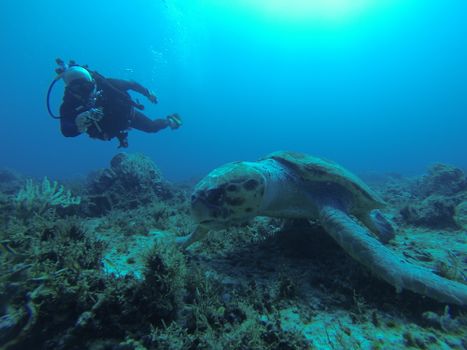
I rolled backward off the gunwale of our wooden panga, and the world instantly went silent, save for the crackle of snapping shrimp and the slow, rhythmic hiss of my regulator. The water in Cabo Pulmo this April morning was the color of a bruised curaçao bottle—crystalline, cold enough to make my 5mm wetsuit feel like a second skin, and humming with life.
When I broke the surface twenty minutes later, my dive slate was scrawled with tallies: twelve yellowtail surgeonfish, four leopard groupers, and one massive, shadow-like bull shark that cruised the sandy channel just meters below my fins.
I wasn't just a tourist paying for a dive charter; I was collecting data for a demographic reef monitoring project. My scribbles would be uploaded directly to a regional database used by marine biologists to track the recovery of Mexico’s most successful marine sanctuary.
This is the new frontier of travel. Across the globe, a quiet revolution is happening along our coastlines. Conscientious travelers are rejecting passive sightseeing in favor of "citizen science"—hands-on, data-driven voluntourism that helps underfunded marine protected areas (MPAs) monitor, restore, and protect fragile aquatic ecosystems.
If you are planning a spring getaway, these five trending MPAs offer the perfect blend of raw natural beauty and meaningful conservation work.
---
1. Cabo Pulmo National Park, Mexico: The Miracle of the Sea of Cortez
Once declared "nearly dead" by marine scientists in the 1990s due to unchecked commercial fishing, Cabo Pulmo is now recognized as one of the most successful marine resurrections on Earth. This 7,000-hectare MPA has seen a 400 percent increase in fish biomass over the last three decades.
During the spring, the convergence of cold and warm currents brings massive schools of mobula rays and migrating humpback whales close to the reef.
The Citizen Science Connection
Visitors can partner with local eco-operators to conduct reef health surveys. Using underwater slates, waterproof cameras, and GPS tracking apps, you will record fish species abundance, note coral bleaching events, and document megafauna sightings. The data goes directly to Niparajá, a regional conservation group monitoring the health of the Gulf of California.
- The Vibe: Off-grid, dusty, and intensely authentic. Think solar-powered casitas, gravel roads, and the smell of wood-fired flour tortillas drifting through the desert air.
- Pro-Tip: Skip the day-trips from Cabo San Lucas. Rent a high-clearance 4WD vehicle, brave the washboard dirt road from Camino Cabo Este, and book a cabin directly in the village. This keeps your tourism dollars inside the local community that fought to protect the reef.
---
2. The Azores Archipelago, Portugal: Deciphering Cetacean Secrets in the Atlantic
Rising abruptly from the mid-Atlantic ridge, the nine volcanic islands of the Azores are a highway for migratory cetaceans. In spring, the deep, nutrient-rich channels between the islands of Faial, Pico, and São Jorge become a feeding ground for blue whales, fin whales, and sperm whales.
The entire marine territory surrounding the Azores is managed under a strict network of MPAs designed to limit commercial shipping impacts on these gentle giants.
The Citizen Science Connection
Through partnerships with local research outfits like Monicet, travelers board semi-rigid zodiacs equipped with hydrophones and telephoto lenses. Your job? Photo-identifying individual whales by capturing high-resolution shots of their unique tail flukes and dorsal fins.
You’ll also help log acoustic data, mapping the vocalizations of resident dolphin pods. Back on land, you will upload these images to a global database, helping scientists track migratory routes and population health.
- The Vibe: Dramatic basalt cliffs, mist-shrouded volcanic calderas, and harbors filled with salty, trans-Atlantic sailors drinking local gin and tonics.
- Pro-Tip: Book your excursions out of Horta on Faial Island. Visit the legendary Peter Café Sport—not just for their famous gin, but because the upstairs museum houses one of the world’s most significant collections of scrimshaw and historical whaling artifacts, offering context on how the islands transitioned from whale hunting to whale protecting.
---
3. Portofino Marine Protected Area, Italy: Restoring Mediterranean Seagrass
While most travelers associate the Italian Riviera with pastel-hued villages and expensive yachts, the waters beneath the cliffs of Portofino tell a different story. The Portofino MPA, established in 1999, protects a jagged limestone peninsula that hosts dense forests of red coral and extensive meadows of Posidonia oceanica (commonly known as Neptune grass).
This seagrass is the unsung hero of the Mediterranean, sequestering up to fifteen times more carbon than a tropical rainforest of equivalent size.
The Citizen Science Connection
Spring is the peak planting season for Posidonia. Divers and snorkelers can join local marine biologists to assist in seagrass restoration projects.
This involves preparing biodegradable mats, securing healthy seagrass shoots to the seabed, and using Secchi disks to measure water turbidity. You’ll also help clear ghost fishing nets and plastic debris that accumulate in the deep underwater canyons.
- The Vibe: High-end Italian glamour meets rugged marine biology. You’ll spend your morning in a muddy wetsuit pulling up plastic and your afternoon sipping crisp Vermentino wine on a cobblestone piazza.
- Pro-Tip: The hidden dive shop, Delfino, is located down a flight of steep stone steps behind the 12th-century Church of San Giorgio in Portofino. They offer the most scientifically rigorous citizen science dives in the region, far removed from the standard tourist boat tours.
---
4. The Southern Great Barrier Reef, Australia: The Great Reef Census
While the northern stretches of the Great Barrier Reef have grabbed headlines for coral bleaching, the southern outer reefs—particularly around Lady Elliot Island—remain remarkably resilient, thanks to cooler, deep-water upwellings.
This coral cay is a highly protected green zone, home to a resident population of over 100 manta rays, nesting green sea turtles, and pristine coral gardens.
The Citizen Science Connection
Spring is a critical window for the Great Reef Census, a pioneering citizen science initiative run by Citizens of the Great Barrier Reef. Snorkelers and divers are armed with GoPro cameras and trained to photograph specific transects of the reef.
These images are then uploaded to an open-source platform where citizen scientists worldwide—and those on the ground—help analyze coral cover and locate key indicator species like crown-of-thorns starfish and giant clams.
- The Vibe: Raw, wild, and completely immersive. Lady Elliot Island is a coral cay with no cell service, where the only sounds are the cries of nesting noddy terns and the rustle of she-oak trees.
- Pro-Tip: Take the earliest charter flight from Hervey Bay or Bundaberg to maximize your low-tide reef walking window. This is when the epaulette sharks (which can "walk" on land using their pectoral fins) are active in the shallow rock pools.
---
5. Silk Caye & Laughing Bird Caye, Belize: Conch and Coral Guardians
Belize boasts the second-largest barrier reef system in the world, and its network of marine reserves is a global model for community-led conservation. Silk Caye and Laughing Bird Caye are tiny, postcard-perfect sand spits surrounded by deep turquoise lagoons, vibrant patch reefs, and deep-water drop-offs where whale sharks congregate in the spring.
The Citizen Science Connection
The queen conch is both a cultural icon and a vital ecological vacuum cleaner in Belize, but overfishing has threatened its survival.
Working with local conservation NGOs like Southern Environmental Association (SEA), volunteers snorkel along designated transect lines to count, measure, and tag queen conchs. You will also assist in monitoring coral nurseries, clearing invasive lionfish using specialized pole spears, and recording sightings of juvenile reef sharks.
- The Vibe: Laid-back Caribbean charm. Think reggae beats drifting from beachside shacks, fresh coconut water, and a slow, "go slow" attitude that instantly lowers your heart rate.
- Pro-Tip: Avoid Tuesdays and Wednesdays when major cruise ships dock in nearby Harvest Caye. Book your research trips for Friday mornings when the waters are quiet, the visibility is at its peak, and you have the cayes virtually to yourself.
---
Budget, Logistics, and Quick Facts
To help you plan your spring conservation trip, here is a breakdown of the costs, travel logistics, and optimal timing for each of these trending MPAs.
| Destination | Core Spring Activity | Est. Daily Cost ($ - $$$$) | Best Spring Month | How to Get There | | :--- | :--- | :--- | :--- | :--- | | Cabo Pulmo, Mexico | Reef biomass & shark monitoring | $$ ($120 - $180 USD) | May (best visibility) | Fly to San Jose del Cabo (SJD), rent a 4WD, and drive 2 hours northeast. | | Azores, Portugal | Cetacean photo-ID & hydrophone logging | $$$ ($200 - $300 USD) | April - May (peak whale migration) | Fly to Lisbon (LIS), then take a connecting flight to Horta (HOR) on Faial Island. | | Portofino, Italy | Seagrass restoration & plastic cleanup | $$$$ ($350 - $500 USD) | May (warmer water, low crowds) | Fly to Genoa (GOA), take the train to Santa Margherita Ligure, then catch the local ferry. | | Lady Elliot Island, Aus | Great Reef Census & turtle tracking | $$$$ ($400 - $600 USD) | October - November (Spring in Southern Hemisphere) | Fly to Brisbane (BNE), take a scenic charter flight from Hervey Bay or Bundaberg directly to the island. | | Silk Caye, Belize | Conch demographic surveys & lionfish removal | $$ ($150 - $220 USD) | April (aligns with whale shark season) | Fly to Belize City (BZE), take a local hopper flight to Placencia, and charter a boat from the harbor. |
---
The Ultimate Citizen Science Packing List
Participating in marine research requires a slightly different gear setup than a standard beach holiday. Beyond your swimsuit and sunglasses, make sure to pack:
- A Rugged Underwater Camera: A GoPro Hero 11 or 12 with a red filter is essential for capturing color-accurate images of corals and marine life for database uploads.
- A Physical Dive Slate: A small, erasable plastic wrist slate with a graphite pencil is indispensable for logging data while underwater.
- Reef-Safe Sunscreen: Standard sunscreens contain oxybenzone, which causes coral bleaching. Opt for non-nano zinc oxide formulas. Better yet, wear a UPF 50+ rash guard to eliminate the need for sunscreen altogether.
- A Waterproof Dry Bag: Protect your logbooks, tablets, and dry clothes from salt spray on open zodiacs and pangas.
---
Final Thoughts: Leaving the Ocean Better Than You Found It
Travel has long been an extractive industry—we take photos, we take memories, and we leave behind a carbon footprint. But by choosing to spend your spring holiday in a marine protected area that invites you to participate in its preservation, you shift the paradigm.
You return home not just with a tan, but with the knowledge that your efforts helped map a reef, protect a whale, or plant a meadow of seagrass that will feed marine life for decades to come. That is a souvenir worth traveling for.
---