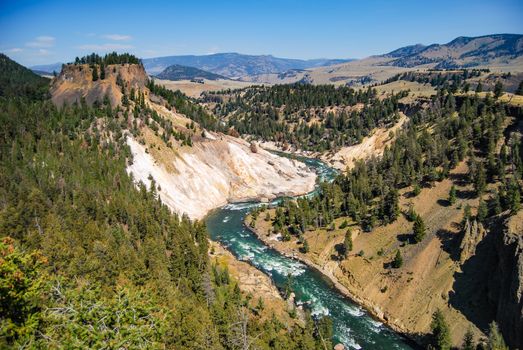
The Great Escape: Why It’s Time to Look Beyond Yellowstone
I stepped off the dirt trail at 5:15 AM, the air thick with the scent of damp western red cedar and crushed wild huckleberries. The only sound was the low, resonant rumble of the Skagit River thousands of feet below and the sharp, metallic tang of glacial runoff cut through the morning mist. There were no idling tour buses. No megaphones. No boardwalks corraling me past sulfur pools. Just raw, vertical granite slicing into a lilac sky.
I was in the North Cascades, a mere three hours from Seattle, yet I felt as though I had slipped through a crack in the Earth into a forgotten, prehistoric America.
For decades, Yellowstone has held the crown of the American West. But let’s be honest: dodging bumper-to-bumper traffic on the Grand Loop Road to catch a fleeting glimpse of a stressed-out bison isn't exactly wild.
As a travel journalist who has spent the last decade field-testing hiking boots across seven continents, I’m here to tell you a secret the tourism boards won't: there are wilder, more dramatic, and infinitely more peaceful sanctuaries waiting for you.
If you are ready to trade the gift shops for genuine awe, these are the national parks more stunning than Yellowstone experts are recommending right now.
---
1. North Cascades National Park, Washington: The American Alps
``` /\ / \ /\ /\ / \/ \ / \_/ /\ \ / / / \ \ ________/___/___/____\______\________ ```
If you took the jagged peaks of Switzerland, drenched them in the emerald moss of the Pacific Northwest, and stripped away 99% of the tourists, you would get North Cascades National Park. Boasting over 300 glaciers—more than any other US park outside of Alaska—this is a vertical wonderland of turquoise alpine lakes and sheer granite walls.
The magic of the North Cascades lies in its rugged isolation. Because the park is bisected by State Route 20 but has almost no paved roads leading into its interior, it remains pristine.
The Insider Route: Sahale Arm Trail
Don't just look at the mountains; climb into them. The Sahale Arm Trail is, bar none, the most spectacular day hike in North America.
- The Vibe: You'll climb through old-growth forest, emerge into wildflower-choked meadows where hoary marmots whistle at your intrusion, and finish with a scramble up a loose talus slope to the base of the Sahale Glacier.
- The View: From the glacier's toe, you look down upon a ring of jagged, ice-capped teeth that seem to rip the sky open.
> Pro-Tip: Park at the Cascade Pass trailhead at exactly 6:00 AM. Not only will you secure a parking spot, but you’ll also catch the morning sun hitting the peaks of Johannesburg Mountain, initiating a daily chorus of distant, rumbling ice avalanches.
---
2. Wrangell-St. Elias National Park, Alaska: The True Wild
At 13.2 million acres, Wrangell-St. Elias is larger than Switzerland, Yellowstone, and Yosemite combined. Yet, it receives a tiny fraction of Yellowstone’s annual visitors. This is not a park for casual sightseeing; this is an arena of raw, colossal nature. Four major mountain ranges meet here, creating a landscape of active volcanoes, massive ice fields, and braided rivers of glacial silt.
``` +-------------------------------------------------------------+ | WRANGELL-ST. ELIAS BY THE NUMBERS | +-----------------------------+-------------------------------+ | Total Acreage | 13.2 Million Acres | | Peak Elevation | 18,008 ft (Mount St. Elias) | | Annual Visitors | ~78,000 | | Yellowstone Annual Visitors | ~4.5 Million | +-----------------------------+-------------------------------+ ```
The Historic Outpost: McCarthy and Kennicott
To experience this park, drive the bone-rattling McCarthy Road—a 60-mile dirt track built over an abandoned railway bed—to the tiny, off-grid enclave of McCarthy. Here, red wooden buildings of the abandoned Kennicott Copper Mine cling to the mountain slopes like architectural ghosts.
- The Experience: Put on crampons and hike onto the Root Glacier. Walking on this massive white highway, listening to the deep groans of moving ice and peer down into neon-blue moulins (glacial sinkholes), will make you realize just how small you really are.
---
3. Great Basin National Park, Nevada: Ancient Spirits and Dark Skies
When people think of Nevada, they think of neon lights and scorched desert. They don’t think of 13,000-foot peaks, underground marble caverns, and the oldest living organisms on Earth. Great Basin National Park is an island of alpine beauty rising out of the sagebrush sea of the Mojave Desert.
``` _.._ .' .-'` / / ⭐ NIGHT SKY SANCTUARY ⭐ | | Great Basin features some of the lowest \ \ light pollution in the lower 48 states. '. '._ `'-.._ ```
The Ancient Giants: Bristlecone Pines
The true crown jewels of Great Basin are the Great Basin Bristlecone Pines. Gnarled, twisted, and stripped bare by centuries of freezing winds, these trees are not just old—they are ancient. Some of them have been clinging to these rocky slopes for over 4,900 years. They were saplings when the Great Pyramids of Giza were being built.
- The Hike: Take the Bristlecone Trail from the Wheeler Peak trailhead. The air at 10,000 feet is thin and crisp, smelling of cold limestone and resin.
- The Nocturnal Show: Stay after dark. Great Basin is a designated International Dark Sky Park. Because of the high altitude and extreme isolation, the Milky Way doesn't just look like a faint cloud—it casts a visible shadow on the ground.
> Pro-Tip: Book a ticket for the Lehman Caves evening tour at least three months in advance. The Gothic Palace room, filled with rare "shield" formations, is an underground cathedral that rivals any geothermal feature in Wyoming.
---
4. Lassen Volcanic National Park, California: The Volcanic Underdog
If you love Yellowstone for its geothermal weirdness but hate the crowds, Lassen Volcanic is your holy grail. Located at the southern end of the Cascade Range, this park contains all four types of volcanoes found in the world: shield, composite, cinder cone, and plug dome.
``` ( . ) ) ( _ _ / \ .---. .---. \ / \/ \/ \ ```
The Sulfuric Spectacle: Bumpass Hell
A three-mile round-trip trail leads you to Bumpass Hell, a 16-acre basin of boiling springs, steaming mud pots, and roaring fumaroles.
- The Sights: The earth here stained in shades of turquoise, ochre, and rust-red by volcanic minerals.
- The Sound: The deafening roar of "Big Boiler," a steam vent that reaches temperatures of up to 322°F (161°C), making it one of the hottest non-eruptive hydrothermal features in the world.
The Challenge: Cinder Cone
For an unforgettable workout, climb the Cinder Cone trail. It is a steep, unforgiving slog up loose, black volcanic gravel. Every step forward feels like half a step back, but the reward at the top is a panoramic view of the Painted Dunes—brilliantly colored ash fields of pink, orange, and red—and the dark, jagged expanse of the Fantastic Lava Beds.
---
5. Isle Royale National Park, Michigan: The Isolated Archipelago
Floating in the frigid, crystal-clear waters of Lake Superior, Isle Royale is a wilderness island accessible only by boat or seaplane. It is one of the least-visited national parks in the country, but it has the highest rate of return visitors. Once you experience its rugged isolation, it gets under your skin.
``` _ _ _ _ ___| |___ | |___ | || / _ \ / -_)| / -_) \_,_\___/_\___|/_\___| [ NO CARS | NO ROADS | NO CROWDS ] ```
The Wild Kingdom
Isle Royale is a living laboratory, famous for its isolated predator-prey relationship between wolves and moose. There are no cars, no paved roads, and no day-trippers. You travel either by foot on the 165 miles of hiking trails or by canoe through the island's interior lakes.
- The Experience: Wake up at Tobin Harbor to the haunting, echoing wail of a common loon. As you paddle through the morning mist, it is not uncommon to see a 1,000-pound moose wading chest-deep in the water, feeding on aquatic plants just yards from your canoe.
---
6. Glacier National Park, Montana: The Crown of the Continent
While Glacier is certainly not "undiscovered," its remote northern valleys offer a level of raw, alpine grandeur that makes Yellowstone look downright tame. This is a landscape carved by ice, where vertical valley walls rise thousands of feet from the edges of emerald-green lakes.
``` /\_/\ _/. . \_ =( _Y_ )= <- Keep your eyes peeled for mountain / \ goats on the sheer cliffs of Logan Pass! ( ) /| | | |\ ```
The Valley of the Gods: Many Glacier
Skip the congested West Glacier entrance and drive straight to the park's northeastern corner: Many Glacier. This is the heart of Glacier's backcountry, where the peaks are sharper and the grizzly bears are plentiful.
- The Must-Do Trail: The Grinnell Glacier Trail. This 10.6-mile hike hugs the cliffs above three distinct, turquoise lakes before depositing you at the edge of Upper Grinnell Lake, where icebergs float in the water even in late August.
- The Scent: The trail smells of damp shale, cedar, and beargrass—a tall, white flower that looks like a Dr. Seuss creation.
> Pro-Tip: After your hike, grab a local huckleberry draft beer at the historic Many Glacier Hotel. Sit on the Swiss-style wooden deck overlooking Swiftcurrent Lake and watch the shadows of the peaks stretch across the water.
---
Quick Facts & Planning Logistics
Planning a trip to these rugged alternatives requires a bit more foresight than a standard road trip. Use this quick-reference guide to plan your logistics and budget.
| National Park | Best Time to Visit | Estimated Cost ($ to $$$) | How to Get There | | :--- | :--- | :--- | :--- | | North Cascades | Late July to September | $ (Free entry, budget campsites) | Fly to Seattle (SEA), drive 2.5 hours northeast on WA-20. | | Wrangell-St. Elias | Mid-June to late August | $$$ (Requires bush planes/tours) | Fly to Anchorage (ANC), drive 5 hours to Chitina, take McCarthy Road. | | Great Basin | June to October | $ (Low camp fees, cheap local lodging) | Fly to Salt Lake City (SLC), drive 4 hours southwest on US-50. | | Lassen Volcanic | July to October | $$ (Standard park fees, mid-range cabins) | Fly to Reno (RNO), drive 2 hours northwest via US-395. | | Isle Royale | July to August | $$$ (Ferry or seaplane costs) | Fly to Duluth (DLH), take the Ranger III ferry from Houghton, MI. | | Glacier (Many Glacier)| July to September | $$ (Park vehicle passes required) | Fly to Kalispell (FCA), drive 2.5 hours northeast to Babb, MT. |
---
The Verdict: Where Will You Go Next?
Yellowstone will always have a place in the history of conservation, but it no longer holds a monopoly on awe.
Whether you choose to walk alongside 4,000-year-old trees in the high deserts of Nevada, paddle past wild moose in the chilly waters of Lake Superior, or watch icebergs drift across a glacial tarn in Montana, these parks offer something that Yellowstone lost long ago: the quiet space to let the wilderness speak to you.
Pack your bags, leave the crowds behind, and go find the real wild.
---