7 Packing Hacks That Changed My Life (Locals Don't Want Tourists to Know)
There I was, standing in the sweltering heat of Marrakech's Djemaa el-Fna square, a human pack mule burdened by a colossal suitcase that felt like it contained rocks instead of clothes. Sweat dripped down my back, my shoulders ached, and my meticulously planned "chic traveler" outfit was rapidly becoming a crumpled, damp mess. Every local zipped past me with effortless grace, carrying a small, unassuming bag, a knowing smirk playing on their lips. That day, amidst the cacophony of snake charmers and spice vendors, I had an epiphany: I was doing travel wrong.
For years, I was that tourist – the one with the bulging suitcase, the frantic rummaging for a forgotten item, the dreaded moment at the check-in counter where the scale tipped just one kilo over. But after countless trips, missed connections, and far too many airport meltdowns, I started observing. I watched the locals, the seasoned travelers, the ones who seemed to glide through airports and bustling markets without a care in the world. And slowly, painstakingly, I began to uncover their secrets.
These aren't just "tips"; these are life-altering packing hacks that have saved me hundreds of dollars, countless hours of stress, and transformed the way I experience the world. These are the tricks that locals, who navigate their cities and countries with an innate efficiency, have mastered – and frankly, they probably don't want you, the average tourist, to know just how easy it is to travel like them. But lucky for you, I'm spilling the beans. Get ready to ditch the baggage woes and embrace the freedom of smart travel!
---
1. The Invisible Wardrobe: Mastering the Art of Blending In (and Saving a Fortune)
Let's face it: we all want to look good on our travels. But that doesn't mean hauling your entire closet across continents. The biggest secret to looking effortlessly chic and blending in (without screaming "TOURIST!") is the invisible wardrobe.
The Hack: Instead of packing for every hypothetical outfit, pack versatile basics in neutral colors that can be mixed and matched endlessly. Think black pants, a white tee, a denim shirt, and one or two colorful accessories. But here's the real local secret: buy a few key items locally.
I learned this hack the hard way in Thailand. I’d packed what I thought was suitable for the heat, but everything felt stifling and screamed "foreigner." On a whim, I bought a couple of light, breathable linen shirts and a flowing skirt from a local market in Chiang Mai for less than $20 total. Not only were they perfectly suited to the climate and culture, but they instantly made me feel more comfortable and less conspicuous.
Why locals love it:
- Cost-effective: Local markets often offer stylish, climate-appropriate clothing for a fraction of what you'd pay back home.
- Authenticity: You get unique pieces that tell a story and help you blend in.
- Lightens your load: You can pack less initially, knowing you'll pick up essentials on arrival.
- Cultural immersion: It’s a fantastic way to interact with local vendors and experience the culture.
How to do it:
- Pack less: Start with a minimalist capsule wardrobe.
- Research local style: Before you go, do a quick image search for "what to wear in [destination]" to get a feel for local fashion.
- Budget for local buys: Allocate a small portion of your travel budget (e.g., $30-$50) for a few local clothing items. This is especially brilliant for places like India, Southeast Asia, or Morocco where local textiles are beautiful and inexpensive.
- Think accessories: A scarf bought in Paris or a piece of jewelry from a Mexican artisan can transform an outfit and make for a memorable souvenir.
My personal anecdote: In Rome, I was constantly sweating in my jeans. I popped into a small boutique near the Pantheon and bought a beautiful, lightweight floral dress for €25. It was perfect for the heat, felt incredibly Roman, and became one of my favorite travel pieces. Plus, it freed up space in my bag as I could ditch one of my heavier skirts.
---
2. The Stealthy Snack Stash & Hydration Hustle: Fueling Your Adventures Wisely
Tourists often fall into the trap of buying overpriced snacks and bottled water at every convenience store or tourist attraction. Locals? They know better. They pack smart, stay hydrated on a budget, and always have a secret weapon against hunger pangs.
The Hack: Always carry a reusable water bottle (preferably one with a filter if you're venturing off the beaten path) and a small, collapsible food container or reusable snack bag.
Why locals love it:
- Massive savings: A bottle of water can cost €3-€5 at tourist sites. Refilling your own bottle from public fountains (where safe) or your accommodation saves you a fortune over a week.
- Eco-friendly: Reduces plastic waste, which is a win for everyone.
- Always prepared: No more "hangry" moments or desperate searches for food.
- Local market advantage: Your collapsible container is perfect for bringing back fresh fruit, pastries, or street food from local markets, avoiding disposable packaging.
How to do it:
- Invest in a good bottle: My go-to is a Lifestraw filtered bottle ($40-$50) for peace of mind, but any sturdy reusable bottle works.
- Pack smart snacks: Before leaving your accommodation, grab some fruit, nuts, or a sandwich from a local grocery store (much cheaper than tourist traps).
- Utilize your container: Fill it with leftovers from breakfast, a sandwich, or pick up some delicious olives or cheese from a market.
- Scope out water sources: Many cities have public water fountains (like Rome's nasoni or Paris's Wallace fountains). Apps like "Tap" can even help you find refill stations.
My personal anecdote: In Venice, where everything is notoriously expensive, I saved a small fortune by refilling my water bottle at the public fountains and packing little panini sandwiches made from ingredients I bought at a local supermercato. My friend, who didn't follow suit, spent over €30 on water and snacks in just two days! It's a small change that makes a huge difference to your wallet, freeing up cash for experiences.
---
3. The Luggage Fee Liberation Front: Beat the Airlines at Their Own Game
This is where the "locals don't want you to know" really kicks in because this hack directly impacts the airlines' bottom line! Budget airlines thrive on hidden fees, and excess baggage charges are a goldmine. Locals, especially those traveling frequently within Europe or Asia, have mastered the art of the carry-on.
The Hack: Embrace the "wear your heaviest items" strategy, use compression packing cubes, and always have a personal item bag that doubles as an overflow.
Why locals love it:
- No luggage fees: This is the big one. Saving €20-€60 per flight, per person, adds up incredibly quickly.
- Faster travel: No waiting at baggage claim. You're off the plane and out of the airport in record time.
- Less risk of lost luggage: Your bag is always with you.
- Increased mobility: Navigating public transport, cobblestone streets, and stairs is a breeze with just a carry-on.
How to do it:
- Strategic layering: Wear your bulkiest items (heavy jacket, hiking boots, jeans) on the plane. If you get hot, layer down and carry them. Yes, you might look a bit silly for 30 minutes, but your wallet will thank you.
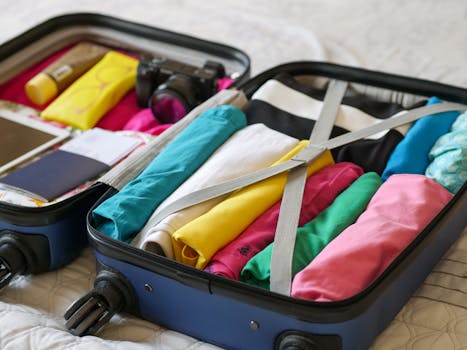
- Compression Cubes: These are magic. My favorite brand is Eagle Creek ($30-$50 for a set). They don't reduce weight, but they dramatically reduce volume, allowing you to fit more into a smaller space. Roll your clothes tightly before putting them in.
- The Personal Item Pouch: Your "personal item" (backpack, large tote bag) often doesn't have weight restrictions, only size. Use this for your heaviest items like books, electronics, and even an extra pair of shoes. I often tuck a small, foldable tote bag into my personal item. If my carry-on is borderline, I'll quickly transfer a few items to the tote and carry it separately, sometimes even wearing it under my jacket. This has saved me from countless Ryanair fines!
- Weigh your bag at home: Invest in a cheap luggage scale ($10-$15) and always weigh your bag before you leave for the airport. Know the airline's limits inside out.
My personal anecdote: Flying with EasyJet from Lisbon to Berlin, my carry-on was 1.5kg over the limit. The attendant was eyeing my bag like a hawk. I quickly unzipped my backpack, pulled out my hiking boots and a heavy sweater, put them on, and then nonchalantly re-weighed the bag. Voila! Under the limit. She just gave me a resigned nod. Pure victory.
---
4. The Digital Nomad's Duffle: Tech Taming & Connectivity Hacks
In an increasingly connected world, staying powered up and plugged in is essential. But an unorganized tech mess can be a nightmare. Locals, especially those who travel for work or leisure frequently, have this down to a science.
The Hack: A dedicated tech organizer pouch, a powerful universal adapter with multiple USB ports, and a high-capacity power bank.
Why locals love it:
- Efficiency: No more untangling cables or searching for the right charger. Everything is in one place.
- Always charged: Ensures your phone, camera, and other devices are always ready for action.
- Universal compatibility: One adapter for all your global needs, reducing clutter.
- Peace of mind: You know exactly where everything is, reducing pre-travel anxiety.
How to do it:
- Tech Pouch: Get a small, zippered pouch with elastic loops and compartments (e.g., from Bagsmart or Peak Design, $20-$40). Designate it only for tech – chargers, cables, earbuds, portable hard drives, memory cards.
- Universal Adapter: Look for one with at least 2-3 USB-A ports and ideally a USB-C port, plus interchangeable plugs for different regions (e.g., Bestek Universal Travel Adapter, $25-$35). This means you only need one wall plug and can charge multiple devices simultaneously.
- Power Bank: A 10,000mAh or 20,000mAh power bank (Anker is a reliable brand, $30-$60) is a lifesaver for long travel days, remote locations, or when you can't find an outlet. Always ensure it's charged!
- Cloud storage: Instead of carrying multiple external hard drives, utilize cloud storage (Google Photos, Dropbox) for backups of your precious travel memories.
My personal anecdote: During a multi-city trip through Vietnam, I often found myself in hostels with limited outlets. My universal adapter with four USB ports became my charging hub, allowing me to charge my phone, camera, and power bank all at once, while only occupying one precious wall socket. My travel companions were constantly begging to borrow it! It's a small item that makes a huge difference to your daily operations.
---
5. The Emergency Enthusiast's Essentials: Preparedness Without Panic
Tourists often panic at minor inconveniences – a blister, a headache, a stain. Locals, especially those who navigate unpredictable environments, know how to be prepared without packing a pharmacy.
The Hack: A minimalist "mini emergency kit" and a focus on multi-purpose, solid toiletries.
Why locals love it:
- Self-sufficiency: You can handle common minor issues without scrambling for a pharmacy or paying inflated prices.
- Space-saving: Solids and small kits take up minimal room.
- Liquid-free travel: Solid toiletries bypass liquid restrictions for carry-on.
- Versatility: Multi-purpose items reduce the need for many specialized products.
How to do it:
- Mini First-Aid: A tiny pouch with band-aids, antiseptic wipes, pain relievers, anti-diarrhea meds, and any personal prescriptions. I buy a small, pre-made kit and then customize it.
- Solid Toiletries: Shampoo bars, conditioner bars, solid toothpaste tabs, and solid lotion bars are game-changers. Brands like Lush or Ethique offer great options ($10-$20 per bar). They last longer, don't leak, and are incredibly compact.
- Multi-purpose products: Castile soap (Dr. Bronner's, $5-$10) can be used for body wash, shampoo, laundry, and even dish soap. A sarong or large scarf can be a towel, blanket, head covering, or even a makeshift bag.
- Small laundry kit: A tiny tube of laundry detergent (or a few detergent sheets) and a universal sink stopper (silicone ones are best, $5) for hand-washing essentials in your hotel sink. Quick-dry underwear and socks (merino wool or synthetic blends) are a must.
My personal anecdote: Hiking through the mountainous regions of Nepal, a sudden downpour left me soaked. My quick-dry shirt and socks were invaluable, drying overnight in a cold guesthouse. My friend, however, was stuck in damp cotton for two days. On another trip, a nasty blister developed in Venice. My tiny first-aid kit, tucked into my daypack, saved me from hobbling around for the rest of the day.
---
6. The Souvenir Smuggler's Secret: Bringing Home Memories, Not Headaches
One of the biggest packing dilemmas is how to bring back those amazing souvenirs without exceeding luggage limits or risking damage. Tourists often overbuy and then struggle. Locals, who understand the nuances of their own country's goods, have a clever strategy.
The Hack: Always travel with a collapsible, lightweight duffel bag and understand the art of strategic souvenir selection and local shipping options.
Why locals love it:
- Flexibility: The collapsible bag provides instant extra capacity for unexpected treasures.
- Smart choices: Locals know which souvenirs are genuinely unique, durable, and worth the space.
- Cost-effective shipping: Sometimes, shipping larger items from the source is cheaper and safer than paying airline excess fees.
How to do it:
- Pack a "just in case" bag: A foldable duffel bag (like the ones from Amazon Basics or Osprey, $20-$40) that packs down to nothing is your secret weapon. If your main bag gets too full with souvenirs, you can check this duffel (or use it as an extra carry-on if allowed).
- Think small and durable: Prioritize souvenirs that are small, lightweight, and less fragile. Think spices, small textiles, jewelry, local art prints (rolled up), or unique food items.
- Buy experience, not just stuff: Instead of a trinket, invest in a cooking class, a guided tour, or a local experience – these are memories that don't take up suitcase space.
- Research shipping: If you plan to buy something large (e.g., a rug from Morocco, pottery from Mexico), research local shipping services before your trip. Often, the vendors themselves can arrange reliable and surprisingly affordable international shipping. Factor this cost into your purchase.
- Wear your souvenirs: A new scarf, hat, or piece of jewelry can be worn on the plane, saving space.
My personal anecdote: In Istanbul's Grand Bazaar, I fell in love with a beautiful, hand-painted ceramic bowl. It was too big for my carry-on and too fragile for my checked bag. The vendor, seeing my dilemma, offered to ship it directly to my home in the US for a very reasonable fee (about $35). It arrived perfectly intact a few weeks later, saving me immense stress and potential breakage. I've used this hack for olive oil from Italy and textiles from Peru too!
---
7. The Shoe Whisperer's Wisdom: Less is More for Your Feet
Footwear is often the biggest culprit for overpacking. Those bulky shoes take up an insane amount of space. Locals, who walk everywhere, understand the importance of versatile, comfortable footwear.
The Hack: Limit yourself to three pairs of shoes maximum and always pack them in shoe bags.
Why locals love it:
- Space-saving: Dramatically reduces the bulk in your luggage.
- Versatility: Ensures you have appropriate footwear for all occasions without overdoing it.
- Cleanliness: Shoe bags keep dirty soles from contaminating your clothes.
- Comfort: Prioritizing comfort means you can explore more without pain.
How to do it:
- The "Rule of Three":
- Comfortable walking shoes: Worn on the plane (e.g., sneakers, comfortable ankle boots). These should be your workhorses.
- Versatile casual shoes: Can be dressed up or down (e.g., stylish sandals, loafers, minimalist flats).
- Specialty shoes (if absolutely necessary): Hiking boots (wear them!), dress shoes for a specific event, or flip-flops for the beach. If you don't need a specialty pair, skip it!
- Shoe Bags: Use dedicated shoe bags (often come with luggage sets or can be bought cheaply, $10-$15 for a set). If you don't have them, plastic grocery bags work in a pinch. Stuff socks and small items inside your shoes to save even more space.
- Prioritize comfort: You'll be doing a lot of walking. Uncomfortable shoes can ruin a trip. Test new shoes extensively before you travel.
My personal anecdote: For years, I packed multiple pairs of heels, wedges, and different colored flats. On a trip to Barcelona, I realized I only ever wore my comfortable sneakers and a pair of simple espadrilles. All those other shoes just sat there, taking up precious space. Now, I stick to my trusty Allbirds, a pair of dressier sandals, and maybe some flip-flops if it’s a beach destination. My back and my suitcase have never been happier!
---
Unlock Your Inner Local: The Freedom of Smart Packing
These aren't just packing tips; they're a mindset shift. They're about embracing efficiency, saving money for incredible experiences, and moving through the world with the confidence and ease of a seasoned local. The freedom you gain from not being bogged down by excessive luggage is truly liberating. You'll spend less time stressing about your bags and more time soaking in the magic of your destination.
So, next time you're staring at an open suitcase, remember these hacks. Think like a local, pack like a pro, and prepare to have your travel life changed forever.
What are YOUR go-to packing hacks? Share your secrets in the comments below – let's help each other travel smarter! And if these tips changed your life, tag @Tripsora and #LocalPackingHacks on Instagram. I can't wait to see your smart packing triumphs!
---