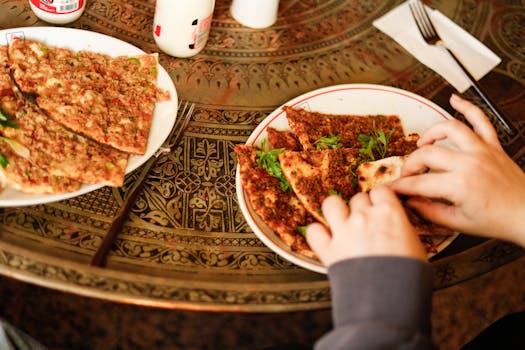
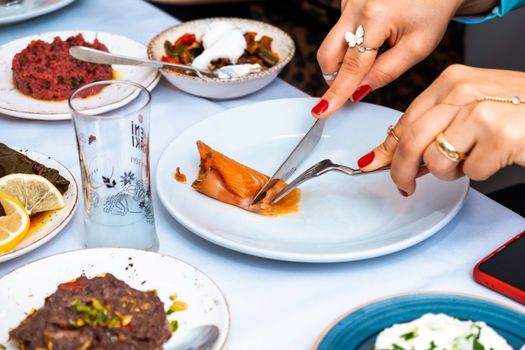
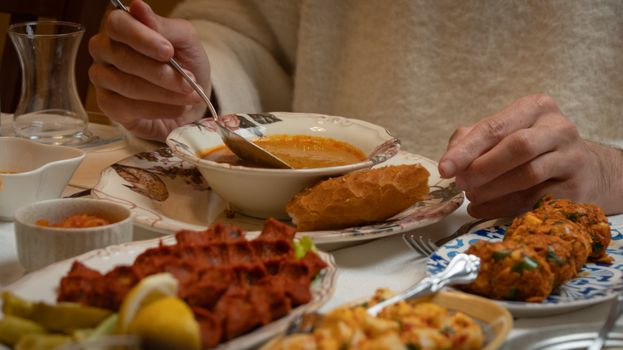
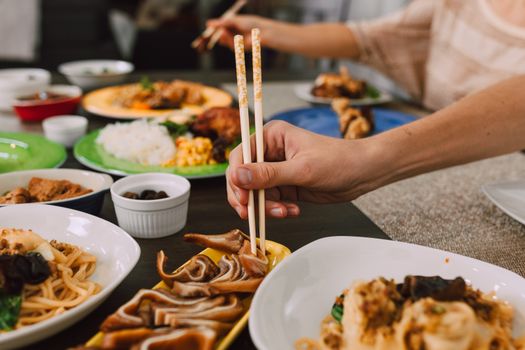
The clink of cutlery, the polite scrape of a knife against a plate – it's the soundtrack to most meals, a familiar rhythm of dining. But what if I told you that some of the most profound, most delicious, and most authentic culinary experiences I’ve ever had involved not a single utensil? Just my bare hands, a hungry heart, and an open mind.
My own journey into the world of hand-eating began years ago, in a dimly lit Ethiopian restaurant in a bustling corner of London. I remember feeling a mix of excitement and apprehension as the waitress placed a massive platter before us, adorned with vibrant stews and spongy injera bread, but conspicuously devoid of forks. My friend, a seasoned traveler, just grinned, tore a piece of injera, and scooped up a dollop of doro wat. I hesitantly followed suit, my fingers squishing into the rich, spicy chicken stew. And that, my friends, was it. The moment my fingers touched the food, something shifted. The aroma intensified, the texture became more pronounced, and the act of eating transformed from a mere necessity into a deeply sensory, almost primal connection. It was liberating, messy, and utterly glorious.
Since then, I’ve been on a quest to find these unsung heroes of the culinary world – restaurants where eating with your hands isn't a gimmick, but a cherished tradition. These aren't the places that have already been "discovered" by every food blogger and Instagram influencer (yet!). These are the hidden gems, the community staples, the places where you can truly immerse yourself in a culture through its food, one delicious, hands-on bite at a time. Get ready to ditch your inhibitions, roll up your sleeves, and prepare for a gastronomic adventure that will redefine your relationship with food.
The Philosophy of Fingers: Why Ditch the Fork?
Before we dive into the delicious specifics, let's talk about why hand-eating is such a transformative experience. It's more than just a novelty; it's a profound act that engages all your senses and connects you to generations of tradition.
- A Sensory Symphony: When you use your hands, you engage touch directly. You feel the warmth of the food, the texture of the rice, the tenderness of the meat. This tactile connection enhances your perception of flavor, making each bite more vivid and memorable.
- Cultural Immersion: In many parts of the world, eating with hands isn't just a preference; it's a deeply rooted cultural practice. It speaks of hospitality, community, and respect for the food. By participating, you're not just eating a meal; you're stepping into a cultural narrative, honoring traditions, and fostering a deeper understanding of the people and their heritage.
- Mindfulness on a Plate: Without the distraction of utensils, you're forced to slow down, to be present. Each tear, each scoop, each movement becomes deliberate. This encourages mindful eating, allowing you to savor every mouthful and truly appreciate the sustenance before you.
- Community and Connection: Many hand-eating cultures involve communal platters, fostering a sense of sharing and togetherness. There’s something incredibly bonding about gathering around a shared feast, digging in with friends and family, and sharing not just food, but laughter and stories. It breaks down barriers and builds bridges, one shared bite at a time.
Ready to embark on this sensory journey? Let's explore some of the most incredible hand-eating experiences you absolutely need to try.
1. Ethiopian & Eritrean Feasts: The Injera Embrace
If you've never experienced Ethiopian or Eritrean cuisine, prepare for a revelation. This is where my love affair with hand-eating began, and it remains one of the most consistently rewarding experiences. The star of the show is injera, a spongy, fermented flatbread made from teff flour. It serves as both your plate and your utensil.
The Experience: Imagine a large, round injera laid out on a communal platter, piled high with an array of colorful, aromatic stews (known as wats or tibs). You'll find everything from spicy chicken (doro wat) and tender beef (kitfo, tibs) to a glorious selection of vegetarian lentil and vegetable stews (shiro, misir wot, gomen). The beauty lies in the communal aspect – everyone gathers around, tearing off pieces of injera to scoop up the various dishes.
My Anecdote: My first time, I was clumsy, tearing off too-big pieces and dropping half my wat back onto the platter. But my Ethiopian friends patiently guided me, showing me the delicate art of the perfect tear and scoop. Soon, I was confidently navigating the platter, mixing the fiery doro wat with a cooling scoop of collard greens, the flavors exploding in my mouth. The texture of the injera, slightly sour and earthy, perfectly complements the rich, complex spices of the stews. It's a dance of flavors and textures that you just can't get with a fork.
Where to Find It: Ethiopian and Eritrean restaurants are often found in vibrant, multicultural neighborhoods in major cities worldwide. Look for family-run establishments – they often offer the most authentic experience. In cities like Washington D.C., New York, London, and Toronto, you'll find entire streets dedicated to this cuisine.
- Example (Hypothetical): Lalibela Ethiopian Restaurant, Adams Morgan, Washington D.C. (expect to pay $15-25 per person for a generous platter).
- Tips for Your Visit: Always wash your hands thoroughly before and after. Use your right hand only – the left hand is traditionally considered unclean. Don't be afraid to ask your server for guidance on how to eat. Most importantly, share and savor the communal spirit!
2. The Filipino Boodle Fight: A Feast of Friendship
Prepare for an explosion of flavor and a true communal spectacle with a Filipino Boodle Fight, or Kamayan (meaning "with hands"). This military-style feast originated from soldiers eating together, quickly and efficiently, directly from banana leaves. It's now a celebratory tradition that embodies the Filipino spirit of hospitality and togetherness.
The Experience: Picture this: a long table covered with fresh banana leaves. On top, mountains of garlic rice are spread out, forming a base for an incredible spread of grilled meats (pork belly liempo, chicken inasal), fried fish (tilapia), lumpia (spring rolls), fresh salads (ensalada), salted eggs, and various dipping sauces. There are no plates, no cutlery – just an abundance of delicious food, and everyone ready to dig in with their bare hands.
My Anecdote: I once participated in a Boodle Fight at a friend's birthday party in San Diego. The sheer volume of food was astounding, and the initial chaos of everyone diving in was infectious. We were laughing, talking, and sharing bites directly from the leaf. My favorite memory is trying to perfectly combine a piece of crispy liempo with a spoonful of garlic rice and a dollop of sweet chili sauce, all with my fingers. It was messy, it was loud, and it was one of the most joy-filled meals I've ever had. It’s an experience that truly strips away formality and gets straight to the heart of sharing good food with good company.
Where to Find It: While Boodle Fights are often home-based or special events, a growing number of Filipino restaurants in North America, Europe, and Australia are offering Kamayan experiences, usually by reservation for groups.
- Example (Hypothetical): Manila Social Club, NYC (check for special Kamayan nights, prices can range $40-70 per person for a lavish spread). Or look for smaller, community-focused Filipino eateries.
- Tips for Your Visit: Bring a big appetite and a group of friends! Don't be shy – get in there and enjoy the sensory overload. Be mindful of others' space on the leaf, and remember to wash your hands thoroughly beforehand.
3. South Indian Thali & Dosa: A Symphony of Flavors
South Indian cuisine offers some of the most delightful hand-eating experiences, particularly with its thalis and dosas. A thali is not a dish, but a meal comprising a selection of various dishes, usually served on a round platter or, more traditionally, a banana leaf. Dosai (or dosa) are thin, savory crepes, often served with chutney and sambhar.
The Experience: When a South Indian thali is placed before you, especially on a fresh banana leaf, it's a work of art. You'll find small mounds of rice, a variety of vegetable curries, sambhar (a lentil and vegetable stew), rasam (a tangy, spicy soup), papadum, and various chutneys and pickles. The goal is to mix and match, creating your own perfect bite. With dosas, you tear off a piece, dip it into the accompanying chutneys and sambhar, and enjoy the crispy-soft texture.
My Anecdote: I remember a tiny, bustling vegetarian restaurant in Chennai, India. The server swiftly laid down a fresh banana leaf, then, with incredible speed and precision, dolloped out spoonfuls of different curries, rice, and chutneys. I watched in awe as the locals expertly mixed a bit of rice with a spoonful of sambhar and a touch of coconut chutney, creating a harmonious blend of flavors and textures with their fingertips. It took me a few tries, but soon I was happily combining the tangy rasam with a spicy potato curry, feeling the warmth of the rice and the spices coating my fingers. It was an intimate, flavorful exploration.
Where to Find It: Authentic South Indian restaurants are plentiful in cities with large Indian diaspora communities (e.g., Silicon Valley, Edison, NJ, parts of London, Singapore). Look for places specializing in "South Indian Vegetarian" or "Udupi" cuisine.
- Example (Hypothetical): Saravanaa Bhavan, multiple international locations (a reliable chain for authentic South Indian, thalis typically $10-18). Also seek out smaller, local spots.
- Tips for Your Visit: Use your right hand, ideally just your fingertips. Don't be afraid to mix the different components on your leaf/plate. Ask for refills – many thali meals offer unlimited rice and curry. It's perfectly fine to drink the rasam directly from the small bowl or cup!
4. West African Delights: Fufu, Banku, and Stews
West African cuisine offers a unique and incredibly satisfying hand-eating experience centered around starchy doughs like fufu, banku, or kenkey. These aren't meant to be chewed extensively but rather used as a vehicle to scoop up and savor rich, flavorful soups and stews.
The Experience: A large bowl of a hearty stew (like egusi soup, peanut soup, or light soup with fish or meat) is placed before you, alongside a smooth, malleable ball of fufu (made from cassava, yam, or plantain) or banku (fermented corn and cassava dough). The technique involves tearing off a small piece of the dough, molding it into a scoop with your right hand, dipping it into the stew, and then swallowing it whole or with minimal chewing to fully appreciate the complex flavors of the soup.
My Anecdote: My first encounter with fufu was in a Ghanaian restaurant in Harlem, NYC. The server brought out a vibrant red light soup teeming with goat meat and a generous ball of pristine white fufu. I watched my friend, who grew up eating it, demonstrate the technique. The texture of the fufu was unlike anything I'd ever felt – soft, slightly elastic, and warm. Dipping it into the spicy, aromatic soup and feeling the flavors coat my tongue before swallowing was a completely new sensation. It's a deeply comforting and immensely satisfying meal that truly connects you to the earthiness and richness of West African flavors.
Where to Find It: Seek out Ghanaian, Nigerian, or other West African restaurants, often found in neighborhoods with strong diaspora communities. These are often unpretentious, family-run establishments that offer incredibly authentic flavors.
- Example (Hypothetical): Bukka, Dallas, TX (or similar local gems, fufu and stew dishes generally $15-25).
- Tips for Your Visit: Again, right hand only. Tear off small, manageable pieces of fufu or banku. The dough is meant to be a carrier for the soup, so don't try to chew it like bread. Embrace the unique texture and the rich, often spicy, flavors of the stews. It's a truly immersive experience.
5. Mexican Street Food: The Taco & Tostada Tango
While tacos and tostadas might seem mainstream, experiencing them truly authentically, fresh from a street cart or a bustling taqueria, is a hand-eating art form that often gets diluted in more formalized settings. This is about embracing the glorious mess and the vibrant, fresh ingredients with your bare hands.
The Experience: Think beyond the hard-shell, chain-restaurant taco. We're talking soft corn tortillas, piled high with perfectly seasoned al pastor, carnitas, carne asada, or suadero. Or crispy tostadas loaded with ceviche or refried beans and cheese. The beauty lies in the simplicity and the freshness. You grab it, you fold it (if it's a taco), and you devour it, letting the juices drip and the flavors meld.
My Anecdote: Wandering through a night market in Oaxaca, Mexico, the aroma of grilling meat and fresh tortillas was irresistible. I pointed to a bustling taqueria stand, and the vendor expertly piled taco al pastor onto soft tortillas, adding a sprinkle of cilantro, onion, and a squeeze of lime. There was no plate, just a small piece of paper. I took a bite, the warmth of the tortilla, the savory pork, the zing of the pineapple – it was pure magic. Juice ran down my chin, but I didn't care. It was the most perfect, unpretentious, and utterly delicious hand-held meal. It reminded me that even familiar foods can be transformative when experienced in their most authentic, hands-on form.
Where to Find It: Look for authentic taquerias, food trucks, or street food stalls in Mexican neighborhoods or border towns. The less fancy, the better!
- Example (Hypothetical): Leo's Tacos Truck, Los Angeles, CA (famous for Al Pastor, tacos typically $2-4 each).
- Tips for Your Visit: Don't be afraid of the mess. Use the second tortilla (if provided) to catch any delicious drips. Experiment with different salsas, but taste them first – some can be incredibly spicy! This is fast food done right, meant to be eaten quickly and joyfully.
Practical Tips for Your Hand-Eating Adventure
Ready to dive in? Here are some essential tips to make your hand-eating journey smooth, respectful, and incredibly enjoyable:
- Hygiene is Key (and Respectful): Always, always, always wash your hands thoroughly with soap and water before and after your meal. Carry a small bottle of hand sanitizer for good measure, especially when exploring street food. It's not just for you; it's a sign of respect for your fellow diners and the establishment.
- Know Your Right from Your Left: In many cultures, particularly in South Asia, the Middle East, and parts of Africa, the left hand is traditionally considered unclean. Always use your right hand for eating and passing food. If you're left-handed, it might feel awkward at first, but it's a small gesture of cultural respect that goes a long way.
- Small Bites, Please: Don't overload your fingers. Take small, manageable portions that you can comfortably scoop and bring to your mouth. This helps maintain cleanliness and allows you to savor each bite.
- Embrace the Mess: Part of the fun is getting a little messy! Don't stress about a stray drop of curry or a smear of sauce. It's all part of the authentic experience. Most places will provide napkins, and some might even offer a finger bowl with warm water and lemon at the end of the meal.
- Observe and Learn: If you're unsure about the etiquette, discreetly watch how locals are eating. Don't be afraid to ask your server for guidance – they'll often be delighted to share their traditions with you.
- Go with an Open Mind (and Heart): The most important tip of all. Approach these experiences with curiosity, respect, and a willingness to step outside your comfort zone. You'll not only discover incredible food but also a deeper appreciation for diverse cultures and the shared human joy of a good meal.
The Unfork-gettable Conclusion
In a world increasingly sanitized and standardized, finding restaurants where the simple act of eating with your hands is celebrated feels like unearthing a culinary treasure. These are the places that offer more than just sustenance; they offer a story, a tradition, and a direct, unfiltered connection to a culture. They are the antithesis of mainstream, the genuine article, often existing within tight-knit communities, waiting for adventurous palates like yours.
So, the next time you're planning a meal out, challenge yourself. Seek out that unassuming Ethiopian spot, that bustling Filipino eatery, or that vibrant South Indian cafe. Ditch the fork, roll up your sleeves, and prepare for an unfork-gettable journey. Not only will your taste buds thank you, but you'll gain a richer understanding of the world, one delicious, hands-on bite at a time.
What's your favorite hand-eating experience? Share your hidden gems in the comments below and inspire fellow Tripsora travelers!
---