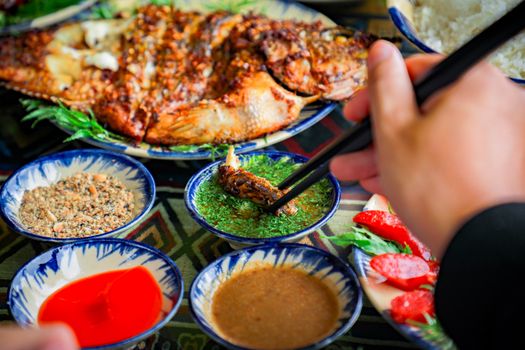
Ditch the Fork, Embrace the Flavor: Your Guide to the Hottest Hand-Eating Restaurants
Remember that time I was in Marrakech, hesitantly reaching for a piece of flatbread to scoop up a fragrant tagine, watching locals eat with such natural grace? I’d spent years dining with the polite clink of cutlery, and suddenly, my hands felt… exposed. But then, the warmth of the bread, the direct contact with the spiced lamb, the vibrant flavors bursting on my tongue – it wasn't just a meal; it was an experience. A primal connection to my food, to the culture, to the moment.
Fast forward to today, and that feeling of joyful liberation is sweeping across the global culinary scene. Eating with your hands isn't just a traditional practice in many cultures; it's a trend. Restaurants are embracing this tactile approach, offering immersive, communal, and utterly delicious dining adventures that challenge our Western norms and invite us to truly feel our food. Forget your manners for a moment (or at least, reinterpret them!), because we're diving into the most exciting, trending restaurants where fingers are the finest utensils. Get ready to get messy, get social, and get absolutely hooked!
1. Ethiopian Feasts: The Art of Injera and Communal Wot
Why it's Trending: Ethiopian dining is a masterclass in communal eating, and it's gaining immense popularity for its unique flavors, vibrant presentation, and deeply social experience. It’s a feast for the eyes and the palate, perfect for sharing on Instagram and with friends.
The Experience: Imagine a large, round platter arriving at your table, lined with spongy, sourdough-risen flatbread called injera. On top, a kaleidoscope of colorful stews – wot – awaits: spicy red lentil misir wot, savory chicken doro wot, mild collard greens gomen, and various vegetable and meat dishes. There are no individual plates, no forks, no knives. Your utensil? Pieces of injera, torn off and used to scoop up generous portions of the stews. The slight tang of the injera perfectly complements the rich, complex spices of the wots.
My Anecdote: I first tried Ethiopian food at a tiny, bustling spot called Awash Ethiopian Restaurant in Washington D.C.'s Adams Morgan neighborhood. The aroma of berbere spice hit me the moment I walked in. My friend, a seasoned injera-eater, showed me the ropes. "Right hand only," she instructed, demonstrating how to gracefully tear and scoop. I felt clumsy at first, but with each bite, the initial awkwardness melted away into pure enjoyment. The shared platter fostered conversation and laughter, and by the end, our hands were stained with turmeric and berbere, our bellies full, and our spirits lifted. It felt like we weren't just eating, but participating in a ritual.
What to Order & Expect:
- Dishes: Go for a "Beyaynetu" (vegetarian platter) or a "Meat & Veggie Combo" to try a variety. Don't miss doro wot (chicken stew with a hard-boiled egg) if you eat meat.
- Price Range: Expect to pay around $15-$25 per person for a generous combo platter.
- Locations: Major cities like D.C., New York, Los Angeles, London, and Toronto have thriving Ethiopian food scenes. Look for family-run establishments.
- Pro Tip: Always wash your hands thoroughly before and after. Use your right hand exclusively, as the left hand is considered unclean in many cultures.
2. The Gloriously Messy World of Seafood Boils
Why it's Trending: Seafood boils are the epitome of indulgent, no-holds-barred dining. They're Instagram gold, famous for their vibrant colors, mountains of seafood, and the sheer joy of tearing into your meal. The interactive and communal nature makes them incredibly popular for groups and celebrations.
The Experience: Imagine a massive bag or bucket of freshly steamed seafood – crab legs, shrimp, crawfish, mussels – all swimming in a rich, buttery, spicy sauce (Cajun, garlic butter, lemon pepper, or a mix of "all of the above"). This bounty is then unceremoniously dumped directly onto a paper-covered table. You're given a bib, gloves (optional, but recommended!), and maybe some crackers or a mallet for the crab. Then, it's pure, unadulterated, messy bliss. You crack, peel, dip, and slurp your way through a mountain of deliciousness.
My Anecdote: My first seafood boil was at The Boiling Crab in California, a place famous for its long lines and even longer list of satisfied customers. The aroma of garlic and Old Bay was intoxicating. When our "Whole Shabang" bag hit the table, it was like a treasure chest of oceanic delights. My friend and I donned our plastic bibs, and within minutes, we were elbow-deep in shrimp shells and crab legs. We laughed, we groaned with pleasure, we used our teeth to extract every last morsel. It wasn't just food; it was an event, a primal feast that left us sticky, satisfied, and already planning our next visit. The sheer joy of the mess is part of the magic.
What to Order & Expect:
- Dishes: Choose your seafood (shrimp, crab, crawfish, lobster), your sauce (Cajun, garlic butter, lemon pepper, or a combination), and your spice level. Don't forget sides like corn on the cob, potatoes, and sausage.
- Price Range: Can vary widely based on seafood choices. Expect $30-$60+ per person for a generous feast.
- Locations: Popular in coastal cities and areas with strong Cajun influences, but chains like The Boiling Crab, Crab Pot, or independent spots are popping up everywhere.
- Pro Tip: Wear clothes you don't mind getting a little messy. Ask for extra napkins and a bucket for shells. Don't be shy – get in there!
3. Filipino Boodle Fights: A Feast of Camaraderie and Abundance
Why it's Trending: Boodle fights are a vibrant, visually stunning, and deeply cultural way to eat that's gaining traction globally. They embody the Filipino spirit of communal sharing (bayanihan) and are incredibly photogenic, making them a hit on social media.
The Experience: A boodle fight, or kamayan, is a military-style dining tradition where a long table is lined with banana leaves. Steamed rice forms a base, and then an incredible spread of grilled meats (pork belly, chicken skewers), fried fish, shrimp, lumpia (spring rolls), fresh vegetables, and various sauces are piled directly onto the leaves. Everyone stands around the table, using their bare hands to scoop up rice and various dishes. It's a symbol of unity, equality, and abundance, where everyone eats together from the same spread.
My Anecdote: I was lucky enough to experience a boodle fight at Jeepney in New York City's East Village, a restaurant known for its authentic Filipino cuisine and lively atmosphere. The moment the banana leaves were laid out and the mountain of food started appearing, the energy in the room shifted. Strangers became friends as we reached for the same grilled squid or a piece of crispy lechon kawali. There was no pretense, just pure joy and the shared experience of delicious food. The flavors were bold, comforting, and utterly unique, from the tangy atchara (papaya relish) to the rich adobo. It felt like a true celebration.
What to Order & Expect:
- Dishes: The beauty is in the variety! Expect a mix of grilled pork belly, chicken, fish, shrimp, longganisa (sausage), lumpia, and fresh fruits/vegetables.
- Price Range: Often priced per person for the boodle fight experience, typically $30-$50+, depending on the restaurant and the spread.
- Locations: Major cities with large Filipino communities (e.g., Los Angeles, New York, San Francisco, Toronto, London, Sydney) will have restaurants offering boodle fights, often by reservation.
- Pro Tip: Boodle fights are best enjoyed with a large group. Don't be afraid to try everything! It's customary to wash your hands before and after.
4. Korean BBQ & Ssam: Wrap It Up, Hand-Held Style
Why it's Trending: Korean BBQ has been trending for years, but the ssam culture – the art of wrapping your grilled meat and accompaniments in lettuce – is a key part of its hands-on appeal. It's interactive, customizable, and creates perfectly balanced, savory bites.
The Experience: You sit at a table with a grill embedded in the center, sizzling with marinated meats like galbi (short ribs) or samgyeopsal (pork belly). Alongside, a vibrant array of banchan (side dishes) arrives: kimchi, pickled radishes, seasoned vegetables, and, crucially, a basket of fresh lettuce leaves. The goal is to take a piece of grilled meat, add a dollop of ssamjang (a savory, spicy dipping sauce), maybe some garlic, a sliver of kimchi, or a spoonful of rice, and wrap it all up in a lettuce leaf to create a perfect, hand-held package.
My Anecdote: One of my favorite Korean BBQ spots is Kang Ho Dong Baekjeong in Los Angeles. The atmosphere is always buzzing, the meat quality is superb, and the servers are experts at grilling. I remember trying to construct my first ssam – a little too much rice, not enough lettuce, and it fell apart! But after a few tries, I got the hang of it. The satisfaction of creating that perfect bite – the smoky meat, the fresh crunch of lettuce, the spicy kick of ssamjang, the tangy kimchi – was immense. Each ssam was a new flavor combination, a mini culinary adventure I crafted myself. It’s a truly engaging way to eat.
What to Order & Expect:
- Dishes: Order a variety of meats (pork belly, beef brisket, marinated short ribs). Don't forget to load up on banchan and fresh lettuce.
- Price Range: Expect $25-$50+ per person, depending on the cuts of meat and how much you order.
- Locations: Korean BBQ joints are ubiquitous in major cities worldwide, especially those with large Korean communities.
- Pro Tip: Don't overload your ssam – aim for a manageable, one-bite wrap. Experiment with different banchan combinations in your wraps.
5. West African Delights: Fufu, Banku, and the Art of Scooping
Why it's Trending: West African cuisine is experiencing a well-deserved moment in the global spotlight, with its rich flavors, hearty stews, and unique textures. Eating with your hands, particularly with starchy staples like fufu or banku, is central to the experience and offers a truly authentic taste of the region.
The Experience: In many West African cultures, the main starch (like fufu made from cassava, plantains, or yams; banku from corn and cassava; or kenkey) serves as your utensil. It’s typically served as a dense, doughy ball alongside a rich, often spicy, stew or soup – think groundnut soup, egusi soup, or light soup with various meats or fish. You tear off a small piece of the starch, form it into a scoop, and use it to pick up the stew, savoring the flavors and textures together.
My Anecdote: My introduction to West African hand-eating was at a small, vibrant Ghanaian restaurant called Gold Coast Ghal Kulture in London. I ordered fufu with egusi soup. The server, seeing my hesitation, kindly demonstrated the technique: tear a piece, make an indentation with your thumb, and scoop. The fufu was warm and slightly chewy, and the egusi soup was a revelation – earthy, savory, with a delightful blend of spices and tender goat meat. It wasn't just about the food; it was about the rhythm of eating, the direct connection to the textures, and the robust flavors that felt deeply comforting and nourishing. It was a complete sensory immersion.
What to Order & Expect:
- Dishes: Try fufu or banku with egusi soup, groundnut soup, or a hearty stew. Ask your server for recommendations based on your spice preference.
- Price Range: Generally affordable, often $15-$25 per person for a main dish.
- Locations: Look for West African (Ghanaian, Nigerian, Senegalese) restaurants in cities with diverse populations, like New York, London, Paris, Toronto, and parts of the US South.
- Pro Tip: Start with a small piece of fufu until you get the hang of it. Don't chew fufu – it's meant to be swallowed with the stew.
6. Indian Thali & South Indian Dosa: A Hand-to-Mouth Journey
Why it's Trending: While cutlery is often offered, many authentic Indian restaurants, especially those specializing in South Indian cuisine or traditional thali, encourage or even expect hand-eating. It’s trending as foodies seek out more genuine, immersive culinary experiences that connect them to the origins of the dishes. The intricate flavors and textures are truly enhanced when eaten by hand.
The Experience: A thali is a round platter featuring a selection of small bowls (katoris) filled with various dishes – curries, lentil stews (dal), vegetables, pickles, yogurt, and a sweet dish – served with rice and bread (roti, naan, or puri). The idea is to mix and match, using your fingers to combine different elements with a piece of bread or a spoonful of rice. For South Indian dosa (a large, crispy fermented crepe), it’s torn into pieces and dipped into accompanying chutneys and sambar (lentil and vegetable stew).
My Anecdote: I remember a particularly memorable thali experience at a vegetarian restaurant in Chennai, India. The waiter simply placed the banana leaf in front of me, then proceeded to ladle various curries, rice, and sambar directly onto it. No plates, no cutlery. Watching the locals, I learned to mix a little rice with some dal, scoop it up with my fingers, and pop it into my mouth. The warmth of the rice, the texture of the lentils, the burst of spices – it was a symphony for the senses that would have been dulled by a spoon. Later, at a simple roadside stall, I devoured a masala dosa, tearing off pieces and scooping up the coconut chutney and spicy potato filling. It felt incredibly authentic and satisfying.
What to Order & Expect:
- Dishes: For thali, just say "vegetarian thali" or "non-vegetarian thali." For South Indian, try a masala dosa, idli, or vada.
- Price Range: Very affordable, often $10-$20 for a substantial thali or dosa.
- Locations: Found in virtually every city with an Indian diaspora. Look for regional specialists (e.g., South Indian restaurants).
- Pro Tip: When eating thali or rice, try to keep your fingers clean by using only the tips. For dosa, tear a piece and use it to scoop.
7. The Ultimate DIY: Make Your Own Hand-Eating Feast at Home!
Why it's Trending: The joy of hand-eating isn't just for restaurants! With social media platforms like TikTok and Instagram showcasing elaborate, shareable feasts, people are increasingly recreating these experiences at home. It's a fantastic way to entertain, connect with loved ones, and explore new cuisines in your own space.
The Experience: Think about it – a DIY seafood boil in your backyard, a homemade boodle fight for a special occasion, or a casual build-your-own taco night where hands are the only tools required. Preparing these meals at home allows you to control the ingredients, customize the flavors, and truly make the experience your own. It's about bringing that communal, authentic vibe into your personal dining space.
My Anecdote: Last summer, inspired by my restaurant experiences, I hosted a "DIY Seafood Boil" for my friends. We bought fresh shrimp, mussels, corn, and potatoes, then cooked them in a huge pot with a homemade Cajun spice blend. I covered our outdoor picnic table with newspaper, provided plastic bibs and gloves, and we just dug in! The laughter, the shared mess, the incredible flavors – it was one of the most memorable dinner parties I've ever thrown. Everyone loved the novelty and the freedom of just getting their hands dirty. It was proof that the magic of hand-eating translates perfectly to a home setting.
What to Do & Expect:
- Ideas:
- Seafood Boil: Easy to replicate with a large pot, fresh seafood, and your favorite spices.
- Taco Bar: Set out tortillas, various fillings, salsas, and toppings. Everyone builds their own.
- Mediterranean Mezze: A spread of hummus, baba ghanoush, olives, cheeses, and plenty of pita bread for scooping.
- Charcuterie Board: The ultimate hand-eating appetizer, perfect for grazing.
- Price Range: Highly variable, depending on ingredients, but often more cost-effective than dining out.
- Locations: Your kitchen, your backyard, a park picnic – anywhere!
- Pro Tip: Embrace the mess! Have plenty of wet wipes and napkins on hand. Encourage guests to get creative with their combinations. It's all about fun and flavor.
Mastering the Art of Hand-Eating: Practical Tips for a Fork-Free Feast
Ready to dive in? Here are some essential tips to make your hand-eating adventures truly enjoyable:
- Wash Up! This is paramount. Always wash your hands thoroughly with soap and water before and after your meal. Some restaurants provide hand-washing stations or wet wipes.
- Right Hand Rule: In many cultures (especially in South Asia, the Middle East, and parts of Africa), the right hand is traditionally used for eating, and the left hand is considered unclean. When in doubt, observe what the locals do or stick to your right hand.
- Embrace the Mess: This is not fine dining. Bibs, gloves, and paper-covered tables are your friends. Don't be afraid to get a little messy – it's part of the fun!
- Small Bites: Start with smaller portions when scooping or wrapping. It's easier to manage and less likely to create a spill.
- Observe and Learn: If you're unsure, discreetly watch how others around you are eating, especially locals or your server. Don't be afraid to ask for guidance!
- Pace Yourself: Hand-eating can sometimes feel faster, so take your time, savor each bite, and enjoy the conversation.
- Hydrate: Spicy food often goes hand-in-hand with hand-eating. Keep a refreshing drink nearby.
- Dress Comfortably: Choose clothes that are easy to move in and that you wouldn't mind if a stray drop of sauce found its way onto them.
The Bottom Line: Why Go Fork-Free?
Beyond the novelty and the Instagram-worthiness, eating with your hands offers a deeper, more sensory connection to your food. You feel the texture, the warmth, the subtle resistance of each ingredient. It’s a primal, human experience that fosters connection – with your food, with your dining companions, and with the culture behind the cuisine.
So, the next time you're planning a meal out, challenge yourself. Seek out one of these incredible hand-eating establishments. Ditch the polite pretenses, roll up your sleeves, and prepare for a culinary adventure that will awaken your senses and leave you with unforgettable memories. It’s more than just a meal; it’s a journey.
Which hand-eating adventure will you embark on first? Share your experiences in the comments below, or tag us on social media with #TripsoraHandEating! Happy feasting!
---