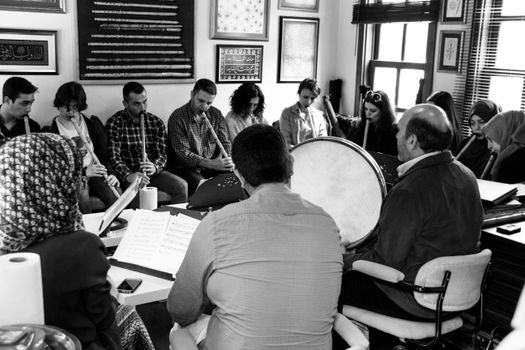
The first time I heard the resonant, almost spiritual hum of a Koto in a quiet Kyoto tea house, something shifted within me. It wasn't just music; it was a story, a feeling, a whisper from generations past. I sat there, captivated, thinking, "How incredible would it be to not just hear this, but to create it?" That fleeting thought, born in the heart of Japan, sparked an obsession that has since taken me on an incredible, ear-opening, and soul-stirring journey across continents: seeking out traditional music lessons from the masters who keep these ancient art forms alive.
We travel to see sights, taste new foods, and immerse ourselves in different cultures. But how often do we consider becoming an active participant in a culture's most intimate expression – its music? Learning a traditional instrument from a local master isn't just a lesson; it's a portal. It's an invitation into homes, studios, and even sacred spaces that most tourists never glimpse. It’s a chance to connect on a level deeper than any language barrier, to feel the rhythm of a people pulsing through your own fingers and heart. And trust me, these experiences will blow your mind, reshape your perspective, and leave you with a skill and a story far more precious than any souvenir.
Ready to trade your passive listening for active playing? Let’s embark on a global musical pilgrimage.
1. The Meditative Strings of Kyoto: Unveiling the Koto’s Secrets
My Koto dream, born in that tea house, eventually led me back to Kyoto. I envisioned a serene, almost monastic experience, and that’s exactly what I found. Through a local cultural center near Nishiki Market (a fantastic resource for all kinds of traditional arts, usually around ¥5,000-¥10,000 for a 60-90 minute private lesson), I was introduced to Sensei Tanaka, a woman whose gentle demeanor belied decades of mastery over the Koto.
Stepping into her tatami-matted studio, the air itself felt different – hushed, reverent. She offered me a cup of green tea, and we spoke (with the help of a translation app and my limited Japanese) about my desire to understand the Koto’s soul. She didn't just teach me notes; she taught me posture, the way the instrument should rest against my body, the precise angle of my fingers adorned with ivory plectrums. My first attempts were clumsy, a cacophony of buzzing strings. But Sensei Tanaka was endlessly patient, her own hands moving with an effortless grace that seemed to coax pure poetry from the instrument.
She explained the Koto isn't just played; it's felt. Each pluck, each slide, each delicate vibrato carries a specific emotion, a story from ancient Japan. We practiced a simple folk tune, "Sakura Sakura," and as I slowly, painstakingly, brought the melody to life, I felt a deep connection not just to the music, but to the very essence of Japanese aesthetics: beauty in simplicity, patience, and profound respect for tradition. It was a lesson in mindfulness as much as music.
Tripsora Tip: Look for cultural centers or music schools in Kyoto (and other major Japanese cities like Tokyo or Nara) that offer short-term experiences. Sometimes ryokans or higher-end hotels can also arrange private lessons. Be prepared for a very respectful, formal environment. Bowing and polite language ("Arigato gozaimasu") are key.
2. Flamenco Fire in Seville: Finding Your Rhythm and Passion
From tranquil Kyoto, my journey swung to the fiery heart of Andalusia: Seville, Spain. Here, the air vibrates with the passionate intensity of Flamenco. I’d seen countless performances, but I craved to feel that duende – that elusive, deep emotional spirit – in my own bones.
My target: the Triana district, the historic birthplace of Flamenco. I found a small, authentic studio, "Puro Flamenco," offering workshops for absolute beginners (around €30-€50 per hour for group classes, private lessons can be €60-€100). My teacher, Maria, was a force of nature – a dancer and singer whose every movement was pure storytelling. I opted for a cajón (percussion box) lesson, thinking it would be less intimidating than guitar or dance. Oh, how wrong I was!
Maria, with her rapid-fire Spanish and expressive gestures, taught us the basic compás (rhythm) of a Bulería. My hands, accustomed to typing, felt ridiculously awkward trying to slap and tap the cajón with the required precision and power. Maria would clap, stamp her foot, sing a line, and then look at me with an encouraging but firm gaze. "¡Siente el ritmo, corazón!" ("Feel the rhythm, heart!") she'd exclaim.
There was a moment, after what felt like an eternity of stumbling, where something clicked. My hands found the beat, my body swayed, and for a glorious few seconds, I wasn't just hitting a box; I was part of the Flamenco. The energy in the room was electric, shared by a small group of fellow travelers, all sweating and laughing and trying to channel their inner Andalusian. It was exhilarating, exhausting, and utterly unforgettable. I left with aching hands, a new appreciation for Flamenco artists, and a tiny spark of that duende ignited within me.
Tripsora Tip: Look for "peñas" (Flamenco clubs) or dedicated academies like Fundación Cristina Heeren in Seville. Many offer introductory workshops. Don't be afraid to try dance or palmas (hand claps) if an instrument feels too daunting. Embrace the intensity and let go!
3. Gnawa Grooves in Essaouira: A Trance-Inducing Journey
My next stop was the windswept coastal town of Essaouira, Morocco, a place renowned for its vibrant Gnawa music scene. Gnawa music, with its deep, spiritual roots and hypnotic rhythms, is unlike anything I'd ever experienced. It’s traditionally played during Lilas, all-night ceremonies meant to heal and evoke spiritual states.
I wandered the medina, following the intoxicating sound of the guembri (a three-stringed bass lute) and qraqeb (large metal castanets). I eventually found myself drawn to a small, unassuming shop filled with instruments, where a kind-faced man named Hassan sat crafting a guembri. He was a Maâlem (master) of Gnawa music, and after a shared mint tea and some broken French, I tentatively asked about lessons.
Hassan, with a warm smile, agreed to teach me. His lessons weren't formal; they were an organic immersion. He’d play a haunting melody on the guembri, his fingers dancing, and then hand it to me, encouraging me to mimic his movements. The guembri, with its deep, earthy tone, felt ancient and alive in my hands. The challenge was not just the notes, but the rhythmic complexity, often involving polyrhythms that felt alien to my Western ear.
He taught me the basic patterns for the qraqeb, which, when played in unison with others, create a powerful, clattering propulsion. More than just technique, Hassan shared stories of Gnawa history, its origins in West African spiritual traditions, and its role in Moroccan culture. One evening, he invited me to a small, informal gathering of musicians in his home. To sit amongst them, playing my rudimentary qraqeb along with the seasoned Maâlems, feeling the collective energy build and swell, was a truly humbling and profound experience. It wasn't a performance; it was a living, breathing tradition I was briefly allowed to be a part of.
Tripsora Tip: In places like Essaouira or Marrakech, finding Gnawa masters often involves asking around in the medina, visiting instrument shops, or attending local festivals. Be respectful, patient, and open to the informal nature of the lessons. Often, the best experiences are found through word-of-mouth. Expect to pay around 150-300 Moroccan Dirhams per hour for a private lesson.
4. The Soulful Sitar in Varanasi: A Journey into Ragas
From the rhythmic trance of Morocco, I journeyed to the spiritual heart of India, Varanasi. Here, along the sacred Ganges, the air is thick with incense, chants, and the intricate melodies of classical Indian music. The Sitar, with its ethereal sound and complex ragas, had always fascinated me.
Varanasi is home to many renowned musicians and schools dedicated to preserving this ancient art form. I sought out a guru near Assi Ghat, recommended by a fellow traveler. Guru Sharma, a man with wise eyes and a tranquil presence, taught from a small, unadorned room overlooking the bustling ghats. His approach was the traditional guru-shishya parampara – the teacher-disciple tradition, emphasizing a holistic relationship beyond just musical instruction.
Learning the Sitar is not for the faint of heart. It demands immense patience, dedication, and a deep understanding of its complex structure. My first lesson was less about playing and more about listening. Guru Sharma would play a raga, explaining its mood, its emotional landscape, and its specific ascending and descending patterns. He taught me how to hold the Sitar, its gourd resting on my foot, the mezrab (wire plectrum) worn on my finger.
The initial sounds I produced were jarring, a far cry from the mellifluous tones of my guru. But each day, I would return, practicing the basic strokes, the meend (bends), and the gamak (ornamentations). Guru Sharma emphasized the spiritual aspect of the music, how each note resonates with cosmic energy. He spoke of how a raga is not just a scale but a living entity, evolving with the time of day and the season. While I only scratched the surface of Sitar mastery, the discipline, the meditative focus, and the profound cultural insights gained were transformative. It was a pilgrimage of the mind as much as the fingers.
Tripsora Tip: In Varanasi, Delhi, or Kolkata, look for established music schools or ask locals for recommendations for reputable gurus. Be prepared for a traditional learning environment that values respect and dedication. Lessons can range from 500-1500 INR per hour, depending on the guru's renown. Renting a Sitar for practice is usually possible through the school or guru.
5. Celtic Harmonies in Doolin: The Craic of the Fiddle and Whistle
After the introspection of the Sitar, I craved something more communal, more rollicking. My next musical quest led me to the emerald isle of Ireland, specifically Doolin, a tiny village on the Wild Atlantic Way famous for its traditional music sessions.
I walked into Gus O'Connor's Pub, the scent of peat smoke and Guinness thick in the air. In a corner, a group of musicians – a fiddler, a flutist, a bodhrán player – were already deep into a lively jig. This was my kind of classroom. I'd always loved the lilting, storytelling quality of Irish traditional music, and decided to try my hand at the tin whistle.
I found a local musician, a cheerful man named Liam, who offered informal lessons during the quieter afternoon hours (around €20-€40 for an hour). He taught me the basic fingering for a simple reel, "The Mason's Apron." It was challenging to coordinate my breath and fingers, but Liam was full of encouragement, his eyes twinkling. He explained that Irish music is less about perfection and more about the craic – the fun, the banter, the shared experience.
That evening, I bravely joined the session with my newly acquired whistle and a very basic understanding of a few tunes. I mostly listened, tapping my foot, but occasionally, I'd tentatively join in on a simple melody. The other musicians, far from being dismissive, offered smiles and nods of encouragement. There's an incredible generosity in Irish sessions; it's about participation and keeping the tradition alive, not about flawless performance. It was a joyful, unpretentious, and deeply authentic immersion into the heart of Irish culture. I left Doolin not just with a few whistle tunes in my head, but with a renewed sense of connection and the warmth of shared laughter.
Tripsora Tip: In Ireland, especially in places like Doolin, Galway, or Ennis, look for pubs that host traditional music sessions. Many musicians offer informal lessons. You can often find information at local tourist offices or ask bartenders. Don't be shy – most Irish musicians are incredibly welcoming. Tin whistles are relatively inexpensive to buy (around €10-€30) and easy to travel with.
6. Balinese Gamelan Gong Kebyar in Ubud: The Art of Collective Sound
My final musical adventure (for now!) transported me to the lush, spiritual landscapes of Ubud, Bali. Here, music is not just entertainment; it's an integral part of religious ceremonies, dances, and daily life. The complex, shimmering sound of the Gamelan orchestra is its heartbeat.
I signed up for a group Gamelan Gong Kebyar workshop at the Agung Rai Museum of Art (ARMA) in Ubud (around 200,000-300,000 IDR for a 2-hour session). Walking into the open-air pavilion, surrounded by the gleaming bronze and carved wood of the instruments – gongs, metallophones, drums – felt like stepping into an ancient temple of sound.
Our instructor, Wayan, a man with a serene smile and a deep love for his cultural heritage, explained that Gamelan is a communal art form. No one instrument plays the full melody; each plays a specific, interlocking part, creating a rich tapestry of sound. I was assigned to a gangsa, a bronze metallophone. Wayan taught us a simple interlocking pattern, showing us how to strike the keys with a wooden mallet and then dampen the sound with our other hand.
It was a fascinating challenge. My initial attempts were hesitant, out of sync. But as more people joined in, each playing their specific rhythmic and melodic phrase, something magical happened. The individual notes dissolved into a single, vibrant, pulsing organism of sound. The vibrations resonated through my body, a powerful, almost trance-like experience. It wasn't about individual brilliance; it was about collective harmony, about listening intently to others, and contributing your small, perfect piece to a magnificent whole. It was a profound lesson in cooperation and the beauty of shared creation.
Tripsora Tip: Ubud is a fantastic place for Gamelan workshops. Look for cultural centers like ARMA or the Bali Culture Centre. Many smaller local groups also offer lessons. Gamelan is typically a group experience, so embrace the collaborative spirit.
Practical Tips for Your Musical Odyssey:
- Do Your Research: Before you go, listen to the traditional music of your destination. Understand its context and significance. This shows respect and prepares your ear.
- Find Your Master:
- Cultural Centers/Schools: Often the most reliable way to find reputable teachers, especially for formal lessons.
- Word-of-Mouth: Ask locals, fellow travelers, or musicians. This often leads to authentic, less commercial experiences.
- Online Forums/Social Media: Search expat groups or music-specific forums for recommendations.
- Embrace the Informal: Especially in places like Ireland or Morocco, lessons might happen in a pub, a local's home, or a shop. Be open to these organic experiences.
- Mind the Language Barrier: Don't let it deter you! Music is a universal language. Be patient, use translation apps, and rely on gestures. Often, a shared smile and mutual enthusiasm are all you need.
- Respect the Tradition: These art forms are often centuries old and deeply intertwined with culture and spirituality. Show humility, punctuality, and respect for your teacher and the instrument.
- Budget Wisely: Prices vary wildly depending on the location, the teacher's renown, and whether it's a private or group lesson. Always confirm costs upfront. Don't be afraid to politely negotiate in some regions, but always value the master's time and expertise.
- Instrument Logistics: Ask if instruments can be rented or borrowed for lessons and practice. For smaller instruments like a tin whistle or ukulele, consider buying one – it makes a fantastic souvenir!
- Be Patient with Yourself: You won't become a master overnight. The goal is immersion, connection, and the joy of learning, not perfection. Embrace the beginner's mind!
- Document & Share: Take photos (with permission!) and videos. Journal your experiences. These memories are priceless, and sharing them inspires others to embark on their own musical journeys.
- Practice, Practice, Practice: Even a few minutes a day during your trip will deepen your understanding and accelerate your progress.
The Encore: Your Turn to Play
My journey through traditional music lessons has been one of the most enriching aspects of my travels. It’s transformed me from a passive observer into an active participant, from a tourist into a temporary apprentice. Each lesson has been a profound cultural exchange, a window into a soul, and a reminder of the incredible diversity and beauty of human expression.
So, the next time you plan a trip, don't just pack your bags – pack an open mind and a willingness to try something truly extraordinary. Seek out a local master, pick up an unfamiliar instrument, and let the ancient melodies guide you. You might just discover a part of yourself you never knew existed.
What traditional instrument would you love to learn on your next adventure? Share your musical dreams in the comments below! Let's inspire each other to make the world our classroom.
---