The first time I heard the haunting, ethereal sound of a shakuhachi flute, it wasn't from a recording or a concert hall. It was in a small, incense-filled temple garden in Kyoto, played by an elderly monk whose fingers moved with a grace that spoke of decades, perhaps lifetimes, dedicated to his craft. The notes didn't just fill the air; they seemed to weave themselves into the very fabric of the ancient stones and rustling bamboo, carrying with them a profound sense of peace and history. I wasn't just listening; I was feeling something ancient awaken within me.
That moment ignited a fire – a realization that true music isn't just sound; it's a living language, a cultural heartbeat, a spiritual practice. And to truly understand it, you don't just listen; you learn. You put an instrument in your hands, feel the wood, the strings, the skin, and let a master guide you, not just through scales, but through stories, philosophy, and the very soul of a people.
We live in a world obsessed with ticking off bucket list destinations, but what if your next adventure wasn't just about seeing a place, but experiencing it at its deepest, most resonant level? What if you could spend a week, a month, or even just a few days, under the tutelage of a true master, immersing yourself in a musical tradition passed down through generations?
This isn't just a travel guide; it's a call to a musical pilgrimage. These are the traditional music lessons from masters you absolutely need to experience before you die. Get ready to pack your bags, open your mind, and prepare for a journey that will not only teach you an instrument but transform your understanding of the world – and yourself.
The Soul of the Emerald Isle: Irish Fiddle & Bodhrán in Doolin, Ireland
My love affair with traditional music truly began in the cozy, peat-smoked pubs of Doolin, a tiny village clinging to the wild west coast of Ireland. Here, music isn't a performance; it's a conversation, a shared heartbeat, a reason to gather. And the fiddle and bodhrán (a traditional Irish frame drum) are at the very core of this vibrant community spirit.
I remember my first evening in Gus O'Connor's Pub, squeezed onto a bench as a session spontaneously erupted. The fiddles sang, the bodhrán pulsed, and the energy was electric. I knew then and there I had to learn.
My Doolin Journey: I found Seamus, a gentle giant with a twinkle in his eye and fingers that danced across his fiddle with effortless grace. Seamus didn't just teach me notes; he taught me the feel of the jigs and reels, the nuances of ornamentation, and the importance of listening to the other musicians. He spoke of the music as "the breath of our ancestors," and each lesson felt like a direct link to Ireland's rich history. For the bodhrán, I sought out Maeve, whose rhythmic precision and energetic playing were mesmerizing. She taught me not just how to hold the "tipper" but how to feel the pulse of the tune, to become the heartbeat of the session.
Why Doolin? It's the undisputed capital of traditional Irish music. Every night, pubs like O'Connor's, McDermott's, and Fitz's host lively sessions where local and visiting musicians gather. It’s an immersive, authentic experience where learning flows naturally from the community itself.
Finding Your Master:
- Doolin Music House: Offers excellent workshops and connections to local teachers.
- Local Pubs: The best way to find a teacher is often through word-of-mouth. Spend a few nights in the pubs, chat with the musicians, and ask for recommendations. They are incredibly welcoming.
- Online Resources: Websites like Irish Traditional Music Archive (ITMA) or local Doolin tourism sites often list teachers.
Practicalities & Costs:
- Lessons: Expect to pay €30-€50 per hour for private lessons. Many teachers offer packages for longer stays.
- Instruments: You can often rent a fiddle or bodhrán locally for a small fee, or bring your own.
- Accommodation: Doolin has B&Bs, guesthouses, and a few hotels. Budget €60-€150 per night.
- Duration: A minimum of 3-5 days will give you a taste, but a week or two allows for deeper immersion.
Instagram Moment: A close-up of your hands on a fiddle, or a bodhrán, amidst the warm glow of a traditional Irish pub, perhaps with a pint of Guinness in the background. #DoolinMusic #IrishTrad #FiddleLessons #BodhranBeats
Zen & Strings: Mastering the Koto/Shakuhachi in Kyoto, Japan
From the spirited energy of Ireland, we journey to the serene, contemplative world of Kyoto, Japan. Here, ancient traditions are not relics but living, breathing arts, and few embody this more profoundly than the music of the koto (a thirteen-stringed zither) and the shakuhachi (a bamboo end-blown flute). These instruments are not just played; they are meditated upon, their sounds reflecting the philosophy of Zen.
My encounter with the shakuhachi in that temple garden was just the beginning. I was drawn to the instrument's ability to evoke profound emotion with minimal notes, and the koto's delicate, shimmering soundscapes.
My Kyoto Journey: I enrolled in a short immersion at a small, traditional music school in Gion, known for its dedication to preserving classical Japanese arts. My Koto sensei, Mrs. Tanaka, was a woman of incredible grace and patience. Each lesson began with a deep bow and focused not just on technique but on ma – the space between the notes, the silence that gives the music its power. Learning to pluck the silk strings with ivory plectrums, feeling the subtle vibrations, was a lesson in mindfulness itself. For the shakuhachi, I learned from a master named Hoshino-san, a direct descendant of a lineage of Komusō monks. He taught me breathing techniques that were as much about meditation as they were about sound production, emphasizing the concept of ichion jobutsu – "becoming Buddha in a single sound." It was less a lesson and more a spiritual transmission.
Why Kyoto? As Japan's ancient capital, Kyoto is the spiritual and cultural heartland, a place where traditional arts are revered and meticulously preserved. It’s the ideal setting for an instrument that demands deep focus and respect for tradition.
Finding Your Master:
- Cultural Centers & Conservatories: Institutions like the Kyoto City University of Arts or private cultural centers often have programs or can recommend teachers.
- Traditional Arts Schools: Many small schools specialize in specific instruments. Look for those with a long lineage.
- Temple Connections: Some temples, especially Zen temples, might have connections to shakuhachi masters.
- Ryokan (Traditional Inns): Some high-end ryokan offer cultural experiences, including introductory music lessons.
Practicalities & Costs:
- Lessons: Expect ¥5,000-¥10,000 (approx. $35-$70 USD) per hour for private lessons. Intensive workshops might cost ¥50,000-¥150,000 ($350-$1000 USD) for a few days to a week.
- Instruments: Renting a koto can be challenging due to its size, but shakuhachi rentals are more common. Many schools provide instruments for lessons.
- Accommodation: Kyoto offers a range from budget hostels to luxury ryokan. Budget ¥5,000-¥20,000 ($35-$140 USD) per night.
- Duration: Even a few days can be deeply enriching, but a week offers a more profound immersion.
Instagram Moment: Your hands gently plucking the strings of a koto in a tatami room, or holding a bamboo shakuhachi against a backdrop of a serene Japanese garden. #KyotoMusic #Shakuhachi #Koto #ZenMusic #TraditionalJapan
Ragas & Rhythm: Sitar & Tabla in the Sacred City of Varanasi, India
From the quiet contemplation of Japan, we plunge into the vibrant, spiritual intensity of Varanasi, India. This ancient city on the banks of the Ganges is a sensory overload in the most beautiful way, and its musical traditions, particularly the classical Hindustani music of the sitar and tabla, are as ancient and profound as the city itself. Here, music is devotion, a path to the divine.
The first time I heard a live sitar and tabla performance in Varanasi, it was late at night by the ghats. The intricate melodies of the sitar, weaving complex ragas, intertwined with the explosive, nuanced rhythms of the tabla, creating a tapestry of sound that felt both earthly and transcendent. It was an experience that vibrated through my entire being.
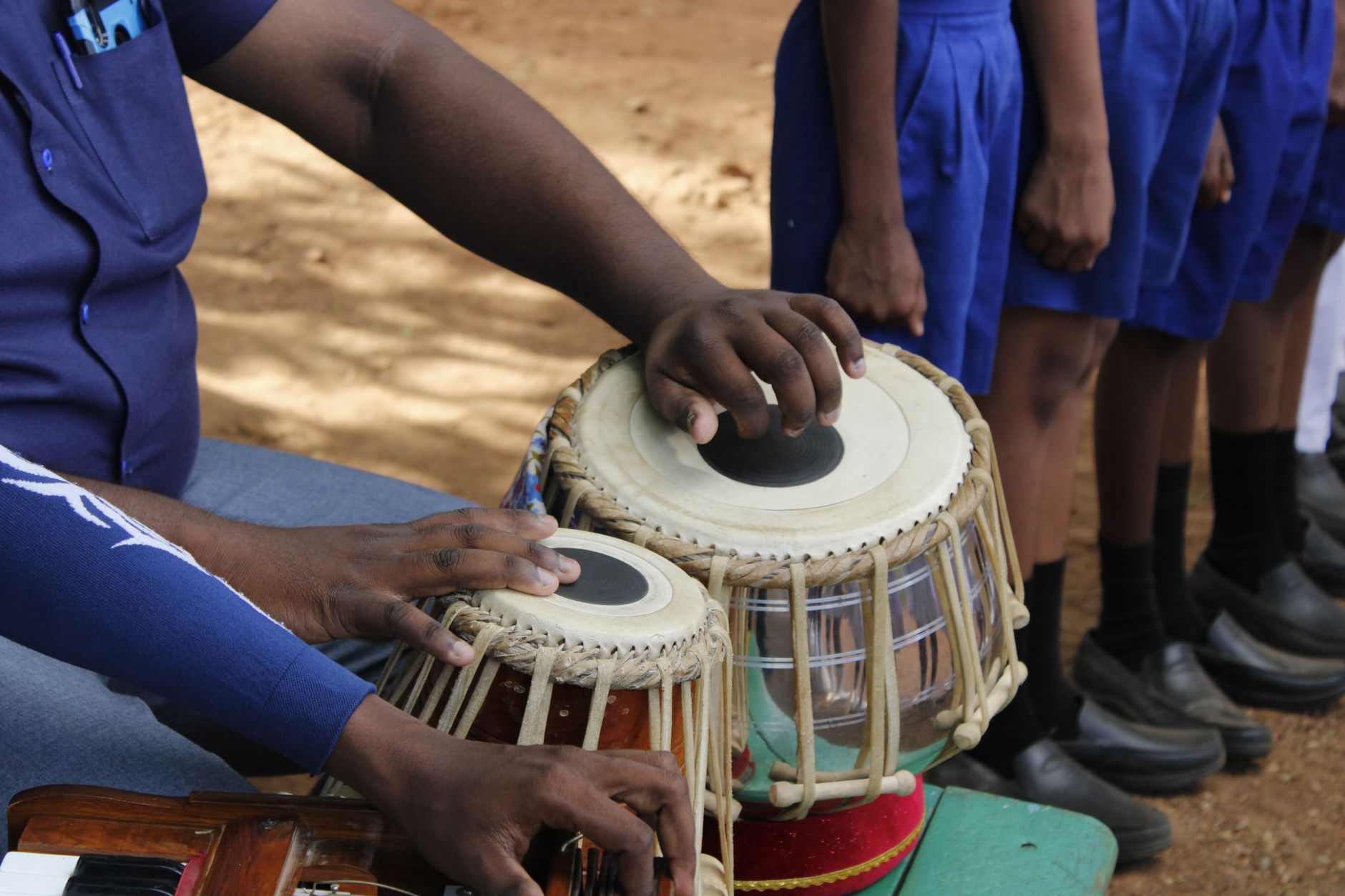
My Varanasi Journey: I sought out a guru at the prestigious Benares Hindu University's Faculty of Performing Arts, though many private teachers also abound. My sitar guru, Pandit Sharma, was a stern but incredibly patient man, a living encyclopedia of ragas and talas (rhythmic cycles). He taught me the correct posture, the delicate touch required for the strings, and the bhava – the emotion – that each raga carries. Lessons were often long, sometimes extending for hours, punctuated by chai breaks and philosophical discussions. For tabla, I found a young but incredibly skilled teacher, Ravi, who taught me the intricate finger techniques and the complex mathematical patterns that make tabla drumming so captivating. Learning to articulate the different strokes – dha, tin, na, ta – and combine them into dazzling rhythmic compositions was a challenging but deeply rewarding experience.
Why Varanasi? Varanasi is one of the oldest continuously inhabited cities in the world and a major center for Hindustani classical music. It has a rich lineage of musicians and gharanas (schools of musical thought), steeped in spirituality and tradition.
Finding Your Master:
- Benares Hindu University (BHU): Its Faculty of Performing Arts is world-renowned and a great place to inquire about teachers.
- Music Schools: Many smaller, reputable music schools are scattered around the city, especially near the Assi Ghat area.
- Word-of-Mouth: Ask locals, especially around music shops or cultural centers. Many masters teach from their homes.
Practicalities & Costs:
- Lessons: Expect ₹500-₹1500 (approx. $6-$18 USD) per hour for private lessons with a reputable teacher. Longer courses can be negotiated.
- Instruments: You can rent a sitar or tabla, or even purchase a student-grade instrument for a few thousand rupees.
- Accommodation: Varanasi offers guesthouses and hotels for all budgets. Budget ₹1,000-₹5,000 ($12-$60 USD) per night.
- Duration: A minimum of one week is recommended to grasp the basics, but a month or more allows for significant progress and cultural immersion.
Instagram Moment: You, engrossed in a sitar lesson, with a glimpse of the Ganges or a vibrant Varanasi street scene through the window. Or your hands poised over a tabla, ready to strike, surrounded by the warm hues of an Indian home. #VaranasiMusic #SitarLessons #TablaRhythm #HindustaniClassical #IncredibleIndia
Duende & Duet: Flamenco Guitar & Cajón in Seville, Spain
From the spiritual depths of India, we move to the fiery passion of Seville, Spain, the undisputed heartland of Flamenco. This art form – a visceral blend of singing (cante), guitar playing (toque), and dance (baile) – is more than just music; it's an expression of duende, a mysterious, intense emotional power that can only be truly understood by experiencing it live. The Flamenco guitar, with its intricate melodies and percussive rhythms, and the cajón, the driving beat of many performances, are the pulse of this captivating tradition.
My first Flamenco show in a dimly lit tablao in Triana left me breathless. The raw emotion, the intricate footwork, the powerful voices, and the virtuosity of the guitarists—it was an explosion of human spirit. I knew I had to feel that rhythm in my own hands.
My Seville Journey: I enrolled in a week-long intensive at a well-regarded Flamenco academy in the Santa Cruz neighborhood. My guitar teacher, Maestro Ricardo, was a charismatic man whose fingers seemed to dance across the fretboard with a life of their own. He taught me the rasgueados (strumming techniques), the picados (fast scale runs), and most importantly, the compás – the complex rhythmic structure that is the backbone of Flamenco. Each lesson was a masterclass in passion and precision. For the cajón, I learned from a percussionist who also played for a dance company. He showed me how to coax an incredible range of sounds from the wooden box, from deep bass to sharp snare, and how to lock into the cante and baile. Learning to clap palmas (handclapping) with the correct rhythm was also a crucial part of understanding the Flamenco ensemble.
Why Seville? Seville is steeped in Flamenco history. The Triana neighborhood is considered a birthplace, and the city is home to countless tablaos, academies, and legendary musicians. The air itself feels charged with the spirit of Flamenco.
Finding Your Master:
- Fundación Cristina Heeren de Arte Flamenco: A prestigious institution offering comprehensive courses.
- Academia de Flamenco y Baile: Many smaller, excellent academies offer guitar and cajón lessons.
- Local Tablaos: Attend shows, talk to the musicians, and ask for recommendations.
- Private Teachers: Many professional musicians offer private lessons. Look for flyers in cultural centers.
Practicalities & Costs:
- Lessons: Expect €40-€70 per hour for private lessons. Intensive workshops can range from €200-€500 for a week.
- Instruments: You can rent a Flamenco guitar or cajón from music shops, or the academies often provide them for lessons.
- Accommodation: Seville has abundant options, from hostels to boutique hotels. Budget €50-€150 per night.
- Duration: A few days can introduce you to the basics, but a week or more is ideal for feeling the compás truly sink in.
Instagram Moment: A close-up of your fingers on a Flamenco guitar fretboard, or your hands striking a cajón, with the vibrant colors of a Seville street or a Flamenco tablao in the background. #FlamencoGuitar #CajonLessons #SevilleFlamenco #Duende #SpanishCulture
Griot's Wisdom: The Kora & Djembe in The Gambia, West Africa
Our next stop takes us to the sun-baked landscapes of The Gambia, West Africa, where music is intertwined with storytelling, history, and community. Here, the kora – a 21-stringed harp-lute – is played by the Griots, hereditary musicians and storytellers who are the living libraries of their people. The djembe, a goblet-shaped drum, provides the electrifying polyrhythms that accompany life's celebrations and rituals.
I first heard the kora's shimmering, water-like sound on a documentary and was instantly captivated. The thought of learning from a Griot, someone who carries centuries of oral tradition, felt like a journey back in time.
My Gambian Journey: I chose to stay in a small village outside the capital, Banjul, with a host family connected to a Griot lineage. My kora master, Jali Musa, was a man of quiet dignity and incredible musical prowess. He didn't just teach me how to pluck the strings; he taught me the stories behind the melodies, the history of his family, and the importance of music in maintaining cultural identity. Lessons often took place under a giant baobab tree, the kora resting on my lap, its calabash resonator vibrating against my body. For the djembe, I joined a communal drumming circle led by a local elder. It was less formal instruction and more immersion, learning by watching, imitating, and feeling the collective rhythm. The sheer joy and energy of communal drumming, often accompanied by dance, was an unforgettable experience.
Why The Gambia? It's a small, accessible country in West Africa, known for its friendly people and strong Griot traditions. It offers an incredibly authentic and immersive cultural experience, away from larger tourist hubs.
Finding Your Master:
- Cultural Centers: Look for community-based cultural centers in and around Banjul or Serekunda.
- Village Stays: Many NGOs and local tour operators can arrange homestays in villages where Griots reside. This is often the most authentic way.
- Word-of-Mouth: Ask around. Gambians are incredibly helpful and proud of their musical heritage.
- Kora Workshops: Some international organizations occasionally run workshops in The Gambia.
Practicalities & Costs:
- Lessons: Negotiate directly with your teacher. Expect $10-$30 USD per hour, or a package deal for a week's intensive, often including meals and accommodation in a homestay (e.g., $300-$700 for a week).
- Instruments: You can often borrow a kora or djembe from your teacher, or purchase one locally.
- Accommodation: Homestays offer the most authentic experience. Budget $20-$50 USD per night for basic guesthouses.
- Duration: A minimum of one week is essential to begin to scratch the surface of these complex traditions.
Instagram Moment: You, learning the kora under a huge baobab tree, or joining a vibrant djembe drumming circle in a Gambian village, surrounded by smiling faces and colorful fabrics. #KoraLessons #DjembeDrumming #GriotTradition #WestAfrica #GambiaCulture
Hypnotic Harmonies: Gamelan in Ubud, Bali, Indonesia
Our final musical destination transports us to the spiritual and artistic heart of Bali, Indonesia, specifically Ubud. Here, the intricate, shimmering sounds of Gamelan music are not just entertainment; they are an integral part of religious ceremonies, dance performances, and community life. A Gamelan orchestra, made up of gongs, metallophones, drums, and flutes, creates a hypnotic, interlocking tapestry of sound that is both complex and deeply meditative.
I'd always been fascinated by the rich, resonant sounds of Gamelan, often hearing it accompanying traditional Balinese dance. The idea of being part of that collective sound, rather than just listening, was incredibly appealing.
My Ubud Journey: I joined a community Gamelan workshop at a local banjar (community center) in Ubud. My teacher, Pak Made, was a patient and joyful man who led our diverse group of learners through the basics of the gangsa (a bronze metallophone). Gamelan is unique because it's a collective effort; you learn your part, often a single melodic line or a rhythmic interjection, and then weave it into the larger ensemble. It’s less about individual virtuosity and more about harmonious collaboration. The sound, when everyone played together, was utterly transporting – a shimmering, percussive wave that felt ancient and alive. We learned the intricate patterns, the subtle changes in tempo, and the spiritual significance behind each piece. It was a profound lesson in listening, cooperation, and the beauty of shared creation.
Why Ubud? Ubud is Bali's cultural and artistic hub, with numerous temples, dance schools, and community centers where Gamelan is actively practiced and taught. The natural beauty and spiritual atmosphere enhance the learning experience.
Finding Your Master:
- Community Banjars: Many local banjars offer Gamelan lessons or workshops for tourists and locals alike. Inquire at local tourism offices.
- Ubud-based Music Schools: A few dedicated schools and cultural foundations specialize in Balinese music and dance.
- Resorts & Retreats: Many high-end resorts in Ubud offer cultural immersion programs that include Gamelan lessons.
- Word-of-Mouth: Ask locals, especially around temples or dance performance venues.
Practicalities & Costs:
- Lessons: Group workshops can range from IDR 150,000-IDR 300,000 (approx. $10-$20 USD) per session. Private lessons might be IDR 300,000-IDR 600,000 ($20-$40 USD) per hour.
- Instruments: Instruments are typically provided by the banjar or school.
- Accommodation: Ubud has a vast array of options, from budget guesthouses to luxury villas. Budget IDR 200,000-IDR 1,000,000 ($13-$65 USD) per night.
- Duration: Even a single workshop can be a fascinating introduction, but a few days to a week will allow you to participate more meaningfully in the ensemble.
Instagram Moment: You, sitting among the bronze instruments of a Gamelan orchestra, mallet in hand, surrounded by the lush greenery of Ubud or a traditional Balinese temple setting. #GamelanMusic #UbudCulture #BalineseMusic #IndonesianTradition #CommunityMusic
Tips for Your Musical Pilgrimage
Embarking on a journey to learn traditional music from a master is an adventure of a lifetime. Here are some actionable tips to ensure your experience is as enriching as possible:
- Do Your Research: Before you go, research the specific instrument and musical tradition you're interested in. Understand its cultural context. Look up schools, cultural centers, and renowned masters online.
- Reach Out in Advance: Contact potential teachers or schools well before your trip. Good masters are often busy, and booking ahead ensures you get a spot.
- Learn Basic Phrases: Even a few words in the local language (greetings, "thank you," "hello") can go a long way in building rapport and showing respect.
- Be Humble & Patient: You're learning a tradition that has often taken generations to master. Approach your lessons with an open mind, a willingness to listen, and immense patience.
- Budget Wisely: Factor in not just lesson costs but also instrument rental/purchase, accommodation, food, and transport. Some experiences, like homestays, can be more economical and culturally richer.
- Cultural Sensitivity is Key: Dress appropriately, observe local customs, and show profound respect for the teacher and the art form. Your teacher is not just an instructor but a custodian of their heritage.
- Document Your Journey: Keep a journal of your lessons, record audio snippets (with permission!), and capture photos and videos. These will be cherished memories and incredible stories to share.
- Be Open to the Unexpected: Sometimes the best teachers are found through serendipitous encounters. Stay open to local recommendations and spontaneous invitations.
- Don't Fear the Beginner Stage: You don't need prior musical experience for many of these lessons. Masters are often adept at teaching absolute beginners.
- Embrace the Immersion: Don't just go for the lessons. Attend local performances, visit cultural sites, eat local food, and talk to people. The music is inseparable from its culture.
The Melody of a Lifetime
Learning traditional music from a master isn't just about acquiring a new skill; it's about connecting with humanity on a profound level. It's about understanding the stories, struggles, joys, and spiritual beliefs of people through the universal language of sound. It's about sitting at the feet of a living legend and receiving a piece of their soul, a thread of an ancient tapestry.
Each strum, each beat, each note becomes a memory, a bridge between cultures, and a testament to the enduring power of human creativity. These experiences will challenge you, inspire you, and ultimately, transform you. They are more than just items on a bucket list; they are investments in a richer, more connected life.
So, what are you waiting for? Which instrument calls to your soul? Which culture beckons? Start planning your musical pilgrimage today. The world's masters are waiting to share their wisdom, their art, and a piece of their heart with you.
Which traditional music lesson are you dreaming of? Share your aspirations in the comments below, and don't forget to share this guide with fellow adventurers and music lovers! Let's inspire a symphony of global learning!
---