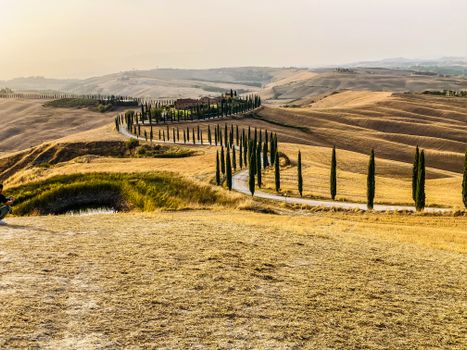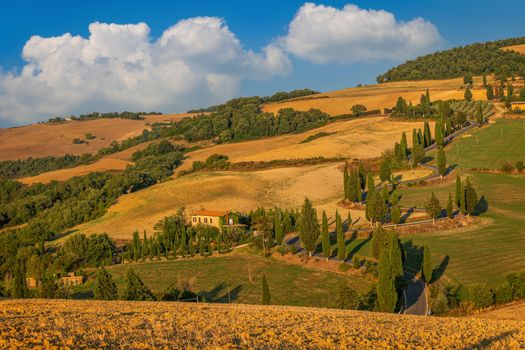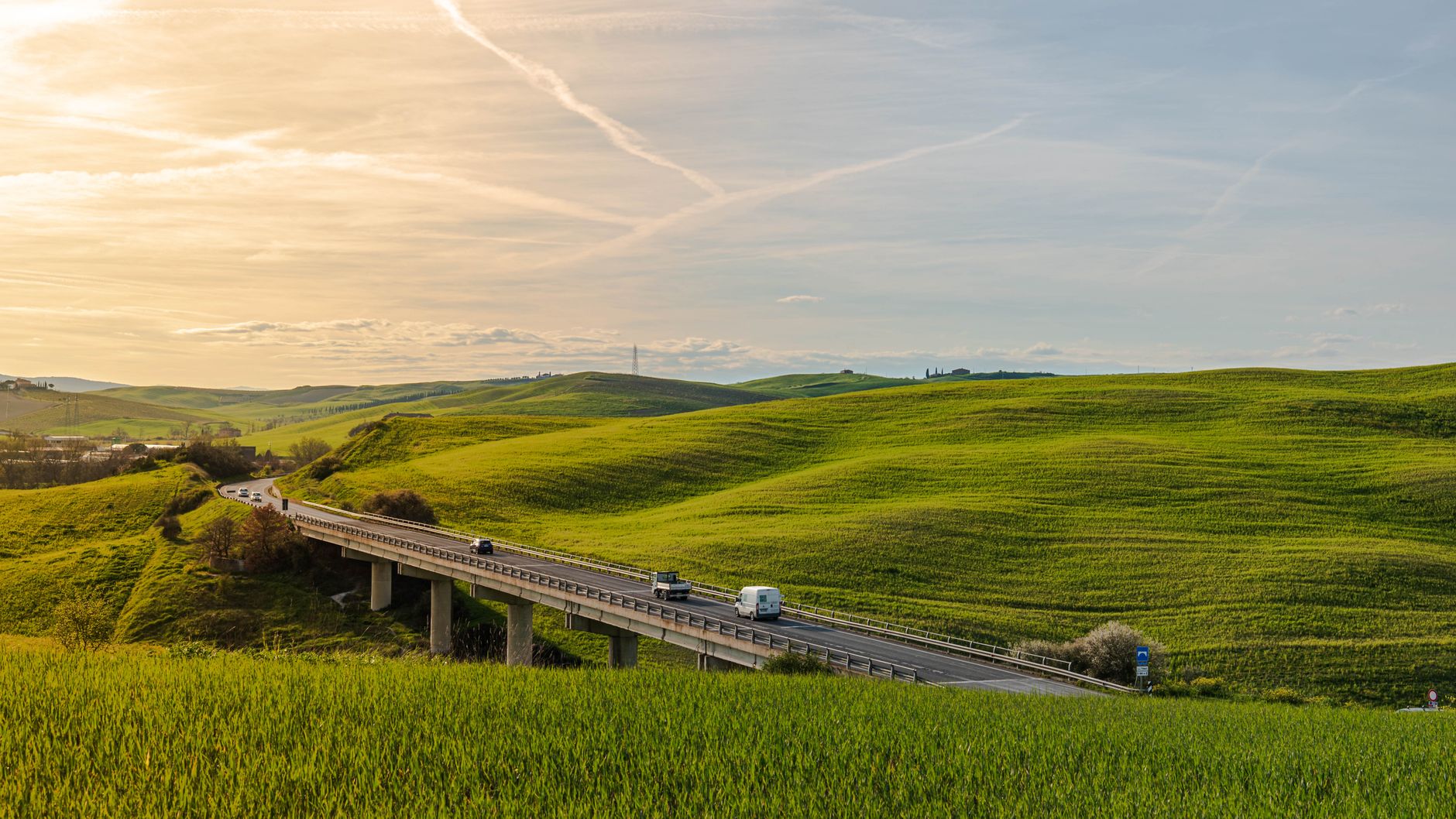
A Tuscany road trip typically takes 5-7 days to fully experience its diverse landscapes and charming towns. We suggest a route covering approximately 650 km / 400 miles, designed for convenience starting and ending in Florence.
Planning Your Tuscany Road Trip
Starting and Finishing Points
We recommend starting and finishing your Tuscany road trip in Florence. This city offers excellent international airport connections, a wide range of car rental options, and a central location that makes it an ideal base for exploring the region. A circular route from Florence is efficient, allowing you to pick up and drop off your rental car in the same location, often simplifying logistics.
Best Time to Visit
The best times for a Tuscany road trip are spring (April to May) and autumn (September to October). During these periods, the weather is pleasantly mild, and the crowds are generally smaller than in the peak summer months. Spring brings lush green landscapes and blooming wildflowers, while autumn offers vibrant harvest colors and local food festivals. Summer (June to August) is popular but can be very hot, with more tourists and higher prices. Winter (November to March) is cooler and quieter, with some attractions potentially having reduced hours, but it provides a different, peaceful perspective of the region.
Road Conditions and Driving
Tuscany's roads are generally well-maintained. However, be prepared for narrow, winding country roads, especially when navigating through rural areas and smaller hilltop towns. Major highways connect the larger cities, offering smoother and faster travel. A key consideration when driving in Italy is the presence of ZTLs (Limited Traffic Zones) in many city centers. These zones restrict vehicle access, usually to residents or authorized vehicles only. We advise checking official sources for rules regarding ZTLs in each town you plan to visit to avoid fines. Parking can also be challenging in popular towns; always look for designated paid parking lots outside city walls. A reliable GPS is essential for navigating the often intricate road network. Remember that driving in Italy is on the right side of the road.
A 7-Day Tuscany Road Trip Itinerary
This itinerary provides a comprehensive route through Tuscany, balancing iconic cities with picturesque countryside and charming smaller towns. It is designed to minimize backtracking and offer a varied experience.
Day 1: Florence to Siena (approx. 75 km / 47 miles)
Begin your journey by exploring Florence's historic center. Visit the Duomo, walk across Ponte Vecchio, and absorb the atmosphere of Piazza della Signoria. In the afternoon, pick up your rental car and drive south along the scenic SR222, also known as the Chianti Classico route. This drive takes you through rolling vineyards and olive groves.
- Highlights: Florence's historic core, scenic Chianti Classico route, charming towns like Greve in Chianti or Castellina in Chianti.
- Overnight: Siena.
Day 2: Siena and San Gimignano (approx. 50 km / 31 miles)
Spend your morning discovering Siena, a UNESCO World Heritage site known for its medieval brick buildings. Explore the Piazza del Campo, visit the Siena Cathedral, and consider climbing the Torre del Mangia for panoramic views. In the afternoon, take a short drive to San Gimignano, a distinctive hilltop town famous for its well-preserved medieval towers.
- Highlights: Siena's Piazza del Campo and Cathedral, San Gimignano's medieval towers and historic center.
- Overnight: Siena.
Day 3: Val d'Orcia Discovery (approx. 100 km / 62 miles loop)
Today, venture into the iconic Val d'Orcia region, another UNESCO World Heritage site renowned for its quintessential Tuscan landscapes of rolling hills, cypress trees, and picturesque villages. Drive a loop visiting Pienza, famous for its pecorino cheese and Renaissance architecture. Continue to Montepulciano, a hilltop town celebrated for its Vino Nobile di Montepulciano, and Montalcino, home to Brunello wine.
- Highlights: Pienza, Montepulciano, Montalcino, iconic cypress-lined roads, classic Tuscan scenery.
- Overnight: Pienza or Montepulciano.
Day 4: Southern Tuscany & Cortona (approx. 60 km / 37 miles)
Enjoy a relaxed morning in Pienza, perhaps visiting a local farm or simply taking in the views. In the afternoon, drive east towards Cortona, a captivating hilltop town with Etruscan origins. Cortona offers stunning panoramic views of the Valdichiana valley and a rich history to explore within its ancient walls.
- Highlights: Cortona's hilltop position, Etruscan history, panoramic views.
- Overnight: Cortona.
Day 5: Cortona to Lucca (approx. 150 km / 93 miles)
After a final morning exploring Cortona, embark on a longer drive west to Lucca. This journey takes you across a significant portion of Tuscany. Lucca is a charming city famous for its remarkably preserved Renaissance-era city walls, which are fully intact and can be walked or cycled upon.
- Highlights: Lucca's historic city walls, elegant streets, and relaxed atmosphere.
- Overnight: Lucca.
Day 6: Lucca and Pisa (approx. 25 km / 15 miles)
Dedicate your morning to exploring Lucca's attractions, perhaps cycling along its famous walls or visiting its Duomo di San Martino. In the afternoon, take a short drive to Pisa. Here, you can visit the Piazza dei Miracoli, home to the iconic Leaning Tower, the Pisa Cathedral, and the Baptistery.
- Highlights: Lucca's city walls, Pisa's Leaning Tower and Piazza dei Miracoli.
- Overnight: Lucca.
Day 7: Return to Florence (approx. 75 km / 47 miles)
Enjoy a final Tuscan breakfast in Lucca. In the afternoon, drive back to Florence, where you will return your rental car. If your flight is the following day, you can spend a final evening enjoying Florence or exploring nearby Fiesole for elevated views of the city.
- Highlights: Last scenic views of the Tuscan countryside, return to Florence.
- Overnight: Florence (optional, depending on flight schedule).
Shorter and Longer Versions
3-4 Day Itinerary
For a shorter trip, we recommend focusing on the northern and central parts of Tuscany. This version would typically include Florence, the Chianti region, Siena, and San Gimignano. You would skip the Val d'Orcia, Cortona, Lucca, and Pisa, allowing for a more concentrated experience of the classic Tuscan heartland. This option involves less driving and more time in fewer locations.
8-10 Day Itinerary
To explore Tuscany at a more relaxed pace or to delve deeper into specific areas, extend your trip to 8-10 days. This allows for additional nights in each major town, more time for leisurely drives, winery visits, or exploring lesser-known villages. You could also incorporate destinations like Arezzo, explore the Maremma coast, or spend more time hiking or cycling in the countryside.
Where to Base Yourself Overnight
To optimize your road trip experience and minimize daily driving distances, we recommend changing your overnight base every 1-2 nights. Strategic towns for overnight stays include:
- Florence: Ideal for arrival, departure, and urban exploration.
- Siena: A central hub for visiting the Chianti region and accessing southern Tuscany.
- Pienza or Montepulciano: Perfect for immersing yourself in the Val d'Orcia.
- Cortona or Arezzo: Good options for exploring eastern Tuscany.
- Lucca: A charming base for discovering western Tuscany, including Pisa and potentially the coast.
Practical Tips for Your Tuscany Road Trip
- Book in Advance: Secure your accommodation and rental car well ahead of time, especially if traveling during peak season, to ensure availability and better rates.
- Car Size: Consider renting a smaller car. It will be easier to navigate narrow village streets and find parking.
- Language: Learning a few basic Italian phrases can enhance your interactions with locals.
- International Driving Permit: Check if an International Driving Permit (IDP) is required for your nationality. Official sources will provide the most current information.
- Hydration: Especially during warmer months, carry water to stay hydrated while exploring.
- Local Cuisine: Embrace the opportunity to savor local Tuscan dishes and wines. Look for trattorias and osterias for authentic experiences.
- ZTLs and Parking: Always be aware of ZTLs in town centers. Plan to park in designated paid parking lots outside these zones and walk into the historic centers.
Frequently asked questions
Is a car necessary for a Tuscany road trip?
While major cities like Florence and Siena are accessible by train, a car is highly recommended for truly experiencing the rural landscapes, charming small villages, and scenic routes of Tuscany. It offers the flexibility to stop at viewpoints, explore wineries, and discover less-visited areas at your own pace.
What are ZTLs and how do we avoid fines?
ZTLs (Limited Traffic Zones) are areas in many Italian city centers where vehicle access is restricted, usually for residents or authorized vehicles only. To avoid fines, always look for signs indicating ZTLs and park outside these zones in designated paid parking lots. We recommend checking official local municipality websites for current rules before your visit.
What is the best way to rent a car in Tuscany?
We recommend booking your rental car well in advance, especially if traveling during peak season. Major rental companies operate at Florence and Pisa airports. Ensure your rental includes comprehensive insurance and clarify any additional charges, such as for an automatic transmission if that is your preference.
How much time should we allocate for a Tuscany road trip?
A minimum of 5-7 days allows for a good balance of exploring key cities, scenic drives, and charming villages. For a more relaxed pace or deeper exploration, 8-10 days would be ideal. A shorter 3-4 day trip would focus on a specific region, such as Florence, Siena, and the Chianti area.