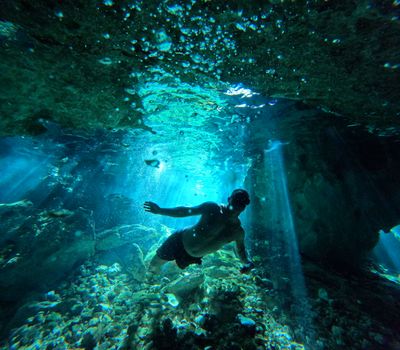
Dive Deep: Unforgettable Underwater Adventures for Non-Swimmers Before They Become Mainstream
The ocean. It’s a realm of breathtaking beauty, vibrant ecosystems, and profound mystery. For as long as I can remember, its depths have called to me, promising untold wonders. But for many, including my dear friend Maya, the deep blue sea has always felt like an exclusive club, accessible only to those with strong swimming skills and a knack for holding their breath. Maya, despite her deep fascination with marine life, harbored a lifelong fear of water that kept her firmly on the shore. She’d spend hours poring over nature documentaries, sighing at the sight of clownfish darting through anemones or majestic sea turtles gliding past coral gardens. "If only," she'd often lament, "if only I could see it for myself, just once."
Her wistful dreaming struck a chord with me. As a travel blogger for Tripsora, I'm always on the hunt for experiences that break barriers and open up new worlds. And it got me thinking: what about all the other Mayas out there? The millions of people who adore the ocean but are held back by a fear of water, physical limitations, or simply never learned to swim? Was there truly no way for them to experience the magic beneath the waves?
What I discovered on my quest wasn't just a handful of niche activities; it was a burgeoning revolution in accessible underwater tourism. Technologies and tours are emerging that allow everyone to plunge into the marine world, often without even getting their hair wet! These aren't your grandma's glass-bottom boats; these are immersive, awe-inspiring adventures that are poised to become mainstream. But you, my fellow Tripsora explorer, are getting the inside scoop before the crowds descend. So, buckle up (or rather, gear up), because we’re about to embark on an unforgettable journey into the secret depths.
The Revolution for Non-Swimmers: What's Possible Beneath the Waves?
For decades, if you wanted to explore underwater, your options were limited: learn to swim, snorkel, or scuba dive. While these are fantastic, they inherently exclude a significant portion of the population. But the travel industry is finally waking up to the demand for inclusive ocean experiences. Thanks to innovative engineering and a focus on accessibility, the underwater world is literally opening its doors.
We're talking about a spectrum of experiences that range from completely dry to partially submerged, all designed with non-swimmers in mind. Forget splashing around nervously; these adventures put you front and center with marine life in comfort and safety. From walking on the seafloor to cruising in personal submarines, the possibilities are more diverse and exciting than ever before. This isn't just about seeing; it's about experiencing the ocean's heartbeat, feeling its tranquility, and connecting with its incredible inhabitants. And the best part? You don't need a single swimming lesson.
Walking on the Seafloor: The Magic of Helmet Diving (or Sea Walking)
This, hands down, is one of the most mind-blowing experiences for non-swimmers, and it’s what finally convinced Maya to take the plunge (metaphorically speaking!). Helmet diving, sometimes called "sea walking," is exactly what it sounds like: you wear a specially designed helmet that supplies a continuous flow of air, allowing you to breathe normally while walking on the ocean floor.
My first time trying it in Mauritius was surreal. They slowly lower you down a ladder, and as your shoulders dip below the surface, the helmet fills with air, creating a pocket of breathable space around your head. The initial sensation is a bit odd – the pressure, the weight of the helmet – but then you're standing on the sandy bottom, completely surrounded by fish. It's like stepping into a giant, living aquarium.
I remember seeing a school of iridescent blue fish swim right up to my face, their tiny eyes curiously examining me. A clownfish, bolder than its movie counterpart, peeked out from its anemone home. The guides, who are usually certified divers, are right there with you, leading you along a designated path, pointing out interesting marine life, and even helping you feed the fish (with approved food, of course). The feeling of weightlessness, even while walking, is incredibly liberating. It’s an intimate, immersive experience that puts you face-to-face with the reef without needing to be a strong swimmer or manage complex scuba gear.
Where to try it:
- Mauritius: One of the most popular spots, especially around Grand Baie and Belle Mare. Expect to pay around $50-70 USD for a 20-30 minute walk.
- Bali, Indonesia: Sanur Beach offers several operators. Prices range from $40-60 USD.
- Maldives: Many resorts offer this as an excursion. Prices can be higher, around $80-120 USD.
- Boracay, Philippines: A classic spot for sea walking, often combined with other water activities. Around $30-50 USD.
Tripsora Tip: Wear comfortable swimwear. Don't worry about prescription glasses; you can wear them inside the helmet. Bring an underwater camera or ask your guide about photo packages – the shots are incredible! Ensure the operator is reputable and prioritizes safety and marine conservation.
Submerged Safaris: The World of Semi-Submarines and Tourist Submarines
If the idea of getting your head wet still gives you pause, or you prefer a completely dry and comfortable experience, then semi-submarines and full tourist submarines are your ticket to the deep. These are far beyond simple glass-bottom boats; they offer unparalleled panoramic views of the underwater world.
Semi-Submarines: These vessels have their lower hull submerged, with large viewing windows, while the upper deck remains above water. You descend into the air-conditioned cabin below, often via a few steps, and then simply sit back and watch the show. It feels like you're in a futuristic observation lounge, gliding through a vibrant ecosystem.
I took a semi-submarine tour in Hurghada, Egypt, exploring the Red Sea's legendary reefs. The sheer scale of the coral gardens, teeming with thousands of fish, was breathtaking. I remember a collective gasp from our group when a majestic manta ray glided past our window, its wing-like fins effortlessly propelling it through the blue. It was a serene, almost meditative experience, offering a perspective usually reserved for divers, all while sipping a cool drink.
Tourist Submarines: These are actual submarines, built to take passengers deep underwater. You board, the hatch seals, and you slowly descend, often to depths of 100 feet or more. These offer an even more immersive, truly submarine-like experience, complete with pressure equalization and professional pilots.
Where to try it:
- Grand Cayman (Atlantis Submarine): One of the most famous and reputable operations. Depths of up to 100 feet. Prices typically $90-110 USD.
- Hawaii (Atlantis Submarine): Available in Waikiki (Oahu) and Lahaina (Maui). Similar pricing and experience to Grand Cayman.
- Hurghada & Sharm El Sheikh, Egypt (Sindbad Submarine): Explore the stunning Red Sea. Prices around $50-70 USD.
- Fiji: Offers unique semi-submarine tours showcasing their pristine reefs.
- Aruba (Atlantis Submarine): Another Caribbean gem with great visibility.
Tripsora Tip: Book your tickets in advance, especially for tourist submarines, as they have limited capacity. Try to secure a window seat for the best views. If you're prone to motion sickness, take precautions, although these vessels are generally very stable.
Dry and Deep: Underwater Observatories & Glass-Bottom Wonders
Sometimes, the best view is from a stationary, perfectly designed vantage point. Underwater observatories offer a unique, completely dry experience, often feeling like you're in a futuristic research station. These are fixed structures, usually built into a coral reef, with large acrylic windows providing continuous, undisturbed views of marine life.
My visit to the Underwater Observatory Marine Park in Eilat, Israel, was a highlight. You walk down a spiral staircase into the heart of the reef, where massive windows reveal a bustling underwater city. Schools of colorful fish swim by, sharks might cruise past, and you can watch divers at work. It’s a fantastic option for families with young children or anyone who wants an extended, comfortable viewing experience. It truly feels like you're part of the ecosystem, without any effort.
Beyond fixed observatories, advancements in glass-bottom boats have also made them a far more engaging experience. Forget the small, murky viewing panels of old. Today, you can find boats with massive, crystal-clear glass panels, or even completely transparent kayaks and stand-up paddleboards that give you an unparalleled view directly beneath you.
I once paddled a transparent kayak in a calm lagoon in the Maldives. The water was so clear, it felt like I was floating on air, with the reef just inches beneath my feet. I spotted baby reef sharks, stingrays, and countless fish, all without getting wet. It was simple, peaceful, and utterly magical.
Where to try it:
- Eilat, Israel (Underwater Observatory Marine Park): A world-renowned facility. Entry around $25-30 USD.
- Maldives: Many luxury resorts feature underwater restaurants or viewing lounges (like Ithaa Undersea Restaurant, though that's a splurge for dining, not just viewing!). Transparent kayaks and clear-bottom boats are common.
- Various Caribbean islands: Look for high-tech glass-bottom boat tours.
- Australia (Great Barrier Reef): Many tours offer advanced glass-bottom boat options, some even with semi-submersible components.
Tripsora Tip: For observatories, check feeding times or guided tours for enhanced viewing. For transparent kayaks/SUPs, go on a calm, sunny day for the best visibility. Don't forget reef-safe sunscreen!
The Future is Now: Emerging Tech & Niche Adventures
The innovation in accessible underwater experiences isn't slowing down. In fact, it's accelerating, bringing us even closer to the "Jetsons-esque" future of ocean exploration.
One of the most exciting developments is the underwater scooter (also known as a personal submersible or BOB – Breathing Observation Bubble). These are single or two-person motorized vehicles that allow you to "drive" underwater. You sit on a seat, with a dome-shaped helmet over your head that provides a continuous air supply. Your torso is submerged, but your head remains dry, allowing you to breathe normally while zipping around a designated area of the reef.
My experience with an underwater scooter in Bora Bora was pure exhilaration. It felt like I was a character in a spy movie, effortlessly gliding through the water, steering with handlebars. The freedom of movement, combined with the dry head environment, was incredible. I zipped past schools of colorful fish, navigated around coral formations, and felt an unprecedented connection to the marine environment. It's a fantastic blend of adventure and accessibility.
While still largely exclusive, the concept of underwater hotel rooms with panoramic viewing windows is also expanding. Imagine waking up to a school of fish swimming past your bedside, or watching a shark glide by your window as you sip your morning coffee. While staying in these rooms can be incredibly expensive (think The Muraka at Conrad Maldives Rangali Island or Planet Ocean Underwater Hotel in Florida), the idea highlights the growing desire for intimate, immersive underwater viewing without any physical effort.
Where to try it:
- Bora Bora, French Polynesia (Aqua Safari): A prime location for underwater scooter tours. Prices around $150-200 USD.
- Cozumel, Mexico (Scooter Snorkel): Another popular spot for these unique vehicles. Around $70-90 USD.
- Mauritius: Some operators now offer underwater scooter experiences.
Tripsora Tip: These experiences often have age and height restrictions, so check with the operator beforehand. Listen carefully to the safety briefing; while easy to operate, understanding the controls is crucial.
Planning Your No-Swim Dive: Essential Tips for Non-Swimmers
Ready to book your underwater adventure? Fantastic! Here are some practical tips to ensure your experience is safe, enjoyable, and utterly unforgettable:
- Safety First, Always: This is paramount. Choose reputable operators with excellent safety records. Read reviews, check their certifications, and don't hesitate to ask questions about safety protocols, emergency procedures, and staff training. A good operator will always prioritize your well-being.
- Read the Fine Print: Understand what's included in the price, the duration of the activity, any age/health restrictions, and cancellation policies. Some activities might have weight limits or require you to be able to climb a few steps.
- What to Wear & Bring:
- Swimwear: Even for dry activities, it's often easiest to wear swimwear under your clothes, just in case there's a small splash or you want to dip your feet.
- Reef-Safe Sunscreen: Protect your skin and the delicate marine environment.
- Hat & Sunglasses: For before/after the activity, especially on boats.
- Waterproof Camera/Phone Case: You'll want to capture these moments! Many operators also offer professional photo packages.
- Towel & Change of Clothes: Handy for after any activity, even if you stay mostly dry.
- Motion Sickness Medication: If you're prone to seasickness, take it before boarding any boat, semi-submarine, or submarine.
- Manage Expectations: While these experiences are incredible, they are different from snorkeling or scuba diving. You won't have the same freedom of movement as a diver, but you gain comfort, accessibility, and unique perspectives. Embrace it for what it is – a magical, effortless journey into the blue.
- Overcome Your Fear: If a fear of water is holding you back, start with a completely dry experience like a submarine tour or observatory. Once you feel comfortable, you might graduate to helmet diving. Remember, you're always in a controlled environment with expert guides.
- Book in Advance: Especially for popular attractions or during peak season, booking ahead ensures you get your preferred time slot and avoids disappointment.
- Ask About Marine Conservation: Support operators who are committed to protecting the marine environment. Look for eco-tourism certifications or ask about their practices.
The Ocean Awaits, No Swimming Required!
The ocean is a treasure trove of wonder, and it should be accessible to everyone. The days of needing to be an Olympic swimmer to witness its magic are rapidly becoming a thing of the past. From walking among schools of fish on the seafloor to cruising in a personal submarine, the options for non-swimmers are not just growing; they're becoming increasingly immersive, exciting, and frankly, absolutely unforgettable.
These aren't just tours; they're gateways to a world you might have thought was forever out of reach. So, for all the Mayas out there, and for anyone who's ever dreamt of the deep blue but hesitated, now is your moment. Don't wait until these incredible experiences become commonplace. Be a pioneer, dive into these adventures, and create memories that will last a lifetime.
Have you tried any of these no-swim underwater adventures? Or are you dreaming of your first one? Share your stories and plans in the comments below! And if this post has inspired you, don't keep these secrets to yourself – share it with a friend who needs to see the ocean's magic!
---