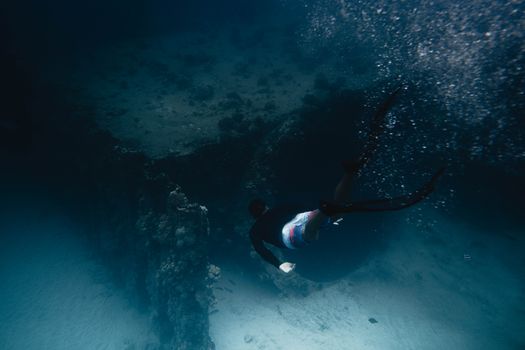
The Ocean Beckons: My Non-Swimmer's Quest for Underwater Magic (and Yours!)
Let me tell you a secret: I love the ocean. Like, really love it. The vibrant corals, the schools of iridescent fish, the majestic turtles gliding by – it’s a world of pure magic. But here’s the kicker: I’m not a strong swimmer. In fact, if you put me in open water without a life vest, I’d probably cling to the nearest piece of driftwood (or person) for dear life. For years, this felt like a cruel joke. How could I adore the underwater world so much yet be utterly terrified of fully immersing myself in it?
I’d scroll through Instagram, seeing influencers with their perfect freediving shots, effortlessly gliding through crystal-clear waters, and a pang of envy (and a little bit of resignation) would hit me. "That's just not for me," I'd tell myself. "You need to be a mermaid to experience that."
But then, a revelation! My travels, driven by an insatiable curiosity, led me to discover a whole universe of underwater adventures specifically designed for people like me. People who want to witness the ocean's glory without the need for Olympic-level swimming skills, or even knowing how to float! And guess what? These experiences are often more accessible, more family-friendly, and frankly, just as breathtaking as any deep dive. The best part? Many of them are the hidden gems influencers often overlook, perhaps because they don't involve a bikini and a perfectly executed backflip.
So, if you’ve ever yearned to explore beneath the waves but felt held back by your swimming ability (or lack thereof), consider this your personal invitation. Get ready to dive into a world of wonder – no swimming lessons required!
Debunking the Myth: You DON'T Need to Swim to See the Sea!
Let's get one thing straight: the idea that you need to be a proficient swimmer to enjoy the ocean's marvels is a myth. A big, fat, confidence-crushing myth! This misconception often stems from the prevalence of snorkeling and scuba diving in mainstream travel media. While these are fantastic activities, they represent only a fraction of what the underwater world offers.
Why do influencers often skip these non-swimmer-friendly options? Perhaps they’re not as "extreme" or as physically demanding, making them less dramatic for a quick video reel. Or maybe they simply haven't explored them, assuming everyone who travels to a beach destination is inherently a water baby. Whatever the reason, it leaves a huge gap in accessible travel information. And that's where we, the Tripsora community, come in!
My journey opened my eyes to the incredible ingenuity of the tourism industry, which has created a plethora of safe, comfortable, and utterly magical ways for everyone to get up close and personal with marine life. From enclosed viewing platforms to specialized helmets that let you breathe normally underwater, the options are endless. The key is knowing what to look for and where to find it. So, let’s peel back the curtain on these incredible experiences.
The Easiest Dive: Glass-Bottom Boats & Semi-Submarines
These are your entry points, your gentle introductions to the sub-aquatic world, perfect for all ages and comfort levels.
1. Glide Above the Reef: Glass-Bottom Boats
Imagine sitting comfortably on a boat, perhaps with a refreshing drink in hand, while the vibrant world beneath the waves unfolds directly below your feet. That's the magic of a glass-bottom boat. These vessels have large, transparent panels built into their hulls, offering a panoramic view of coral gardens, schools of colorful fish, and sometimes even turtles or small sharks, all without getting a single drop of water on you.
My Experience: My first glass-bottom boat trip was in Bora Bora, French Polynesia. The water there is so impossibly clear, it felt like the boat was floating on air. We saw clownfish darting in and out of anemones, parrotfish munching on coral, and even a small reef shark gliding gracefully below. The guide was incredibly knowledgeable, pointing out different species and explaining the reef ecosystem. It was a serene, almost meditative experience, perfect for easing into the idea of underwater exploration.
Where to Find Them & What to Expect:
- Locations: Widely available in almost any major coastal tourist destination. Think Maldives, Red Sea (Egypt), Cairns (Great Barrier Reef, Australia), Hawaii, Caribbean islands, and Southeast Asia (Thailand, Philippines).
- Experience: Relaxed, educational, great for families with young children or anyone who prefers a completely dry experience.
- Price Range: Typically very affordable, ranging from $20 - $50 USD for a 1-2 hour tour. Some resorts offer them complimentary.
- Tripsora Tip: Look for boats with large viewing panels for the best experience. Go on a sunny day for optimal visibility!
2. Submerge Without Submerging: Semi-Submarines
Taking things a step further, semi-submarines offer a more immersive experience than their glass-bottom cousins. While the top deck remains above water, the main viewing cabin is situated below the waterline, providing the sensation of being truly underwater. You descend a few steps into a comfortable, air-conditioned cabin with large windows, almost like a mini-aquarium on the move.
My Experience: I tried a semi-submarine in Sharm El Sheikh, Egypt, exploring the stunning reefs of the Red Sea. The feeling was completely different from the glass-bottom boat. Here, I truly felt among the fish. We cruised slowly along a vibrant coral wall, and I watched in awe as schools of bannerfish swam past my window, completely oblivious to my presence. It was like watching a live-action nature documentary, right outside my personal porthole.
Where to Find Them & What to Expect:
- Locations: Popular in destinations with rich marine life and clear waters, such as Maui (Atlantis Submarine operates full submarines, but many other locations offer semi-subs), Grand Cayman, Bali, and the Canary Islands.
- Experience: More immersive, comfortable seating, often includes narration about the marine environment.
- Price Range: A bit pricier than glass-bottom boats, usually between $70 - $150 USD for a 1.5-3 hour tour.
- Tripsora Tip: These can sometimes get crowded, so try to book a tour during off-peak hours or ask about capacity to ensure a good window seat.
Walking on the Ocean Floor: Helmet Diving (Sea Walking)
Now, this is where things get truly exciting for the non-swimmer! Helmet diving, often called "sea walking," is an experience that bridges the gap between simply observing and actively participating in the underwater world, all without needing to know how to swim or even get your hair wet (unless you choose to!).
The Magic of the Helmet
You wear a specially designed helmet that rests on your shoulders. This helmet is connected to an air supply from the surface, allowing you to breathe normally and comfortably underwater. Because the helmet is weighted, it keeps your head completely dry and lets you walk on the ocean floor as if you were on land. Your body is submerged, but your face remains dry, meaning you can even wear glasses!
My Experience: My first helmet dive was in Mauritius, and it was nothing short of surreal. I remember the initial apprehension as the heavy helmet was lowered onto my head, and I descended the ladder into the turquoise water. The moment my feet touched the sandy bottom, about 10-15 feet down, all fear vanished. I was breathing normally, surrounded by an explosion of color. A guide was with us, leading a small group, and they even brought bread to attract fish. Suddenly, I was enveloped by hundreds of shimmering fish, feeding directly from my hand! It felt like I was walking on another planet, a vibrant, silent, aquatic paradise. The feeling of weightlessness, combined with the normal breathing, was absolutely liberating. It was an Instagram-worthy moment I never thought I'd experience.
Where to Find Them & What to Expect:
- Locations: Extremely popular in many tropical destinations. You'll find excellent operations in Mauritius, Bali (Indonesia), Phuket (Thailand), Boracay (Philippines), Key West (Florida, USA), and some Caribbean islands.
- Experience: A truly unique and interactive experience. You'll walk among corals, interact with fish, and feel completely immersed. Always guided and in shallow, controlled environments.
- Safety: Operators provide thorough briefings, and guides are always with you. The depth is usually limited to 10-20 feet, and the air supply is constant.
- Price Range: Typically ranges from $60 - $120 USD for a 20-30 minute underwater walk, often including boat transfers and equipment.
- Tripsora Tip: Choose operators with good safety records and clear instructions. Don't be afraid to ask questions beforehand. Bring an underwater camera or ask your guide about photo packages – you’ll want to capture this!
The Deep Dive Without Getting Wet: Tourist Submarines & Underwater Observatories
For those who want to go deeper, explore shipwrecks, or simply enjoy a continuous, luxurious underwater view, these options are unparalleled.
1. Real Submarines, Tourist Style!
Yes, you can actually go on a real submarine without being a navy recruit! Tourist submarines are designed with large viewing ports, allowing passengers to descend to significant depths, often much deeper than semi-submarines or helmet dives. This opens up a whole new realm of marine life and underwater landscapes.
My Experience: My submarine adventure with Atlantis Submarines in Aruba was an absolute highlight. We descended to over 100 feet! The light filtered down differently at that depth, giving everything a magical, ethereal glow. We passed by impressive coral formations, spotted a variety of larger fish, and even saw a small shipwreck, eerily resting on the seabed. It was like being in a futuristic viewing capsule, exploring the unexplored. The guides provided fascinating commentary on the marine ecosystem and the history of the area. It felt like a true expedition.
Where to Find Them & What to Expect:
- Locations: Atlantis Submarines operates in several locations including Hawaii (Maui, Kona, Oahu), Aruba, Grand Cayman, Cozumel (Mexico), and Guam. Other similar operations exist globally.
- Experience: A genuine deep-sea experience in a comfortable, climate-controlled environment. Ideal for seeing deeper marine life and larger underwater structures.
- Price Range: More expensive, typically $100 - $200+ USD for a 1.5-2 hour tour.
- Tripsora Tip: Book in advance, especially during peak season. Some people might experience mild claustrophobia or motion sickness, though the submarines are very stable.
2. Underwater Observatories, Restaurants & Hotels: Luxury Views
Imagine sipping a cocktail while reef sharks glide past your window, or dining on gourmet cuisine surrounded by schools of tropical fish. Underwater observatories, restaurants, and even hotels offer continuous, static, and often luxurious immersion into the marine world.
My Experience: While I haven't stayed in an underwater hotel (yet!), I had the incredible privilege of having dinner at Ithaa Undersea Restaurant in the Maldives. It's a surreal, completely transparent acrylic tunnel set 16 feet below the surface. As I ate, a kaleidoscope of fish swam around me, and reef sharks occasionally cruised by, their silhouettes majestic against the blue. It wasn't just a meal; it was an art installation, a living, breathing aquarium where I was inside the tank. Even if a full underwater hotel stay is out of budget, many aquariums around the world (like AQWA in Perth, Australia, or the Dubai Aquarium & Underwater Zoo) offer impressive walk-through tunnels and viewing platforms that provide a similar, albeit less exclusive, experience.
Where to Find Them & What to Expect:
- Locations:
- Restaurants/Hotels: Ithaa Undersea Restaurant (Maldives), The Manta Resort (Zanzibar - underwater room), Huvafen Fushi (Maldives - underwater spa), Conrad Maldives Rangali Island (underwater villa 'Muraka').
- Observatories: Undersea Observatory in Eilat (Israel), Okinawa Churaumi Aquarium (Japan), various large aquariums globally.
- Experience: Ranging from casual viewing to ultra-luxury dining and accommodation. Provides constant, unobstructed views of marine life in a stable, dry environment.
- Price Range: Varies wildly. Aquarium admission for observatories is typically $30 - $60 USD. Underwater restaurants can be $100s per person for a meal, and underwater hotel rooms are often $1000s per night.
- Tripsora Tip: These experiences are often high-demand, especially the restaurants and hotels. Book months in advance if possible. For observatories, check if your city's aquarium has one!
Snorkeling Smarter: Life Vests & Guided Tours for Confidence
"But wait," you might say, "isn't snorkeling just for swimmers?" Not necessarily! With the right approach and equipment, snorkeling can absolutely be an option for non-swimmers who are comfortable in the water (even if they can't swim laps).
Your Best Friend: The Life Vest
The key to snorkeling for non-swimmers is the life vest. Forget those flimsy pool noodles; I'm talking about a proper, well-fitting buoyancy aid. Wearing a life vest means you float effortlessly on the surface, allowing you to simply put your face in the water and breathe through the snorkel, observing the underwater world below. You don't need to kick, tread water, or worry about staying afloat. The vest does all the work.
My Experience: I’ve found incredible joy in snorkeling with a life vest in places like the Great Barrier Reef in Australia and the Phi Phi Islands in Thailand. On one particular tour to the GBR, I was initially hesitant, but the guides were fantastic. They assured me the vest would keep me perfectly afloat, and even offered a 'noodle train' where non-swimmers could hold onto a long float line while a guide gently pulled them around. It transformed my experience. I could focus entirely on the incredible coral formations and the dazzling array of fish, rather than panicking about staying afloat. I saw giant clams, colorful parrotfish, and even a friendly reef shark from a safe distance.
Where to Find Them & What to Expect:
- Locations: Any popular snorkeling destination will offer life vests. The Caribbean, Southeast Asia, Australia, Mexico, and the Mediterranean are prime spots.
- Experience: Offers a direct, intimate view of the reef. With a vest, it’s relaxing and worry-free.
- Price Range: Snorkel gear rental is often included in boat tours (which can range from $50 - $150 USD for a half-day or full-day trip). You can also buy your own vest for $20 - $50 USD.
- Tripsora Tip:
- Communicate: Always inform your tour operator or guide that you are a non-swimmer. They are usually very accommodating and can provide extra assistance.
- Practice: If you're completely new, practice breathing through the snorkel in shallow water first.
- Full-Face Masks: Some people find full-face snorkel masks more comfortable than traditional two-piece sets, as they allow natural breathing through the nose and mouth.
Practical Tips for Your Non-Swimmer Underwater Adventure
Ready to book your next trip? Here are some essential tips to make your underwater adventure seamless and unforgettable:
- Research, Research, Research: Before booking any tour, read reviews and check their website for specific mentions of "non-swimmer friendly," "no swimming ability required," or "life vests provided." Don't be afraid to email or call operators to confirm.
- Communicate Your Comfort Level: Always, always let your tour guides know if you're a non-swimmer or not confident in the water. They are professionals and can offer extra support, advice, or even direct assistance.
- Safety First, Always: Choose reputable operators with strong safety records. Look for clear safety briefings, well-maintained equipment, and certified guides. Your peace of mind is paramount.
- Gear Up (Non-Swimming Style!):
- Water Shoes: Protect your feet from sharp rocks or hot sand, especially if you're doing a sea walk.
- Quick-Dry Clothes: Comfortable for boat trips.
- Waterproof Phone Pouch/Camera: You'll want to capture these incredible moments! Many tours offer professional photo packages, too.
- Motion Sickness Medication: If you're prone to seasickness, take precautions, especially for boat or submarine tours.
- Embrace the Experience: Don't let any lingering fear or self-consciousness hold you back. These adventures are designed for you. Focus on the incredible beauty unfolding before your eyes.
- Go with a Buddy: Traveling with a friend or family member can boost your confidence and make the experience even more enjoyable.
Dive In, The Water's Fine (And You Don't Even Have to Swim!)
There you have it, fellow Tripsora explorers! A comprehensive guide to unlocking the ocean's wonders, even if your swimming skills are more "dog paddle" than "dolphin dive." The world beneath the waves is not an exclusive club for strong swimmers and freedivers. It's a universal treasure, and with these incredible options, it’s now completely within your reach.
Forget what the influencers aren't showing you. This is your chance to create your own unique, awe-inspiring underwater story. Imagine the vibrant photos you'll share, the incredible tales you'll tell, and the newfound confidence you'll gain.
So, what non-swimmer underwater adventure are you dreaming of first? Are you ready to walk on the seabed, dine with the fish, or glide over a coral reef? Share your thoughts and plans in the comments below! Don't forget to bookmark this post for your next trip and share it with every ocean-loving friend who thought they couldn't join the underwater fun. The ocean is calling, and it's waiting for you!
---