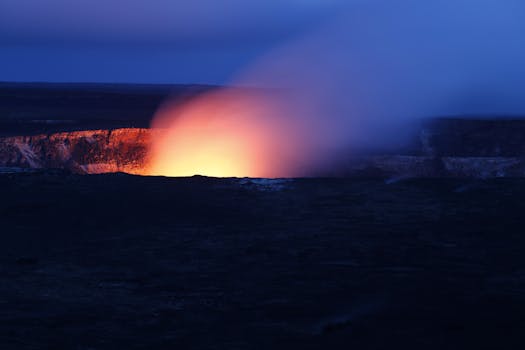
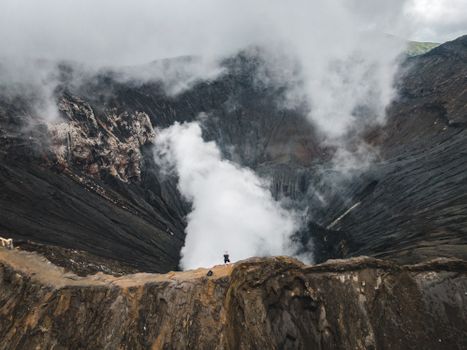
The air was thick with the scent of sulfur, a primal aroma that tingled in my nostrils. Below, a river of molten rock glowed with an otherworldly orange, slowly snaking its way across the stark, black landscape. The heat was palpable, a gentle warmth on my face, but the sheer power of the scene before me was anything but gentle. This wasn't some daredevil stunt for a viral video; this was a perfectly safe, guided hike to a newly erupted fissure in Iceland, and it was, without a doubt, one of the most profoundly humbling and exhilarating moments of my life.
For too long, volcanoes have been painted with a broad brush of danger and destruction, often fueled by sensationalized media or, let's be honest, Instagram influencers chasing that "death-defying" shot. They’ll show you the dramatic, the extreme, the seemingly impossible – but rarely the accessible, safe, and utterly awe-inspiring experiences that millions of travelers enjoy every year.
Here’s the truth: you absolutely can experience the raw power and majestic beauty of volcanoes without putting your life at risk. In fact, some of the most stunning geological wonders on Earth are perfectly set up for safe, guided exploration. As a travel blogger who's chased molten marvels across continents, I’m here to pull back the curtain and share the volcano tours that won't kill you – the ones the influencers often overlook because they prioritize shock value over genuine, safe adventure. Get ready to add some serious heat to your bucket list!
Dispelling the Myth: Volcanoes Aren't Always Doomsday
Before we dive into specific destinations, let's clear up some common misconceptions. Not all volcanoes are created equal, and not all are ticking time bombs waiting to explode. Volcanoes are incredibly diverse, from the gentle, effusive shield volcanoes that ooze lava (like Hawaii's Kilauea) to the explosive stratovolcanoes that build steep cones (like Mount Fuji).
The key to safe volcano tourism lies in understanding that reputable tour operators and national park services work hand-in-hand with volcanologists. They monitor activity 24/7, establish clear exclusion zones, and develop safe viewing platforms and hiking trails. When you go with a certified guide or stick to designated areas, you’re relying on expert knowledge and real-time data, not guesswork. The "dangerous" volcano experiences you hear about almost always involve people ignoring warnings, venturing off-limits, or attempting solo expeditions in highly active areas. Don't be that person. Be the smart, adventurous traveler!
The Land of Fire & Ice: Iceland's Gentle Giants (and Newcomers)
Iceland is practically synonymous with volcanoes, and for good reason. It’s one of the most volcanically active places on Earth, yet it offers some of the safest and most accessible ways to witness Earth's raw power.
Fagradalsfjall / Geldingadalir (Reykjanes Peninsula)
- The Experience: My first encounter with fresh, flowing lava was here, during the 2021 eruption. While the eruption has since been declared over, the site remains a testament to Iceland's geological dynamism and offers incredible hiking over newly formed lava fields. When active, guided hikes lead you to designated viewing areas, often hours from Reykjavík, providing a safe distance from the lava flows but close enough to feel the heat and smell the sulfur. The trek itself is moderate to challenging, crossing uneven terrain, but the reward is unparalleled.
- Details:
- Cost: Guided tours from Reykjavík typically range from $100-$200 USD, including transport and a guide. Self-driving is also an option, with parking fees.
- Best Time: During an active eruption, any time of year, but summer offers longer daylight hours. For exploring the cooled lava fields, summer or early autumn.
- What to Expect: Layered clothing (weather changes rapidly), sturdy hiking boots, water, snacks, and a sense of awe.
- My Anecdote: Standing on that ridge, watching the molten rock creep forward, I felt a connection to the Earth's very core. The sound was a soft crackle, like a million tiny glass shards breaking, punctuated by the occasional hiss as the lava consumed vegetation. It was a sensory overload – the heat, the smell, the vibrant colors against the twilight sky. It wasn't scary; it was profoundly beautiful and utterly unforgettable. It proved to me that experiencing an active volcano could be safe and utterly spectacular.
Eyjafjallajökull Visitor Centre:
- The Experience: While the infamous 2010 eruption caused global air travel chaos, today, you can safely learn about its impact at the Thorvaldseyri Farm's Visitor Centre, located right at the foot of the volcano. It offers a fascinating look at the eruption through film and personal accounts.
- Details:
- Cost: Around $8-10 USD for entry.
- Best Time: Year-round.
- Photography Tip: For future active eruptions, a telephoto lens is your best friend. For cooled lava fields, a wide-angle can capture the vastness. If drones are permitted, always check local regulations and fly safely.
Pacific Paradise with a Punch: Hawaii's Kilauea
Hawaii's Big Island is home to Kilauea, one of the world's most active volcanoes, and the crown jewel of Hawaii Volcanoes National Park. This is a place where you can witness ongoing geological creation safely and respectfully.
- The Experience: Kilauea is a shield volcano, known for its effusive, relatively gentle lava flows. The park offers numerous opportunities to see steam vents, ancient lava tubes, and, when active, the mesmerizing glow of a lava lake within Halemaʻumaʻu crater. Ranger-led programs provide invaluable insights into the volcano's geology and Hawaiian culture.
- Details:
- Cost: National Park entrance fee (around $30 USD per vehicle, valid for 7 days). Guided tours within the park are often free or low-cost.
- Best Time: Year-round. Lava viewing is best after dark. Check the NPS website for current conditions and viewing opportunities.
- What to Expect: Good walking shoes, rain gear (weather can change quickly), water, and a flashlight/headlamp if viewing at night.
- My Anecdote: Walking along the Devastation Trail, a paved path through an area covered by the 1959 Kilauea Iki eruption, was surreal. The stark black landscape, punctuated by occasional ferns pushing through cracks, felt like walking on another planet. Later, standing at the Jaggar Museum overlook (before its closure due to the 2018 eruption, though new viewing areas have since opened), watching the distant glow of the lava lake reflected in the night sky, was a moment of profound peace and power. The air was crisp, and the silence was broken only by the whispers of other visitors. It's a deeply spiritual experience, reminding you of the island's continuous birth.
- Safety: Always stay on marked trails. Volcanic gases can be hazardous, especially for those with respiratory issues. Heed all park warnings and closures. Respect the sacred nature of the land.
Asia's Fiery Spectacles: Indonesia's Iconic Peaks
Indonesia, part of the Pacific "Ring of Fire," boasts some of the most iconic and visually stunning volcanoes on the planet. Mount Bromo and Ijen Crater are two must-sees that offer truly unique experiences.
Mount Bromo, Java
- The Experience: This is an iconic sunrise trek. You'll typically start in the pre-dawn hours, riding a jeep up to a viewpoint (like Penanjakan Hill) to watch the sunrise paint the sky over the dramatic caldera, which houses Bromo, Batok, and Semeru volcanoes. After sunrise, you descend into the "Sea of Sand," traverse it by jeep or on horseback, and then hike a series of steps to Bromo's crater rim, where you can peer into its steaming maw.
- Details:
- Cost: Tours from Surabaya or Malang range from $70-$150 USD (often combined with Ijen). Park entrance fee is around $15-20 USD for foreigners. Horse rental is extra.
- Best Time: Dry season (April to October) for clearer views.
- What to Expect: Very early start, cold temperatures at the viewpoint, dusty conditions in the caldera, moderate hike to the crater. Wear layers, sturdy shoes, and bring a scarf/mask for dust.
- My Anecdote: The moment the sun crested the horizon, illuminating the otherworldly landscape of the caldera, was breathtaking. Mount Bromo, with its perpetually smoking cone, looked like a painting. Riding a small pony across the vast "Sea of Sand" felt like an adventure from a fantasy novel. Then, climbing the steps to the crater rim, the sulfurous smell growing stronger with each step, and peering into the rumbling, steaming abyss – it was a sensory explosion I'll never forget. The sheer scale of it all, the raw power just beneath your feet, is utterly humbling.
Ijen Crater, Java
- The Experience: Famous for its mesmerizing "blue flames" (visible at night) and its turquoise acid lake, Ijen offers a challenging but incredibly rewarding night hike. Accompanied by a local guide, you trek up the volcano in the dark, then descend into the crater to witness the ethereal blue light caused by sulfuric gases igniting. You'll also see the incredible, grueling work of the sulfur miners.
- Details:
- Cost: Often combined with Bromo tours. Standalone tours around $50-100 USD. Park entrance fee around $10-15 USD.
- Best Time: Dry season (April to October) for safer hiking conditions.
- What to Expect: Night hike (headlamp essential), very steep and rocky descent into the crater, strong sulfur fumes (gas mask provided by guides is crucial), cold temperatures.
- My Anecdote: The hike up Ijen in the pitch black was tough, but the anticipation kept me going. Descending into the crater, the air thick with sulfur, and then seeing those electric blue flames dancing in the darkness – it was like stepping onto an alien planet. But what truly moved me was witnessing the sulfur miners, carrying immense loads out of the crater, their faces etched with the hardship of their work. It's a powerful reminder of nature's beauty and humanity's resilience. It’s a physically demanding but profoundly impactful experience.
- Safety: A certified guide and a proper gas mask are absolutely non-negotiable for Ijen, especially if descending into the crater. Stay alert to your surroundings and follow all instructions.
Europe's Ancient Powerhouses: Italy's Stromboli & Etna
Italy, too, is a hotbed of volcanic activity, home to some of Europe's most famous and accessible volcanoes.
Stromboli, Aeolian Islands
- The Experience: Located on its own small island north of Sicily, Stromboli is one of the world's most active volcanoes, known for its frequent, mild eruptions (often called "Strombolian activity"). You can experience it safely in two ways:
- Boat Tours: The most popular option, especially for photography. Night boat tours circle the island, stopping at a safe distance from the "Sciara del Fuoco" (Stream of Fire), where you can watch incandescent lava fragments explode and tumble down the slope into the sea.
- Guided Hikes: For the more adventurous, guided hikes allow you to climb to designated viewing points near the summit. These require permits and an official guide, and access depends heavily on volcanic activity.
- Details:
- Cost: Boat tours around $30-50 USD. Guided summit hikes around $35-60 USD (plus ferry to the island).
- Best Time: Spring and autumn offer pleasant weather. Summer is popular but hot. Night viewing is essential for the full effect.
- What to Expect: For boat tours, just enjoy the show! For hikes, good physical condition, sturdy boots, headlamp, and layers.
- My Anecdote: The boat tour around Stromboli at dusk was pure magic. We sat on the deck, the sea calm, waiting. Then, a rumble, a flash of red-orange, and molten rock shot into the sky, arcing gracefully before tumbling down the dark slope. It was like nature's own fireworks display, happening every few minutes. The collective gasp from everyone on board was testament to its raw beauty. It was a perfectly safe way to witness an active volcano, feeling the distant rumble in your chest.
Mount Etna, Sicily
- The Experience: Europe's most active volcano and one of the largest in the world, Etna offers a variety of ways to explore its vast, lunar-like landscapes. You can take a cable car (Funivia dell'Etna) up to 2,500m, then switch to special 4x4 vehicles (Unimogs) or continue hiking with an alpine guide to designated crater areas (activity permitting). There are also lower-level guided treks through ancient lava flows and forests.
- Details:
- Cost: Cable car + 4x4 + guide can be around $80-100 USD. Lower treks with guides are less.
- Best Time: Summer for clearest views, but winter offers a unique snow-covered volcanic landscape (skiing is possible!).
- What to Expect: Cold temperatures at altitude even in summer, strong winds, uneven terrain, volcanic ash. Layers, sturdy shoes, and sunglasses are essential.
- My Anecdote: Walking on the black, craggy terrain of Etna felt like being an astronaut on the moon. Our guide, a local with an encyclopedic knowledge of the volcano, pointed out different lava flows from various eruptions, explaining how the landscape constantly changes. The vastness of it, the steam rising from fumaroles, and the knowledge that this immense power lay dormant (or sometimes not so dormant!) beneath our feet was incredibly humbling. We even saw a small, fresh lava flow bubbling in the distance during one visit – a reminder of its constant activity, all from a safe, designated viewing point.
- Safety: Always go with an authorized guide, especially if venturing above the cable car station. Weather conditions can change rapidly, and visibility can drop to zero.
Central American Thrills: Guatemala's Pacaya
For a truly interactive and relatively easy volcano experience, look no further than Pacaya in Guatemala.
- The Experience: Located near Antigua, Pacaya is one of Guatemala's most active volcanoes, but its eruptions are typically effusive, producing slow-moving lava flows. Guided day hikes take you up its slopes, often allowing you to walk on recent lava fields that are still warm. The highlight for many? Roasting marshmallows over natural heat vents right on the volcano!
- Details:
- Cost: Tours from Antigua (including transport and guide) typically range from $20-40 USD.
- Best Time: Dry season (November to May) for clearer views and easier hiking.
- What to Expect: Moderate hike (can be steep in parts), uneven terrain, bring marshmallows! Wear sturdy shoes and layers.
- My Anecdote: Hiking up Pacaya, with the panoramic views of nearby Agua, Fuego, and Acatenango volcanoes, was stunning. But the real fun began when our guide found a crack in the lava rock, emanating heat. Out came the marshmallows! Skewering them on sticks and watching them toast over the volcano’s natural oven was such a unique, playful experience. It perfectly encapsulates how a volcano tour can be both awe-inspiring and incredibly fun, all while being perfectly safe. It’s an adventure that feels genuinely accessible to most fitness levels.
- Safety: Always go with a local guide. Conditions on the volcano can change, so follow their instructions.
General Practical Tips for Your Volcanic Adventure
So, you're ready to chase some fire! Here's how to ensure your volcano tour is safe, spectacular, and truly unforgettable:
- Research, Research, Research: Before you book anything, check the current activity level of the volcano. Official national park websites, geological survey sites, and reputable local tour operators are your best sources. Conditions can change daily.
- Go with a Reputable Guide: This is non-negotiable for active or potentially hazardous sites. Certified, experienced local guides know the terrain, understand the risks, and are up-to-date on current conditions. They are your safety net and your fount of knowledge.
- Gear Up Appropriately:
- Footwear: Sturdy, ankle-supporting hiking boots are essential. You'll be walking on uneven, often sharp, volcanic rock.
- Layers: Weather on volcanoes can be unpredictable. Dress in layers to adapt to temperature changes, wind, and rain.
- Rain Gear: A waterproof jacket and pants are always a good idea.
- Headlamp/Flashlight: Crucial for pre-dawn or night hikes.
- Water & Snacks: Stay hydrated and fueled.
- Sun Protection: Hat, sunglasses, and high-SPF sunscreen.
- Gas Mask: If visiting sulfur-rich areas like Ijen, ensure your tour provides a proper gas mask, not just a flimsy surgical mask.
- Respect Nature and Local Culture: Volcanic areas are often fragile ecosystems and, in many cultures, sacred sites. Stay on marked trails, do not take souvenirs (like lava rocks), and follow all instructions from guides and park rangers. Leave no trace.
- Travel Insurance: Always, always, always have comprehensive travel insurance that covers adventure activities. While these tours are safe, accidents can happen anywhere.
- Photography & Drones:
- Protect Your Gear: Volcanic dust and ash can be brutal on cameras and lenses. Use lens covers and keep your equipment protected.
- Tripod: Essential for night shots of lava flows or starry skies.
- Drone Regulations: Check local laws. Many national parks or active sites prohibit drones. If allowed, fly responsibly and safely.
- Assess Your Fitness Level: While many tours are accessible, some hikes can be strenuous. Be honest about your physical capabilities and choose a tour that matches them.
- Listen to Your Body: Volcanic gases can affect some people, especially those with respiratory conditions. If you feel unwell, inform your guide immediately.
The True Fire Within
Volcanoes are more than just geological formations; they are living, breathing entities that remind us of the incredible power and constant change of our planet. They offer a unique blend of adventure, natural beauty, and profound contemplation. Unlike the fleeting, often superficial, "viral moments" you might see online, these safe, guided tours offer genuine, immersive experiences that will stay with you long after the sulfur smell fades from your clothes.
So, ditch the fear, ignore the sensationalism, and embrace the extraordinary. The world's safest, most spectacular volcano tours are waiting. Which fiery peak will you conquer first? Share your volcanic dreams below, and let's inspire each other to explore the Earth's beating heart!