Ancient Crafts: How Artisan Workshops Changed My Life Forever
The drone of my laptop, the endless scroll of social media, the constant pressure to do more, be more, see everything – it was all starting to blur into one giant, exhausting hum. I was a travel blogger, living the dream, yet something vital was missing. My adventures felt increasingly superficial, a checklist of destinations rather than a tapestry of experiences. I craved authenticity, a deeper connection, a pause from the digital frenzy.
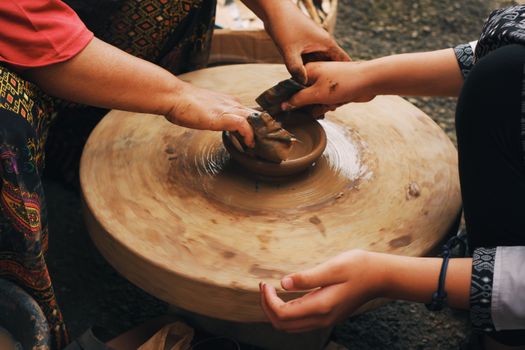
It was on a whim, during a particularly draining trip through Mexico, that I stumbled upon a small, unassuming pottery studio in Oaxaca. The sign, faded by the sun, simply read "Barro Negro Taller." Something pulled me in. I watched an elderly woman, her hands gnarled but graceful, coaxing form from a lump of clay. Her focus was absolute, her movements rhythmic, almost meditative. In that moment, watching her create something tangible and beautiful, I felt a spark ignite within me – a spark that would soon become a roaring fire, leading me down a path of discovery that truly changed my life forever.
This isn't just a story about learning new skills; it's about reconnecting with humanity's roots, with the satisfaction of creation, and with a slower, more mindful way of living. It’s about finding my own hands again, and in doing so, finding myself.
The Call of the Clay: Finding My Center in Oaxaca, Mexico
My first foray into artisan workshops was, as mentioned, in Oaxaca, Mexico, specifically exploring the renowned black pottery (Barro Negro) tradition. I signed up for a week-long intensive at a local family-run workshop, Taller de Artesanías Doña Rosa (a fictionalized name inspired by real traditions).
I remember feeling awkward and clumsy on my first day. The clay felt foreign, resistant. My attempts at shaping a simple bowl often resulted in lopsided disasters or piles of mud. But my instructor, the patient and wise Elena, never once made me feel inadequate. She taught me not just the techniques – the coiling, the shaping, the intricate burnishing before firing – but the philosophy behind it. Each piece of clay held a story, a connection to the earth, to generations of artisans.
The workshop was a simple, open-air structure, filled with the earthy scent of clay and the quiet chatter of family members working alongside each other. We’d start early, the cool morning air a balm against the rising sun. Lunch was always a communal affair, fresh tortillas, mole, and lively conversation. In the afternoons, as the sun beat down, the rhythm of creation continued, punctuated by the gentle scraping of tools and the occasional burst of laughter.
Details:
- Location: San Bartolo Coyotepec, Oaxaca, Mexico (a short drive from Oaxaca City).
- Craft: Barro Negro Pottery (black pottery).
- Workshop Duration: I did a 5-day intensive (approx. 4-5 hours/day). Shorter 1-day workshops are often available.
- Estimated Cost: For a multi-day intensive, expect to pay anywhere from $300-$700 USD, including materials and often lunch. A single-day class might be $50-$100.
- What I Learned: Patience, perseverance, the beauty of imperfection, and the incredible satisfaction of holding a finished piece that started as a lump of earth. It taught me to slow down, to trust my hands, and to find joy in the process, not just the outcome.
Instagram-Worthy Moment: Capturing the intricate burnishing process with a smooth quartz stone, or a shot of my hands, covered in clay, proudly holding a still-wet, newly formed pot.
Weaving Stories into Threads: The Ancient Art of Textiles in the Sacred Valley, Peru
From the earth to the loom, my journey next took me high into the Andes of Peru, specifically the Sacred Valley, where the ancient art of backstrap weaving thrives. The Quechua people have been weaving for millennia, their textiles not just clothing or blankets, but intricate narratives, carrying symbols, history, and identity.
I found myself at a women's weaving cooperative in a small village outside Pisac, a place called Centro de Textiles Tradicionales de Chinchero (a renowned real organization that preserves these traditions). Here, I spent two weeks under the guidance of Mamá Nilda and her community. There was no electricity, no WiFi, just the stunning mountain backdrop, the rhythmic click-clack of the looms, and the vibrant colors of alpaca and sheep wool.
Learning to spin wool, dye it with natural pigments derived from plants and insects (like cochineal!), and then meticulously weave complex patterns on a backstrap loom was both physically demanding and incredibly rewarding. My fingers ached, my back protested, but my spirit soared. Each thread, each color, each symbol had meaning. I wasn't just making a textile; I was participating in a living history, connecting with a lineage of storytellers. The women shared their lives, their laughter, and their ancestral wisdom, often over cups of coca tea.
Details:
- Location: Various villages in the Sacred Valley, Peru (e.g., Chinchero, Pisac, Ollantaytambo).
- Craft: Backstrap weaving, natural dyeing, spinning.
- Workshop Duration: I did a 2-week immersion. Many cooperatives offer half-day or full-day demonstrations and introductory workshops.
- Estimated Cost: A multi-day experience can range from $500-$1500 USD (often includes accommodation and meals). A half-day session might be $30-$70.
- What I Learned: The power of community, the profound connection between craft and culture, patience beyond anything I thought possible, and the realization that true beauty often requires immense dedication and time. My finished small wall hanging, though imperfect, is one of my most treasured possessions.
Instagram-Worthy Moment: A close-up of vibrant naturally dyed wool skeins drying in the sun, or a shot of a weaver's hands gracefully manipulating threads on a backstrap loom with the Andes mountains in the background.
Forging a New Path: The Art of Blacksmithing in Rural Ireland
After the delicate intricacies of weaving, I felt a pull towards something more raw, more elemental. While researching unique workshops, I stumbled upon a traditional blacksmithing course in the heart of rural Ireland. It sounded wild, challenging, and completely out of my comfort zone – perfect.
I found myself at The Anvil & The Hearth, a small, family-run forge in County Clare (fictional name, but inspired by real Irish smithies). My instructor, Liam, was a burly man with a booming laugh and surprisingly gentle hands. The workshop was a symphony of clang, hiss, and roar – the rhythmic strike of hammer on anvil, the blast of the bellows, the sizzling quench of hot metal in water.
Learning to control the fire, to heat the metal to just the right cherry-red glow, to strike with purpose and precision, was an incredibly physical and mentally engaging process. I spent days shaping and bending steel, starting with simple hooks and eventually creating a small, decorative leaf. My muscles ached in places I didn't know existed, my hands were calloused, and my face was smudged with soot. But with each successful bend, each perfectly formed taper, I felt an exhilarating sense of accomplishment. It was a visceral, almost primal satisfaction.
Details:
- Location: Rural Ireland (e.g., County Clare, County Kerry).
- Craft: Traditional Blacksmithing.
- Workshop Duration: I did a 3-day introductory course. Shorter taster sessions (half-day) are also common.
- Estimated Cost: A multi-day course can be $400-$800 USD. A half-day taster might be $100-$200.
- What I Learned: The immense satisfaction of physical labor, the beauty of transforming raw materials with fire and force, the importance of focus and rhythm, and a newfound respect for the strength and artistry of metalworkers. It taught me that I am capable of far more than I imagined.
Instagram-Worthy Moment: A dramatic shot of sparks flying from an anvil as a hammer strikes hot metal, or a close-up of my soot-stained hands holding a newly forged, still-warm piece.
The Art of Illumination: Lantern Making in Hoi An, Vietnam
From the heat of the forge, I sought a different kind of light. Hoi An, Vietnam, a UNESCO World Heritage site, is famous for its exquisitely crafted silk lanterns. Walking through the ancient town at night, bathed in the soft glow of hundreds of lanterns, is like stepping into a dream. I knew I had to learn how to make one.
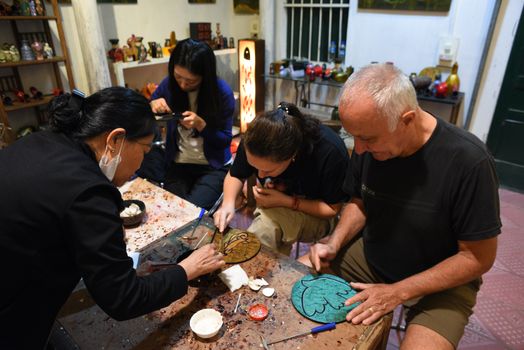
I enrolled in a half-day workshop at Hoi An Handicraft Workshop (a common offering in the town). The experience was a delightful contrast to the intensity of blacksmithing. Here, it was all about delicate precision, patience, and color. My instructor, a soft-spoken woman named Linh, guided me through the steps: carefully bending bamboo spokes into a frame, attaching the silk fabric, and then adding intricate patterns and tassels.
The air was filled with the gentle rustle of silk and the faint scent of glue. It was a deeply meditative process, requiring intense focus on small details. Each fold, each brushstroke of glue, contributed to the final, luminous piece. Holding my finished lantern, glowing softly in the evening light, felt like capturing a piece of Hoi An's magic. It was a reminder that beauty often lies in meticulous, loving detail.
Details:
- Location: Hoi An Ancient Town, Vietnam.
- Craft: Traditional Silk Lantern Making.
- Workshop Duration: Typically 2-3 hours.
- Estimated Cost: Very affordable, usually $15-$30 USD per person, including all materials.
- What I Learned: The joy of creating something beautiful and delicate, the importance of precision and patience, and how a simple craft can transform an entire town's atmosphere. It showed me that even small acts of creation can bring immense joy and light.
Instagram-Worthy Moment: A vibrant silk lantern hanging against the backdrop of Hoi An's ancient architecture, or a flat lay of colorful silk fabrics and bamboo frames with my hands in action.
From Bean to Bar: The Sweet Science of Chocolate in Ecuador
My final, and perhaps most delicious, artisan adventure took me to Ecuador, a country renowned for its fine cacao. As a self-proclaimed chocoholic, the idea of learning to make chocolate from scratch was irresistible.
I found a fantastic "Bean to Bar" workshop at a small, sustainable farm and chocolate producer near Mindo, called El Quetzal de Mindo (a real, highly-rated establishment). Here, the workshop wasn't just about making chocolate; it was a deep dive into the entire process, from harvesting the cacao pods to tempering the finished bars.
My guide, Juan, walked me through the cacao plantation, explaining the delicate ecosystem. I learned how to crack open a ripe pod, taste the fresh, tangy pulp (surprisingly fruity!), and observe the fermentation and drying processes. Then, in the open-air workshop, we roasted the beans, removed the husks, ground them into a rich liquor, and finally, added sugar and tempered the chocolate. The aroma alone was intoxicating.
Holding a warm, freshly poured chocolate bar that I had made myself, from a bean picked just days before, was an unparalleled experience. It wasn't just food; it was a journey, a connection to the earth, and a testament to the magic that happens when simple ingredients are transformed with knowledge and care.
Details:
- Location: Mindo, Ecuador (a popular eco-tourism destination).
- Craft: Bean-to-Bar Chocolate Making.
- Workshop Duration: Typically 2-4 hours.
- Estimated Cost: $20-$40 USD per person, often including tastings and a bar to take home.
- What I Learned: The incredible complexity behind a simple chocolate bar, the importance of sustainable farming, and the sheer joy of creating something delicious and shareable. It taught me to appreciate the origins of what I consume and to savor every single bite.
Instagram-Worthy Moment: A vibrant shot of a cacao pod cracked open, revealing the white beans, or a close-up of melted chocolate being tempered, ready to be poured into molds.
Why Ancient Crafts Resonate Today: More Than Just a Souvenir
These workshops weren't just about acquiring new skills or collecting unique souvenirs (though I have plenty!). They were about something far deeper:
- Mindfulness and Presence: In a world of constant distractions, these crafts demand your full attention. The rhythmic movements, the focus on detail, the tactile nature of the materials – it all forces you into the present moment, a true form of meditation.
- Connection to History and Culture: Each craft is a living link to generations past, a direct connection to the traditions and stories of a culture. You're not just observing; you're participating in history.
- The Joy of Creation: There’s an unparalleled satisfaction in transforming raw materials into something tangible and beautiful with your own hands. It taps into a fundamental human need to create, often lost in our digital lives.
- Escape from the Digital: For hours, sometimes days, my phone was forgotten. My mind was fully engaged with the clay, the threads, the metal, the cacao. It was a much-needed detox, a reminder of what truly matters beyond screens.
- A Sense of Accomplishment: Finishing a piece, no matter how simple, brings a profound sense of pride and capability. It reminds you of your own potential.
- Sustainable and Ethical Travel: By supporting local artisans and their workshops, you contribute directly to the preservation of traditional skills and livelihoods, fostering authentic cultural exchange.
Your Own Artisan Adventure: Practical Tips & Actionable Advice
Inspired to get your hands dirty? Here’s how to make your own life-changing artisan workshop experience happen:
- Do Your Research:
- Identify Your Interest: What craft sparks your curiosity? Pottery, weaving, cooking, jewelry making, woodworking, painting?
- Destination-Specific Crafts: Research what traditional crafts are unique to the destinations you plan to visit. Many countries have specific regional specialties (e.g., Murano glass in Venice, indigo dyeing in Japan, rug making in Morocco).
- Look for Cooperatives & Family Studios: These often offer the most authentic and impactful experiences, directly supporting local communities.
- Read Reviews: Check Google, TripAdvisor, and travel blogs for recommendations.
- Booking & Logistics:
- Book in Advance: Especially for popular or multi-day workshops, spots can fill up quickly.
- Inquire Directly: Email or call the workshop. Ask about class sizes, language barriers (some offer English-speaking instructors), and what’s included (materials, meals, accommodation).
- Check Accessibility: Some workshops are in remote locations. Plan your transport accordingly.
- Budget: Workshop costs vary wildly. Factor in materials, instruction, and any additional inclusions. Don't be afraid to splurge a little – these are often priceless experiences.
- What to Expect & How to Prepare:
- Be Open-Minded: You might not be an expert overnight, and that's okay! Embrace the learning process and the imperfections.
- Dress Comfortably & Appropriately: You'll likely get dirty. Wear old clothes, closed-toe shoes, and tie back long hair.
- Bring Water & Snacks: Especially for longer sessions.
- Language Barrier: A basic phrasebook or translation app can be helpful, but often, the language of craft transcends words.
- Patience is Key: Learning a new skill takes time. Don't get discouraged.
- Leave Your Expectations at the Door: Go in with a willingness to learn and connect, and you'll gain so much more than just a skill.
- Capture the Moment (Respectfully): Ask permission before taking photos or videos, especially of people. Be mindful not to interrupt the flow of work.
- Beyond the Workshop:
- Support Local Artisans: Purchase their finished goods directly from their workshops. This ensures they receive a fair price and helps preserve their craft.
- Share Your Experience: Tell your friends, post on social media, review the workshop. Your enthusiasm helps others discover these incredible opportunities.
- Practice Your New Skill: Don't let your newfound talent fade! Find ways to continue your craft at home.
The Unforgettable Transformation
My journey through artisan workshops wasn't just a collection of memorable travel moments; it was a profound transformation. I arrived burnt out and searching; I left with a renewed sense of purpose, a deeper appreciation for human ingenuity, and a quiet confidence in my own hands. I learned that true travel isn't just about seeing the world, but about experiencing it, connecting with its heart, and allowing it to change you.
So, next time you plan a trip, consider stepping away from the typical tourist trail. Seek out a local artisan, pick up a tool, and let your hands guide you. You might just find that learning an ancient craft doesn't just teach you a new skill – it teaches you about yourself, and perhaps, changes your life forever too.
What ancient craft are you curious to try? Share your thoughts in the comments below!
---