Beyond the Horizon: Camping Spots That Feel Like Another Planet (Locals Don't Want Tourists To Know!)
There’s a moment every seasoned traveler craves. It’s not the bustling market, the iconic landmark, or the perfect restaurant. It’s that split second when you look around, take a deep breath, and realize you’ve stepped onto an entirely different planet. The air hums with an unfamiliar energy, the landscape defies earthly logic, and for a glorious instant, you’re an astronaut exploring a new world.
I remember my first encounter with this feeling. It was years ago, a spontaneous detour on a road trip through the American Southwest. My map had a tiny, faded circle labeled “Goblin Valley.” Skeptical but intrigued, I veered off the main highway, rattling down a dusty track. As the sun dipped below the horizon, casting long, eerie shadows, I finally arrived. Before me stretched a vast, silent playground of mushroom-shaped hoodoos, each one a unique, sculpted alien. My tent, a tiny human beacon, felt utterly insignificant in this landscape of silent giants. The stars that night were so bright, so numerous, they felt like glitter spilled across black velvet, and I swear I could almost hear the whispers of ancient cosmic winds. I knew then: this wasn't just camping; it was an intergalactic escape.
That experience ignited a quest within me – a mission to uncover camping spots that truly transport you, places so surreal they make you question if you've accidentally boarded a shuttle to Mars or Venus. These aren't your typical national park campgrounds, folks. These are the whispered-about, the hard-to-reach, the "how did that get here?" destinations that locals cherish and perhaps, just perhaps, wish they could keep to themselves. But hey, good secrets are meant to be shared, especially when they involve pitching a tent under a sky full of alien wonders.
Ready to embark on a journey that will redefine your concept of "camping"? Let's dive into six of the most mind-blowing, other-worldly campsites on Earth.
1. The Martian Playground: Goblin Valley State Park, Utah, USA
Why it feels alien: Imagine a landscape sculpted by mischievous extraterrestrial hands, a valley teeming with thousands of mushroom-shaped sandstone formations (locals call them "goblins"). These eerie, bulbous figures, ranging from a few feet to several stories tall, create a surreal, maze-like environment that genuinely feels like a scene from a science fiction movie set on Mars. The red-orange hues of the rocks, especially at sunrise or sunset, intensify the illusion.
My first night here, after setting up my tent amidst the silent stone sentinels, I climbed a small bluff. The silence was profound, broken only by the gentle rustle of the wind. As the moon rose, casting long, distorted shadows, I felt an almost primal connection to the vastness around me. It’s a place that encourages childlike wonder, where you can spend hours wandering, imagining stories for each unique "goblin."
Getting There & Staying There:
- Location: Southeastern Utah, near the town of Green River. It's a bit remote, about an hour from Moab.
- Camping: Goblin Valley Campground offers 25 sites with shade shelters, picnic tables, and fire rings. Reservations are highly recommended, especially during peak season (spring/fall). Each site is first-come, first-served outside of reservation periods.
- Fees: State park entrance fee (around $20 per vehicle) and camping fees (around $40/night).
- Best Time to Visit: Spring (April-May) and Fall (September-October) for mild temperatures. Summer can be scorching, winter can be cold.
- Insider Tip: Don’t just stay in the main valley. There are three designated "valleys" to explore. Valley 2 and 3 are often quieter and offer different perspectives. Also, hike the Carmel Canyon Trail for some incredible views from above.
- Instagram-Worthy: Capture the "goblins" at golden hour, silhouetted against a fiery sky. Or, for the ultimate shot, set up a long-exposure photo of your tent under the incredibly dark, star-studded sky – it’s an International Dark Sky Park, after all!
2. Floating on a Cloud: Salar de Uyuni, Bolivia
Why it feels alien: The world's largest salt flat, covering over 10,000 square kilometers, Salar de Uyuni is an endless expanse of blinding white that transforms into a colossal mirror during the rainy season. When a thin layer of water covers the salt, the sky perfectly reflects, blurring the horizon and creating an illusion of floating in the clouds. It’s an optical wonderland, a place where perspective photography thrives, and the sheer scale is utterly humbling.
I remember standing in the middle of this vast white desert, the air crisp and thin. The silence was deafening, the horizon endless. When the clouds above mirrored perfectly below, it felt like I was suspended between two worlds, a tiny speck in an infinite dreamscape. It’s an experience that truly reconfigures your understanding of space and distance.
Getting There & Staying There:
- Location: Southwest Bolivia, near the town of Uyuni.
- Camping/Accommodation: While true "wild camping" is rare and not recommended due to the extreme conditions and vastness, most multi-day tours include stays in "salt hotels" or basic refugios. These unique accommodations, often built almost entirely from salt blocks, add to the otherworldly experience. Some tours offer a night under the stars in a more remote area, providing sleeping bags and basic tents.
- Fees: Tour prices vary greatly depending on duration (1-4 days), inclusions, and group size (typically $150-$400+ USD). Park entrance fees (around $20 USD) are usually extra.
- Best Time to Visit: Dry season (May-November) for the hexagonal salt patterns, or rainy season (December-April) for the iconic mirror effect (though travel can be more challenging).
- Insider Tip: Bring sunglasses (multiple pairs!) and high-SPF sunscreen – the glare is intense. Also, be prepared for extreme temperature swings; days can be warm, but nights are often below freezing. Acclimatize to the altitude in Uyuni town before starting your tour.
- Instagram-Worthy: This is the ultimate spot for forced-perspective photos! Think tiny humans fleeing giant dinosaurs, or holding the sun in your hand. And for night owls, the Milky Way reflected in the salt flats is a once-in-a-lifetime shot.
3. Iceland's Volcanic Rainbow Wonderland: Landmannalaugar, Iceland
Why it feels alien: Landmannalaugar, nestled in Iceland's southern highlands, is a geological masterpiece. Its rhyolite mountains boast an impossible palette of colors – vibrant reds, oranges, greens, blues, and yellows, created by volcanic minerals. Steaming hot springs bubble from the earth, and stark black lava fields contrast dramatically with the moss-covered hills. It’s a landscape that feels like a fantasy realm, forged by fire and ice, unlike anything else on Earth.
Hiking through Landmannalaugar felt like stepping into a painter's dream. Every turn revealed a new, breathtaking vista. One moment, I was traversing a black obsidian field, the next, soaking my tired feet in a naturally heated river, steam rising around me as rainbow-colored mountains glowed in the distance. The raw, untamed power of the earth is palpable here.
Getting There & Staying There:
- Location: Southern Icelandic Highlands. Accessible via F-roads (rough gravel roads) that require a 4x4 vehicle.
- Camping: The main campsite at Landmannalaugar is well-equipped with showers, toilets, and a small service center. It’s the starting point for the famous Laugavegur hiking trail. There are also mountain huts available for booking.
- Fees: Campsite fees (around $20-25 USD per person per night) and hut fees (significantly higher). F-roads are free, but car rentals for 4x4s are more expensive.
- Best Time to Visit: Only accessible during summer (late June to mid-September) when the F-roads are open.
- Insider Tip: Pack layers! The weather in the highlands is notoriously unpredictable. Bring sturdy hiking boots and be prepared for river crossings if you venture onto certain trails. Don't miss a dip in the natural hot spring after a long day of hiking.
- Instagram-Worthy: Capture the incredible color gradients of the rhyolite mountains, the steam rising from geothermal vents, and the contrast of black lava fields against green moss. A drone shot here would be epic!
4. The White Dunes of New Mexico: White Sands National Park, USA
Why it feels alien: Imagine an ocean of pristine white gypsum sand dunes stretching as far as the eye can see, shimmering under the intense desert sun. White Sands National Park is a geological anomaly, the largest gypsum dune field in the world. The absence of color, save for the blue sky and occasional hardy plants, creates an almost monochromatic, dreamlike landscape that feels utterly detached from our green-and-brown planet.
My first visit to White Sands was at dawn. The dunes were still cool, etched with the tracks of nocturnal creatures. As the sun climbed, the white became blindingly brilliant, the silence profound. I spent hours simply walking, marveling at the perfectly sculpted curves and vast emptiness. It's a place that strips away distractions, forcing you to simply be present in its stark, beautiful otherworldliness. And yes, sledding down the dunes is an absolute blast!
Getting There & Staying There:
- Location: Southern New Mexico, near Alamogordo.
- Camping: White Sands offers ten primitive backcountry campsites located deep within the dunes. These are walk-in sites, requiring a hike of 1-2 miles. Permits are required and are issued on a first-come, first-served basis at the visitor center (they go fast!). There are no facilities at the campsites, so you must be fully self-sufficient.
- Fees: Park entrance fee (around $25 per vehicle) plus a backcountry camping permit fee (around $3 per person).
- Best Time to Visit: Spring and Fall offer the most pleasant temperatures. Summer can be extremely hot, and winter nights are cold. Avoid missile test closures (check the park website).
- Insider Tip: Bring plenty of water – there’s none in the backcountry. Sun protection is crucial: hat, sunglasses, long sleeves, and high-SPF sunscreen. Rent or bring a plastic saucer for dune sledding – it's a must-do activity!
- Instagram-Worthy: The stark white dunes against a vibrant blue sky are iconic. Capture the patterns of the wind-sculpted sand, the sunset casting long shadows, or a silhouette of someone sledding down a dune. Night photography here is also incredible, with the white sand reflecting moonlight.
5. Sleeping Under Red Stars: Wadi Rum, Jordan
Why it feels alien: Wadi Rum, also known as the Valley of the Moon, is a vast desert wilderness characterized by towering sandstone mountains (jebels), dramatic rock formations, and sweeping expanses of red and orange sand. It’s a landscape that has served as a stand-in for Mars in Hollywood films (like "The Martian"). The sheer scale, the ancient petroglyphs, and the feeling of stepping back in time make it profoundly otherworldly.
Camping in Wadi Rum was a truly transformative experience. After a day exploring the desert by jeep, scrambling up dunes, and sipping Bedouin tea, I settled into my traditional tent. The night sky here is a canvas of unimaginable stars, a cosmic river flowing above the red earth. Sharing stories around a crackling fire with Bedouin hosts, hearing their ancient songs echo off the jebels – it felt like a journey not just across space, but through time.
Getting There & Staying There:
- Location: Southern Jordan, near the city of Aqaba.
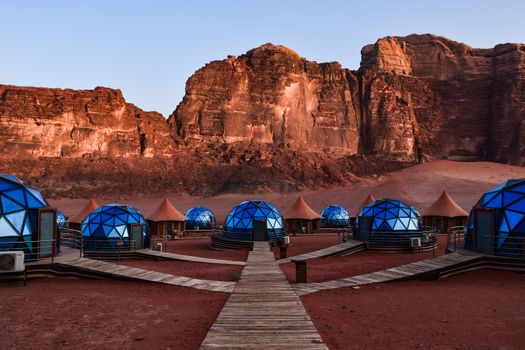
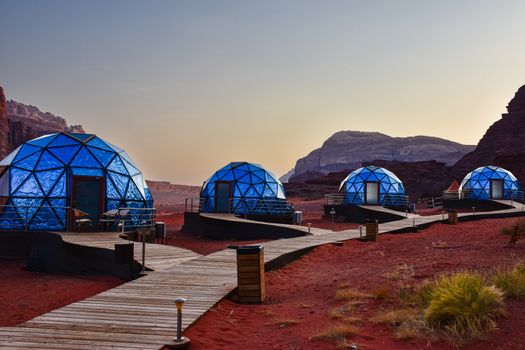
- Camping: Most camping in Wadi Rum is organized through Bedouin camps. These range from basic tents to more luxurious "glamping" bubbles. You'll typically arrange a jeep tour that includes an overnight stay, traditional meals (like Zarb, cooked underground), and cultural experiences. Wild camping is possible but requires expert local guidance due to the vastness and lack of resources.
- Fees: Tour packages vary widely (e.g., $50-$150+ USD per person per night for a basic tour with overnight stay, including meals and activities). Park entrance fee (around $7 USD) is often extra.
- Best Time to Visit: Spring (March-May) and Fall (September-November) offer pleasant temperatures. Summer is extremely hot, winter nights can be very cold.
- Insider Tip: Embrace the Bedouin hospitality! Engage with your hosts, learn about their culture, and enjoy the delicious food. Pack a headlamp, comfortable walking shoes, and a light scarf for sun protection and dust.
- Instagram-Worthy: Silhouettes of camels and jeeps against the red dunes, the dramatic sandstone arches, traditional Bedouin tents under a blanket of stars, and of course, those Mars-like landscapes.
6. Moonscape of Spire in Western Australia: The Pinnacles Desert, Nambung National Park, Australia
Why it feels alien: Step into The Pinnacles Desert, and you'll believe you've landed on the moon. Thousands of limestone spires, some towering several meters high, rise eerily from a vast expanse of yellow sand. These ancient formations, remnants of an earlier era, create a stark, almost sculptural landscape that feels both ancient and utterly alien. The silence and the sheer number of these unique pillars are truly captivating.
I visited The Pinnacles at dusk, and it was an unforgettable experience. The setting sun cast long, distorted shadows, making the spires seem to writhe and dance. It was easy to imagine myself on an archaeological dig on an unknown planet, uncovering the relics of a forgotten civilization. The air was still, the only sound the crunch of my boots on the sand, and the occasional squawk of a distant bird.
Getting There & Staying There:
- Location: Nambung National Park, about 2 hours north of Perth, Western Australia.
- Camping: There is no camping allowed directly within The Pinnacles Desert itself. However, there are excellent camping options nearby. The closest towns with campgrounds are Cervantes (about 20 minutes north) and Jurien Bay (about 40 minutes north). These offer powered sites, facilities, and access to beautiful coastal areas.
- Fees: Nambung National Park entry fee (around $15 AUD per vehicle). Camping fees vary by campground (e.g., $30-50 AUD per night).
- Best Time to Visit: Spring (September-November) for wildflowers and mild weather, or Autumn (March-May). Summer can be very hot, and winter can be rainy.
- Insider Tip: While The Pinnacles is a popular day trip, aim to visit early in the morning or late in the afternoon/dusk. The light is incredible for photography, and you'll avoid the crowds. Wear comfortable walking shoes, and bring water and sun protection.
- Instagram-Worthy: Capture the spires silhouetted against a sunrise or sunset, creating dramatic, eerie scenes. Use wide-angle lenses to emphasize the sheer number of formations. Get creative with perspective shots among the pillars.
---
Your Interstellar Travel Guide: Practical Tips for Your Alien Adventure
These aren't your typical backyard camping trips. Venturing to these otherworldly locales requires a bit more preparation and respect for the unique environments.
- Leave No Trace, Literally: These landscapes are often fragile and ancient. Pack out everything you pack in. Stick to designated trails or areas. Protect these alien wonders for future explorers.
- Research Permits & Regulations: Many of these spots require special permits for camping, especially backcountry or remote areas. Always check official park/local authority websites well in advance. "Locals only" often means "permit holders only."
- Pack for Extremes: Otherworldly often means extreme conditions. Prepare for scorching days and freezing nights, intense sun, high winds, and unpredictable weather. Layers are your best friend.
- Hydrate, Hydrate, Hydrate: Water is scarce in many of these destinations. Carry significantly more than you think you'll need, and have a purification method as a backup.
- Navigation is Key: GPS, detailed maps, and a compass are essential. Cell service can be non-existent. Inform someone of your itinerary.
- Respect Local Culture & Environment: Especially in places like Wadi Rum or Salar de Uyuni, you're a guest. Be mindful of local customs, traditions, and the delicate ecosystems.
- Go Off-Season (If Possible): To truly capture that "alone on another planet" feeling, consider visiting during the shoulder seasons or even slightly off-peak times. You'll often have more solitude.
- Invest in Good Gear: A reliable tent, sleeping bag rated for the expected temperatures, and sturdy hiking boots are non-negotiable. Don't skimp on quality when you're far from civilization.
- Capture the Moment, But Be Present: These places are incredibly Instagrammable, but don't let the quest for the perfect shot overshadow the actual experience. Take a moment to put your camera down and simply absorb the magic.
---
The Universe Awaits
There’s a primal human desire to explore, to discover what lies beyond the familiar. These six camping spots offer more than just a place to pitch a tent; they offer an invitation to step out of your earthly routine and into a landscape of pure wonder. They are the places where stories are born, where perspectives shift, and where you truly feel the vast, incredible diversity of our own planet.
Locals might not want these secrets out, but the universe is too grand to keep hidden. So, pack your bags, charge your camera, and prepare for an adventure that will redefine your understanding of "camping."
Which of these alien landscapes calls to you first? Have you discovered another "off-planet" gem? Share your thoughts and dream camping spots in the comments below!
---