The Hook: A First-Person Descent into the Blue Studio
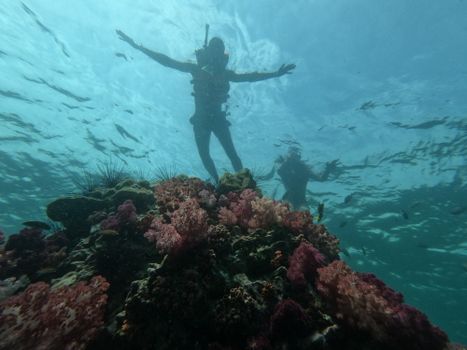
I stepped off the dive platform of the catamaran, the heavy double-tank rig pulling me instantly into the warm, gin-clear waters of the Florida Keys. The sharp, clean scent of salt spray and neoprene was still fresh in my nose, but as I cleared my mask and descended to thirty feet, the surface world vanished.
Below me was not just a reef, but an active underwater construction site.
I hovered, adjusting my buoyancy with micro-breaths, watching a marine biologist gently slice a finger-sized fragment of staghorn coral (Acropora cervicornis) using bone cutters. My task for the afternoon? Using marine-grade epoxy to glue these living fragments onto bare limestone substrate.
When my gloved hand pressed the sticky, mint-green putty onto the rock, securing a fragile coral clone that would one day grow into a sprawling sanctuary for parrotfish and sea turtles, something shifted. I wasn’t just a tourist peering through a glass window anymore; I was part of the ecosystem's life support team.
If you are tired of passive travel and want to make a tangible, scientific impact on your next dive trip, hands-on coral restoration is the most rewarding adventure you can undertake.
---
Why Voluntourism Needs a Wet Suit: The Rise of Citizen Science Reef Restoration
For decades, marine conservation was a spectator sport. Travelers paid park fees, looked at marine protected areas (MPAs) from behind dive masks, and hoped their ecotourism dollars were doing some vague good. But as rising ocean temperatures, ocean acidification, and localized pollution continue to bleach reefs worldwide, marine scientists have realized they cannot do this work alone. They need boots on the ground—or rather, fins in the water.
This realization birthed the era of active coral restoration. By leveraging the global network of recreational scuba divers, conservation organizations can scale up their efforts exponentially.
As a participating traveler, you don't need a PhD in marine biology. What you do need is solid buoyancy control, a willingness to learn, and an itch to do work that matters.
Here are five unforgettable, highly vetted coral restoration programs around the globe where you can actively participate in rebuilding our oceans.
---
1. Key Largo, Florida: The Cradle of Coral Restoration
The Coral Restoration Foundation (CRF)
Key Largo isn't just the self-proclaimed dive capital of the world; it is the birthplace of large-scale coral gardening. The Coral Restoration Foundation (CRF) operates the world's largest open-ocean coral nursery right off the coast of the Florida Keys.
CRF's methodology relies on offshore "Coral Trees"—structures made of white PVC pipes anchored to the sandy bottom and suspended by buoys. These trees mimic natural ocean currents, allowing coral fragments to grow up to four times faster than they would on a flat reef.
``` [Buoy] | [PVC Crossbeams] <--- Coral fragments hang from monofilament lines | [Tension Collar] | [Anchor on Sandy Bottom] ```
What You Will Actually Do
On a typical two-day CRF program, your first morning is spent in the classroom learning about coral ecology, bleaching threats, and restoration techniques. In the afternoon, you head out to the nursery.
Armed with scrub brushes, you will clean algae and biofouling off the PVC trees (algae competes with coral for sunlight). You will then harvest mature coral fragments from the trees, load them into crates, and dive at a degraded reef site to "outplant" them using two-part marine epoxy.
- Pro-Tip: Book your trip at least three months in advance. CRF’s public volunteer slots fill up fast, especially during the summer spawning months.
- The Insider Secret: To get the absolute best buoyancy practice before your dive, book a "Peak Performance Buoyancy" specialty course the day before. You will be working with delicate tools inches away from fragile corals; hovering perfectly still is your most important safety skill.
---
2. Nusa Penida, Bali: Planting Reef Stars in the Coral Triangle
The MARS Coral Reef Restoration Methodology
Just a 45-minute speedboat ride from the chaotic streets of Sanur, Bali, lies Nusa Penida. This island is famous for its dramatic limestone cliffs, manta rays, and ripping ocean currents. It is also home to one of the most innovative reef restoration projects in Southeast Asia, utilizing the Mars Coral Reef Restoration method.
Because Nusa Penida's reefs suffer from historical blast fishing, the seabed in many areas is a shifting desert of unstable coral rubble. Coral larvae cannot settle on moving rubble. To solve this, scientists developed "Reef Stars"—hexagonal, sand-coated steel structures that are webbed together on the seafloor to create a stable, continuous platform.
What You Will Actually Do
Working with local operators like Lembongan Dive Center or Blue Corner Dive, volunteers help build and prep these steel stars on land, tying healthy, resilient coral fragments onto the structures using biodegradable zip ties.
Once prepped, you will assist in lowering these heavy steel frames into the shallow, current-swept waters of the Ped or Toyapakeh reefs. Under water, you will help secure the frames to the seabed and to each other using steel ground stakes. Within months, the corals grow over the steel, completely hiding the structure and creating a thriving three-dimensional reef habitat.
- Pro-Tip: The currents around Nusa Penida and Nusa Lembongan can be notoriously strong (often called "washing machine" currents). This project is best suited for advanced divers who are comfortable in drift conditions.
- The Insider Secret: After a hard day of underwater construction, head to Warung Bambu in Ped. Order the Ikan Bakar (charcoal-grilled fish marinated in sweet soy and local spices) and wash it down with a cold Bintang as the sun sets behind Mount Agung.
---
3. Bonaire, Caribbean: PADI Reef Renewal in Diver's Paradise
Reef Renewal Foundation Bonaire (RRFB)
Bonaire is a shore-diving mecca. Its fringing reefs are incredibly healthy compared to the rest of the Caribbean, but they are not immune to storm damage and disease. Reef Renewal Foundation Bonaire (RRFB) has established multiple nurseries around the island, focusing on genetic diversity to build reefs that can withstand future climate shocks.
RRFB focuses heavily on propagating staghorn (Acropora cervicornis) and elkhorn (Acropora palmata) corals, which are critical for coastal protection and wave energy dissipation.
What You Will Actually Do
Bonaire’s unique geography allows for incredibly easy, low-stress diving. Most of the restoration work here is done via shore entries or short boat rides.
Through participating dive centers (such as Buddy Dive Resort or Wannadive), you can take a 2-day PADI Reef Renewal Distinctive Specialty course. You will learn how to maintain rope nurseries, fragment corals using specialized pliers, and outplant them using underwater cement.
- Pro-Tip: If you have your own dive gear, bring a set of small, rust-resistant stainless steel shears or bone cutters. While the dive shops provide tools, having your own high-quality shears makes the delicate fragmenting process much smoother.
- The Insider Secret: Look for the yellow-painted stones on the side of the coastal road. These mark Bonaire's official dive sites. For a break from restoration, do a self-guided night dive at the Salt Pier; the coral-encrusted pillars host an incredible array of hunting octopuses and sleeping tarpon.
---
4. Great Barrier Reef, Australia: Citizen Science on a Grand Scale
The Coral Nurture Program (CNP)
The Great Barrier Reef is the world’s largest living structure, but it has suffered from successive mass bleaching events. In response, a unique alliance between marine scientists from the University of Technology Sydney (UTS) and local tourism operators created the Coral Nurture Program (CNP).
Instead of using plastic or steel structures, CNP developed a game-changing tool called the Coral Clip®. This is a small, spring-loaded metal clip that allows divers to quickly attach coral fragments directly to the natural rock substrate without using chemical glues or cement. It is faster, cheaper, and highly effective.
``` [Coral Fragment] || ====//==== <--- Coral Clip® (metal spring clip) [==========] ----------------- [Natural Reef Rock] ```
What You Will Actually Do
Several high-end liveaboards and day-trip operators departing from Cairns and Port Douglas (such as Wavelength Reef Charters or Passions of Paradise) allow paying guests to participate in monitoring and planting efforts.
You will assist marine biologists in identifying "corals of opportunity"—fragments that have naturally broken off due to storm action or tourist contact—and clipping them back onto the reef matrix. You will also use handheld slates to record ecological data, including coral health, fish counts, and macroalgae coverage.
- Pro-Tip: Book a multi-day liveaboard trip to the Outer Reef. This gets you away from the heavily touristed inner reefs and allows you to participate in dawn and dusk monitoring runs when marine life is most active.
- The Insider Secret: Keep an eye out for the endemic Acanthaster planci (Crown-of-Thorns Starfish). If you spot one, do not touch it; report its coordinates to the onboard biologist immediately, as these coral-eating predators can decimate a restoration site overnight.
---
5. Koh Tao, Thailand: Conservation for the Budget Backpacker
New Heaven Reef Conservation Program (NHRCP)
For budget travelers and backpackers, Koh Tao is famous as the cheapest place in the world to get scuba certified. But the island’s heavy tourist traffic has taken a toll on its marine ecosystems. Enter the New Heaven Reef Conservation Program (NHRCP), which has been running hands-on marine conservation courses since 2007.
NHRCP is one of the most comprehensive programs in the world, teaching everything from artificial reef construction to shark and turtle monitoring, land-based mariculture, and water quality testing.
What You Will Actually Do
NHRCP offers programs ranging from a single day to a full month. If you sign up for a week-long course, you won't just be planting coral; you will be building giant steel dome structures, maintaining land-based giant clam nurseries, monitoring coral disease, and even participating in beach and underwater cleanups.
This is a gritty, highly educational program designed for those who want a deep dive into the science of marine resource management.
- Pro-Tip: Skip the crowded party hostels in Sairee Beach. Stay in the quieter, southern part of the island near Chalok Baan Kao, where New Heaven is based. The vibe is much more laid-back, and you will be surrounded by fellow conservationists rather than full-moon partygoers.
- The Insider Secret: For a cheap and mind-blowing post-dive meal, head to Ying Yang Restaurant near Chalok. Order the Massaman Curry with a side of garlic naan; it is rich, deeply spiced, and packed with local potatoes and cashews.
---
The Ethics of Reef Voluntourism: How to Avoid Greenwashing
As eco-travel grows in popularity, so does greenwashing. Some dive operators use "coral restoration" as a marketing gimmick, taking tourists out to glue corals that have zero chance of survival due to poor water quality, incorrect placement, or lack of long-term monitoring.
To ensure your time and money actually support the ocean, ask these three critical questions before booking any program:
- Who is the scientific partner? Reputable programs are always paired with a university, government agency, or registered NGO (e.g., University of Technology Sydney, NOAA, or Reef Renewal International).
- Is there a long-term monitoring plan? Planting coral is only 10% of the job. The organization must regularly monitor, clean, and collect survivorship data on the outplanted corals for at least 12 to 24 months.
- Do they prioritize genetic diversity? Simply cloning the same fast-growing staghorn coral over and over creates a monoculture that can be completely wiped out by a single disease outbreak. High-quality programs track genetic strains to ensure reef resilience.
---
Planning Your Eco-Dive: Cost & Logistics Breakdown
To help you choose the project that best fits your travel style and budget, here is a quick reference guide to the top five programs:
| Destination | Organization / Partner | Estimated Cost (USD) | Best Time to Visit | Minimum Certification Level | | :--- | :--- | :--- | :--- | :--- | | Key Largo, Florida | Coral Restoration Foundation | $150 - $250 (Day trip) | May to September (Calm seas) | PADI Open Water (Advanced preferred) | | Nusa Penida, Bali | Blue Corner Dive / MARS | $300 - $500 (Multi-day) | May to October (Manta season) | PADI Advanced Open Water | | Bonaire, Caribbean | Reef Renewal Bonaire | $200 - $350 (2-Day Course) | Year-round (Outside hurricane belt) | PADI Open Water | | Great Barrier Reef, Aus | Coral Nurture Program | $250 - $400 (Day trip) | October to December | PADI Open Water | | Koh Tao, Thailand | New Heaven Conservation | $450 - $1,200 (1 to 4 Weeks) | March to August | PADI Open Water |
How to Get There & What to Pack
- Florida Keys: Fly into Miami International Airport (MIA), rent a car, and drive 1.5 hours south along the Overseas Highway (US-1) to Key Largo.
- Bonaire: Fly directly into Flamingo International Airport (BON) via Houston, Atlanta, or Amsterdam.
- Essential Packing List:
- Reef-safe, non-nano zinc sunscreen (chemical sunscreens containing oxybenzone or octinoxate kill coral larvae).
- A high-quality dive computer (you will be doing multiple multi-level dives; tracking your nitrogen loading is critical).
- A durable dry bag (to keep your logbook, phone, and dry clothes safe from salt spray on open boats).
- A pair of neoprene dive gloves (essential for handling tools, epoxy, and rough substrates without damaging your skin).
---
The Last Stop: Leaving the Reef Better Than You Found It
On my final dive in Key Largo, we swam past a reef section that had been outplanted three years prior. The individual finger-sized fragments we had glued down were gone. In their place was a dense, interlocking thicket of golden-brown staghorn coral, pulsing with life.
A school of juvenile blue tangs darted between the branches, using the structure we built to hide from a cruising barracuda.
As travelers, we spend so much of our lives consuming the beauty of the world. We take photos, we collect stamps in our passports, we leave footprints. But diving down to plant a reef is one of the rare opportunities we have to put something back.
It is a chance to look at a thriving underwater ecosystem decades from now and say: I helped build that.
---