The Bitter, Peppery Bite of Liquid Gold
I stepped off the morning regional train in Chiusi with the damp chill of late October clinging to my wool sweater. The morning air smelled intensely of woodsmoke, wet wild mint, and crushed damp earth. Thirty minutes later, I stood on a steep terrace outside San Casciano dei Bagni, balancing on a lime-slicked slope with a plastic hand rake (manina) gripped in my gloved fist.
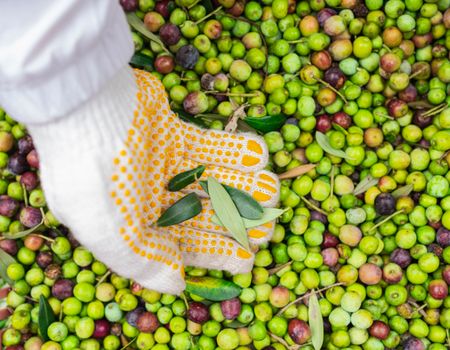
Beneath my boots, heavy green mesh nets fanned out across the terra-cotta soil like billowing sails. When I raked the laden boughs of a centuries-old Frantoio tree, the olives rained down around me with a rhythmic clatter that sounded like hail on a zinc roof.
By 4:00 PM, those same hand-picked fruits were fed into a continuous-cycle centrifugal mill. What flowed out twenty minutes later wasn't the pale, transparent oil you buy at supermarket chains—it was an opaque, electric-green elixir so thick it pooled like velvet on toasted slab bread. The first sip hit my throat with the sharp, astringent punch of raw artichoke and wild arugula, followed by an immediate cough.
"Three coughs," smiled the miller, brushing flour off his apron. "That’s how you know the polyphenols are alive."
Participating in an olive harvest is a visceral antidote to modern travel burnout. It drops you straight into the oldest living culinary ritual of the Mediterranean basin. If you want to trade sightseeing lines for field work, cellar tastings, and long communal dinners, here are the world's finest olive groves offering harvest experiences worth considering.
---
1. Fattoria Poggio di Sotto & The Val d'Orcia (Tuscany, Italy)
The southern tip of the Val d'Orcia is home to some of the planet's strictest agricultural standards. Here, the olive harvest isn't a staged photo-op; it’s an all-hands-on-deck race against frost and fruit fly migrations that typically kicks off in late October.
At traditional estates around Montalcino and Montepulciano, harvest stays blend raw physical labor with legendary hospitality. You spend mornings unfurling the reti (nets) and pulling purple-black Leccino and peppery Frantoio olives from gnarled limbs. The reward comes at lunchtime: outdoor trestle tables groaning under the weight of ribbed ribollita, Pecorino di Pienza rind-rubbed with tomato paste, and carafes of young Sangiovese.
- The Experience: Guests work directly alongside multi-generational farm crews, learning how to rake without stripping the delicate fruiting buds for the next year’s crop. After collecting your crates, you follow the tractor directly to the local frantoio (mill) to watch the cold extraction process at under 27°C (80.6°F).
- Pro-Tip: Pack clothes you don't mind throwing away. Raw olive oil spray and crushed leaves leave dark, tannin-rich black stains that permanently set into cotton and canvas.
---
2. Hacienda Guzmán (Andalusia, Spain)
Drive twenty minutes east of Seville into the arid plains of La Rinconada, and you hit the heartland of world olive oil production. Andalusia produces more olive oil than the entire nation of Italy, but Hacienda Guzmán focuses purely on high-heritage agronomy. This estate dates back to the 16th century, when Hernando Columbus (son of Christopher) managed its trade of olive oil to the Americas.
Today, the estate boasts a living museum with more than 150 olive varieties sourced from five continents, alongside massive commercial groves of Arbequina, Manzanilla, and the ubiquitous Andalusian Picual.
- The Experience: Harvest tours here run throughout November. You can step into their historical 12th-century beam press—where a massive wooden beam once crushed olives using mule power—before heading into the field with traditional wicker baskets to harvest olives destined for single-estate reserve bottles. The experience culminates in a professional sensory tasting led by an oleologist.
- Pro-Tip: Skip the standard afternoon day tour from Seville. Book an overnight stay nearby in Carmona and request an 8:00 AM private harvest slot. The morning mist hanging over the silver-green groves makes for extraordinary light and cooler fieldwork.
---
3. Biolea Estate: Astrikas (Kolymbari, Crete)
High above the coastline of western Crete, nestled against the rugged limestone bluffs of the Kolymbari region, the Dimitriadis family runs Biolea. While most modern mills have swapped out heritage equipment for stainless steel continuous decanters, Biolea remains one of the few certified organic producers in Greece operating an artisanal, stone-mill press.
Crete’s olive harvest revolves almost exclusively around the tiny, concentrated Koroneiki olive. What this variety lacks in water weight, it makes up for in intense aromatics and staggering antioxidant levels.
- The Experience: Harvest here takes place later in the season, running from mid-November well into January. Travelers can join the family in harvesting the terraced mountain trees using battery-powered harvesting wands, followed by sweeping the olives into burlap sacks. Back at the mill, massive granite millstones crush the whole fruit into an oily paste, which is then layered onto woven nylon mats (capachos) and cold-pressed using low hydraulic pressure.
- Pro-Tip: The dirt track leading up to the estate from the main Kolymbari road is rutted and narrow; skip the low-clearance compact rental car and opt for a high-clearance vehicle or an AWD crossover.
---
4. Herdade do Esporão (Alentejo, Portugal)
The sun-scorched Alentejo region produces some of the most complex, under-the-radar extra virgin olive oils on the Iberian Peninsula. Located near the historic whitewashed village of Reguengos de Monsaraz, Herdade do Esporão is an estate where ancient agricultural traditions intersect with boundary-pushing architecture and a Michelin Green Star culinary program.
The terroir features schisty, iron-rich soils supporting Portuguese heritage varieties like Galega, Cordovil, and Cobrançosa.
- The Experience: Esporão offers an immersive olive-to-bottle masterclass throughout October and November. You participate in the hand harvest, visit the hyper-modern lagar (press house) designed by architectural firm Bruno Shobinger, and finish with a multi-course harvest lunch prepared over open oak embers. The dishes feature distinct oil pairings tailored to acidity, bitterness, and fruitiness.
- Pro-Tip: Ask to taste the Cobrançosa monovarietal oil side-by-side with the Galega. Cobrançosa gives off distinct notes of freshly cut grass and green tomatoes, while Galega leans toward sweet apples and ripe bananas.
---
5. Domaine de Leos (Provence, France)
Tucked below the limestone crags of the Luberon near L’Isle-sur-la-Sorgue, Domaine de Leos sits on a historic plateau that yields exceptional AOP Huile d'Olive de Provence. Unlike the hyper-industrial olive flatlands of northern Europe, Provence’s groves are planted among wild thyme, lavender, and garrigue scrub.
The regional harvest focuses heavily on Aglandau and Salonenque varieties, celebrated for producing oils with velvety, buttery textures and subtle herbal finishes.
- The Experience: The estate opens its doors in November for small, intimate picking groups. Harvest days involve traditional hand-picking into shoulder-slung baskets, field pruning demonstrations, and rustic picnics featuring crusty country sourdough, tapenades prepared on site, and local charcuterie.
- Pro-Tip: Make time to visit the nearby waterwheel village of L’Isle-sur-la-Sorgue on Sunday morning before your harvest slot to explore one of the largest antique and local producers' markets in southern France.
---
The Terroir Masterclass: How to Taste Like an Oleologist
Don't dip bread into the oil during your initial evaluation. In professional olive oil competitions and mill laboratories, bread masks imperfections, tempers high-end acidity, and obscures oxidation defects. To evaluate oil like an insider at the mill, follow these four steps:
``` [POUR] -> 15ml of raw, fresh-milled oil into a rounded, blue tasting glass. │ [WARM] -> Cup the base of the glass in one palm; cover the rim with the other. │ Swirl for 60 seconds to release volatile aromas via body heat. │ [SNIFF] -> Uncover and inhale deeply through your nose. Look for artichoke, │ tomato leaf, green almond, or cut grass. Any greasy or crayon aroma signals rancidity. │ [SLURP] -> Take a small sip. Press your tongue to the roof of your mouth and inhale sharply twice through your teeth (strippaggio). Note the fruit on the tongue, bitterness on the sides, and pepper in the throat. ```
High-quality harvest oil should make your throat tingle or sting. This sensation is caused by oleocanthal, a naturally occurring anti-inflammatory polyphenol. If the oil is smooth, flat, and tastes like standard vegetable cooking fat, it has degraded or oxidized.
---
Logistics, Timing & Quick Facts
Harvest windows vary significantly depending on microclimates, tree altitude, and autumn rainfall. Plan your trip with this quick planning index:
| Region | Peak Harvest Window | Star Varietals | Average Daily Cost (Stay + Workshop) | Closest Transit Hub | | :--- | :--- | :--- | :--- | :--- | | Tuscany (Val d'Orcia) | Oct 20 – Nov 15 | Frantoio, Moraiolo, Leccino | $220 – $450 USD | Florence (FLR) / Chiusi Station | | Andalusia (Seville/Jaén) | Nov 1 – Dec 10 | Picual, Hojiblanca, Arbequina | $140 – $300 USD | Seville (SVQ) / Santa Justa Train | | Crete (Kolymbari/Chania) | Nov 15 – Jan 10 | Koroneiki, Tsounati | $110 – $240 USD | Chania International (CHQ) | | Alentejo (Monsaraz) | Oct 15 – Nov 30 | Galega, Cobrançosa | $180 – $380 USD | Lisbon (LIS) / Évora Train | | Provence (Luberon) | Nov 1 – Dec 05 | Aglandau, Salonenque | $260 – $520 USD | Marseille (MRS) / Avignon TGV |
---
3 Essential Rules for Booking a Harvest Trip
1. Book Directly With Agriturismi 6 Months Ahead
Real working farms have limited guest accommodations, often only four to eight rooms. Because harvest requires full family focus, estates cap outside guest numbers to keep operations safe and manageable. Reach out directly via phone or personal email in early spring to lock in late-autumn harvest packages.
2. Guard Against Climate Variations
The harvest date is dictated by nature, not calendar appointments. A sudden dry spell can push picking early; a week of heavy autumn rain halts work immediately, since wet olives rot in harvest bins and can't be milled properly. Book a farm stay that spans at least four to five days so you have a weather buffer to ensure you get grove time.
3. Check International Agricultural Customs
You will want to bring home liquid souvenirs. You cannot pack fresh, unfiltered olio nuovo into your carry-on luggage due to TSA liquid limits. Bring a dedicated hard-shell suitcase lined with bubble wrap or buy sealed, airline-approved 3-liter or 5-liter tin containers shipped directly from the mill.
The olive harvest bridges the gap between active adventure and culinary heritage. You will finish your days with sore forearms, soil under your fingernails, and an appreciation for the Mediterranean's most celebrated crop that no grocery store aisle could ever give you.
---