Beyond the Filter: Scary Street Foods Influencers WON'T Show You!
The sun beat down on the bustling streets of Hanoi, a symphony of motorbikes, hawker calls, and the sizzling of countless woks. I was navigating the labyrinthine Old Quarter, camera in hand, trying to capture that perfect, Instagram-worthy shot of a steaming bowl of pho. Suddenly, a pungent, almost medicinal aroma hit me. It wasn't unpleasant, just… different. I followed my nose, a cardinal rule of street food hunting, and found myself staring at a vendor meticulously arranging what looked like dark, gelatinous eggs on a small cart. Their color ranged from deep grey to almost black, with a peculiar, almost translucent sheen. My stomach did a little flip. My brain screamed, "No way!" My travel buddy, ever the instigator, nudged me. "Bet you won't try it."
That, my friends, is the moment I knew I had to write this post. Because while Instagram is awash with stunning flat lays of smoothie bowls and perfectly stacked burgers, there's a whole universe of incredible, mind-blowing street food out there that looks, well, a little scary. These are the dishes that influencers often skip, or only show for shock value, missing the incredible stories, the rich history, and the utterly delicious flavors hidden beneath their unconventional exteriors.
Forget the filters and the curated perfection. Today, we're going on a culinary adventure to uncover the street food secrets that will challenge your preconceptions, thrill your taste buds, and leave you with genuine, unforgettable travel stories. These aren't just meals; they're rites of passage, cultural insights, and proof that true deliciousness often lies beyond our comfort zones.
Are you ready to truly eat like a local? Let's dive in.
---
1. Balut (Philippines): The Embryonic Enigma
What it looks like: Oh, Balut. The undisputed champion of "looks scary but tastes amazing" in Southeast Asia. This is a fertilized duck egg, incubated for about 14-21 days, then hard-boiled. When you crack it open, you'll find a developing embryo, complete with visible veins, a small beak, and sometimes even tiny feathers. Yeah, I know. Deep breaths.
My first encounter: My inaugural trip to Manila was a whirlwind of jeepneys and karaoke. One humid evening, walking through a vibrant night market in Quiapo, my Filipino friend, Leo, pointed to a vendor with a mountain of eggs. "You have to try Balut," he declared, a mischievous glint in his eye. My gut reaction was pure revulsion. I'd seen videos, heard the whispers. But Leo insisted, explaining it was a Filipino delicacy, a source of protein and vitality. He showed me how: crack the top, sip the savory broth, then peel the rest and eat it with a dash of vinegar and salt.
The taste revelation: With a gulp and a prayer, I cracked it. The warm, salty broth was surprisingly delicious, like a concentrated chicken soup. Then came the main event. The yolk was rich and creamy, more intense than any regular egg yolk. The albumen (the white part) was firm, almost jelly-like. And the embryo itself? It was tender, meaty, and savory, a texture somewhere between soft chicken and rich pâté. The vinegar and salt cut through the richness perfectly. I was genuinely shocked. It wasn't just edible; it was genuinely good.
Where to find it & price: Widely available from street vendors, especially at night markets, in public squares, and near bus terminals across the Philippines. Look for vendors with large baskets of eggs, often kept warm. Price: Typically 20-30 PHP (around $0.35 - $0.50 USD) per egg.
Tripsora Tip: Don't overthink it. Just crack, sip, season, and eat. The younger the embryo (14-16 days), the less developed it will be, which some find easier for a first-timer. It's often considered an aphrodisiac, so prepare for some playful teasing from locals!
---
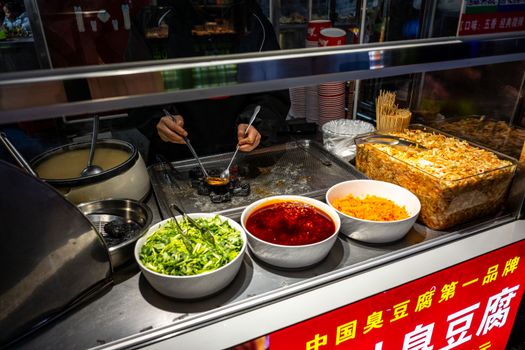
2. Stinky Tofu (Taiwan/Hong Kong/China): The Olfactory Overload
What it looks like: Usually deep-fried to a golden crisp, often served with pickled cabbage and a generous dollop of chili sauce. Visually, it's just cubes of tofu. The "scary" part isn't what you see, but what you smell.
My first encounter: Shilin Night Market in Taipei. A sensory explosion of sights, sounds, and, most notably, smells. Amidst the sweet scent of bubble tea and grilled squid, a powerful, unmistakable odor hit me like a wall. It was a pungent, almost sewage-like stench that made my eyes water. "What is that?!" I exclaimed to my partner, covering my nose. He pointed to a small stall with a long queue, where a woman was expertly frying cubes of tofu. "Stinky Tofu," he grinned. "You have to try it."
My initial thought was, "No way anything that smells like that can taste good." But the sheer number of locals patiently waiting for their fix was compelling. We joined the line, enduring the olfactory assault, and ordered a small plate.
The taste revelation: The first bite was a revelation. The exterior was perfectly crispy, giving way to a soft, fluffy interior. The flavor? Incredibly savory, umami-rich, and distinct, but completely devoid of the foul smell. It was like a well-aged cheese, complex and deeply satisfying, especially when paired with the tangy pickled cabbage and a fiery chili sauce. The contrast between the smell and the taste was so extreme it felt like a magic trick. I ended up ordering a second plate.
Where to find it & price: A staple in night markets and street stalls across Taiwan (especially Taipei's Shilin, Raohe), Hong Kong, and mainland China. Look for the longest queues and, naturally, the strongest smell. Price: Around 50-100 NTD (Taiwan) or 20-40 HKD (Hong Kong) per plate ($1.50 - $5 USD).
Tripsora Tip: Don't let your nose fool your mouth. Go for the deep-fried version first, as the crispy exterior helps mitigate the initial texture shock. Always ask for extra chili and pickled vegetables – they're essential companions.
---
3. Fried Insects (Thailand/Cambodia): Crunchy Critters, Unexpected Delights
What it looks like: Piles of deep-fried crickets, grasshoppers, silkworms, bamboo worms, and even scorpions, often seasoned with salt, pepper, and sometimes chili. They look exactly like what they are: bugs.
My first encounter: Khao San Road, Bangkok. A kaleidoscope of backpackers, neon lights, and street food. Amidst the Pad Thai and mango sticky rice, a vendor proudly displayed a veritable buffet of fried insects. A group of rowdy tourists were daring each other to try a scorpion, but I was drawn to the more approachable-looking crickets and silkworms. I'd always been curious about entomophagy, and this felt like the perfect opportunity.
The taste revelation: I bought a small bag of mixed crickets and silkworms. The crickets were surprisingly crunchy, like tiny, savory potato chips, with a slightly nutty flavor. The silkworms were richer, with a softer, almost creamy interior and an earthy taste reminiscent of mushrooms. Both were perfectly seasoned with salt and a hint of chili, making them incredibly moreish. They paired surprisingly well with a cold beer. It wasn't just a novelty; it was a genuinely tasty snack.
Where to find it & price: Very common in night markets across Thailand (Khao San Road, Chiang Mai Night Bazaar), Cambodia (Siem Reap Pub Street, Phnom Penh Russian Market), and parts of Vietnam. Price: A small bag usually costs 20-50 THB/KHR (around $0.60 - $1.50 USD), depending on the type and quantity. Scorpions are often more expensive, a novelty item.
Tripsora Tip: Start with crickets or bamboo worms – they're generally the most palatable. Think of them as high-protein, environmentally friendly potato chips. Don't be afraid to ask for a sample if the vendor offers! They're often fried fresh, so look for a stall with a hot wok.
---
4. Durian (Southeast Asia): The King of Fruits (and Smells)
What it looks like: A large, spiky, greenish-brown fruit, sometimes weighing several kilograms. It looks formidable, like a medieval weapon. The "scary" part, however, is its notorious, incredibly potent smell.
My first encounter: My first trip to Malaysia. I'd heard the legends of Durian, the fruit so pungent it's banned from many hotels and public transport systems across Southeast Asia. I considered myself a culinary adventurer, but the smell, even from a distance, was alarming – a bizarre mix of ripe cheese, gym socks, and turpentine. My local host, Auntie Ling, insisted I try it. "You haven't truly experienced Malaysia until you've eaten Durian," she declared, presenting a perfectly cut wedge of the fruit.
The taste revelation: I braced myself, took a small piece of the creamy, yellowish flesh. The texture was incredibly smooth, like a rich custard. The flavor was an explosion: intensely sweet, complex, with notes of almond, caramel, and a hint of onion, all wrapped in a strangely savory undertone. It was unlike anything I had ever tasted – a truly unique, almost intoxicating experience. The smell, which had been so off-putting, somehow transformed into part of its unique charm once I tasted it. I was instantly converted into a Durian lover.
Where to find it & price: Ubiquitous in Malaysia, Thailand, Singapore, Indonesia, and the Philippines. Look for roadside stalls, fruit markets, and specialized Durian shops. Peak season is typically May to August. Price: Varies wildly by variety and weight. Popular varieties like Musang King can be expensive, ranging from $10-$30 USD per kilogram, but smaller, local varieties are much more affordable.
Tripsora Tip: Don't buy pre-packaged durian if you can help it; fresh is always best. Ask the vendor to help you choose a ripe one. If the smell is too much, try holding your nose for the first bite, or pair it with something neutral like plain water or a bite of rice. Once you get past the smell, the reward is immense.
---
5. Sannakji (South Korea): The Wriggling Wonder (Handle with Care!)
What it looks like: Pieces of raw, chopped octopus, still wriggling on the plate due to residual nerve activity. It’s usually served simply with sesame oil and sesame seeds. The "scary" factor here is definitely the movement.
My first encounter: Noryangjin Fish Market, Seoul. A vibrant, bustling fish market where you pick your seafood fresh from tanks and have it prepared on the spot. My Korean friend, Min-jun, suggested Sannakji. My eyes widened as I saw a plate of still-moving tentacles being delivered to a nearby table. The suction cups were visibly active! I was both terrified and utterly fascinated.
The taste revelation: With a healthy dose of apprehension, I picked up a piece with my chopsticks. It clung slightly, and as I brought it to my mouth, I could feel the tiny suction cups gently adhering to my lips. The taste was incredibly fresh, mildly sweet, and chewy, enhanced by the nutty sesame oil. The sensation of the wriggling was surprisingly exhilarating rather than gross, adding an element of thrill to the dining experience. It was a true adrenaline rush and a testament to how fresh seafood can be.
Where to find it & price: Best found in large fish markets like Noryangjin Fish Market or Garak Market in Seoul, or in specialized seafood restaurants. Price: A small plate can range from 15,000-25,000 KRW (around $12-$20 USD), depending on the size of the octopus.
Tripsora Tip: This is one dish where caution is paramount. The active suction cups can pose a choking hazard. Chew thoroughly and slowly! Have water or a drink nearby. It’s an experience for the truly adventurous, but the freshness and unique texture are unforgettable. This is definitely one influencers often show for shock value, but the actual culinary delight is often overlooked.
---
6. Pidan (Century Egg) (China/Taiwan): The Ancient Alchemist's Egg
What it looks like: A duck, chicken, or quail egg that has been preserved for several weeks or months in a mixture of clay, ash, salt, quicklime, and rice hulls. The yolk turns dark green or black and creamy, while the white becomes a dark brown, translucent, gelatinous mass. It looks like something from an alien planet.
My first encounter: During a family visit to my friend's grandmother in rural Taiwan, a platter of cold tofu topped with wedges of these mysterious, dark eggs was placed before me. "Pidan," my friend said, noticing my hesitant gaze. My first thought was, "Is this… edible?" The dark, almost obsidian color of the egg white, and the greenish-black yolk, looked so unnatural.
The taste revelation: I took a small bite, bracing myself. The texture was surprisingly smooth and jelly-like for the white, and incredibly creamy for the yolk. The flavor was complex, savory, and powerfully umami, with a distinct, slightly metallic or ammonia-like tang that quickly mellowed into a rich, earthy taste. It was often served with fresh ginger, soy sauce, or a drizzle of sesame oil, which perfectly complemented its intensity. It wasn't an instant love affair like Durian, but it was profoundly interesting and left a lasting impression. I learned to appreciate its depth, especially when paired with milder dishes like congee or cold tofu.
Where to find it & price: Widely available in supermarkets and street food stalls across China, Taiwan, and Hong Kong. Often served as a side dish in restaurants or in congee (rice porridge). Price: Very affordable, usually a few RMB/NTD per egg (less than $1 USD).
Tripsora Tip: Don't try to eat it plain if you're a first-timer. Try it sliced and served with cold tofu (皮蛋豆腐, pídàn dòufu) or in congee (皮蛋瘦肉粥, pídàn shòuròu zhōu). The other ingredients help balance its intense flavor and introduce you to its unique deliciousness.
---
Beyond the Fear: Practical Tips for Your Street Food Adventure
So, you're ready to dive into the deep end of street food? Fantastic! Here are some practical tips to ensure your adventure is both delicious and safe:
- Look for the Locals: The golden rule of street food. If a stall has a long queue of locals, it's usually a sign of good, fresh food and a high turnover, which means ingredients aren't sitting around too long.
- Observe Hygiene: While street food isn't always pristine, look for vendors who appear clean, use fresh ingredients, and handle food properly (e.g., using gloves, separate utensils for raw and cooked food). Avoid places where cooked food sits uncovered for long periods.
- Go During Peak Hours: This is when food is cooked in large batches and consumed quickly, ensuring freshness. Lunch and dinner rushes are ideal.
- Embrace the Unknown (within reason): Part of the fun is trying things you don't recognize. Point, gesture, or use a translation app. Most vendors are happy to help.
- Start Small: Don't commit to a huge plate if you're unsure. Order a small portion to try, and if you like it, go back for more!
- Carry Cash: Many street food vendors only accept local currency, and often only small denominations.
- Stay Hydrated: Always have bottled water on hand.
- Be Open-Minded: This is the most crucial tip. Leave your preconceived notions at home. What looks strange to you is a beloved delicacy to someone else. Approach each dish with curiosity and respect for the local culture.
- Ask for Recommendations: Don't be shy to ask locals or your hostel/hotel staff for their favorite street food spots, especially for specific dishes.
---
Conclusion: Your Plate, Your Story
In a world increasingly dominated by curated feeds and picture-perfect experiences, there's immense joy and authenticity in stepping off the beaten path. The "scary" street foods aren't just about pushing your culinary boundaries; they're about embracing local culture, connecting with people, and creating genuinely unique travel memories that you won't find replicated on every influencer's grid.
These are the flavors that tell stories, the textures that surprise, and the aromas that linger long after you've left the bustling streets. They are an invitation to be brave, to be curious, and to discover that the most incredible tastes often hide behind the most unexpected appearances.
So, next time you're wandering through a foreign market, resist the urge to scroll past the unfamiliar. Take a deep breath, silence that inner voice of apprehension, and dare to try something that looks a little wild. You might just discover your new favorite dish, and a story far more compelling than any perfectly filtered photo.
What's the "scariest" street food you've ever tried and loved (or hated)? Share your wild culinary adventures in the comments below! And don't forget to tag #TripsoraFoodDare on your next daring food pic!
---