Beyond the Brazen Bite: Uncovering the World's Scariest-Looking, Most Delicious Street Foods
My heart pounded, a primal drumbeat against my ribs. In my hand, a small, unassuming brown egg, warm from the vendor's pot. Around me, the cacophony of Manila's night market swirled – sizzling woks, laughter, the scent of grilled meats. But all I could focus on was the egg. Specifically, what was inside it.
"Just go for it," my Filipino friend, Marco, urged with a mischievous grin. "It's good for the soul... and the stomach."
I took a deep breath, tapped the top of the egg, peeled back a small section of shell, and peered inside. My stomach lurched. There it was: a partially developed duck embryo, veins visible, a tiny beak-like structure. This, my friends, was Balut. The ultimate "scary street food" challenge.
Every fiber of my being screamed, "NO!" But the adventurous traveler in me, the one who craves authentic experiences beyond the tourist traps, whispered, "Try it. What's the worst that could happen?"
I squeezed my eyes shut, tipped the egg, and took a tentative sip of the broth. It was warm, savory, surprisingly rich. Then, a small bite of the yolk and the... thing. And that, dear readers, is when my world of culinary perception shattered. The texture was soft, tender, the flavor a complex, earthy, meaty symphony I never expected. My eyes snapped open. A wide grin spread across my face. Marco chuckled. "See? I told you."
That moment, standing amidst the chaos and charm of a Manila night market, was a revelation. It taught me that true travel isn't just about seeing sights; it's about experiencing cultures, and often, that means pushing your boundaries, especially with food. The most incredible, authentic flavors are often hidden behind appearances that might make your Instagram followers gasp. These aren't just foods; they're stories, traditions, and a direct line to the heart of a local culture.
Locals often savor these "scary" delicacies, not just for their taste, but for the history and community they represent. They’re the dishes that tourists often shy away from, leaving more for those in the know. But today, I’m letting you in on the secret. Forget your preconceived notions and join me on a wild, delicious ride through the world of street foods that look terrifying but taste absolutely phenomenal. Get ready to expand your palate, impress your friends, and discover flavors you never knew existed!
1. The Embryonic Enigma: Balut (Philippines)
Let's start where my journey of culinary bravery began. Balut, the aforementioned fertilized duck egg, is arguably the poster child for "looks scary, tastes amazing."
What Makes It Scary: Visually, it's a shock. Peeling back the shell reveals a partially formed duck embryo, complete with feathers, bones, and a tiny beak. It's not for the faint of heart, or those with a delicate stomach.
The Surprise Taste: Despite its appearance, Balut is incredibly delicious. The broth inside is a warm, savory, almost chicken-soup-like liquid. The yolk is rich and creamy, while the embryo itself has a tender, meaty texture, often described as a cross between chicken and liver, with a distinct gamey flavor. It's usually seasoned with a sprinkle of salt and a splash of vinegar. The tiny bones and feathers are soft enough to chew and swallow, adding a unique texture.
My Anecdote: My first balut was, as described, a moment of pure terror followed by pure delight. After that initial sip and bite, I found myself craving more. I went from squeamish tourist to a balut enthusiast in one bite. I even learned to identify the different stages (the older the embryo, the more developed it is, which some prefer for a stronger taste).
Where to Find It & Price: Balut is ubiquitous in the Philippines. You'll find vendors selling it from insulated baskets on almost every street corner, especially in the evenings. Night markets in cities like Manila (e.g., Quiapo Market, Salcedo Market) and Cebu are prime spots.
- Price: Typically PHP 20-30 per egg (approx. $0.35 - $0.50 USD).
- How to Eat: Tap the broader end, peel a small hole, sip the savory broth. Then, peel more of the shell, add a pinch of salt and a dash of vinegar (often provided by the vendor), and eat the yolk and embryo. Don't overthink it, just enjoy the unique flavors and textures!
Instagram-Worthy Moment: A shot of you, mid-peel, with a look of brave anticipation, or triumph after your first bite!
2. Crunchy Critters: Chapulines (Mexico)
From the streets of Oaxaca, Mexico, comes another seemingly terrifying treat that will awaken your taste buds: chapulines.
What Makes It Scary: They're grasshoppers. Whole, roasted, seasoned grasshoppers. Piles of them, often bright red from chili, staring back at you from baskets in the market. If you have an aversion to insects, this will test your limits.
The Surprise Taste: Forget your preconceived notions about bugs. Chapulines are incredibly flavorful and addictive. They're roasted or fried until crispy, then seasoned with chili, lime, garlic, and salt. The result is a smoky, salty, tangy crunch that's utterly irresistible. They have an earthy, slightly nutty flavor, often compared to shrimp or crunchy potato chips, but with a unique depth.
My Anecdote: I first encountered chapulines in Oaxaca's Mercado Benito Juárez. The sheer volume of them was intimidating. A friendly vendor, noticing my hesitant gaze, offered me a small sample. I popped one into my mouth, expecting... well, bug. Instead, I got an explosion of smoky, salty, limey goodness, followed by a satisfying crunch. I immediately bought a large bag and munched on them throughout my trip, adding them to tacos, quesadillas, and even just eating them by the handful. They became my favorite snack!
Where to Find It & Price: Chapulines are a staple in Oaxaca, Mexico, especially in the central markets like Mercado Benito Juárez and Mercado 20 de Noviembre. You'll also find them in some parts of Mexico City.
- Price: MXN 30-50 for a small bag (approx. $1.50 - $2.50 USD). Larger quantities are available.
- How to Eat: Eat them plain as a snack, sprinkle them over tacos, tlayudas (large crispy tortillas), or guacamole for an extra crunch and flavor boost.
Instagram-Worthy Moment: A vibrant close-up of a colorful pile of chapulines, or you confidently munching on them with a backdrop of a bustling Mexican market.
3. The Stink That Sings: Stinky Tofu (Taiwan/China)
This one doesn't look scary, but it certainly smells scary. Stinky tofu is an olfactory challenge that rewards the brave with an unforgettable culinary experience.
What Makes It Scary: The smell. Oh, the smell. It's often described as rotten garbage, dirty socks, or sewage. You'll smell it long before you see the stall, and it's enough to make many tourists turn and run.
The Surprise Taste: Once you get past the pungent aroma, stinky tofu is a revelation. The fermentation process gives it an incredibly complex, savory, umami-rich flavor that is utterly unique. When deep-fried, it develops a wonderfully crispy exterior and a soft, custard-like interior. When stewed or grilled, it's hearty and deeply flavorful. It's often served with pickled cabbage, chili sauce, and garlic, which perfectly complement its robust taste.
My Anecdote: My first encounter with stinky tofu was at Taipei's Shilin Night Market. I followed my nose (and my adventurous spirit) to a stall where locals were lining up, unfazed by the powerful odor. I ordered a plate of the fried version, my nose wrinkling with every breath. The first bite was a moment of cognitive dissonance – my brain was telling me "run!", but my taste buds were screaming "more!". The crispy skin, the creamy interior, the powerful savory punch – it was addictive. I quickly understood why it's such a beloved local delicacy.
Where to Find It & Price: Stinky tofu is a cornerstone of night markets throughout Taiwan (Taipei's Shilin, Raohe, or Ningxia Night Markets are excellent spots) and is also popular in Hong Kong and parts of mainland China.
- Price: NTD 50-100 per plate (approx. $1.70 - $3.40 USD).
- How to Eat: Try the fried version first, as the crispy crust can make the initial experience less overwhelming. It's typically served with pickled cabbage, chili sauce, and sometimes a sweet soy-based sauce. Don't be afraid to douse it in condiments!
Instagram-Worthy Moment: A shot of the steaming, fragrant (to some!) stall, or a close-up of a perfectly fried piece of stinky tofu with its condiments, capturing the vibrant night market atmosphere.
4. The Spiky King: Durian (Southeast Asia)
The "King of Fruits" reigns supreme in Southeast Asia, but its intimidating appearance and notorious aroma make it a challenge for many.
What Makes It Scary: Visually, it's a spiky, football-sized fruit that looks like it could double as a medieval weapon. But the real scare factor is its smell. It's so potent that it's banned from many hotels and public transport in the region. Descriptions range from rotten onions and old gym socks to sewage and turpentine.
The Surprise Taste: If you can brave the smell, you'll be rewarded with a truly unique and complex flavor profile. Durian flesh is incredibly creamy, almost like a custard or cheesecake. The taste is a rich blend of sweet, savory, and sometimes a hint of bitterness, with notes of almond, caramel, and even garlic. It's a flavor explosion that is utterly distinct and highly addictive for its fans.
My Anecdote: My first durian experience was in Penang, Malaysia, during peak durian season. The air was thick with its unmistakable scent. I bought a small segment from a street vendor, who expertly cracked open the thorny shell. Hesitantly, I took a bite. My initial reaction was a mix of "what is this?!" and "oh my god, this is incredible!" The creamy texture and complex sweetness were unlike anything I'd ever tasted. It wasn't love at first sniff, but it was definitely love at first bite. I spent the rest of my trip seeking out different varieties, each with its own subtle nuances.
Where to Find It & Price: Durian is widely available across Southeast Asia, particularly in Malaysia, Thailand, Singapore, and Indonesia. Look for street vendors, dedicated durian stalls, and markets, especially during its season (typically May to August, but varies by region).
- Price: Varies wildly depending on variety, size, and season. A small segment can be MYR 10-30 (approx. $2.50 - $7 USD), while a whole premium durian can be MYR 100+ (approx. $25+ USD).
- How to Eat: Best eaten fresh, directly from the fruit. Ask the vendor to open it for you. Don't be afraid to use your hands to scoop out the custardy flesh. Pair it with water to cleanse your palate.
Instagram-Worthy Moment: You, proudly holding a massive, spiky durian, perhaps with a look of cautious excitement or pure bliss.
5. Sticky, Slimy, Savory: Natto (Japan)
Japan, known for its pristine aesthetics, also harbors a breakfast food that challenges the uninitiated with its unique texture and aroma: Natto.
What Makes It Scary: Natto is fermented soybeans. Its appearance is fairly benign, but the texture and smell are the real hurdles. It's incredibly sticky and stringy, pulling into long, slimy threads when you try to separate the beans. The aroma is pungent, often described as a strong, earthy, slightly ammonia-like smell.
The Surprise Taste: Once you get past the sliminess and smell, natto offers a powerful umami punch. It has a deeply savory, nutty, and slightly bitter flavor that is incredibly satisfying. It’s a probiotic powerhouse, and locals swear by its health benefits. When mixed with the accompanying soy sauce and karashi (mustard), it transforms into a complex, savory delight.
My Anecdote: My first encounter with natto was in a Tokyo convenience store. I'd heard about it and, ever the adventurous eater, decided to try it for breakfast. Opening the small styrofoam container revealed the glistening, sticky beans. The smell hit me first. Then, the stir. The strings stretched endlessly, making it difficult to get a clean spoon. My first bite was... challenging. But as I kept mixing and adding the condiments, something shifted. The savory depth, the slight bitterness, the unique mouthfeel – it started to grow on me. By the end of the small serving, I understood why it's a beloved staple. It was a true acquired taste, but one I'm glad I acquired.
Where to Find It & Price: Natto is a common breakfast food in Japan. You can find it in virtually any supermarket, convenience store (konbini), and often served as part of a traditional Japanese breakfast at hotels or restaurants.
- Price: JPY 100-200 for a single-serving pack (approx. $0.70 - $1.40 USD).
- How to Eat: Open the pack, add the provided soy sauce and karashi (mustard). Stir vigorously for about 30 seconds to a minute until it becomes frothy and even stringier. Serve it over hot rice. Some add chopped green onions or a raw egg yolk.
Instagram-Worthy Moment: A boomerang video of you vigorously mixing natto, showcasing its incredible stringiness, or a beautifully plated bowl of natto over rice.
6. Eight-Legged Feast: Tarantula Fritters (Cambodia)
For the truly fearless, Cambodia offers a snack that pushes the boundaries of conventional cuisine: deep-fried tarantulas.
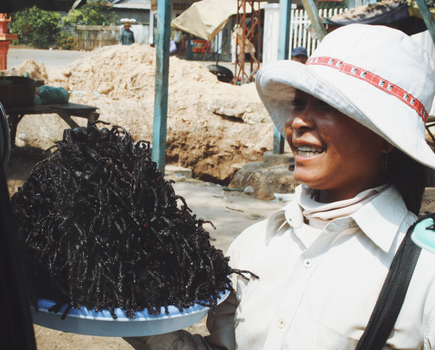
What Makes It Scary: It’s a whole, deep-fried spider. With all eight legs, furry body, and fangs (though often removed), staring back at you. For arachnophobes, this is the ultimate nightmare on a plate.
The Surprise Taste: Despite its terrifying appearance, deep-fried tarantula is surprisingly palatable and, dare I say, delicious. The legs are crispy, like a very light potato chip, with a subtle nutty flavor. The body, while softer, is often described as having a taste similar to a cross between chicken and cod, or even soft-shell crab, with an earthy undertone. It’s usually seasoned with garlic, salt, and chili, which enhances the flavor.
My Anecdote: My journey to Skuon, Cambodia, known as "Spider Town," was specifically for this challenge. I watched as vendors expertly fried the large, hairy spiders. My heart hammered as I picked up a freshly cooked one. The legs crackled as I bit into them – pure crispiness. The body was a bit softer, with a richer, more complex flavor than I anticipated. It wasn't just a gimmick; it was genuinely tasty, a unique blend of savory, nutty, and slightly spicy notes. It was a monumental moment of overcoming fear and embracing an entirely different culinary world.
Where to Find It & Price: The most famous place to try tarantula fritters is Skuon, a town about 75km north of Phnom Penh, Cambodia, where vendors line the main highway. You can also find them in some markets in Phnom Penh, particularly the Russian Market (Psar Toul Tom Poung) or Central Market (Psar Thmei).
- Price: USD 0.50 - 1 per spider.
- How to Eat: Pick it up by the body and bite into the crispy legs first. Then, if you're feeling brave, tackle the body. They're often served with a dipping sauce of lime, salt, and pepper.
Instagram-Worthy Moment: A shot of you holding a deep-fried tarantula, perhaps with a nervous smile or a triumphant grin, definitely a conversation starter!
Tips for the Adventurous Eater: Conquer Your Culinary Fears!
Ready to dive into the thrilling world of "scary but amazing" street food? Here’s some actionable advice to make your experience safe, enjoyable, and unforgettable:
- Trust the Locals (But Observe Wisely): The best indicator of good street food is a long line of locals. If they’re eating it, it’s usually safe and delicious. However, still use your judgment: look for stalls with high turnover, freshly cooked food, and good hygiene practices (e.g., clean utensils, gloves).
- Start Small: Don't order a huge portion right away. Try a single balut, a small bag of chapulines, or a single piece of stinky tofu. If you like it, you can always go back for more!
- Ask Questions (or Point!): Don't be afraid to ask vendors what the food is, how it's prepared, and how to eat it. Even if there's a language barrier, pointing and smiling often works wonders. A quick "What is this?" or "How do I eat?" can open up a fun interaction.
- Embrace the Condiments: Many of these foods are served with sauces, spices, or pickled accompaniments for a reason. They're designed to enhance the flavor and balance the strong tastes. Don't be shy – experiment!
- Hydrate: Always have bottled water on hand, especially when trying new or spicy foods.
- Be Respectful: Remember that these foods are often deeply ingrained in local culture and tradition. Approach them with an open mind and respect, even if they challenge your comfort zone.
- Document It! Take photos and videos! Not just for your social media, but to remember the experience. Your journey into adventurous eating is a story worth telling.
- Listen to Your Body: While pushing boundaries is fun, know your limits. If something feels truly off, or if you have severe allergies, err on the side of caution.
The Ultimate Reward: Beyond the Plate
Stepping out of your comfort zone to try a seemingly scary street food isn't just about the taste; it's about the entire experience. It's about connecting with a culture on a deeper level, breaking down preconceived notions, and discovering a newfound bravery within yourself. It's about the thrill of the unknown, the burst of flavor, and the story you'll tell for years to come.
These "scary" foods are often the most authentic, the most beloved by locals, and the most memorable parts of any trip. They represent centuries of culinary tradition and ingenuity. So, next time you're wandering through a bustling foreign market and catch a whiff of something unusual, or spot a dish that makes you do a double-take, pause. Take a deep breath. And remember the incredible flavors that might be hiding just beneath the surface.
Are you ready to be brave? Are you ready to taste the world in a way most tourists never will?
What's the bravest, scariest-looking street food you've ever dared to try? Or which of these are you most excited (or terrified!) to taste? Share your stories and tag us on social media! Let's inspire each other to eat adventurously!
---