Dare to Devour: Scary Street Foods That Taste Heavenly! Your Ultimate Bucket List!
I remember standing there, sweat trickling down my back in the humid Manila night, staring at the vendor's cart. A small, unassuming man with a weathered smile gestured towards a bowl of... well, something. My travel buddy, ever the instigator, nudged me. "Come on, you said you'd try anything once!" My stomach did a nervous flip. What lay before me was a dark, unidentifiable mass, a texture that looked like it belonged in a science lab, not on a dinner plate. But then, a local woman next to me took a bite, closed her eyes, and sighed in pure bliss. That was it. My moment of truth. My first encounter with a street food that looked utterly terrifying but promised a hidden universe of flavor.
And oh, what a universe it was! From that moment on, my culinary travels transformed. I stopped looking for familiar comfort and started actively seeking out the weird, the wonderful, and the downright bizarre. Because here's the truth, fellow food adventurers: some of the most mind-blowing, palate-expanding, and utterly delicious experiences you'll ever have come wrapped in the most intimidating packages.
Are you truly a foodie if you only stick to what's familiar? I say no! True culinary explorers understand that the greatest rewards often lie just beyond the edge of your comfort zone. So, if you're ready to swap predictable for profound and mundane for magnificent, buckle up! We're about to embark on a mouth-watering (and slightly stomach-churning) journey through the world's most deceptively delicious street foods. These are the dishes that look scary but taste amazing, and you absolutely need to experience them before you die.
---
1. Balut (Philippines): The Embryonic Enigma
Let's kick things off with the undisputed champion of "looks scary, tastes amazing" street food: Balut.
The "Scary" Part: If you've never encountered balut, prepare yourself. This isn't just a boiled duck egg; it's a fertilized duck egg, incubated for 14-21 days, meaning you might find a partially developed embryo inside. Yes, feathers, bones, and all. The thought alone sends shivers down many a spine, and the visual can be... confronting.
The "Amazing" Part: But oh, the taste! Crack open the top, sip the savory, rich broth within – it's like a concentrated chicken soup. Then, peel the rest of the shell. The yolk is incredibly creamy and rich, far more intense than a regular egg yolk. The "whites" are firm, sometimes slightly chewy. And the embryo itself? It's surprisingly tender, often described as having a texture similar to soft liver, with a distinct, savory, umami-packed flavor. It's often seasoned with a pinch of salt and a splash of vinegar, which cuts through the richness beautifully. It's truly a complete meal in one shell.
My Experience: My first balut was in that very Manila market. I closed my eyes, took a deep breath, and followed the instructions of a grinning local. The broth was a revelation – warm, salty, and incredibly comforting. Then came the yolk, a creamy explosion. When I finally encountered the embryo, it wasn't the horror I'd imagined, but a surprisingly tender, flavorful bite. I went from terrified to triumphant in a single egg. It's now a must-have every time I'm in the Philippines.
Pro Tips:
- Where to Find It: Ubiquitous in the Philippines, especially at night markets and street stalls. Look for vendors with stacks of eggs.
- How to Eat It: Tap the top, peel a small hole, sip the broth. Then peel more of the shell and eat the rest, usually with a sprinkle of rock salt and a dash of spiced vinegar.
- Price: Very affordable, usually 20-40 PHP (around $0.30-$0.70 USD) per egg.
- What to Look For: Ask for a 16-18 day old balut for a less developed embryo (and often a more pleasant experience for first-timers).
- Instagram Factor: The initial crack and sip, the steam rising from the egg, and your brave (or shocked!) expression make for a fantastic shareable moment.
---
2. Stinky Tofu (Taiwan/China/Hong Kong): Aromatic or Abominable?
The name says it all, doesn't it? Stinky Tofu is less about what it looks like and more about what it smells like. And trust me, that smell is legendary.
The "Scary" Part: Imagine the pungent aroma of old socks, rotten garbage, and a sewer all rolled into one. That's the initial olfactory assault of stinky tofu, particularly when you're downwind of a vendor. It's so potent that many first-timers simply can't get past the smell to even consider a bite. The tofu itself often looks like regular fried tofu, sometimes a bit darker, but it's the invisible cloud of aroma that's the real barrier.
The "Amazing" Part: If you can brave the scent, a revelation awaits. The taste is remarkably savory, deeply umami, and often surprisingly mild compared to the smell. It's typically deep-fried until crispy on the outside, with a soft, custard-like interior. It's often served with pickled cabbage, a garlic soy sauce, and a chili sauce, which perfectly complement its unique flavor. The fermentation process gives it a complex, cheesy, almost blue-cheese-like depth that is truly addictive.
My Experience: My first encounter was at Shilin Night Market in Taipei. The smell hit me from blocks away, like a physical wall. My nose wrinkled, my eyes watered. But the line was long, full of eager locals. Curiosity (and a healthy dose of peer pressure) won. I ordered a small plate of crispy fried stinky tofu. The first bite was tentative, but the crunch gave way to a creamy interior, and the flavors of the sauces and the tofu itself were an unexpected harmony. It was savory, tangy, and had a delicious funk that made me go back for more. Now, the smell is a siren call!
Pro Tips:
- Where to Find It: Night markets across Taiwan (Shilin, Raohe), Hong Kong (Mong Kok), and mainland China.
- How to Eat It: Usually served cubed and deep-fried, often with pickled vegetables and various sauces. Spear a piece with a toothpick.
- Price: Around 50-100 TWD (approx. $1.50-$3.50 USD) per plate.
- What to Look For: Start with the fried version, as it tends to be less pungent than the boiled or stewed varieties. Look for busy stalls – a good sign of fresh, delicious stinky tofu.
- Instagram Factor: A sizzling plate of golden-brown fried tofu, maybe with steam rising, contrasting with your initial "Ew!" face, makes for a great story.
---
3. Durian (Southeast Asia): The Spiky, Pungent King
Often banned from hotels and public transport due to its infamous odor, Durian is a fruit that evokes strong reactions.
The "Scary" Part: First, there's its appearance: a large, spiky, intimidating green-brown orb that looks like it could double as a medieval weapon. Then comes the smell. Oh, that smell! It's been described as everything from rotten onions and turpentine to gym socks and sewage. It's incredibly powerful and lingers for ages, making it a true challenge for the uninitiated.
The "Amazing" Part: If you can hold your breath and get past the aroma, you'll discover why durian is revered as the "King of Fruits." Its flesh is a creamy, custardy delight, with a unique flavor profile that's sweet, slightly savory, and incredibly complex. It's often compared to a rich, almond-flavored custard with hints of caramel, garlic, and even cheese. The texture is smooth and melts in your mouth. There are many varieties, each with subtle differences in sweetness and bitterness. Once you acquire a taste for it, you'll understand the obsession.
My Experience: I first tried durian in a bustling market in George Town, Penang, Malaysia. The vendor, seeing my hesitant expression, offered a tiny piece. The smell was intense, but the moment the cool, yellow flesh hit my tongue, I understood. It was like nothing I'd ever tasted – a rich, sweet, almost alcoholic creaminess that was utterly captivating. I quickly bought a whole segment. It's a love affair now, and I actively seek it out whenever I'm in Southeast Asia.
Pro Tips:
- Where to Find It: Prevalent across Southeast Asia, especially Malaysia, Thailand, Singapore, and Indonesia. Look for roadside stalls, fruit markets, and specialized durian shops.
- How to Eat It: Vendors will usually crack open the fruit for you. Eat the creamy yellow pods directly. Be prepared for sticky fingers!
- Price: Varies greatly by season and variety, from $5-$30+ USD for a whole fruit, or by weight for segments.
- What to Look For: Ask locals for recommendations on the best varieties (e.g., Musang King, D24, Monthong) and for advice on ripeness.
- Instagram Factor: Posing with the formidable spiky fruit, then a shot of the golden, creamy flesh, and finally your reaction (delight or disgust!) is gold.
---
4. Chapulines (Mexico): Crunchy Critters with a Kick
Ready to embrace your inner entomophagist? Mexico offers a surprisingly delicious entry into the world of insect-eating with Chapulines.
The "Scary" Part: Let's be honest, eating insects can be a mental hurdle. Chapulines are grasshoppers, and when you see them piled high, often still identifiable as grasshoppers, it can be a bit off-putting. The idea of tiny legs and antennae in your mouth is not for the faint of heart.
The "Amazing" Part: Once you get past the visual, these little guys are fantastic! They're typically roasted or fried until crispy, then seasoned with chili, lime, and garlic. The flavor is savory, earthy, and nutty, with a satisfying crunch. The lime and chili add a vibrant, tangy kick that makes them incredibly addictive. They're often served as a snack, a topping for tacos and guacamole, or mixed into quesadillas. They're also a great source of protein!
My Experience: I first encountered chapulines in Oaxaca, Mexico, a region famous for them. I saw them everywhere – vibrant red, green, and brown piles at market stalls. I was apprehensive, but the vendor offered me a sample. The first one was a shock – crunchy, salty, and then that burst of lime and chili! It was like a super-charged savory chip. I ended up buying a bag and munching on them throughout my trip, adding them to everything.
Pro Tips:
- Where to Find It: Most common in Oaxaca, Mexico, but can be found in other parts of Mexico too. Look for them in markets like Mercado Benito Juárez or Mercado 20 de Noviembre.
- How to Eat It: As a snack on their own, sprinkled over tacos, tlayudas, or guacamole.
- Price: Very affordable, sold by weight. A small bag can be 20-50 MXN (around $1-$3 USD).
- What to Look For: Look for vibrant colors and a fresh, dry appearance. Ask for different spice levels.
- Instagram Factor: A close-up of a handful of colorful chapulines, perhaps on a taco or bursting from a market bag, makes for an eye-catching and conversation-starting post.
---
5. Deep-Fried Insects (Thailand & Cambodia): A Bug's Life, Deep-Fried
If chapulines piqued your interest, then a full dive into the world of Deep-Fried Insects in Southeast Asia is next!
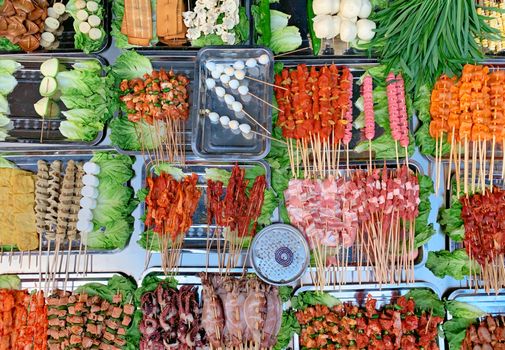
The "Scary" Part: This category encompasses a variety of creepy crawlies: crickets, grasshoppers, bamboo worms, silkworms, and even scorpions and tarantulas. Seeing them live, then seeing them piled high and crispy on a street cart, can be truly unsettling. The sight of a deep-fried tarantula with its fuzzy legs still intact is enough to make anyone do a double-take.
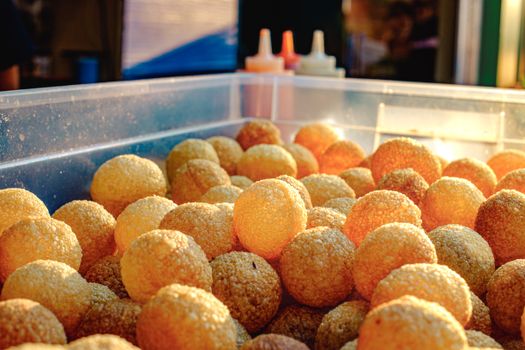
The "Amazing" Part: Just like chapulines, these insects are all about texture and the seasonings. Most are deep-fried until wonderfully crispy, offering a satisfying crunch. The flavors vary: crickets are often described as nutty and earthy, bamboo worms as mild and slightly sweet, and silkworms as having a buttery texture with an earthy taste. They're typically seasoned with salt, pepper, and sometimes a dash of chili, making them perfect beer snacks. They're high in protein and a sustainable food source!
My Experience: My first foray into Thai insect eating was at the famous Khao San Road night market in Bangkok. I started with a small bag of crickets. The vendor had them stacked like golden jewels. They were crunchy, salty, and surprisingly delicious – like miniature potato chips. Emboldened, I moved on to bamboo worms, which were milder. My ultimate challenge was a deep-fried tarantula in Siem Reap, Cambodia. It was crunchy on the outside, with a surprisingly soft, almost pate-like interior (the abdomen). The legs were pure crunch. It was a true "conquer your fear" moment, and the taste was unexpectedly savory and earthy.
Pro Tips:
- Where to Find It: Night markets in Thailand (Bangkok's Khao San Road, Chiang Mai's Saturday/Sunday walking streets), Cambodia (Siem Reap's Pub Street night market), and Vietnam.
- How to Eat It: Pick them up with your fingers, pop them in your mouth. Don't overthink it!
- Price: Small bags start from 20-50 THB (around $0.60-$1.50 USD). Tarantulas and scorpions are more expensive, 100-200 THB.
- What to Look For: Look for freshly fried insects – they should be crispy, not soggy. Choose a variety of insects to sample different textures and flavors.
- Instagram Factor: A bold selfie holding a skewer of scorpions, or a close-up video of you crunching on crickets, will definitely turn heads and get those likes!
---
6. Pig's Blood Cake (Taiwan): The Dark, Delicious Delight
Often overlooked for its more pungent cousin, Stinky Tofu, Pig's Blood Cake (豬血糕, zhū xiě gāo) is another Taiwanese street food that looks daunting but delivers big on flavor.
The "Scary" Part: The name itself is a giveaway. This savory snack is made from pig's blood, glutinous rice, and soy sauce, then steamed, fried, and often coated in peanut powder and cilantro. Visually, it's a dense, dark, almost black block on a stick, often resembling a block of tar or a solidified brick of something unappetizing. The idea of eating coagulated blood can be a major mental hurdle for many.
The "Amazing" Part: Forget your preconceptions! Pig's Blood Cake is a textural marvel and a flavor bomb. It's incredibly chewy and sticky from the glutinous rice, with a rich, savory, slightly metallic (in a good way, like a robust iron flavor) taste from the blood. The steaming keeps it moist, while a quick fry gives it a slight crispness. The typical toppings of sweet peanut powder and fresh cilantro create an unexpected symphony of savory, sweet, and herbaceous notes that is utterly delightful. It’s comforting, hearty, and uniquely Taiwanese.
My Experience: I was wandering through the bustling Raohe Night Market in Taipei, drawn by the steam and the chatter. I saw locals happily munching on these dark, mysterious blocks on sticks. The vendor, an elderly woman with a warm smile, offered me a piece. The texture was the first surprise – wonderfully chewy, like mochi but savory. Then the flavor: a deep, satisfying umami, perfectly balanced by the sweet, nutty peanut powder and the fresh burst of cilantro. It was incredibly moreish, and I quickly became a convert. It's now one of my absolute favorite Taiwanese street foods.
Pro Tips:
- Where to Find It: Widely available at night markets across Taiwan (Raohe, Shilin, Ningxia).
- How to Eat It: Served on a stick, often fresh from a steamer and then quickly dipped in sauce, rolled in peanut powder, and garnished with cilantro.
- Price: Very affordable, usually 30-60 TWD (around $1-$2 USD) per stick.
- What to Look For: Look for stalls where it's freshly steamed and fried, and where the vendor is generously coating it in peanut powder and cilantro.
- Instagram Factor: The dark, glossy block on a stick, vibrant green cilantro, and golden peanut powder make for a surprisingly appealing photo, especially against the backdrop of a bustling market. A bite shot showing the chewy texture is also great!
---
Why Embrace the Bizarre? The Philosophy of Fearless Foodies
Beyond the initial shock and the eventual delight, there's a deeper reason to seek out these "scary" street foods. It's about more than just a meal; it's about cultural immersion, challenging your perceptions, and expanding your world.
- Cultural Understanding: Food is a window into a culture. What might seem strange to us is often a staple, a delicacy, or a historical necessity for others. Trying these foods helps you understand local traditions, resourcefulness, and tastes.
- Pushing Boundaries: Stepping out of your culinary comfort zone builds confidence that spills over into other aspects of travel and life. If you can conquer balut, what else can you do?
- Unforgettable Memories: Let's be honest, you're far more likely to remember the time you ate a deep-fried tarantula than another plate of pasta. These experiences become legendary travel tales.
- Taste Bud Transformation: Your palate will thank you. You'll discover new flavors, textures, and ingredient combinations you never knew existed, enriching your appreciation for food in general.
---
Tips for the Timid but Tempted: Your Guide to Fearless Feasting
Feeling a little nervous? That's totally normal! Here's how to ease yourself into the world of scary-looking, amazing-tasting street food:
- Start Small: Don't go straight for the most extreme option. Try a small portion, or share with a friend. For example, begin with crickets before tackling a scorpion.
- Go with a Local: If possible, have a local friend or a trusted guide introduce you to the food. They can explain what it is, how to eat it, and where to find the best versions.
- Look for Busy Stalls: This is crucial for hygiene and taste. A long line of locals usually means the food is fresh, popular, and delicious.
- Observe First: Watch how locals eat it. What condiments do they add? How do they hold it? Mimic their technique.
- Focus on the Flavor, Not the Form: Close your eyes if you need to! Concentrate on the aroma, the texture, and the taste.
- Stay Hydrated: Carry water, and maybe some mints, especially if you're trying something with a strong aftertaste.
- Embrace the Adventure: Go in with an open mind and a sense of humor. It's an experience, and even if you don't love it, you'll have a great story!
- Ask Questions: Don't be afraid to ask the vendor what's in it, how it's prepared, or what it tastes like. Most are happy to explain.
---
Conclusion: Your Culinary Adventure Awaits!
So, there you have it – a tantalizing (and perhaps slightly terrifying) glimpse into the world of street foods that defy expectations. From the embryonic richness of balut to the aromatic embrace of stinky tofu, the custardy delight of durian, the crunchy zest of chapulines, the varied textures of deep-fried insects, and the savory chew of pig's blood cake, these dishes are more than just meals; they're rites of passage for any true traveler.
Don't let your eyes (or your nose!) deceive you. The greatest culinary treasures are often hidden behind the most unusual facades. Step out of your comfort zone, challenge your palate, and prepare to be utterly amazed. You'll not only discover incredible new flavors but also gain a deeper appreciation for the diverse and vibrant food cultures that make our world so wonderfully delicious.
What's the scariest-looking food you've ever tried that turned out to be amazing? Share your stories and photos with us on social media using #TripsoraFoodDare and inspire fellow adventurers! Your next unforgettable meal is just a brave bite away!
---